Having activated this POTA “4-fer” park back in June, I looked around for a closer point to the car park, to reduce the time to get there as I wished to to test out the vertical array, rather than just the 1/4 wave vertical which I used last time. In the future I plan to include this 4-fer in a group of activations to enable 10 park activations in one day. The closer the activation site is to the car park, the less time needed.
Preparation for an activation using the planned equipment is very easy, I simply pick up the small rucksack with everything in it and leave home. In this case early enough to be able to catch the 20 metre long path propagation to Australia. Despite radio conditions being less than perfect on Sunday, this activation was planned for Monday morning, the 10th of August 2026.
The Activation
POTA DE-1058, 0968, 0791 & 0663
Rising at 6 am, following a rain storm did not bode well for this activation. This, of course, meant the tracks down to the park where I wanted to operate from would be slippery. I arrived at the car park at about 7:15 am local time and set off down to the new POTA 4-fer spot, that I had found looking at the satellite picture from Google Maps. When I got there, however, what I had expected to be a grassy, scrubby area turned out to be a field full of thistles! I had to look for somewhere else and eventually found a better location about 15-20 minutes later. During the whole time I operated, there were occasional rainy periods but nothing heavy and as I packed up to walk back to the car park, the sun came out, and the temps started to rise. Later in the day it was 38.7°C at home.
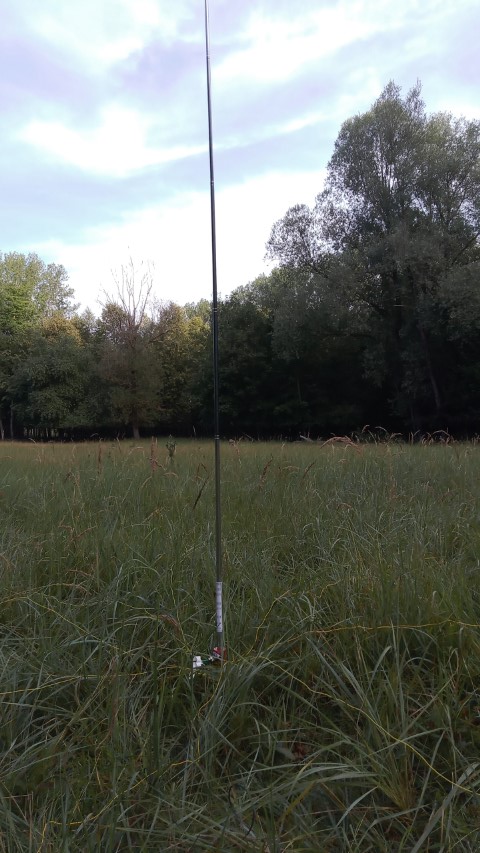
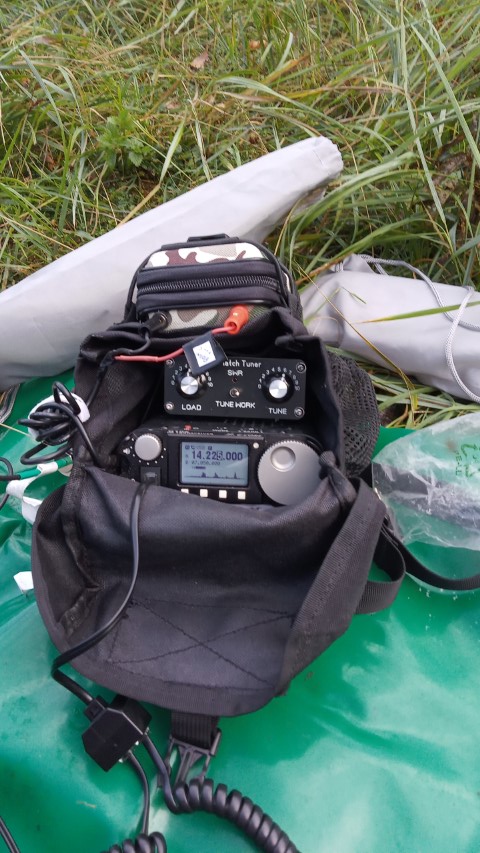
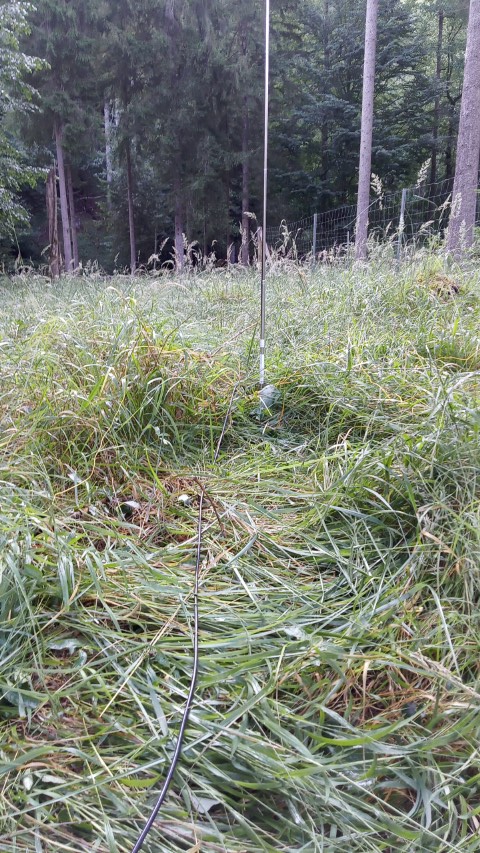
For the activation, I used the little G106 radio (5W) and my parasitic vertical array pointing west – it worked well again and the only time consuming part is laying out two sets of 8 radial wires – one set for the driven element and the other for the reflector.
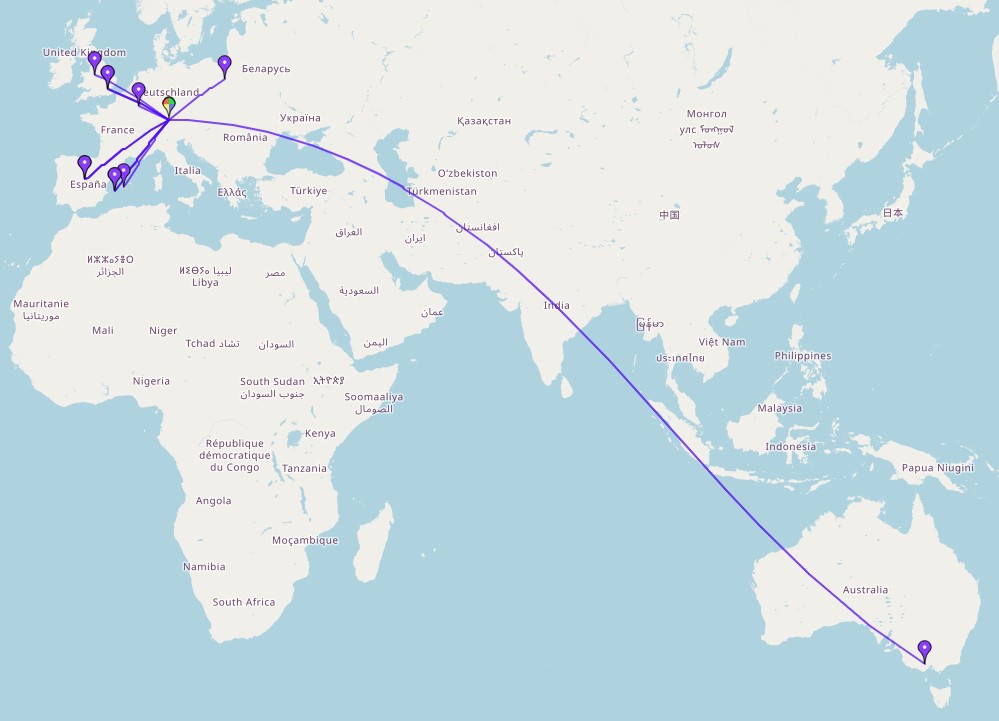
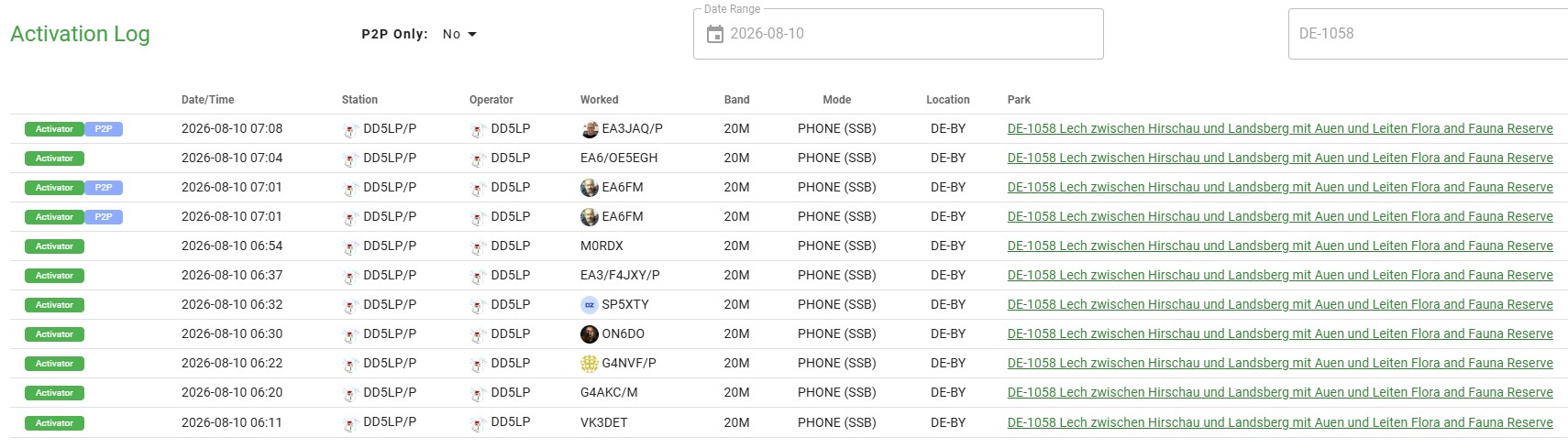
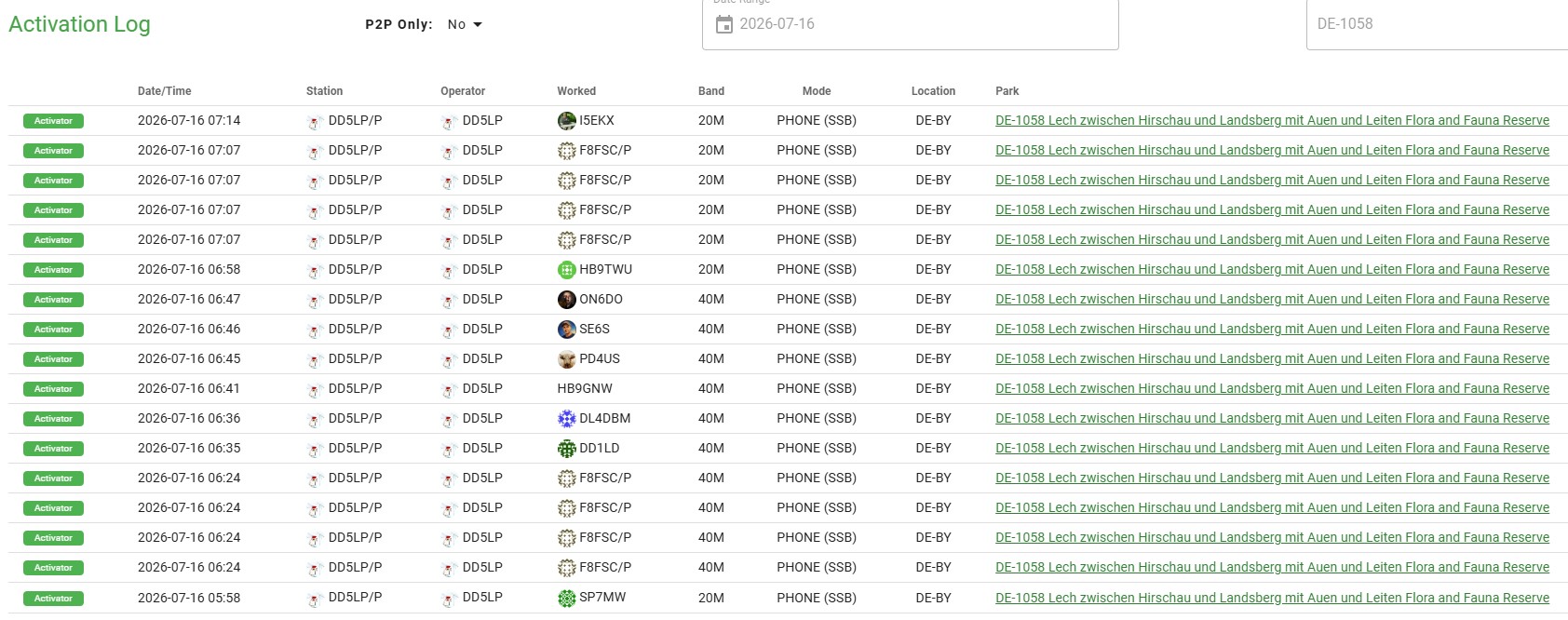
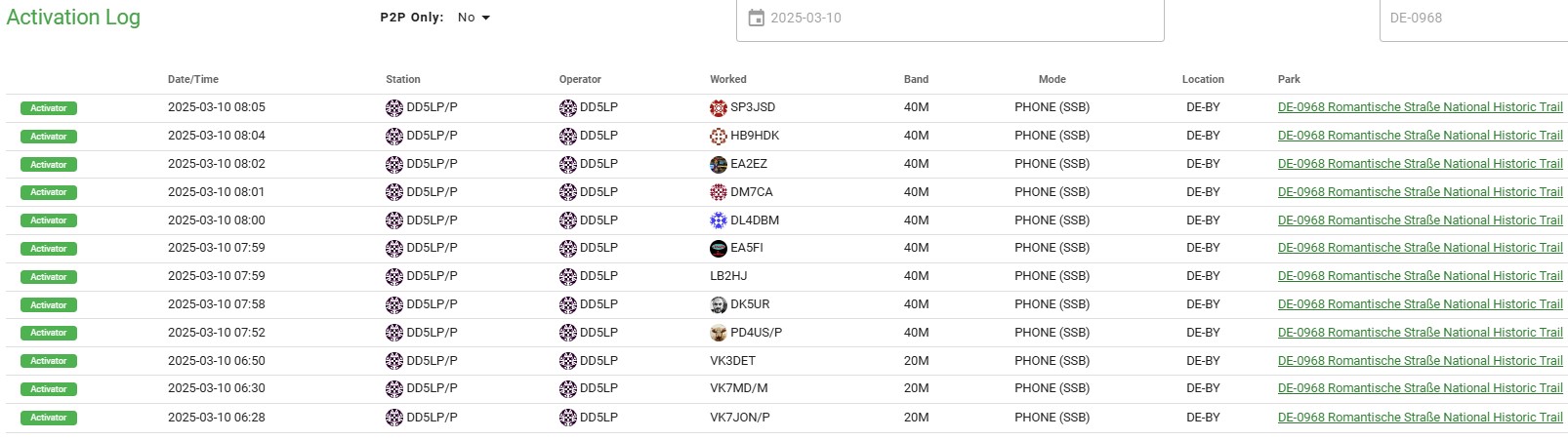
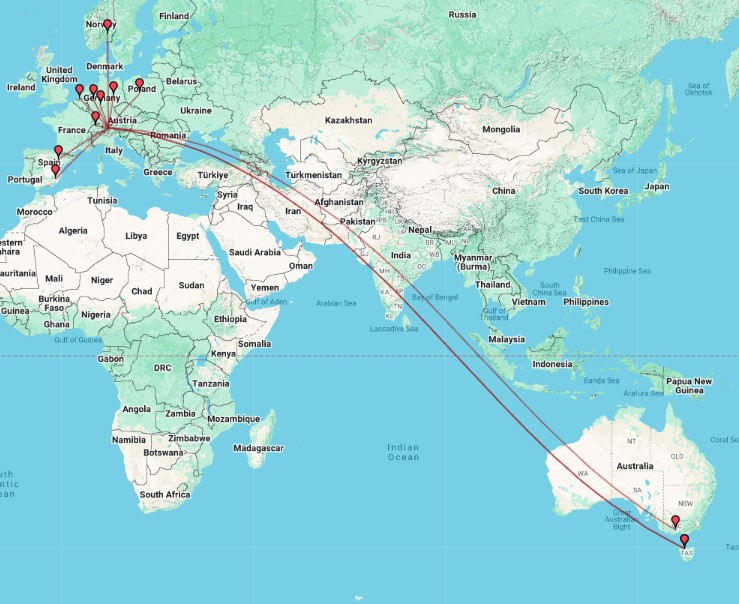
As you will see from the log, one contact was made into Australia although I heard several more, some quite strong. So radio conditions turned out to not be as bad as was predicted (which is often the case). All other contacts were around Europe.
Photos:
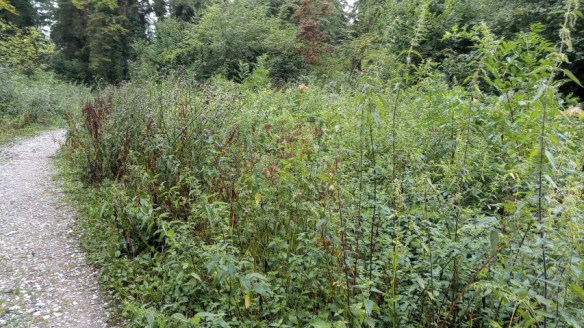
Field of dreams? NO – field of thistles!
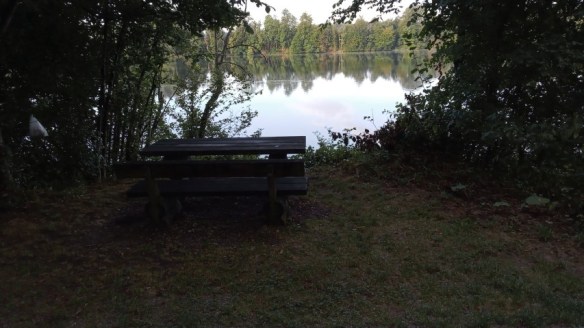
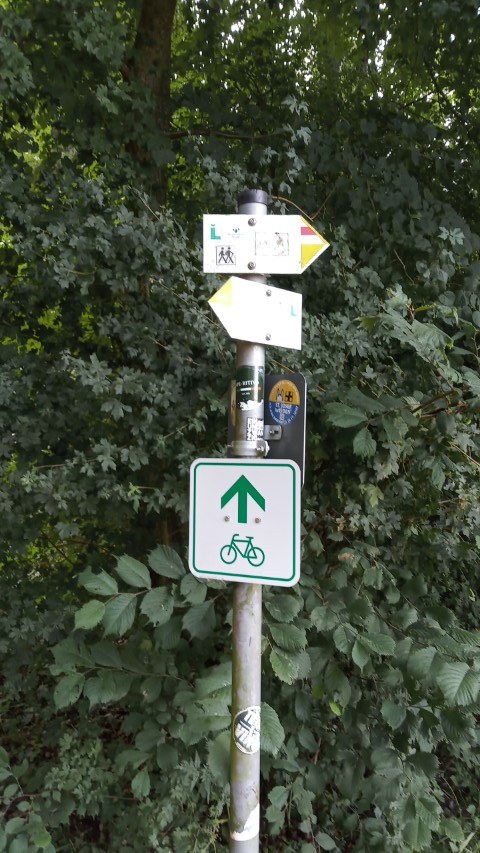
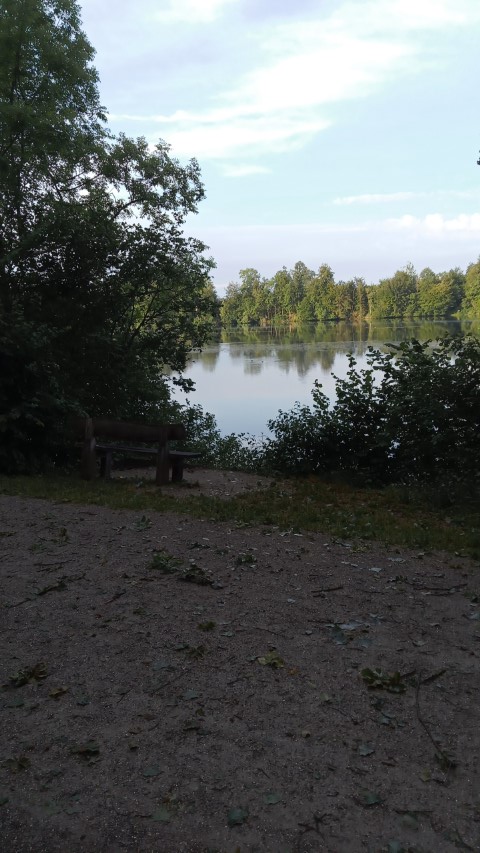
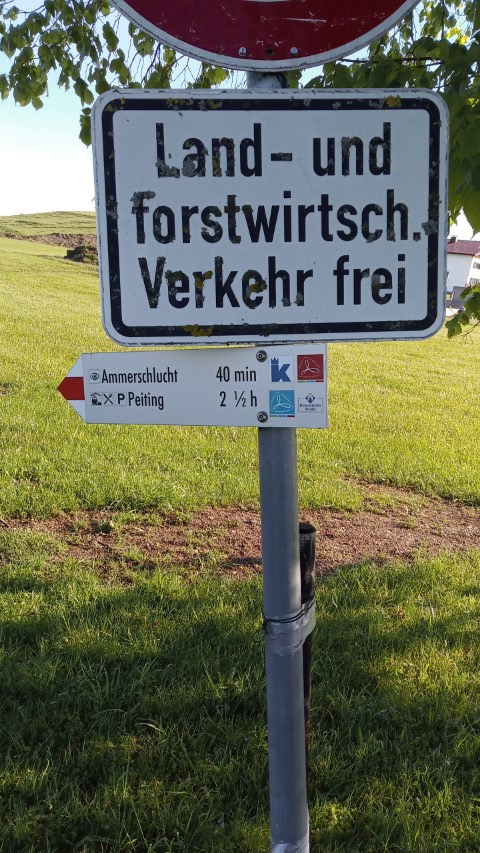
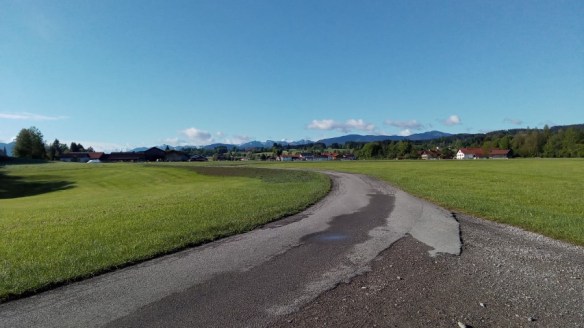
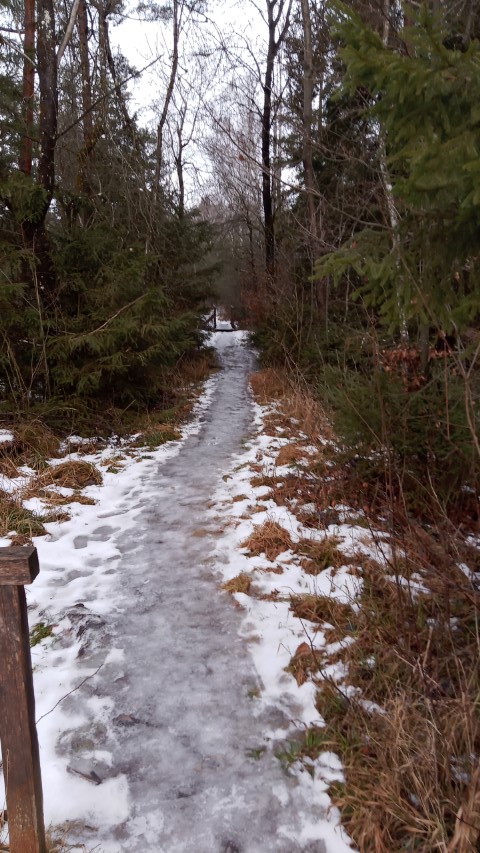
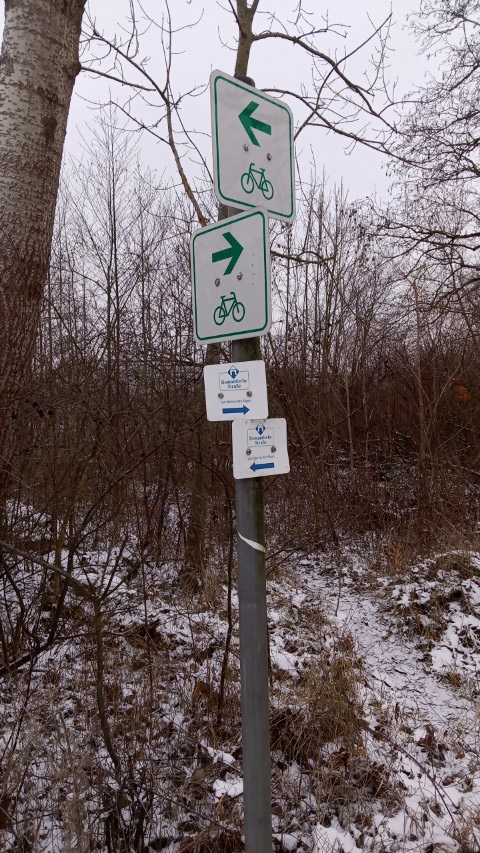
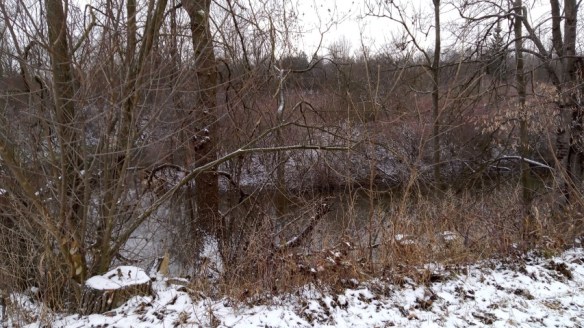
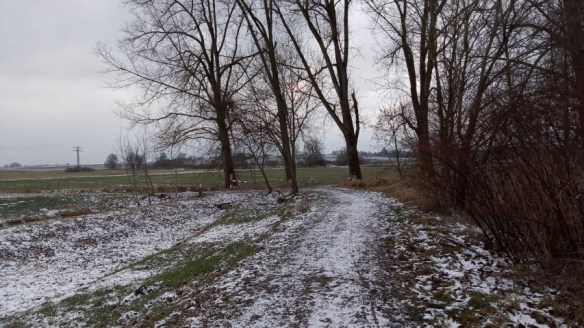
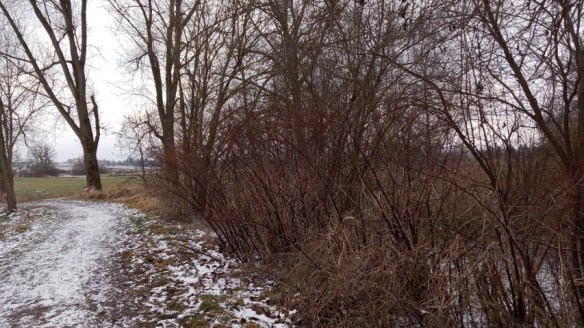
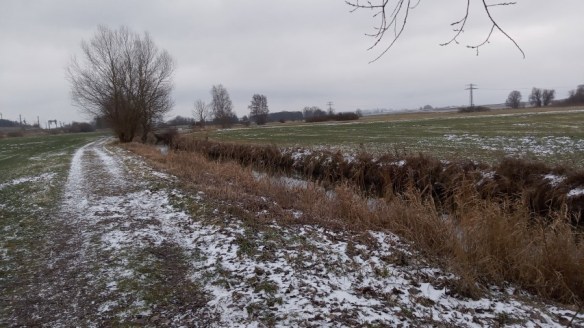
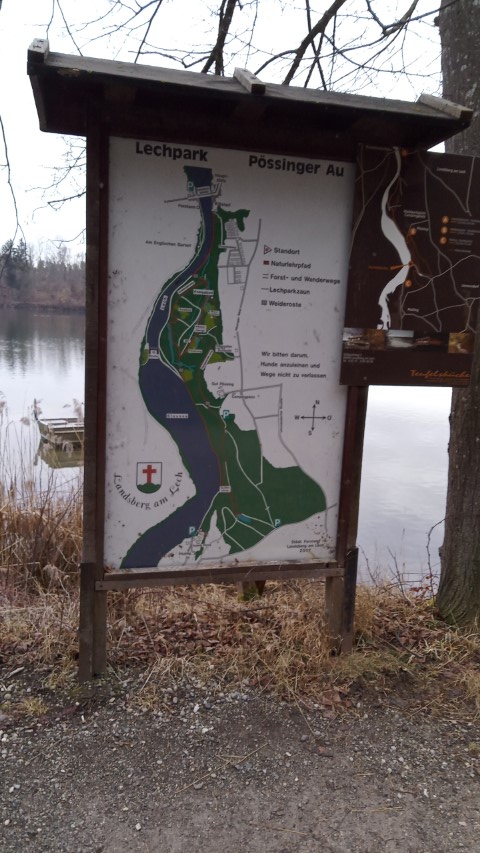
Along the path to the second site & the River Lech
Along the path to the second site & the River Lech
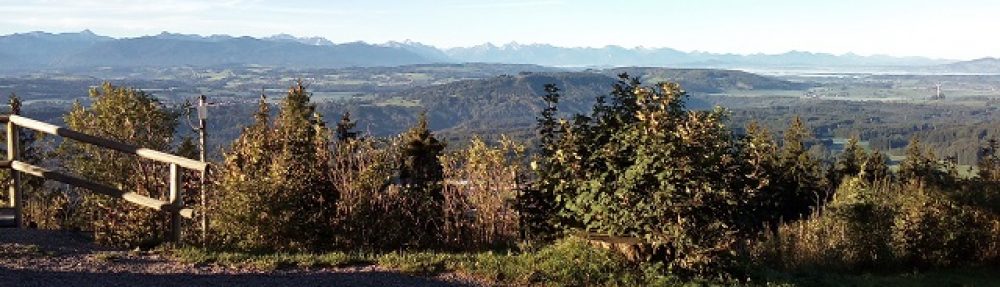
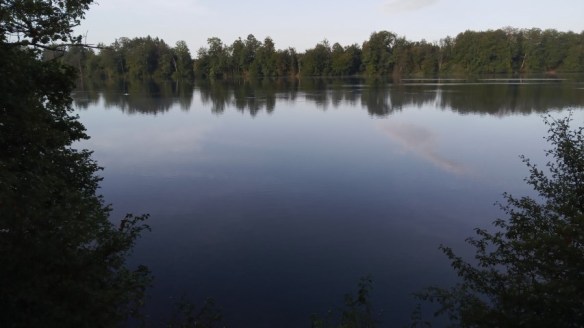
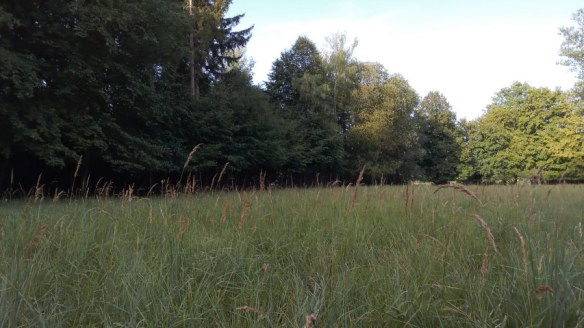
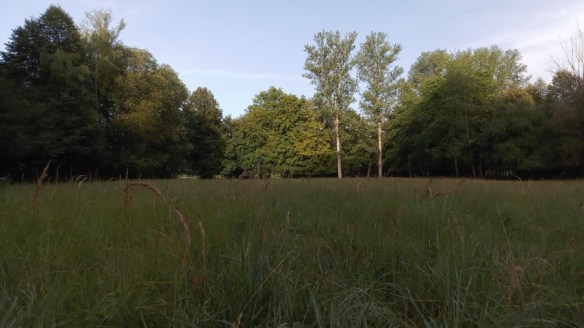
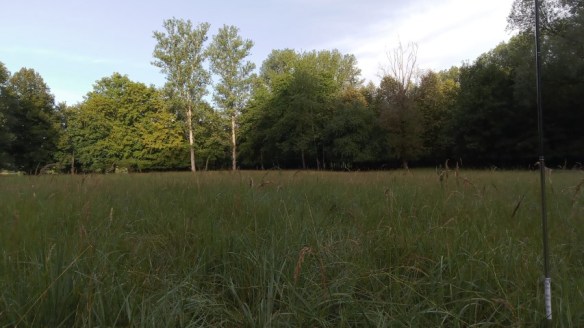
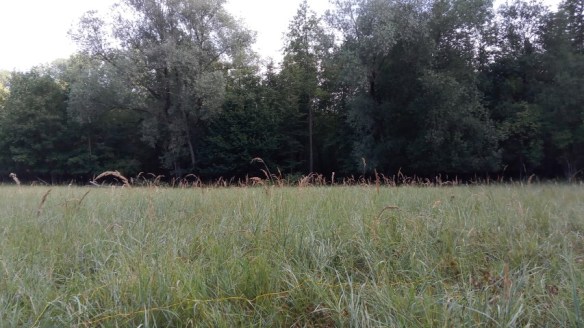
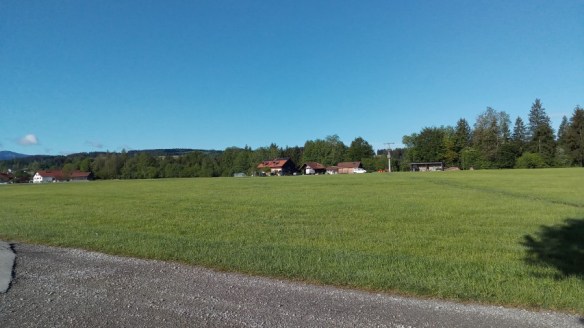
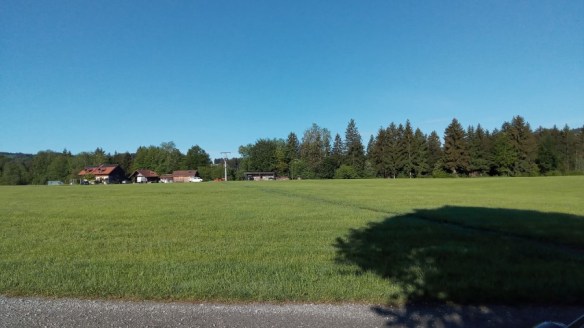
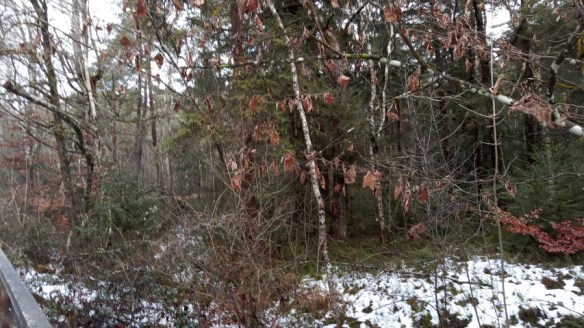
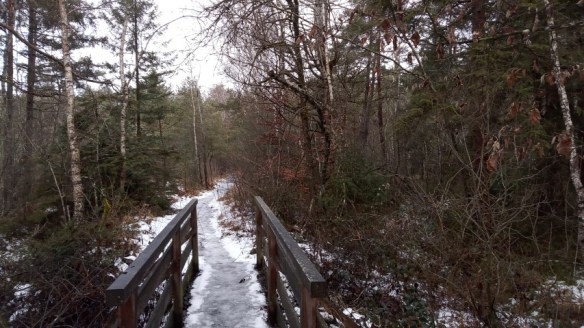
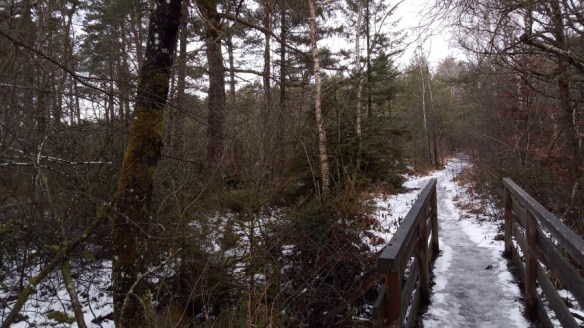
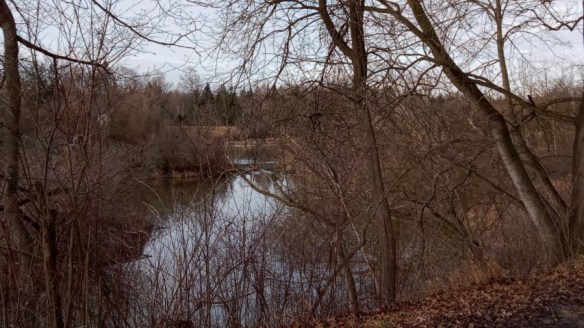
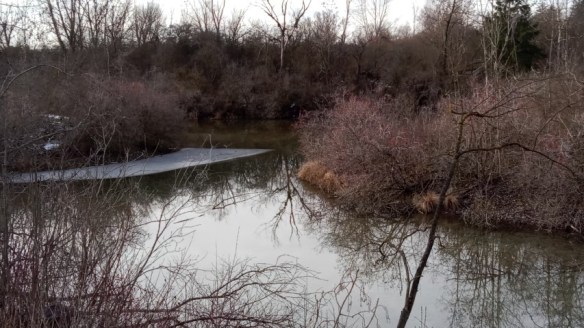
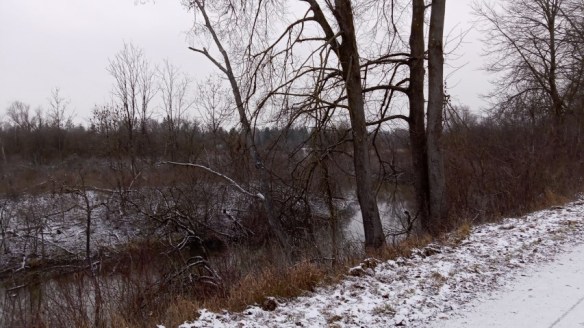
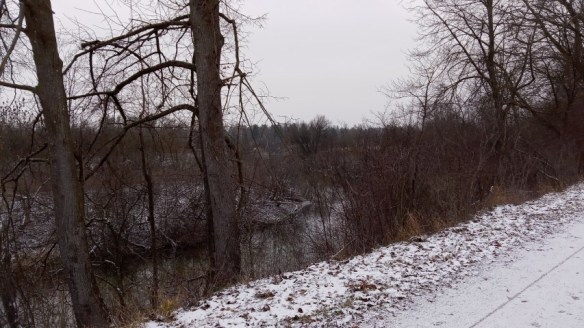
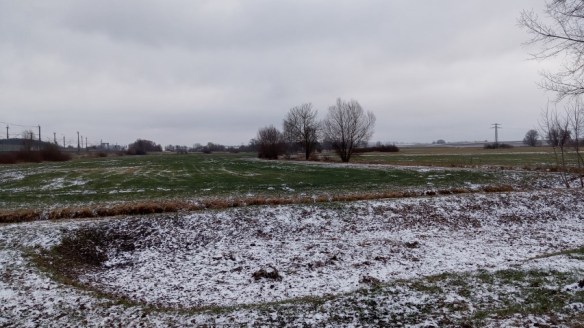
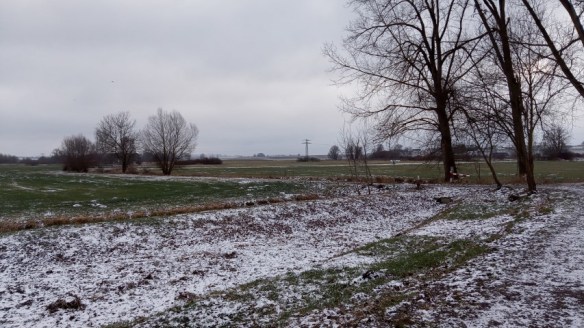
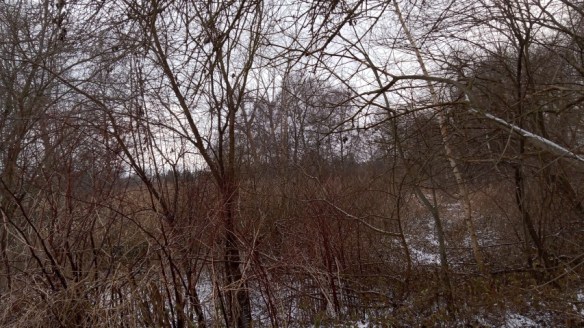
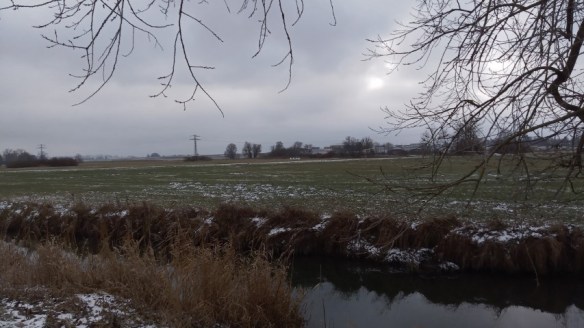
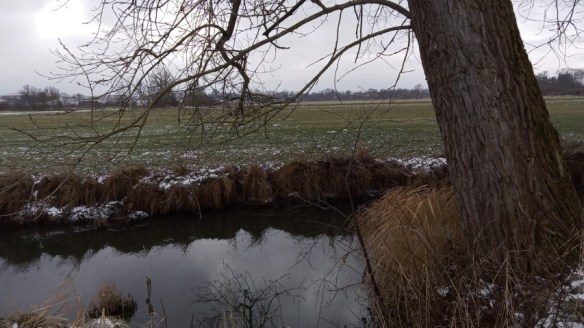
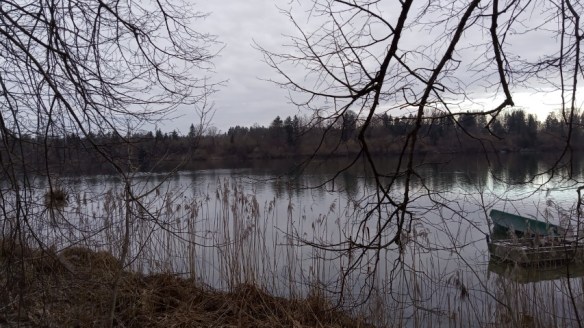
The view around the site.
The view around the site.
The view around the site.
The view around the site.
Antenna
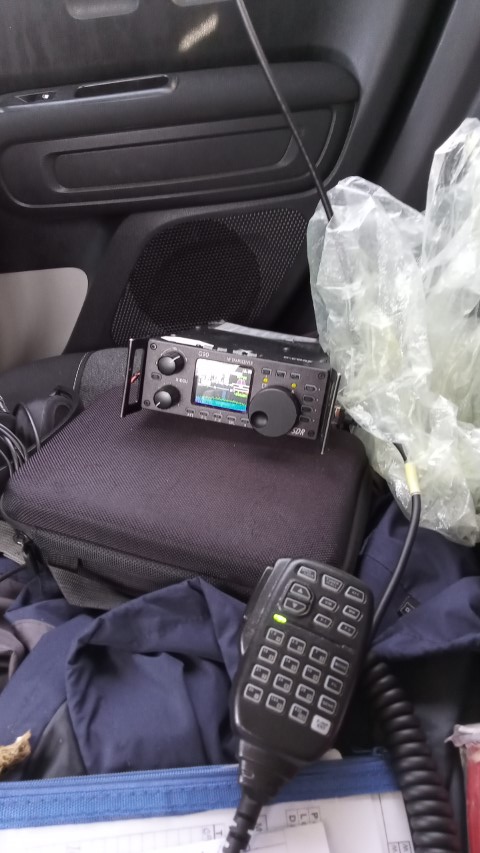
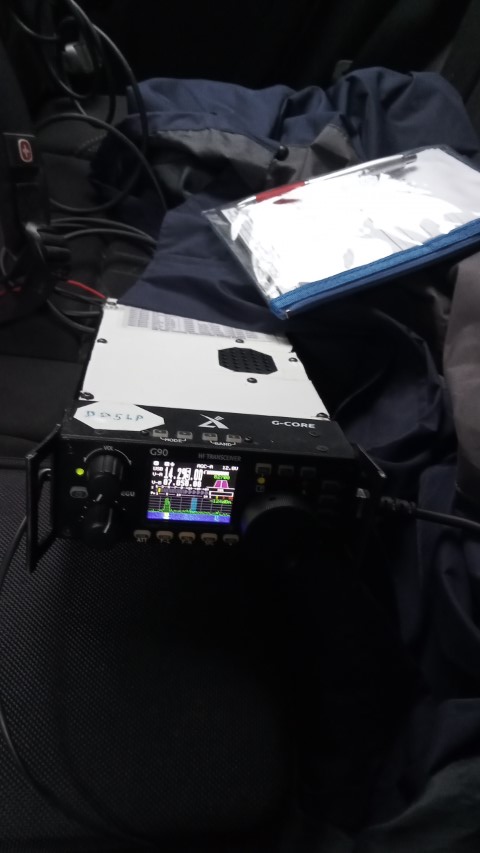
Station.
DE-1058 / DE-0968 / DE-0791 / DE-0663
Equipment taken:
Xiegu G-106 radio.
“Red Slug” ground mounted quarter-wave vertical.
5.6m reflector element to make up a two element parasitic array.
2Ah Eremit LifePO4 battery.
Lightweight headphones.
Smartphone for spotting.
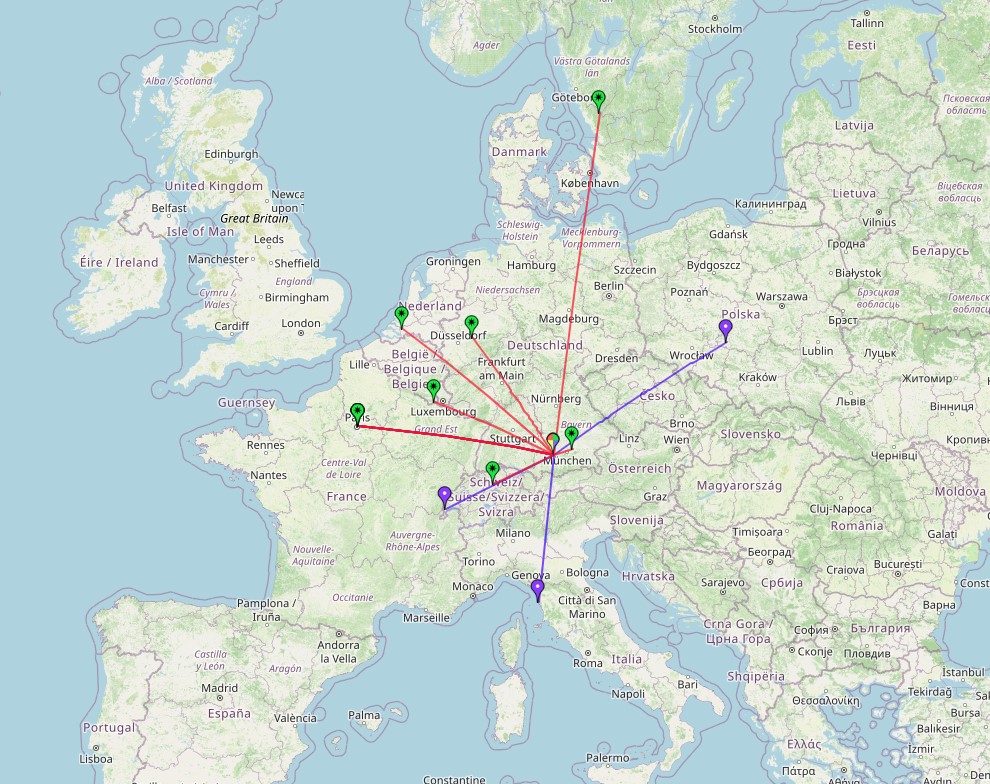
Contacts Map
LOG:
Conclusions:
The fact that what I expected to be an open grassy area, turned out to be a field of thistles and hence making it unusable, was a surprise. For what I had hoped to be a quick to access location, was not to be, however the second location, when approached over other tracks than I took, may still be an acceptable option for the future ten parks in a day attempt.
The equipment worked perfectly and underlines that this choice of small five watt radio and vertical array is the best equipment combination to take to Cyprus with me.
This POTA “4-fer” is a nearby location (within the same Maidenhead locator square as my home), however, it is only accessible on foot or by bicycle, not a PLOTA by any means! It also happens to be within the allowed 1 km radius of the Atom Bunker in Landsberg am Lech (B/DL-1193 in the Bunkers on the Air scheme).
To activate this point a fairly long walk from the nearest car park is needed – about 20 minutes, even taking the short-cut tracks that I found checking hiking maps. My usual 14-15 kilo heavy rucksack with my G90 fibreglass mast antennas and battery, while do-able is not the best option, especially when I have been working on aa lightweight ~ 4 kilo pack that I will take to Cyprus with me in August. This therefore would be a good opportunity to test out this QRP solution.
Despite earlier weather reports saying this week would be hot and sunny, Tuesday and Wednesday brought thunderstorms and even hail, so the planned activation on Thursday would depend upon what the weather would turn out to be. I set my alarm to 6 am (0600 UTC) with the hope of catching the long path on 20 metres into Australia.
The Activation
BOTA B/DL-1193, POTA DE-1058, 0968, 0791 & 0663
Rising at 6 am, the sky still looked overcast and given the downpour over the last two days there was a good chance that the tracks down into the park may be unpassable. Despite that, I decided to try – at worst this would act as a “reccie” for a second attempt.
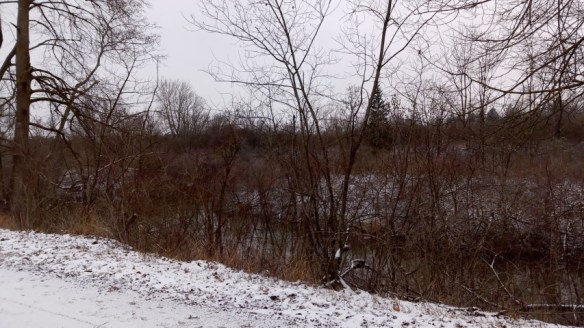
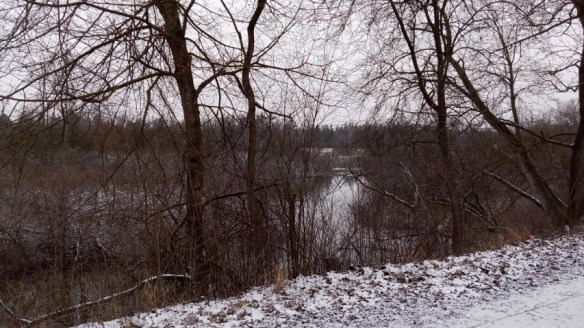
Arriving at the car park behind the caravan camping grounds, I parked up and then grabbed my small rucksack and headed back up the road, to where the track was supposed to start. When I got there, I saw that the track had had a wooden barrier built across it, but it was obvious people had simply walked around the end of it, so I did the same. A little further down the track, there were red and white tapes strung between the trees. Obviously someone did not want this track to be used. Whatever, I clambered around the tree to join the track at the other side. Interesting, from this point there was a worse-looking track heading straight up the bank to near the car park, which then became the (shorter) route that I took on my return journey. The rest of my route was, as on my map, and I soon arrived at the area where, on one side, there is a cycle parking spot and at the other a Kneipp basin (a small area of water with stones in the bottom of it, which people walk over to improve their feet and ankles). Just past the cycle parking area, there was a grassy area going off towards the river, which suited me perfectly (apart from the high, wet grass). Luckily, this had not turned into a bog from all of the recent rain.
After setting up the equipment, I tuned around 20m to see how it was performing, and the first station I found was Jon VK7JON/M – one of the Australian friends that I often talk with and had hoped to contact. He was not a strong signal, though – S2 at best, and he runs 100W from his static mobile location while I was only running 5w. I called him – no reply. I messaged him, and we tried again – nothing – I could hear him, but he could not hear me. He then had Mike VK7MD/M call me, but Mike was even weaker at S1, so that did not work either. Even Ernie VK3DET with his high power and beam was not audible to me. This was to be the story of this activation. The band, whether 20m or 40m, which I tried as I needed contacts for the POTA activation, was very difficult. It was not that the bands were noisy, rather that the signals were simply not travelling as they usually do. I even received a report on 40 metres of 1-1 from a station in Munich! Then in contrast I got a 5-9 report from Central Switzerland, so today was a strage one for conditions. Of course, initially I worried that something might be wrong with my radio or antenna with those low reports (even for QRP) but then the good reports told me that in fact it was simply radio conditions that were bad today.
Once I had the needed 10 contacts (including one P2P with another 4-fer POTA location in France), I needed to pack up and head back to the car as my wife needed it. The walk back was fine as I knew the route. Of course it was no where as easy as the trip in as this time it was up-hill.
The strange technical issue was that at one point I was hearing what I presume was Radio China right across the band. Weak but there behind other signals. Given that it was there over the complete band, I can only think that they are transmitting on a frequency that is mixing to make the IF frequency of this radio, with a very strong signal (they use Europe-based transmitters as well as those in the Far East) that it was breaking through.
Photos:
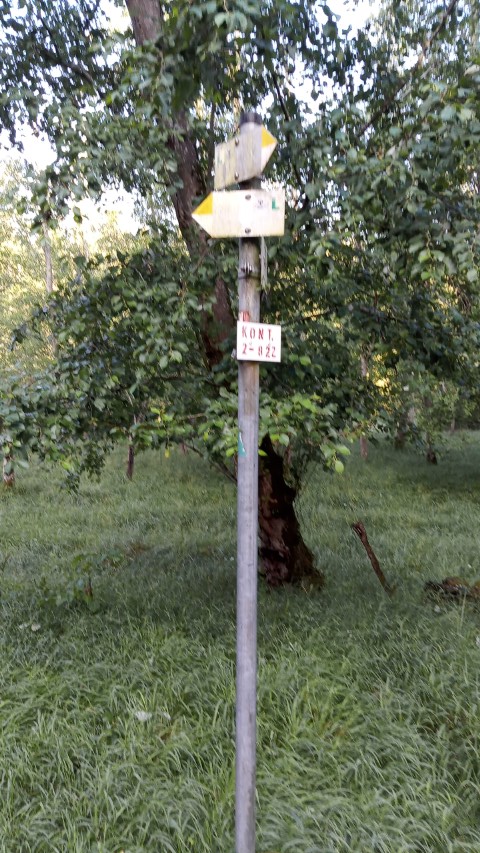
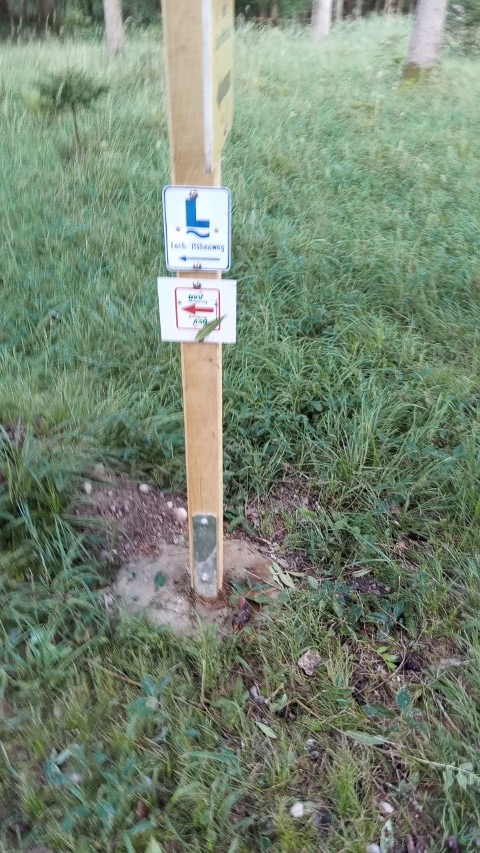
Following the trail(s)
View of River Lech
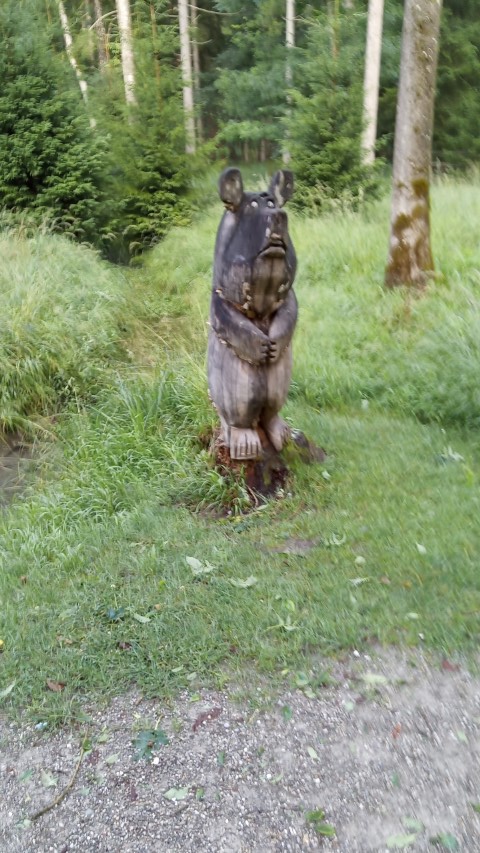
Wooden artwork along the trail
Following the trail(s)
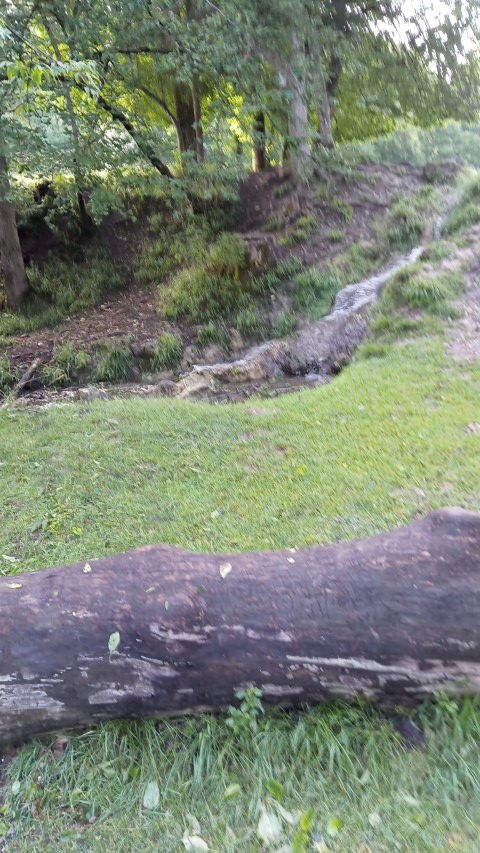
Small waterfall
Wooden artwork along the trail
Following the trail(s)
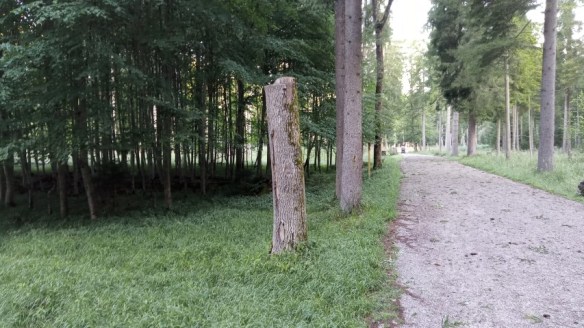
View around site
View around site
View around site
View around site
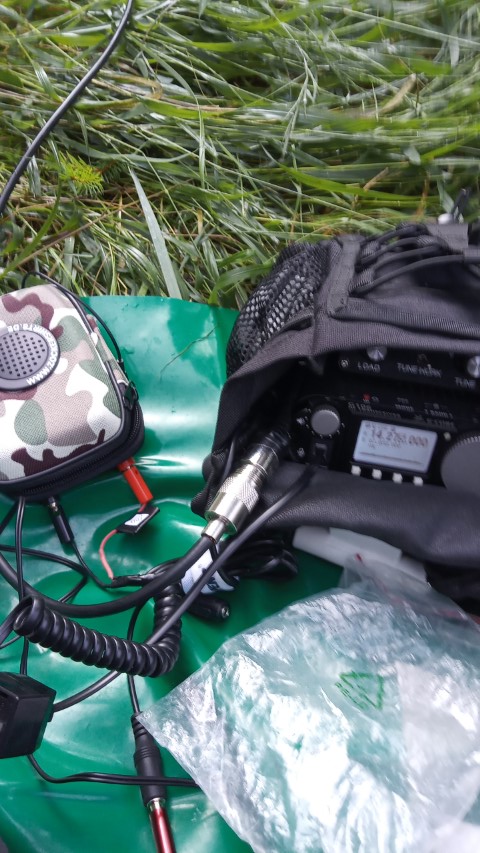
Station
Antenna
B/DL-1193 / DE-1058 / DE-0968 / DE-0791 / DE-0663
Equipment taken:
Xiegu G-106 radio.
“Red Slug” ground mounted quarter-wave vertical.
2Ah Eremit LifePO4 battery.
Lightweight headphones.
Smartphone for spotting.
Contacts Map
LOG:
Conclusions:
I was surprised that conditions were so bad but happy that the weather stayed dry. The lightweight pack is far easier to carry than the usual kit, however, had anything failed, I had little back-up possibility, whereas with the larger pack, I have several spares. Two antennas mast/tripod, even extra batteries.
For what it is, the cheap G106 rather competes above its weight, as does the simple quarter-wave antenna made with a 5.6m telescopic whip, the “slug” feed point and its ground stake. I am happy to take this small kit to Cyprus, with some spares in a second bag, which will stay in the apartment unless needed, so keeping the carried weight down.
Having seen that I had been awarded the Rover Warthog (5 parks in a day) award for my activations 3 months ago, I started looking into the Rover Awards. Given that they also work with locations that are in multiple POTA entities, getting to the next (Rhino – 10 parks in a day) should also be possible. For that attempt (using the fewest “PLOTA” stops), I need POTA sites with multiple codes. Looking at the maps for Bavaria, I found two spots near the village of Rottenbuch that have FIVE POTA entities in one spot. As I had not activated in Rottenbuch before (but driven through it many, many times to HEMA and SOTA activations), this activation was to be a test for a later attempt to get the Rhino, and possibly even higher Rover awards. As the forecast said that Tuesday morning, at least, was going to be dry, I decided on May 19th and as usual, loaded the radio gear into the car for an early start.
The Activation
POTA DE-0594 Münchner Jakobsweg DE-0641 Via Romea NHT DE-0797 KönigLudwigweg DE-0968 Romantische Straße DE-1059 Ammer von Alpenrand zum Vogelfrei Ammersee Südufer
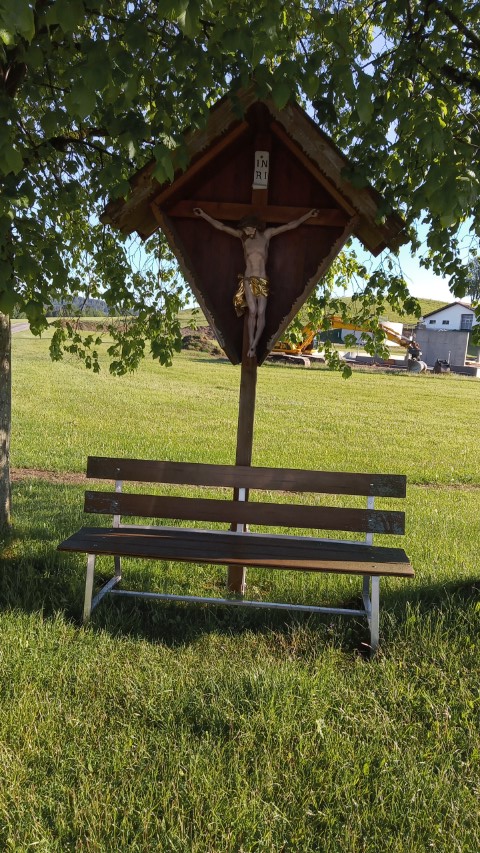
The 40-minute drive down started earlier than planned, as I was ready and the weather was fine. I had programmed both possible locations into Google Maps, and when we approached Rottenbuch, before entering the village, the GPS navi told me to turn off the main road. I thought I must have selected the wrong option, as indeed one option was in that direction. I carried on along the route I had seen on the map. My first possible location was near the sewage works, behind the town hall. When I got to what I expected to be a drivable track, it turned out to be a pedestrian/cycle way and had been changed to this sometime, many years ago. It would, of course, have been possible to park in the village square and walk into the spot with my portable radio gear, but rather than do that, I decided to check out my second PLOTA spot, which indeed took me down the road on the outskirts of the village that the GPS had chosen previously. Off this road is a track to the sewage works from the other side. Continuing on to the second location (driving around pot holes on a road that was only wide enough for one car, but was a proper tarmacced road, I eventually found somewhere to park, next to a holy cross and direction signs for the various tracks. So that is where I parked.
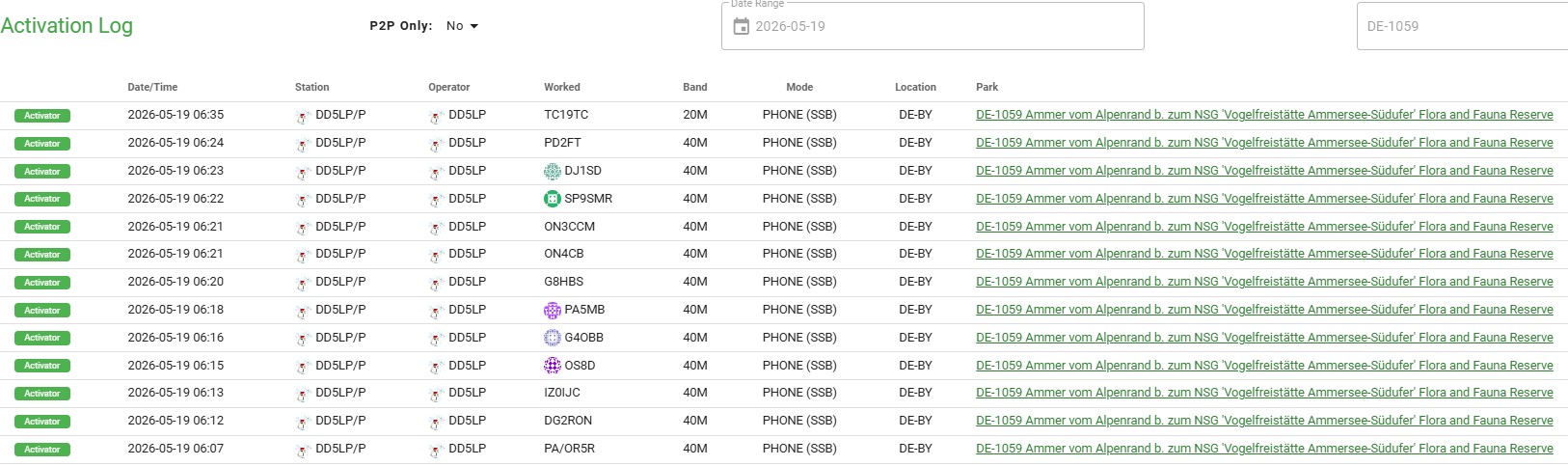
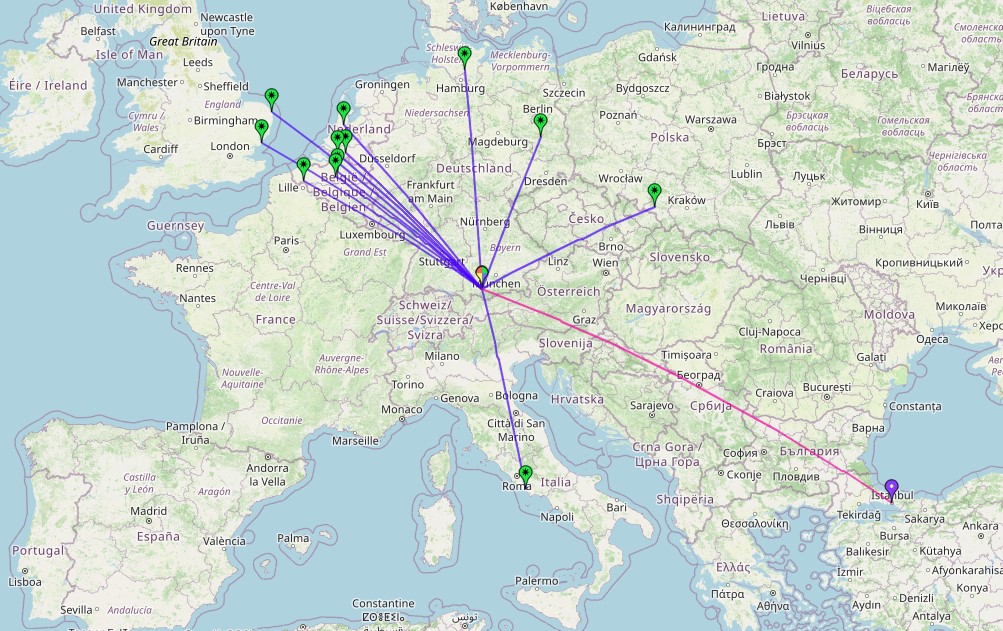
I had intended to start on 20 metres as usual; however, when I turned the radio on, it was still on 40 metres from the last activation, and there was a strong signal from an IOTA station. I re-adjusted the antenna for 40m and called and worked them. Rather than switch then to 20 metres, I had a tune around and found a nice band with not too much atmospheric or man-made noise. Having spotted myself on the POTA cluster, I received 11 calls in 12 minutes. Once the calls dried up, I decided to go back to 20 metres, but got no calls on that band. That is despite hearing several VK stations easily and one HS0 (Thailand) station. Before packing up, I found and worked a Youth Sports special event station, TC19TC from Turkey.
Photos:
Trail signs
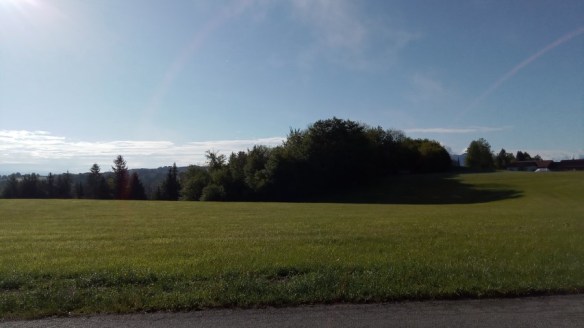
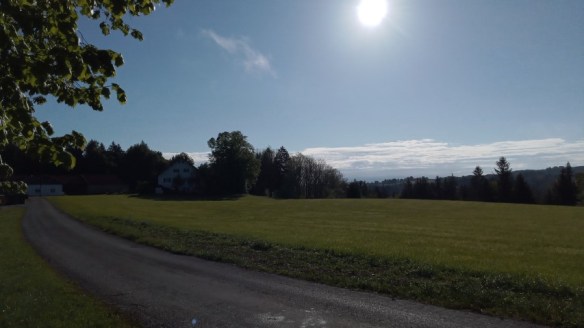
View around spot.
View around spot.
View around spot.
View around spot.
View around spot.
Holy Cross
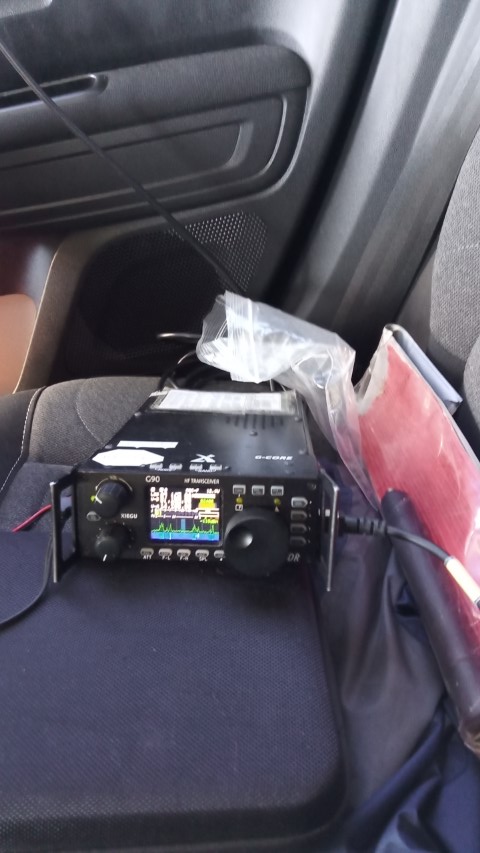
Station
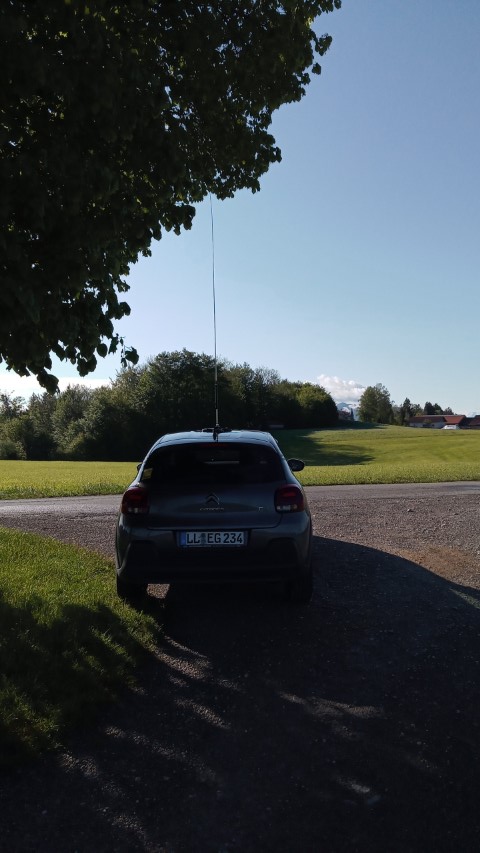
Antenna
Equipment taken:
Xiegu G-90 radio.
Komunica Power HF-PRO2-PLUS-T loaded vertical antenna.
3-magnet car roof mount and single magnet mount (single not used).
8 Ah LifePO4 battery.
2 x 4Ah Eremit LifePO4 batteries (not used).
Lightweight headphones.
Smartphone for spotting.
Log:
POTA DE-0594/DE-0641/DE-0797/DE-0968/DE-1059
Conclusions:
This was a successful activation and a lovely RF quiet location. Setting up, operating, and shutting down from the PLOTA configuration makes it ideal as part of my “RHINO” attempt. All equipment worked well. Next time, I may check out the other location (same park and trails) for comparison.
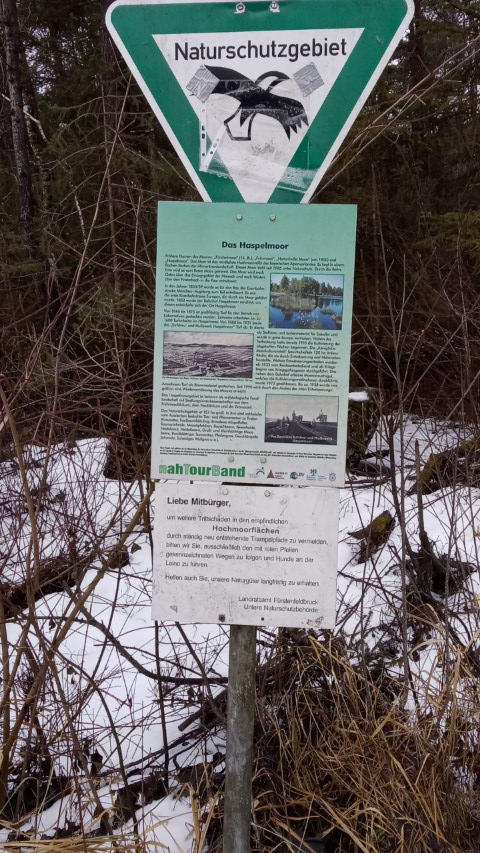
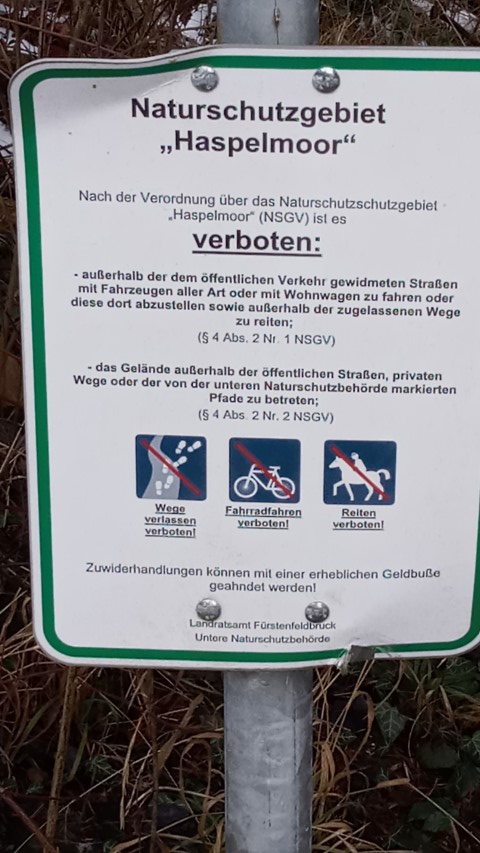
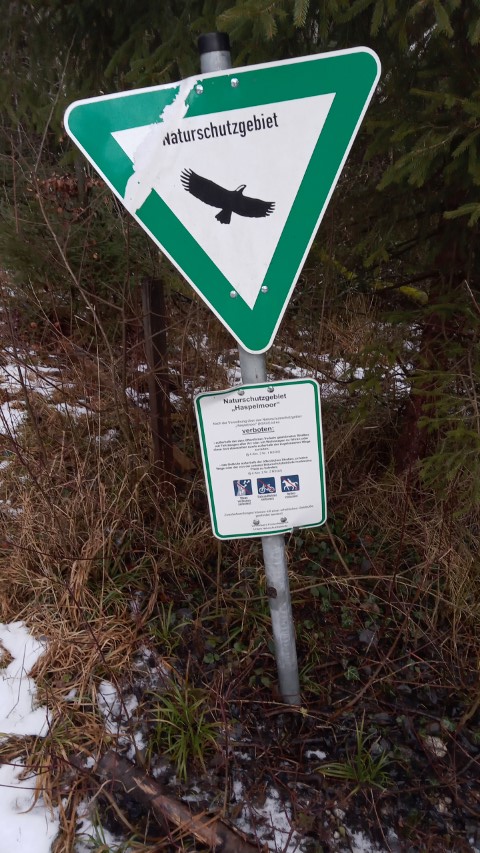
This was another “fill-in” activation after dropping my wife off at her Physio rehab centre. A week earlier, I had tried to activate Haspelmoor, made one contact and then the radio failed on me, first with high VSWR on speech peaks and then with a “COMMUNICATION LOST” error between the head unit and body of the radio, even though they are bolted together, and no firmware upgrade has been performed on one half and not the other.
On getting home, the radio worked perfectly, and I was unable to recreate the issues. This activation, therefore, was to see if I could find the fault under EXACTLY the same circumstances (I packed a second radio as backup in case the problems reoccurred).
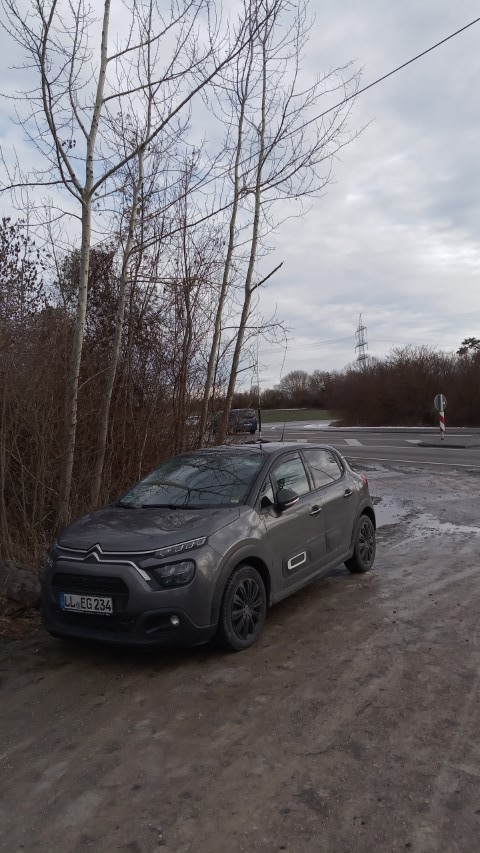
I had several hours for the activation and a chance to get lunch at the only open restaurant in the area (Tuesday’s most restaurants are closed). As it turned out, I had plenty of time to also activate the “4-fer” that I had activated in December, as it was on the route back to my wife’s physical rehabilitation centre. We have just come out of 2 weeks of sub-zero temperatures, but the ground is still frozen and partially ice-covered, so this meant that the activations would again be “PLOTA” activations from within the car, only stepping out to attach or adjust the HF-PRO2 antenna.
As usual, all radio gear was put ready in the car the day before, for this PLOTA.
The Activations
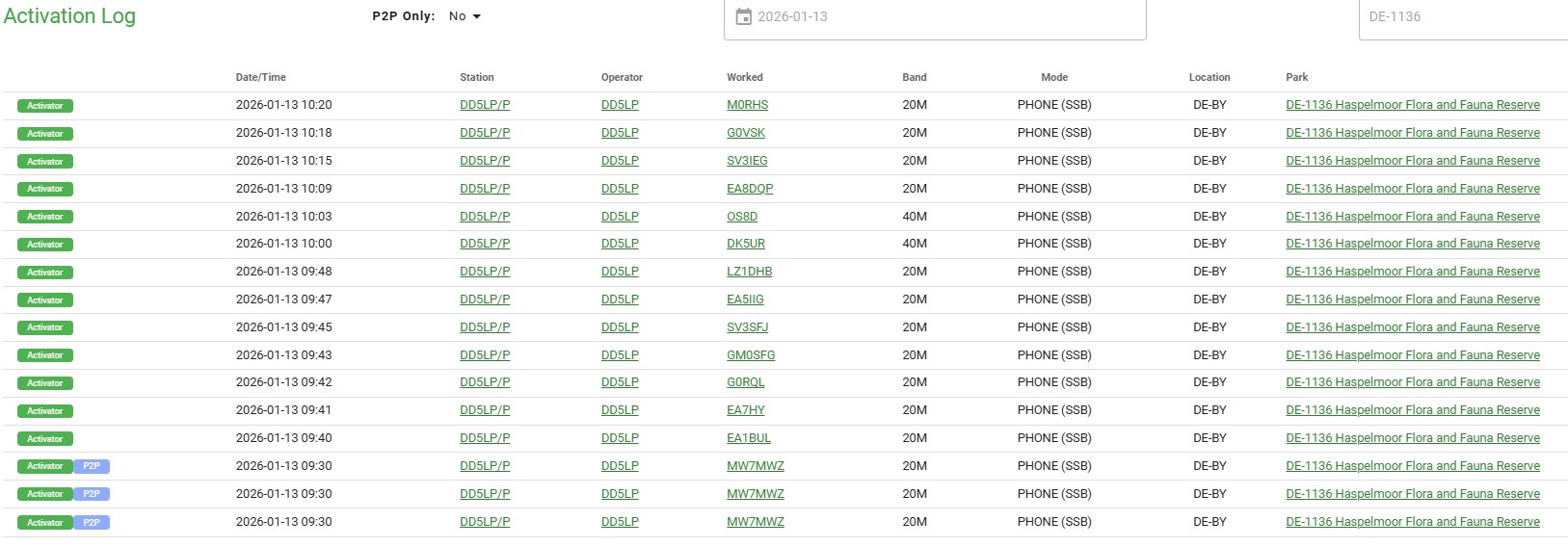
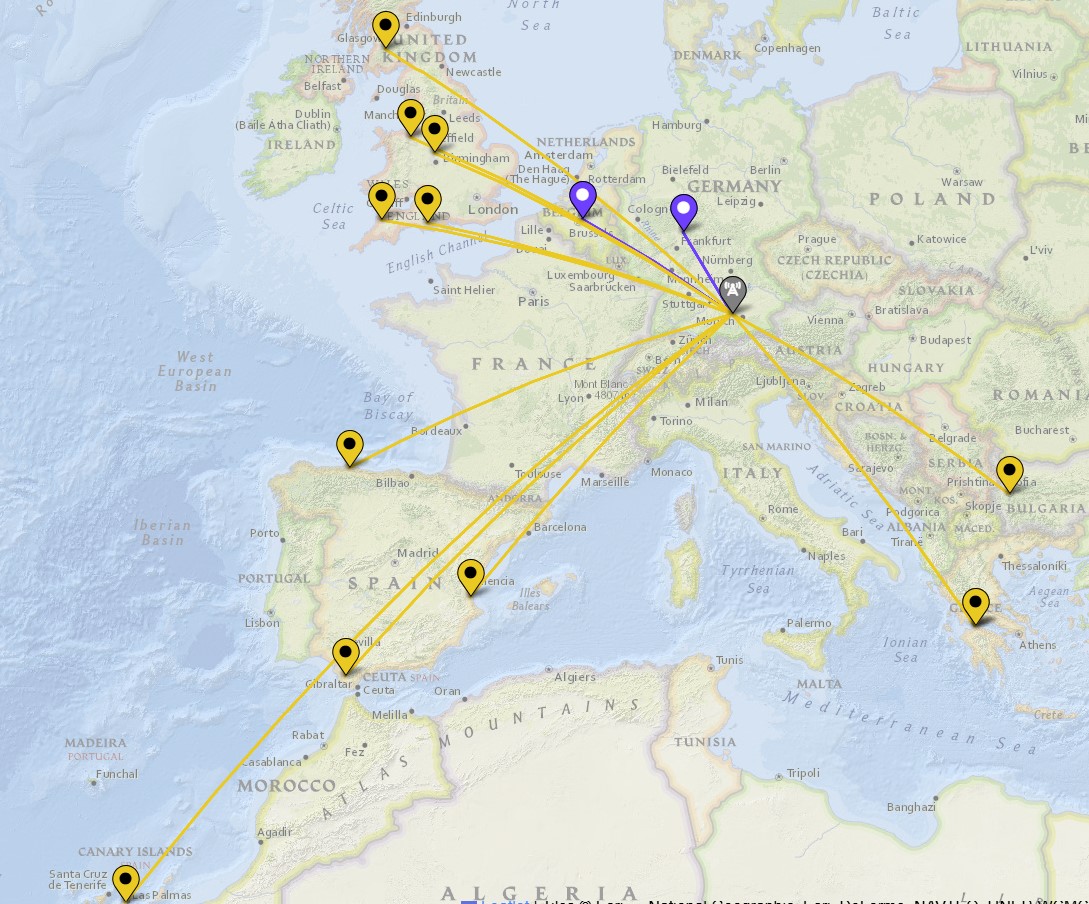
POTA DE-1136 Haspelmoor Flora and Fauna reserve
After dropping my wife off, having driven the route the previous week, it was a clear run down to the same parking spot next to a strange metal (artistic sculpture?) construction as last time in the forested Haspelmoor.
I started on 20 metres, catching one P2P contact into Wales where the activator was in a 3-fer POTA location. Following this a spot in POTA and calling CQ brought in 7 strong calls but thene the well known military digital QRM (OTHR) started wiping out the top of the band. Trying to find a clear frequency on 20m to QSY to was impossible as there was a contest on (normally contests are only allowed on weekends and this was a Wednesday). It turned out later that the increased contest activity were participants in the WWA “World Wide Award” which was running every day in January. It seems that by calling it an “award” rather than a contest, the organisers decided they could run it on weekdays aswell. It certainly has increased activity on the HF bands, but of course, for low-power portable stations, this is very bad news.
So to get away from both of these types of interference, I decided to move to 40 metres. Up to this point, the radio had operated perfectly, so I was starting to think the testing purpose of the activation might come to nothing. Conditions on 40 metres were not good; in this case, the atmospheric noise was high, and it took over ten minutes to just get 2 contacts. However, at this point, I started to see the High SWR on speech peaks problem again and had an idea. I changed the setting on the loading coil on the antenna just a little, to move it away from my calibrated position and then, while the base SWR after running the AATU sat a little higher, I no longer got the sudden high SWR peaks that I had been seeing.
I decided to switch back to 20 metres to get a few more contacts before driving to the restaurant for lunch. Dour more contacts followed in the next 10 minutes before I went QRT.
Regarding the high SWR on 40 metres, at the time, I wasn’t sure why this was happening. Perhaps the antenna’s adjustable coil was wearing out (I have had the antenna at least 8 years) – Perhaps the 3-magnet base?? At least I had a temporary fix for the time being. Later, at home, I think I may have the answer … The calibrations that I made with the antenna were with it on top of our Peugeot car. In the meantime, we have changed to a similarly sized Citroen car, and the actual “ground plane area” and type of steel, the magnetic mount is sat on, could easily give a different ground plane to the antenna. On the higher bands, the ground plane has a lesser effect than on the lower bands, such as 40 metres. It could be that I just need to recalibrate the antenna scale settings on the new car’s roof!
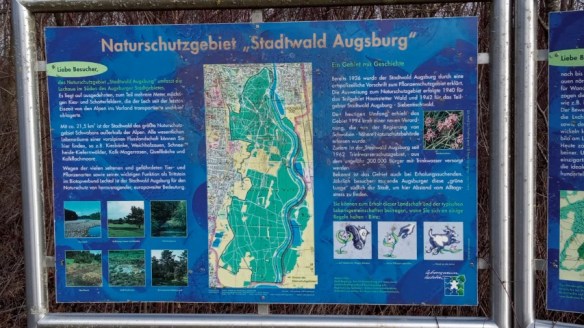
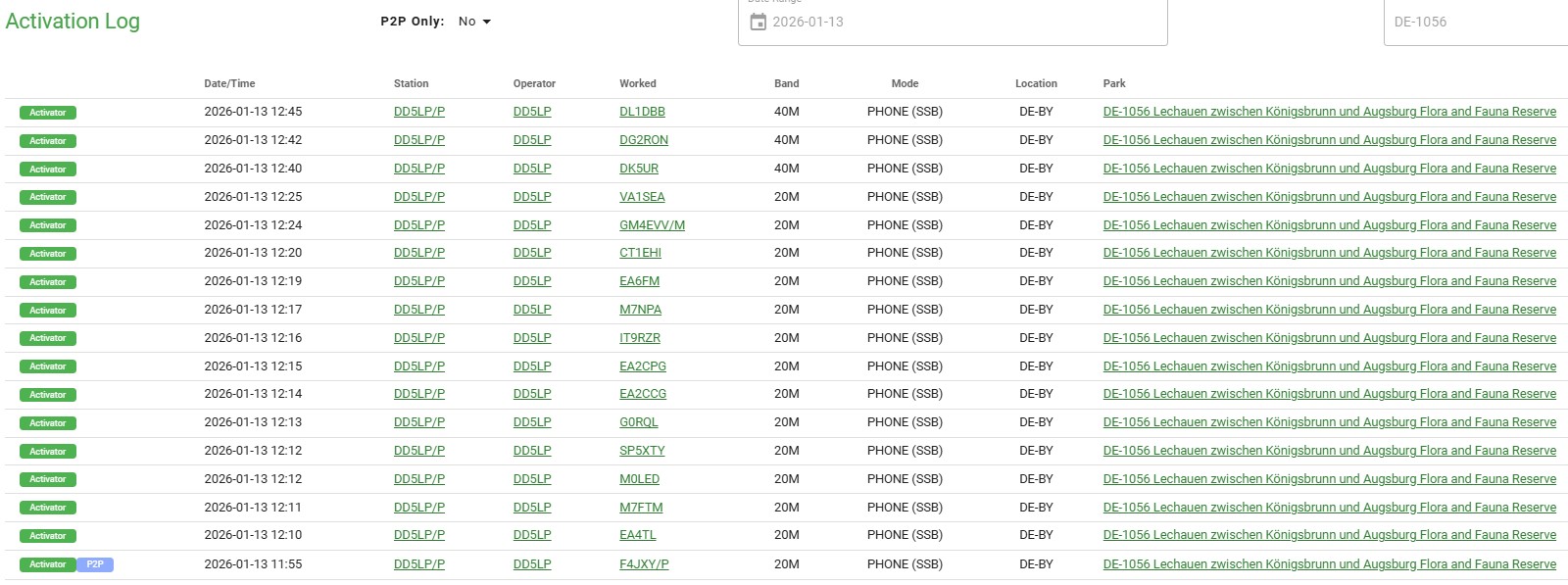
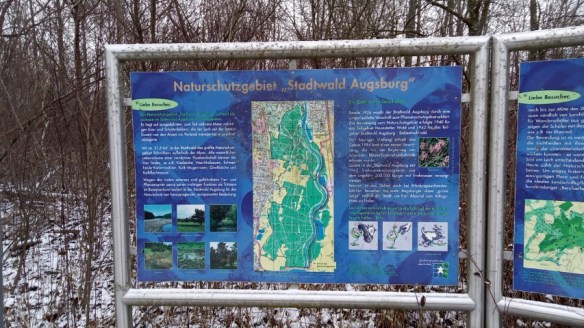
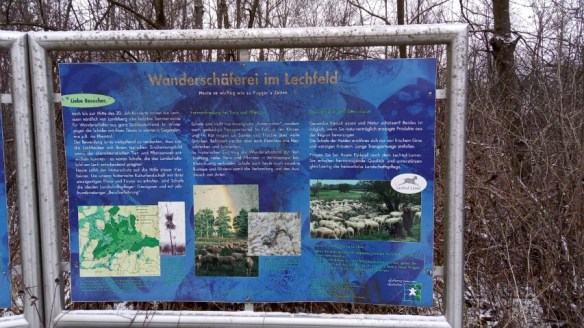
POTA DE-0466 Augsburg Statswald/DE-0942 Via Julia NHT/DE-0968 Romantische strasse/DE-1056 Lechauen
After lunch at a really old-fashioned German restaurant, I saw that I still had nearly three hours of free time before I would need to pick up my wife, so I decided to activate this convenient “4-fer” location on my way back in the direction of the Reha.
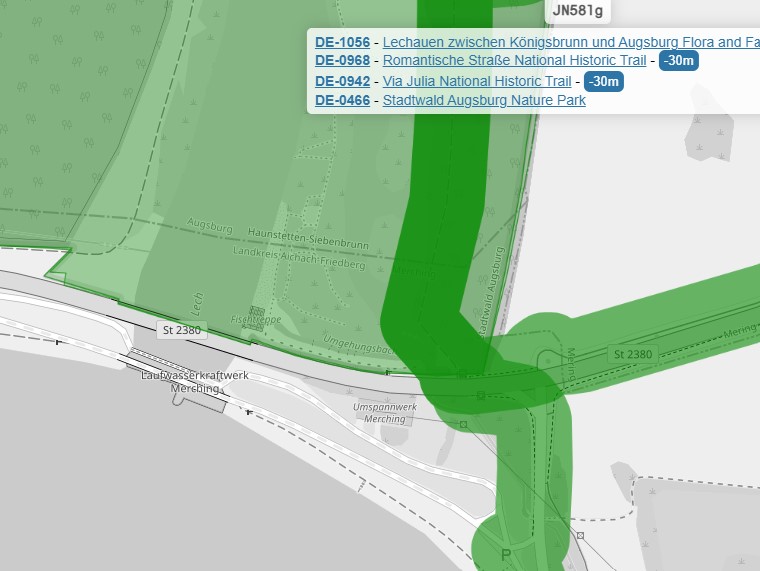
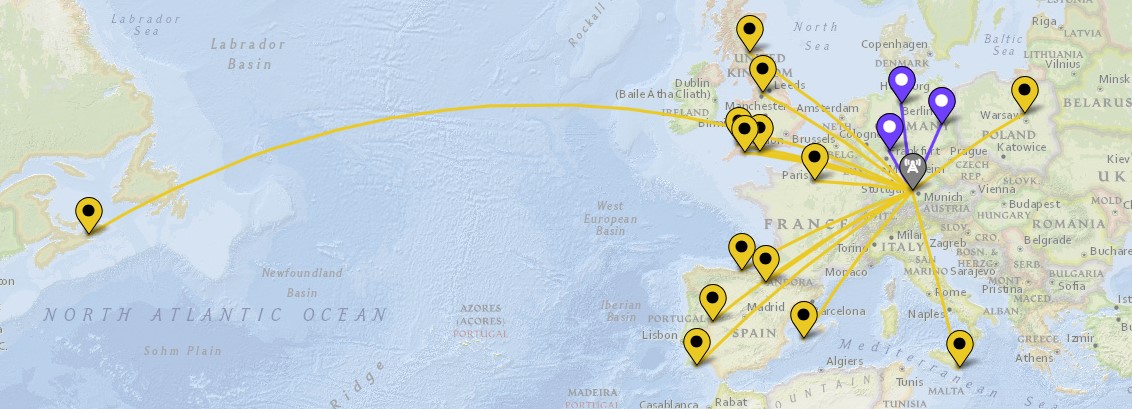
This activation took place early afternoon, not usually a good time for 20 metres contacts but I managed quite a few with the contact of the day being with VA1SEA in Nova scotia, Canada. Apart from that, all contacts were around Europe. The biggest problem with this location was that, being directly on a main road, the ignition and engine controller interference from passing cars and trucks on the wet road was horrendous, but as you’ll see from the map extract below, this “had” to be the location to get all 4 parks in one:
After 14 contacts on 20 metres, I switched to 40 metres, remembering to offset the setting on the loading coil. However, the QRM on 40 metres was even worse than on 20 metres, and I managed only three more contacts, all German stations. The main thing was that my quick fix of off-tuning the antenna worked again.
Once the QRM got too much, I decided to pack up and even had time to do some food shopping before picking up my wife and driving home.
Photos:
DE-1136
Strange construction at parking spot.
Park signs.
Park signs.
Park signs.
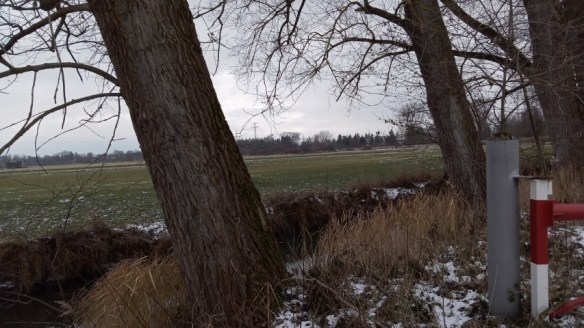
“A walk in the park”.
“A walk in the park”.
“A walk in the park”.
“A walk in the park”.
“A walk in the park”.
Antenna
Station
DE-0466, 0942, 0968, 1056
Park signs.
Park signs.
Park signs.
Park signs.
Park Trail views.
Park Trail views.
Park Trail views.
Park Trail views.
Park Trail views.
Park Trail views.
Antenna
Station
Equipment taken:
Xiegu G-90 radio.
Xiegu X6200 radio (not used)
Komunica Power HF-PRO2-PLUS-T loaded vertical antenna.
3-magnet car roof mount and single magnet mount (single not used).
8 Ah LifePO4 battery.
2 x 4Ah Eremit LifePO4 batteries (not used).
Lightweight headphones.
Smartphone for spotting.
Log:
DE-1136
POTA DE-0466/DE-0942/DE-0968/DE-1056
Conclusions:
Overall, these two activations went well, and if I have indeed now found the reason for the earlier problems, it was worth doing the activations. That contact into Canada out of nowhere was the “icing on the cake” and VA1SEA must have a fantastic station set-up!
This was another “fill-in” activation after dropping my wife off at her Physio rehab centre. I had several hours for these activations, even with a chance to get lunch in between the two locations, so I was to take them at a slow pace. The sub-zero temperatures meant that they would be “PLOTA” activations from within the car, only stepping out to attach or adjust the HF-PRO2 antenna.
As usual, all radio gear was put ready in the car for this PLOTA.
The Activations
POTA DE-0466 Augsburg Statswald/DE-0942 Via Julia NHT/DE-0968 Romantische strasse/DE-1056 Lechauen
After dropping the wife off, this first location was only about a 10-minute drive. Having checked maps, I had found this POTA 4-fer, although the parking was a little restricted (more a pull-in than an actual parking area, but used by locals to start jogging from, take their dogs for a walk, etc.).
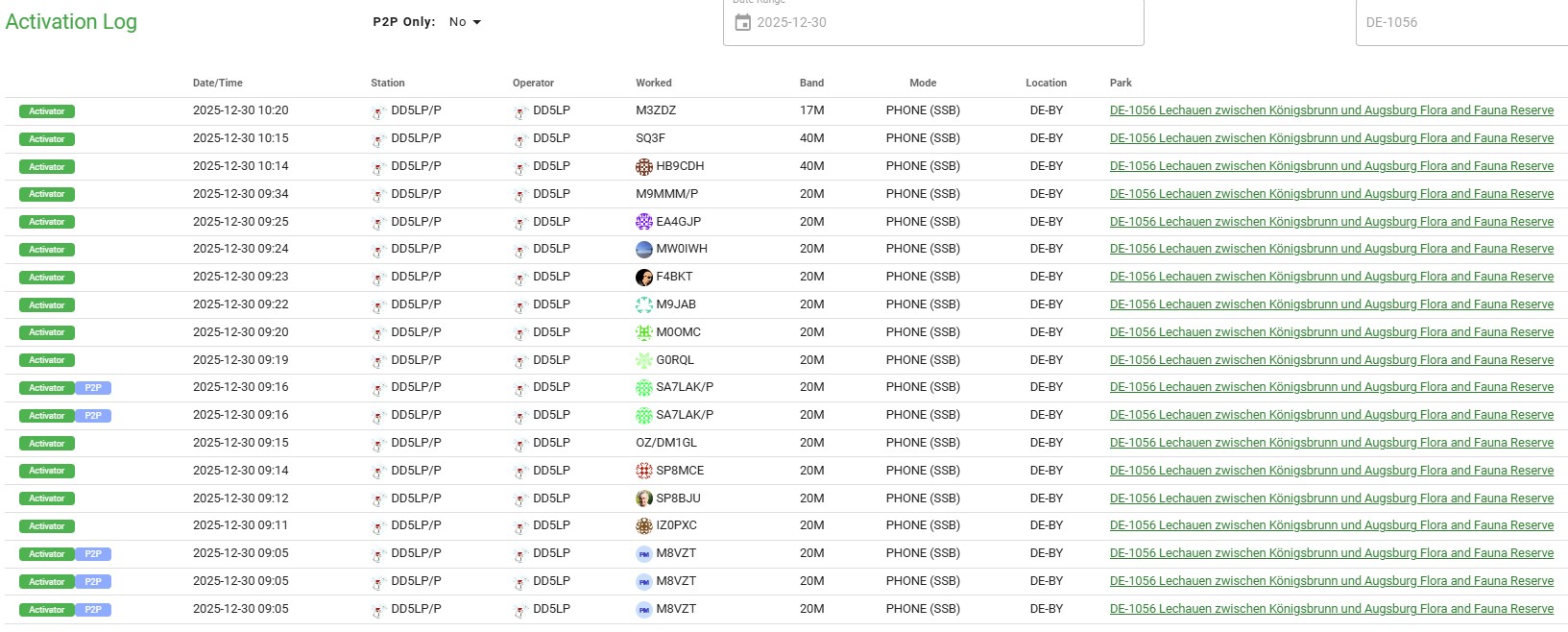
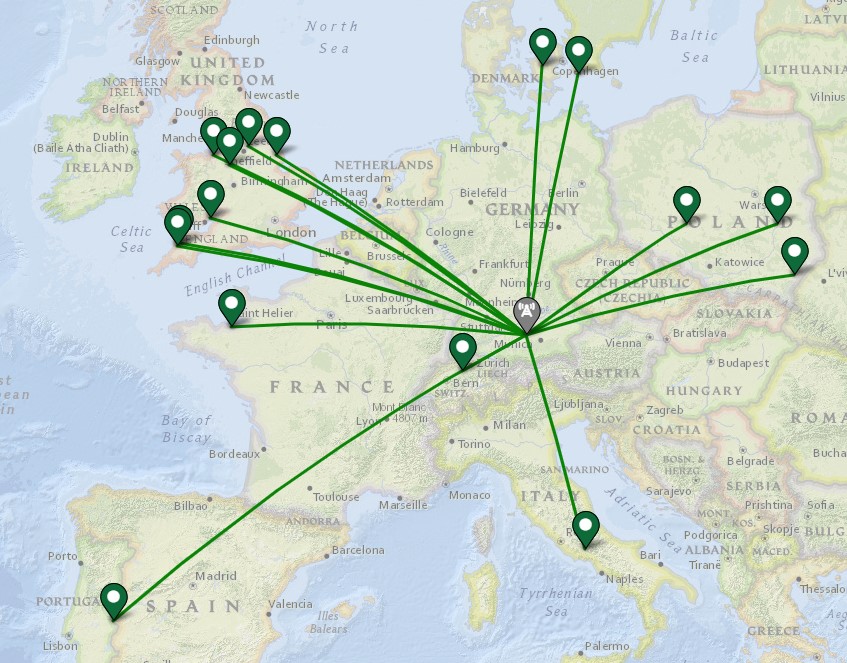
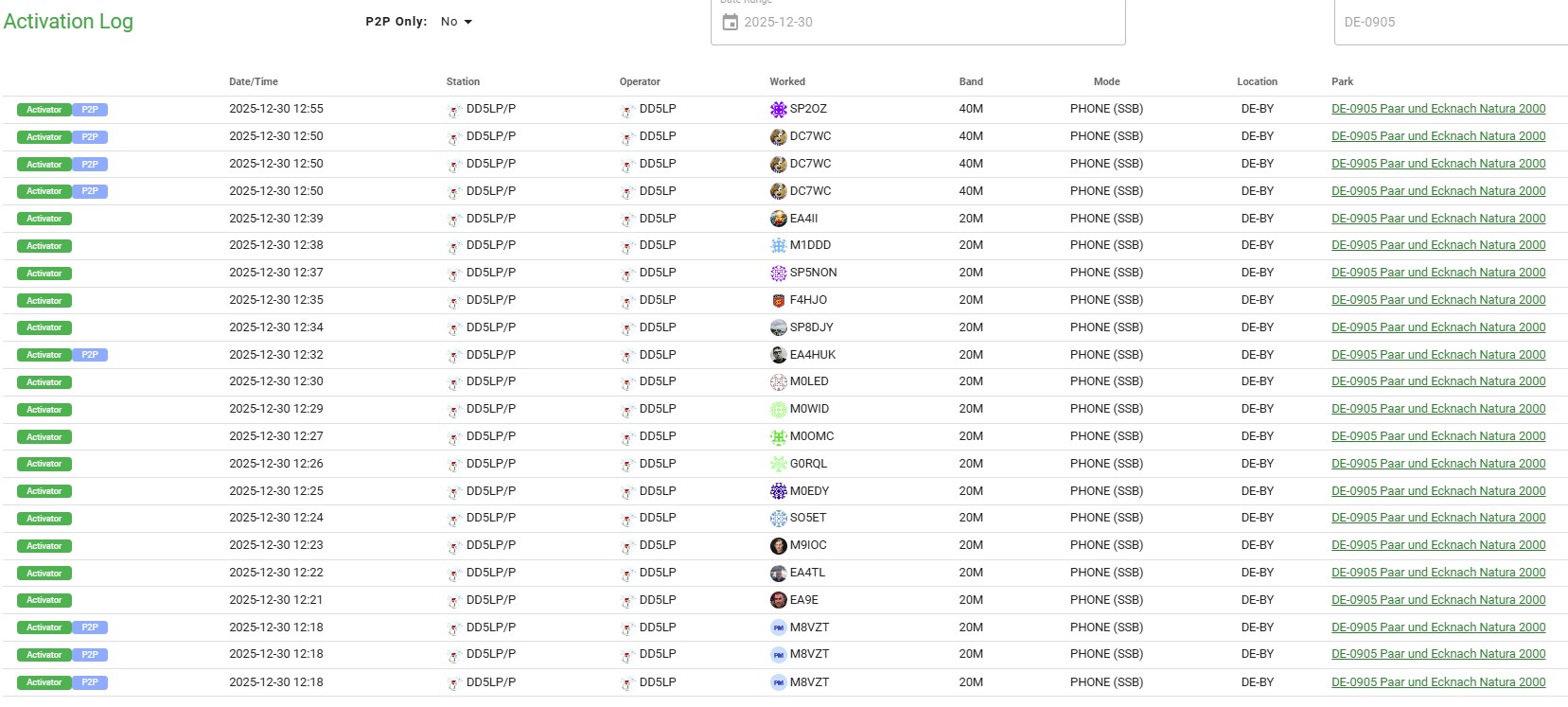
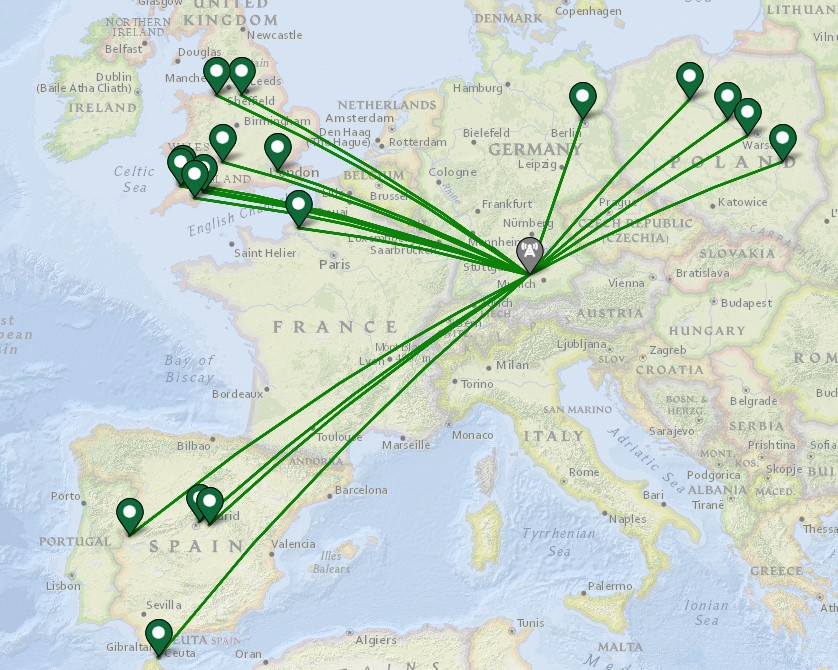
The setup time was short as usual, and since it was around 10 am local (0900 UTC), I expected the long path on 20m to have closed, which turned out to be the case. My best DX was probably Mike in the UK with his new M9MMM/P call sign. I did, however, manage to establish two P2P contacts in this first session, so that was a plus. Indeed, one station (M8VZT) was in three UK POTA entities, so this was a 4-fer to 3-fer P2P contact.
Mike told me he had worked DX on 15 metres, so once the calls dried up on 20 metres, I moved to 15 metres, where indeed I heard VU2DKI at over S9, but despite trying several times to call him, I could not break the major pile-up that he had going. I also heard a VK6 station on 15m, but too weak to really be able to work. after spotting anf calling on 15m for a while, I decided I was wasting my time as no one was coming back and stations that I could hear on the band were dealing with kw plus stations calling them, so my little 20w signal with a loaded whip as antenna, while certainly arriving at the other station, it was being crushed by the high power stations.
I switched to 40 metres at around 1015 UTC, but my spot on POTA and CQ call only returned two callers. Wanting to try 10 metres before I packed up, I switched bands and, as luck would have it, heard Daryl M3ZDZ on 17m as I switched through. I stopped, changed the antenna setting and then we had an enjoyable chat for 10 minutes. On eventually getting onto 10 metres, I had the same result as on 15 metres – so much DQRM and pile-ups on the band meant that the DX stations I could hear, I could not work.
By this time, I decided it was time to pack up and head for lunch. On checking the map, the restaurant that I had chosen (one of the few in the area who are open on a Tuesday) was closed for the Christmas break, but it seems Google Maps had just been updated the day before. Searching for another restaurant that was shown as open, that turned out to be a kiosk that was only open in summer! In the end, I always had the fallback of the local McDonald’s, which, while difficult to reach in the middle of the industrial area in Mering, was at least open. After a “meal” there, I headed to my second POTA location at the other end of the town.
POTA DE-0905 Paar und Ecknach Natura 2000 park
The access to the parking spot located in Mering in this park needed to drive through a residential area between two main railway lines (I would not like to live in those apartments but I suspect they were at the lower-priced living grade).
I was lucky, one spot was available in the parking area, and I was set up in no time. I started again on 20 metres, and again my first entry in the log was when I called M8VZT as he was still in his 3-fer POTA location. 55 rather than the earlier 59 signal could mean my new location was not as good as the earlier one, or simply that band conditions on 20m had changed. The band suffered QSB on signals from both locations. After 60 quickly obtained contacts on 20m, I switched to 40m to pick up two more P2P contacts, but my spotted CQ call on 40m brought no calls. So I decided to pack up and head back to pick up my wife, arriving 15 minutes early, but after two good activations, reducing the number of parks I have not activated in the area yet.
Photos:
DE-0466, 0942, 0968, 1056
Trail signs
Views around site
Views around site
Views around site
Park details
Park details
Views around site
Views around site
Views around site
Views around site
Views around site
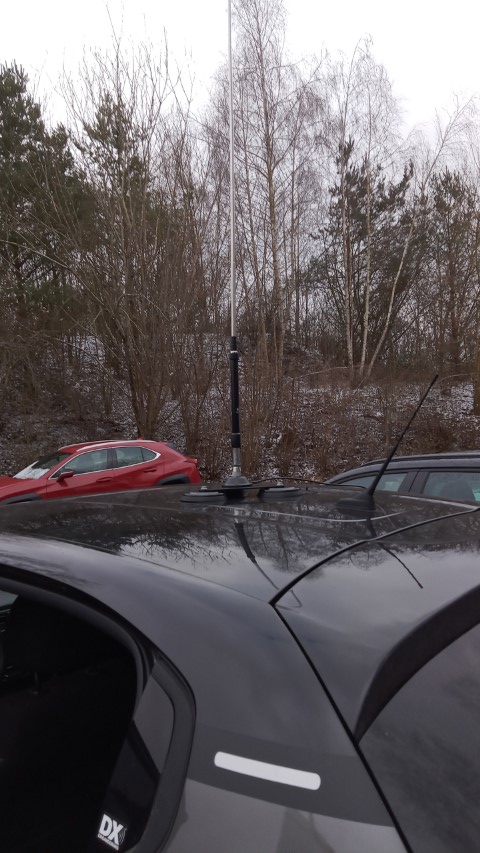
Antenna
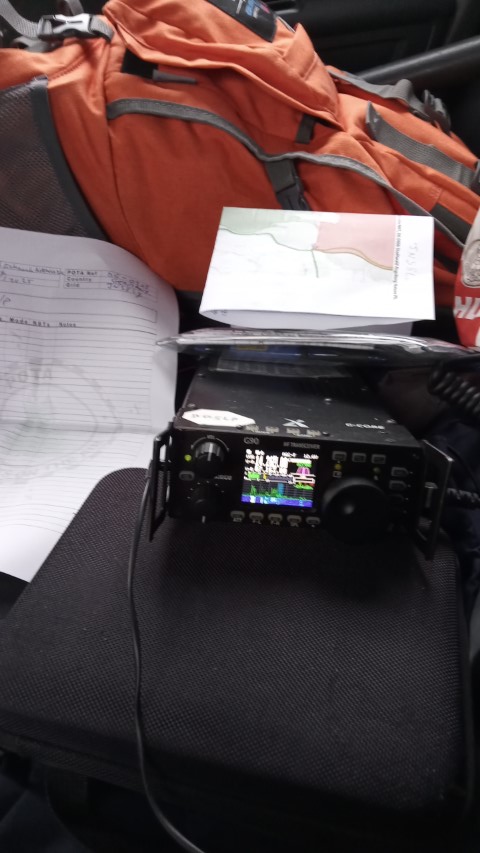
Station
DE-0905
Views around site
Views around site
Views around site
Views around site
Views around site
Views around site
Views around site
Views around site
Views around site
Antenna
Station
Equipment taken:
Xiegu G-90 radio.
Komunica Power HF-PRO2-PLUS-T loaded vertical antenna.
3-magnet car roof mount and single magnet mount (single not used).
8 Ah LifePO4 battery.
2 x 4Ah Eremit LifePO4 batteries (not used).
Lightweight headphones.
Smartphone for spotting.
Log:
POTA DE-0466/DE-0942/DE-0968/DE-1056
POTA DE-0905
Conclusions:
The trouble getting contacts on 15 & 10 metres was disappointing, as the propagation was there. It was purely the disadvantage of only running enough power to make the contact (as required in all amateur radio licences) and the limited antenna, which stopped contacts. Even with a better antenna, I suspect those KW stations will remain a problem for everyone else. Crocodiles.
This was originally going to be another attempt at the park near FFB (DE-0591 Amperauen) that I have not as yet activated, to coincide with Helen VK7XYL and Jon VK7JON being out portable in Tasmania (along with Mike 2E0YYY in England, and as it turned out, also Ernie VK3DET in Victoria, Australia). The problem with the FFB park was that as the start time was around 0700 UTC and the FFB park sits on a small but very busy commuter route, the trip would take too long, so I decided to head to my local park, which conveniently has two POTA trails running through it and one small parking area qualifies for all three making the activation a “3-Fer”.
As I had just received another 4 Ah LifePO4 battery for my trip to Cyprus, this activation would serve to test that and also to test that it recharges without problems.
The Activation
POTA DE-0663 / DE-0791 / DE-0968
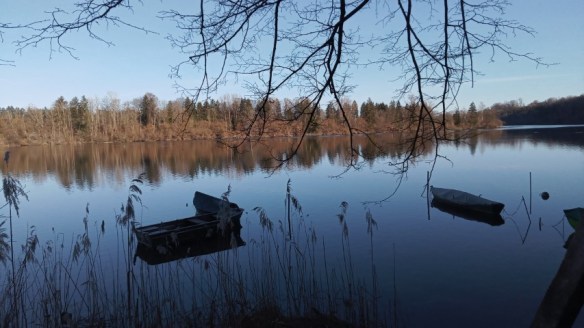
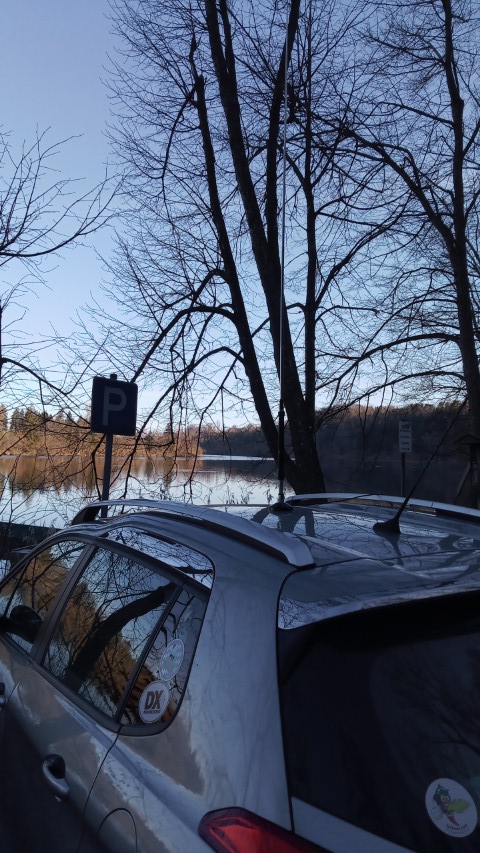
Although my alarm was set for 6:30 am (CET), I was already up and about at 5:30 AM, so leaving the house at 7:15 (0615 UTC) meant that I was on-site at 06:25 UTC.
Unfortunately, the forestry commission had also decided this was a good day to trim some trees around the small car park and two large machines were already there to start work. After a chat with the tractor driver, he clarified where they would be working and it would be fine if I parked just about where I had parked the last time that I was here.
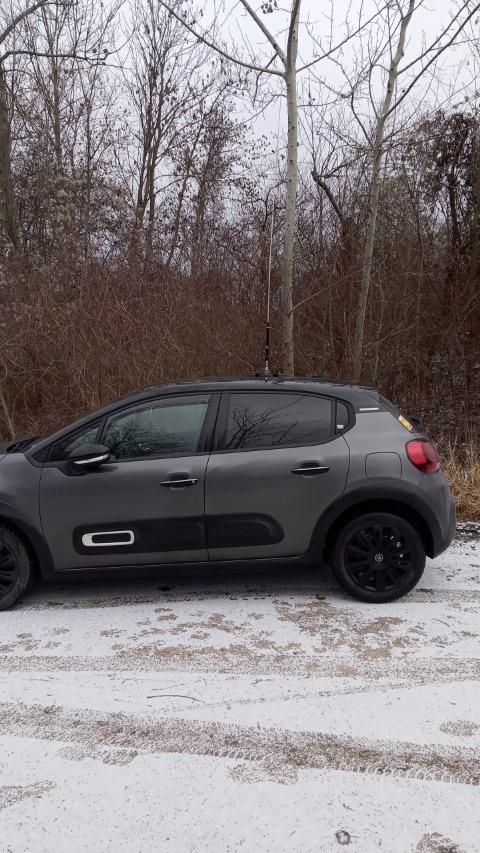
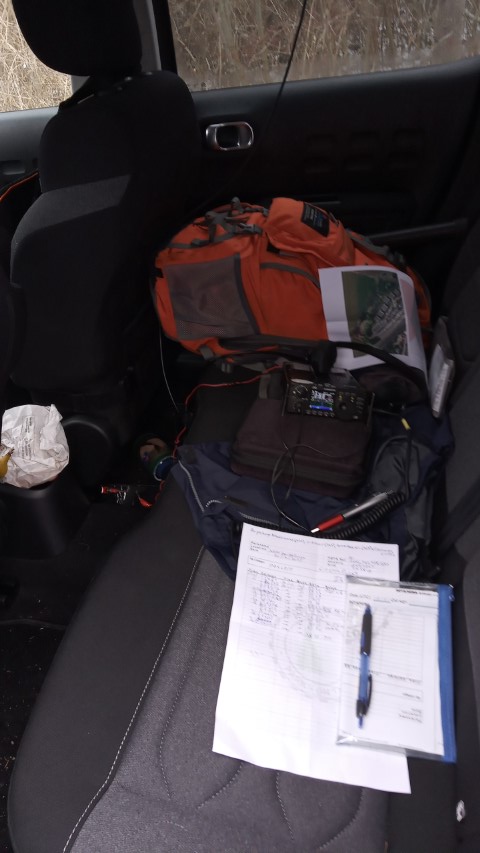
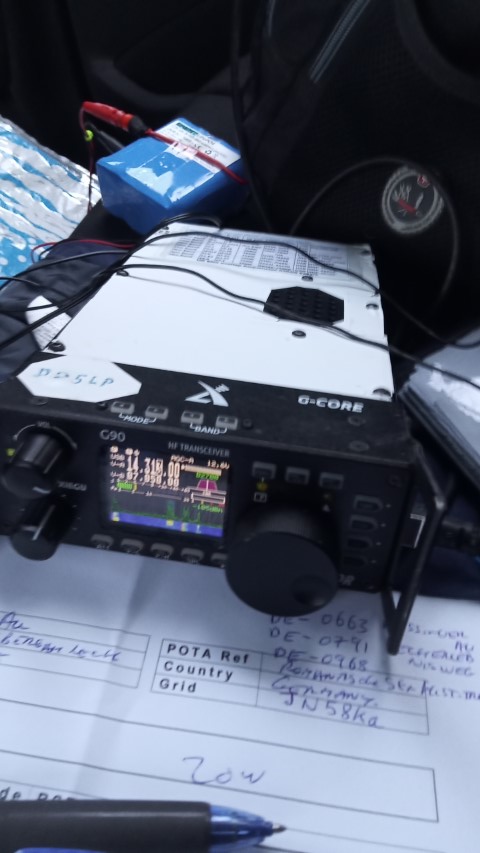
As I had loaded everything in the car the previous day, all that remained to be done was to connect the HF-PRO-2 loaded whip on the roof and the battery to the radio. I immediately heard Helen VK7XYL/M at around S5 but she was talking with Mike 2E0YYY whom I could not hear at all.
After making contacts with Helen VK7XYL/M and Mike VK7MD/M and having received only 3-1 reports from them, I decided to take a look at my antenna. I logged the correct loading coil settings about a week ago using the same antenna on the same car roof with my RigExpert antenna analyser, however now checking with the in-built SWR scan in the G90, it was not as good as I expected and adjusting the coil improved things. I wondered why this was but at the time I was more concerned with making contacts again. After this adjust I became several contacts from Poland, the UK and even one from Canada.
Considering the situation afterwards, I suspect the large tractor, towering over my car may easily have de-tuned the antenna.
Getting contacts on 20m took some time, which considering the distance I was getting, I would have thought there would be more contacts but later a caller commented there was a strong station (who I could not hear) a couple of KHz away, splattering over the frequency I was on – this may be part of the reason for a lower number of calls than normal.
As I packed up the forestry guys were also finished and stopping for a coffee.
Photos:
View around site.
View around site.
View around site.
View around site.
View around site.
Park Sign.
Antenna.
Station.
Equipment taken:
Xiegu G-90 radio.
Komunica Power HF-PRO2-PLUS-T loaded vertical antenna.
OPEK single-magnet car roof antenna mount.
2 x 4 Ah LifePO4 battery.
Lightweight headphones.
Smartphone for spotting.
Log:
POTA DE-0663 / DE-0791 / DE-0968
Conclusions:
The activation went well. The new battery worked without issues, so it becomes part of the equipment I will take to Cyprus.
My previous activation attempt failed without any contacts being made from a park near FFB (DE-0591 Amperauen) that I have not as yet activated. The problem was that the ever-reliable G90 radio for some unknown reason kept losing power and when that happened, the radio reset various settings and indeed following one re-power-on, it started to squeal and flash an error message on the screen in red. As I could not do anything in the back of the car, I had to abort and head home.
At home my actions included reloading the radio’s two firmware files, doing a factory reset, replacing the microphone lead as well as building a new power lead for the radio. This was all tested in the shack and the problems did not re-occur but of course, the only true test is to run the radio in the field again. As this was the configuration that I intended to take with me on my holiday to Cyprus in a few weeks, I needed to know that all was now fixed so planned this activation.
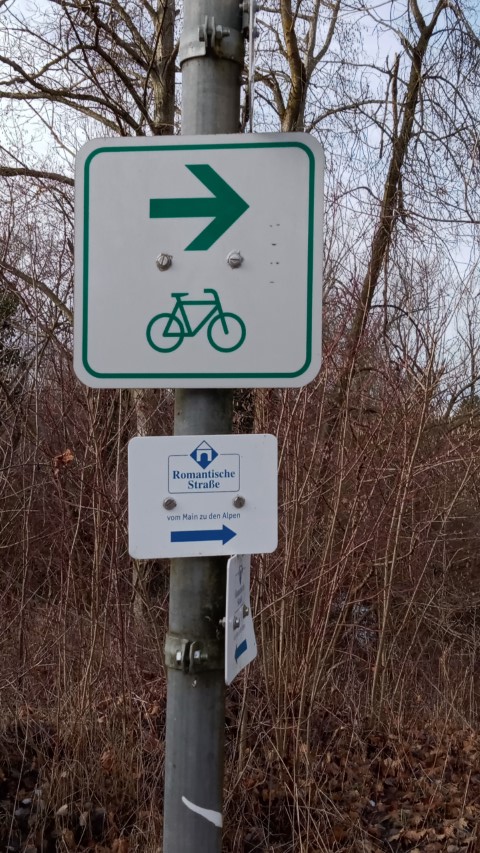
Rather than heading back over to FFB, I decided to just head down to my most local park (DE-0663) / trail (DE-0791) (2-fer) which is about a 10-minute drive away from home. In fact, after completing the activation, I saw that a brand new trail has been added to POTA (DE-0968) and it also runs through my exact location, so this has become a 3-Fer activation, not just a 2-Fer!
The Activation
POTA DE-0663 / DE-0791 / DE-0968
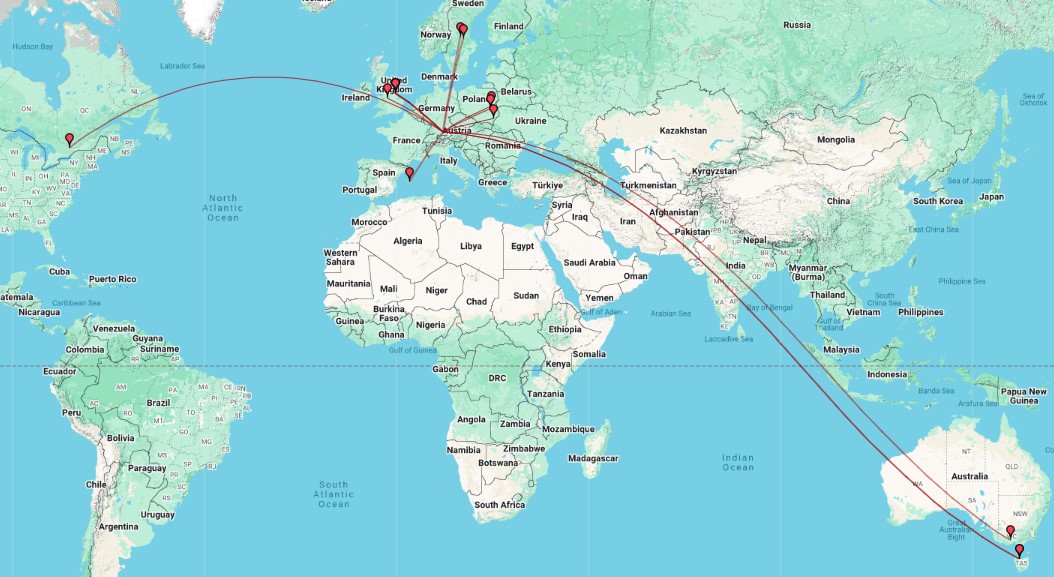
Saturday and Sunday saw major Solar Storms, with high noise levels and a suppressed MUF expected for Monday morning. Nevertheless, I set my alarm for 6 am (CET) to be at the site and set up by 0615 UTC as originally Dave G4AKC (who was on holiday in Cyprus) had planned to come on, but unfortunately, he was not feeling well. 20 metres often opens “locally” across Europe before the long path opens down to VK and hence I had hoped to get a contact with Dave on the rocks alongside the Mediterranean Sea.
Surprisingly after setting up, I could hear Jon VK7JON/P in Penguin on the north coast of Tasmania and we managed a contact despite an S6-S7 noise level at his end. Next in the log was Mike VK7MD/M about 10 km down the coast from Jon. It took a little longer before I made a scratchy contact with Ernie VK3DET, but the signals improved a little later. This was very early for 20m long-path. Mike 2E0YYY was also out portable at Merryton Low near Stoke on Trent but despite trying many times during the 2 hours that I was operating, I was unable to make contact with Mike today. “0 metres was not a good band today – apart from the usual Italian, Greek and Russian stations and the three VK stations, I heard no one on the band.
Switching to 40 metres enabled me to collect enough POTA hunters to qualify the activation. Some told me they had listened for me on 20 metres and heard nothing as the band was so bad.
The main result of this activation, however, was that the radio had operated normally and while I will make at least one more test activation before leaving for Cyprus, I am relieved that this one went so well.
As I packed up rain started and persisted for the next 3-4 hours, so I was lucky after all with the early start.
Photos:
View around site.
View around site.
View around site.
View around site.
View around site.
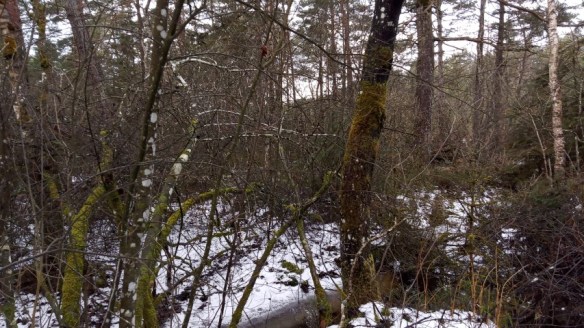
Park sign.
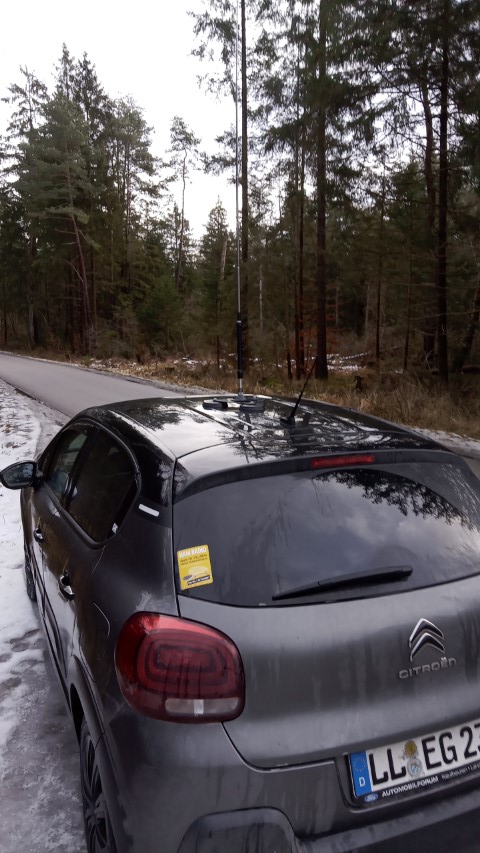
Antenna on car.
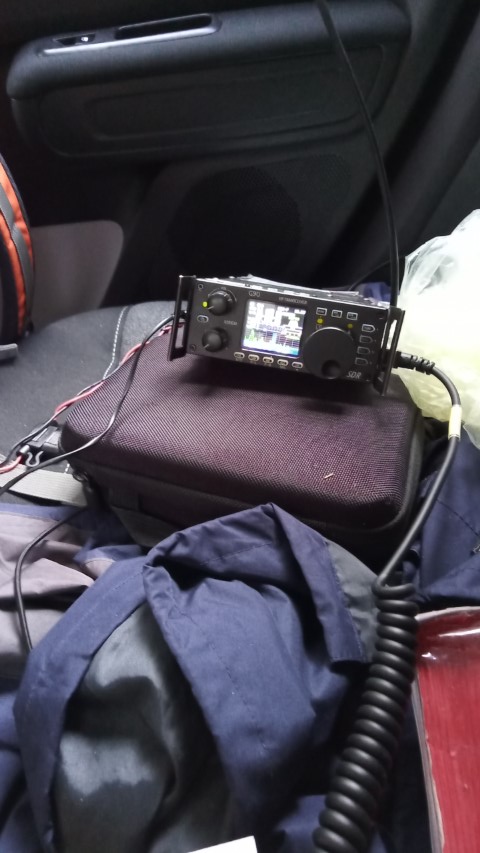
Station.
Equipment taken:
Xiegu G-90 radio.
Komunica Power HF-PRO2-PLUS-T loaded vertical antenna.
OPEK single-magnet car roof antenna mount.
4 Ah LifePO4 battery.
8 & 2Ah Eremit LifePO4 batteries (not used).
Lightweight headphones.
Smartphone for spotting.
Log:
POTA DE-0663 / DE-0791 / DE-0968
Conclusions:
The activation went well. The bonus that I will be listed as the first activator of yet another new trail is a nice bonus. If the next activation using the same equipment goes without issues, I will be more happy with the equipment planned for the Cyprus trip.




















 DD5LP / G8GLM / VK2JI blog
You must be logged in to post a comment.