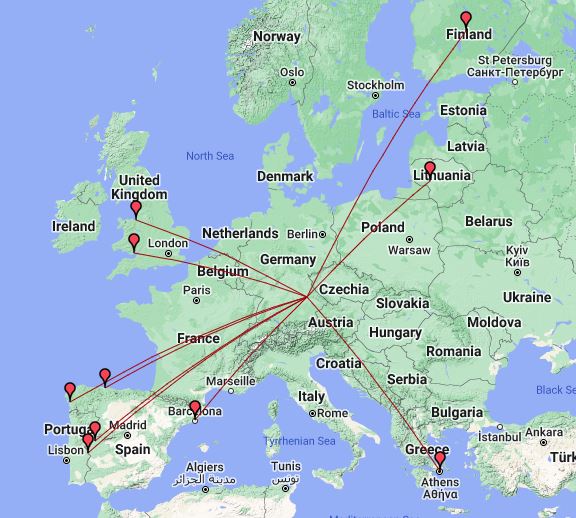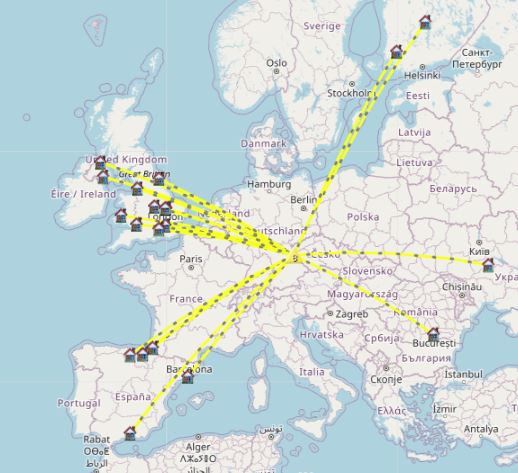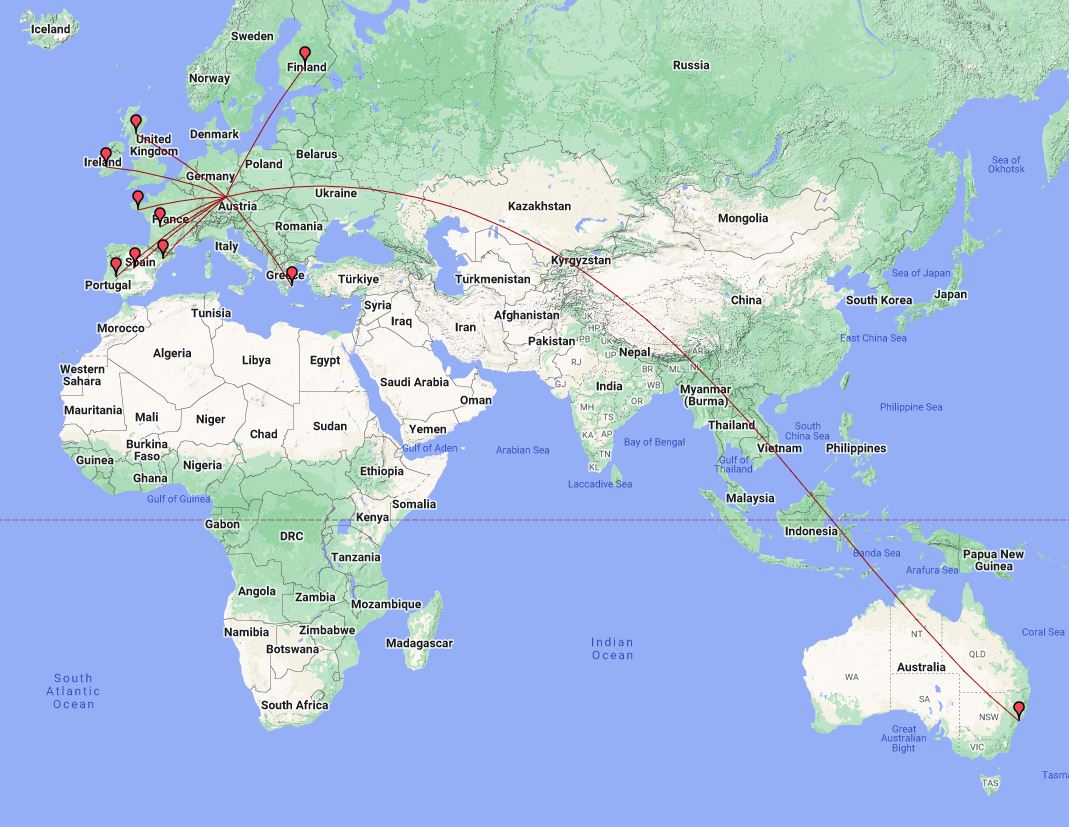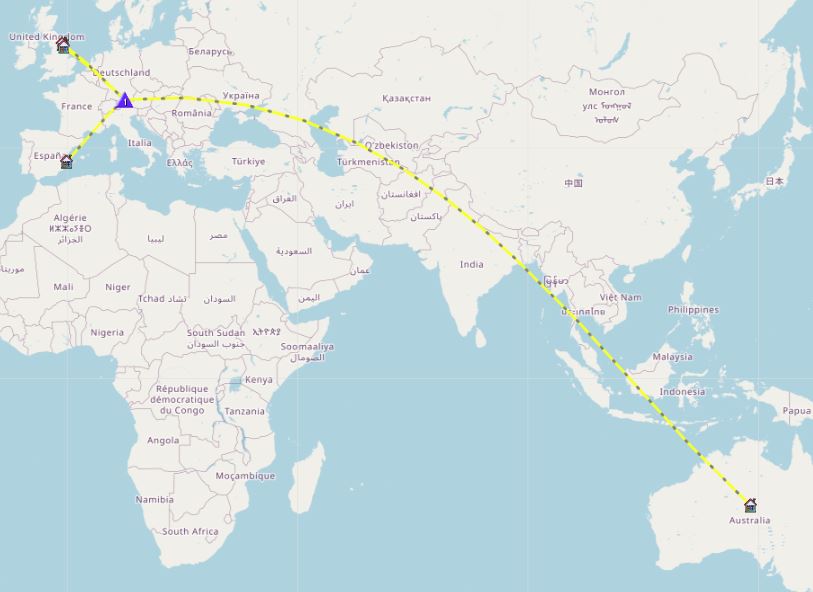
DD5LP/P – April 30th 2024 HEMA DL/HBY-064 & SOTA DL/AM-180 Berndorfer Buchet.

Preparation:

My closest summit is Berndorfer Buchet and as I needed a summit I know to test my latest build of the 2-element HF wire beam, this one pointer was ideal as I had not yet activated it in 2024.

This was the first dry day in about a week and as more rain was expected later in the week, this was to be a quick activation. Just enough time to set up the beam, test it on the analyser and bag a few contacts ideally on 20 and 10 metres.

A relatively late activation was planned, to arrive at the summit by 9 am local (0700 UTC) but despite this the complete station fitted into/onto my 40L backpack would be loaded into the car, Monday evening, the night before to allow an easy departure the next morning.

The Activation

DL/HBY-064 / DL/AM-180 Berndorfer Buchet

As normal I woke 30 minutes before my alarm went off and was all packed and out of the door at 7:30 am as planned for a 9 am (0700 UTC) start. I had hoped to fill the car at a garage on the way but there were so many queued that I decided to leave it for the return journey.

Although sunny, it was still cool. Walking from the parking spot to the open area 15m below the summit, the track was muddy and I hoped that the small area where I intended to set up was not as much of a bog as it was the last time I used it.

Although soft underfoot, the ground had dried enough from the last few days of rain to be usable. After putting down my painter’s sheet, I proceeded to unpack everything from the rucksack. A more complex operation than normal with the HF beam antenna rather than just a dipole or loaded vertical.  Once the mast and antenna were up and the elements/guy ropes positioned, my first task was to run my RigExpert antenna analyser on the beam with it switched to each of its four directions, as while, I had only moved the complete feedpoint electronics from a flat board into a box, there are several things that could have gone wrong. I had done DC connectivity checking but this was the first chance to test the antenna completely.

The first trace (see photos) for the beam on 20 metres (it covers 20 & 10m) with it pointed West, was a little strange with two dips shown. These were OK if a little strange. I then pressed the key fob to turn the antenna to the North and ran another scan – see next photo – this was all over the place. It was worse still when I wanted to clear the trace and try again, the RigExpert analyser would not let me. I tried turning it off – nothing! the trace stayed. Unplugged the coax, no change, so there was nothing for it, but to take the back off and remove the batteries, which I did and I was able to turn the unit on again, but as soon as I tried to take a trace again (this time with the antenna switched back to the known good West direction) the same mess on the screen and the unit had hung up. Luckily I have seen this before – these units don’t like low battery voltage and after once again removing and replacing the batteries, I could see on the startup display that the batteries were low. So, as I had no spare batteries with me I put the analyser away and continued to set up the radio, hoping that the antenna was OK.

Well, the first station in the log was Ernie VK3DET with a 5-5 in both directions, so I guess the antenna was working. Band conditions were all over the place though. Some DX stations (VK4 and Jamaica were booming in while others from Finland were not as strong as usual – with the beam switched north). Ernie reported having just worked some portable stations in the UK with S9+ signals and had expected me to be stronger but 20 metres was in such a mess that in the 10 minutes in between signals had dramatically changed.

After spotting myself on the SOTA cluster I tried calling CQ for 10 minutes on 10 metres with no responders. All I could hear was the local 10m beacon about 25 km to my south – I used this to check the antennas directivity and as before I got 2 S-points less signal off the back and 1 S-point less off the sides. That said, this was not a complete test for the antenna and I will need to plan to go out again and check it with the analyser again, now that it is working fine with some new batteries.

20m had really deep QSB but at least the weather stayed fine long enough for me to complete the activation.  

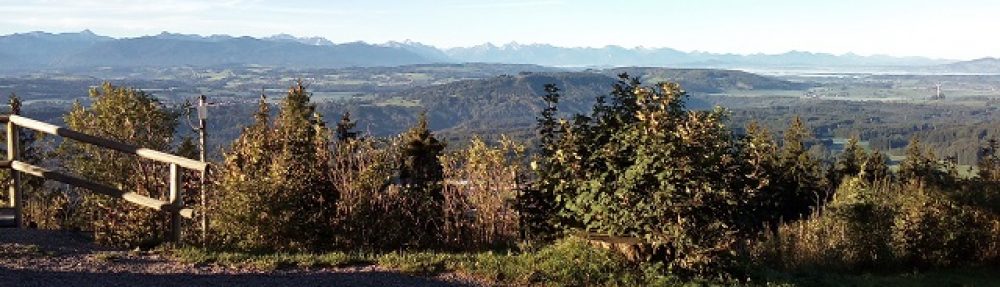
Photos:

This slideshow requires JavaScript.

Equipment taken:

  • Mountaintop travelling 40-litre rucksack.
  • Xiegu G90 radio.
  • Screw-in sun umbrella base.
  • 7 Metre Zita Fibreglass mast.
  • Komunica Power HF-Pro2-PLUS-T loaded vertical antenna and tripod (not used)
  • Remote switched 2-element wire HF trapped elements beam for 20 & 10m.
  • 4 Ah Eremit LifePO4 battery.
  • 4 Ah LiHV battery(not used).
  • Painter’s thick plastic sheet.
  • Gardener’s kneeling pad.
  • Electrical hand warmer.
  • Suncream.
  • Lightweight headphones.
  • Smartphone for SOTA spotting.
  • RigExpert AA-30 Antenna Analyser. 

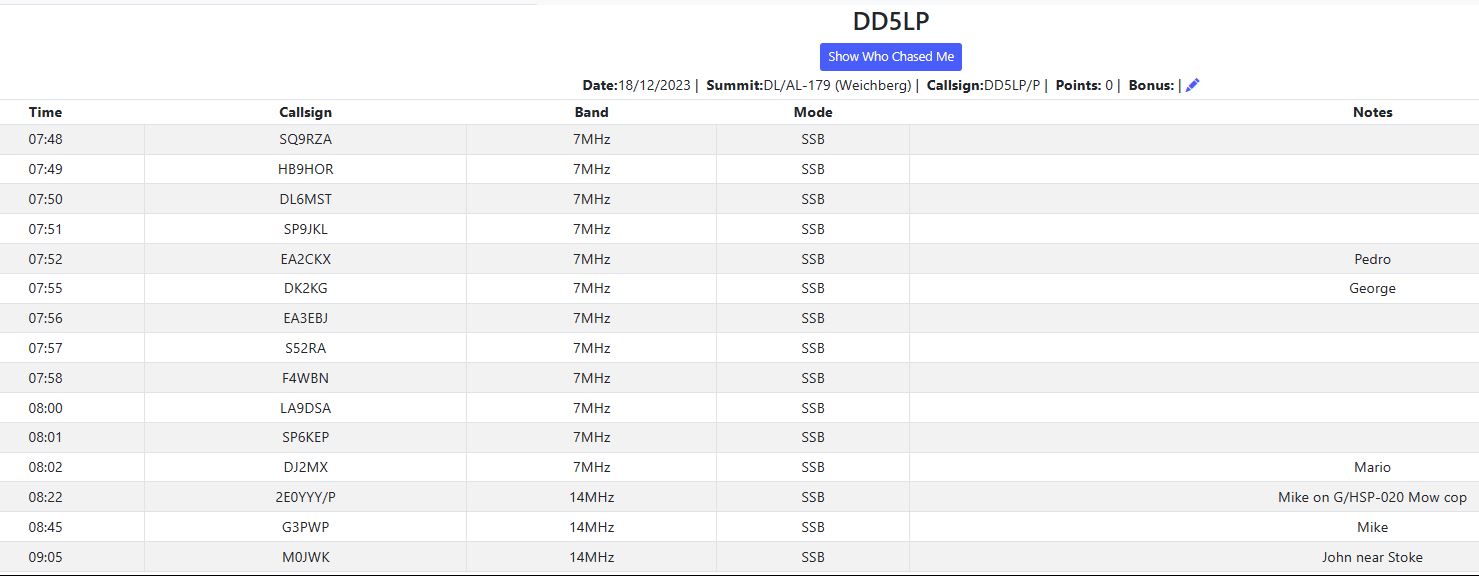
Log:

HEMA DL/HBY-064 Berndorfer Buchet


SOTA DL/AM-180 Berndorfer Buchet


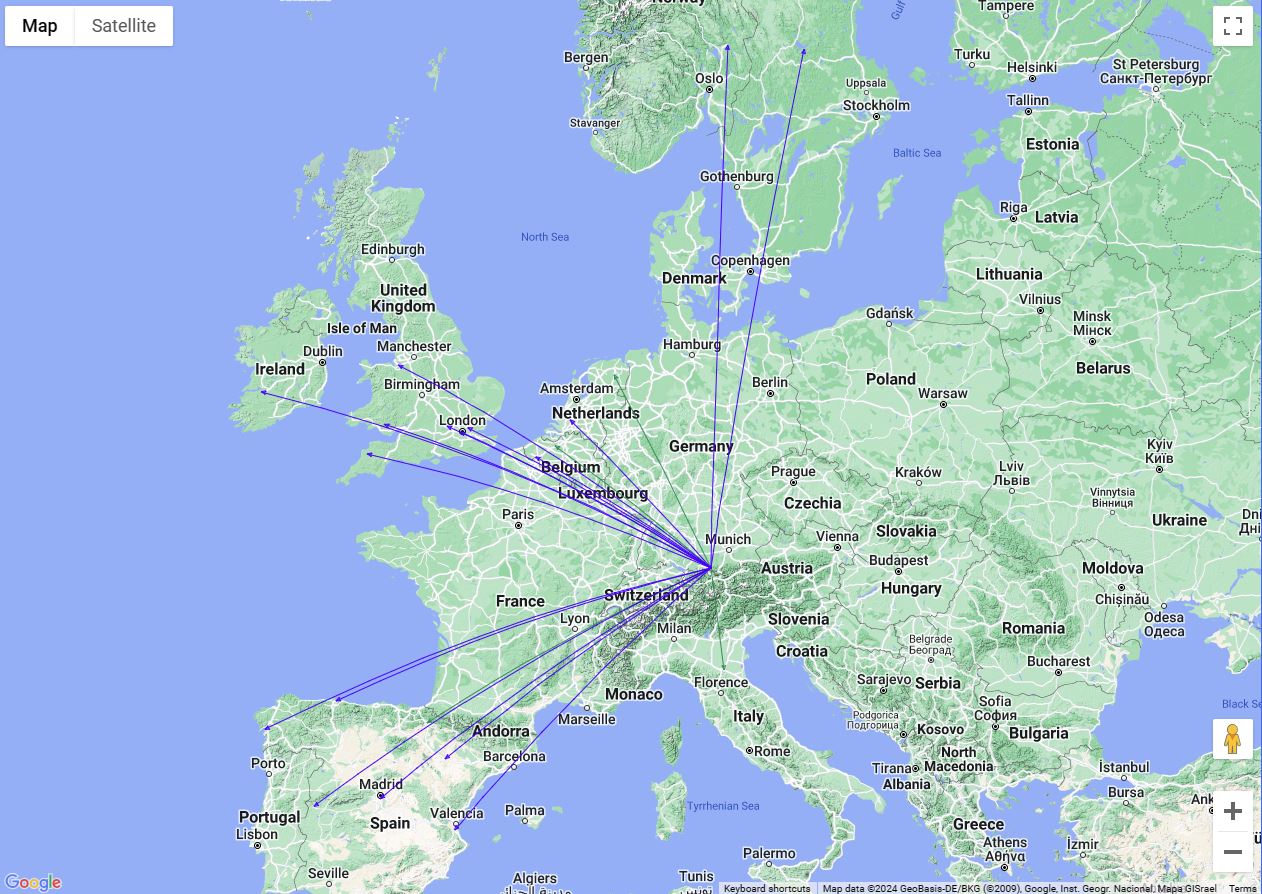
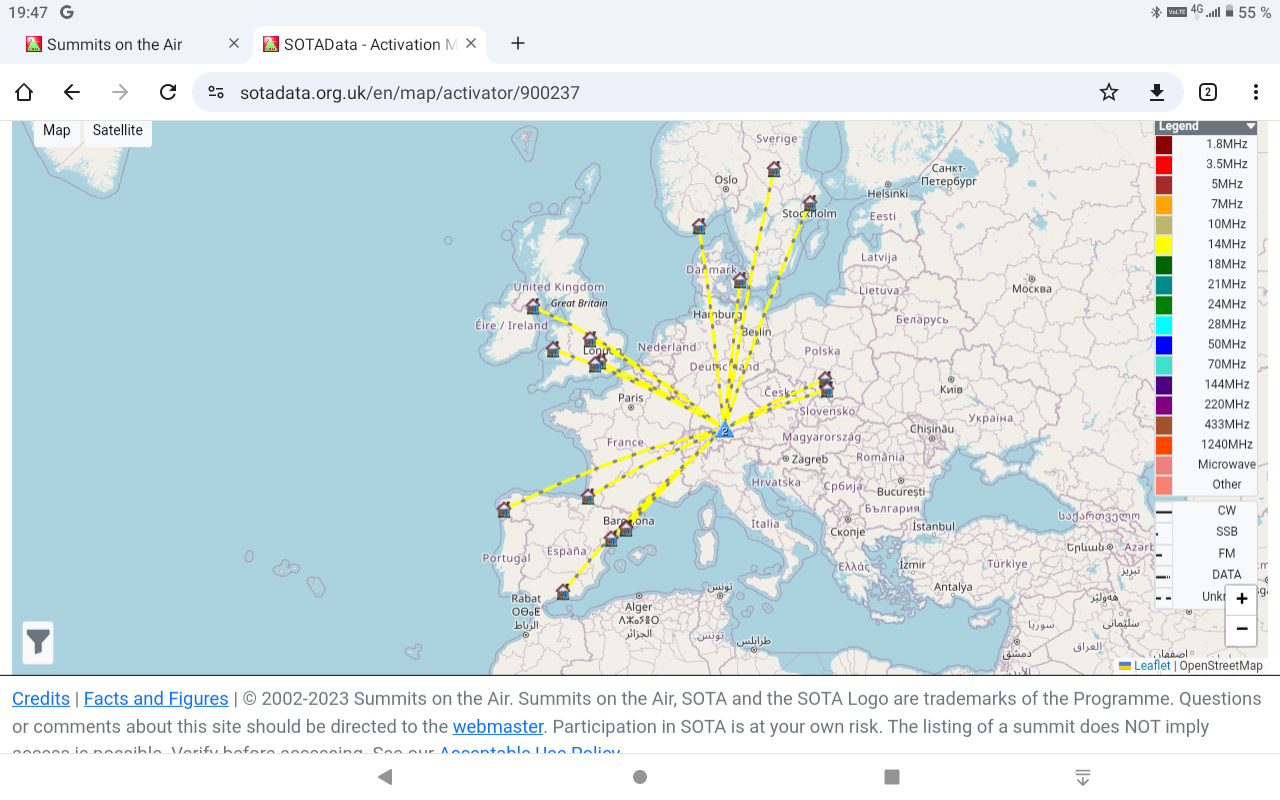
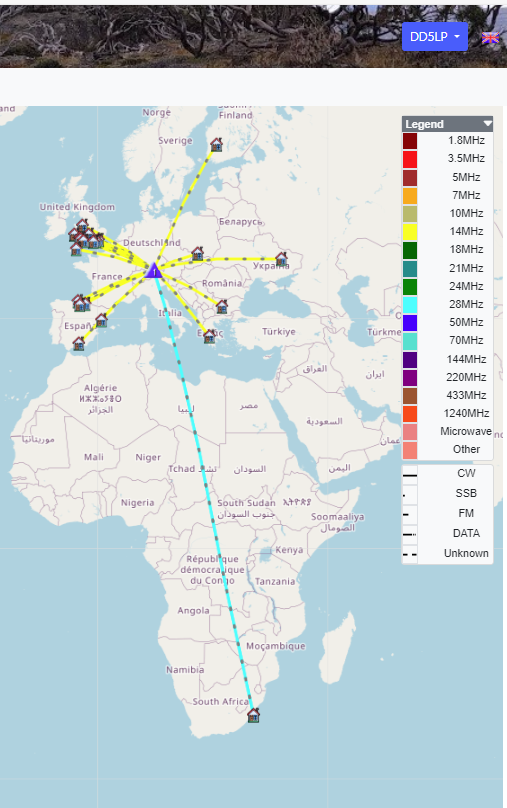
Contacts map
Conclusions:

  • You can never predict what will happen. Thankfully the crazy readings from the RigExpert were caused indeed only because of flat batteries.

  • The band conditions were disappointing overall compared to activations a couple of weeks earlier.

73 ’til the next summit.


DD5LP/P – April 16-19 2024 – Short Break to the Oberpfälz with POTA/HEMA/SOTA activations.

Preparation:

A short 3-night break with the family to the Oberpfälz region (in English Upper Plantine) of Bavaria near the Czech/German border brought the chance of some portable radio activations. The problem of planning ahead with this trip was the uncertainty of the weather with high winds rain and even snow forecast as possibilities, this was going to have to be, grab the activation when you can. Our base for the short stay was the medieval town of Nabburg between Regensburg and Weiden. The Oberpfälzerwald nature park covers a large area of land around our base and hence the likelihood would be that POTA DE-0017 would be activated at the same time as a HEMA or SOTA summit. Very near to the town was an unactivated HEMA summit Darlesberg and this would most likely be the summit in the park, dual activation. The only reasonable summit to take the family to was Fahrenberg (DM/BM-321) and this 8-point, drive-up summit is in the next POTA park northwards, DE-0024 Nordlicheroberpfälzerwald NP so this could be a combined SOTA/POTA activation. On the way to our holiday flat, my wife wanted to see an art exhibition in Regensburg, so this was planned to coincide with me activating the Donaupark which is within Regensburg city.

The equipment would be the 6m telescopic fishing pole, umbrella base and the 404-UL OCF dipole from Aerial-59. The reason not to use the usual linked dipole was the probably need for band changing given the variable radio conditions present. This set-up would be used for the summit activations and the Komunica HF-Pro2-Plus-T on a mag mount on the car roof for the POTA activation from the Regensburg park (or any others that might be needed/possible). 

The Activations

Tuesday 16th April – POTA DE-0376 DonauPark.

Apart from a delay finding my way to the parking area in this city park, the planned combination of dropping the wife off at the gallery, driving to the park, taking our dog for a walk, setting up the radio in the car, activating the park (10 contacts needed), closing down and packing away, taking the dog for her second walk and then going back to pick up my wife, went to plan and we were able to continue our journey on to our flat in Nabburg.

The activation itself brought in strong signals from around Europe on 20m but contacts number nine and ten took a little longer to get than the first eight which started me worrying a little that I would not manage the needed number of contacts in the time I had available. I tried 40 metres but with so many stations on that band, it was impossible to find a free frequency to call CQ on and when I did eventually find one, after calling CQ another station starting calling CQ without even asking if the frequency was free. It was a jungle of animals on 40 metres. Luckily I did manage to get the needed ten contacts on 20 metres. 10 metres was totally closed at the time.

Wednesday 17th April – POTA/SOTA DE-0024 NordlicherOberpfälzerWald NP / DM-BM-321 Fahrenberg.

As the first day proper of our holiday we had planned to split this between radio and visiting the town of Weiden about 5 km north of Nabburg and that’s what we did, We spent the showery morning in Weiden (well worth a look, especially in the large church there) and by midday, we were heading up to the Fahrenberg. Unfortunately, the restaurant was not open on Wednesdays but again, it has a nice baroque-style church that is worth a visit. Behind the church, there is a perfect grassed area to put the mast and dipole up on and while it was sunny when we got there we did not know how long that would last, so I quickly set up and got calling. An impressive 25 callers got into the log in 16 minutes when the calls dried up on 20 metres I considered switching to 40 metres but as I could see black clouds approaching, I thought better of it and packed up the equipment. Just as I lifted my rucksack to my shoulder the first few flakes of snow started to fall, so timing could not have been better.

As we drove off the snow stopped but it was clear rain at least was on the way.

A good day’s radio operating and sightseeing.

Thursday 18th April – HEMA DL/HBY-226 Darlesberg

This should have been the easiest of the activations. The parking spot I had found on the map was less than 10 minutes drive away from our flat and then it was about a 1.25 km walk up a forest track to a picnic area followed by a smaller walking track of about one kilometre to the summit.

Admittedly with this activation, I carry my rucksack laden with gear for the longest distance but despite that, I did not expect any problems. I arrived at the parking spot around 9 am local time, loaded up and started up the forestry vehicles-only track, the start was a little steeper than I had expected but then it got better. I kept following the main track until after about 45 minutes, it started to go downhill, which made no sense. Rather than take my rucksack off to check my printed-out paper map, I decided to use my smartphone to check how much further it would be to the picnic area. What I saw was that I was on the wrong track. I used Google Maps to start with but then switched to the Mapy.cz app for confirmation which, unfortunately, it gave. about 10 minutes earlier I should have taken another much smaller muddy track (which on the maps is shown as being of the same type as the one I was on – it isn’t). In fact, I was now level with the summit but about 60 metres below it. There was a track to go up through the bush to the summit from this point, but it was a boggy mess and with the steep climb that would have been needed, I decided it was not a good option to try in the drizzle in a remote location. If I slipped there would be no one coming by to help.

I then had to face the decision, of whether to go back and go up the correct track and then join the official walking track to the summit, as originally planned or to abort the attempt. By the time I got back to the junction, I would have walked as far as I would have needed for the complete walk to the summit and then would have to face probably another 30-minute walk. I decided to cancel. Had I been carrying less weight or if the ground had not been so soaked I may have made a different decision. I know now not to rely on my memory of a paper map in my rucksack and either to have it out to check junction by junction or as I did on the return walk to the car, follow my position on an online map.    

Friday 20th April – POTA DE-0017 OberpfälzerWald NP

As the previous day’s activation (which would have been a HEMA/POTA one) had to be aborted, I was still left with the POTA activation available to coincide with a break to our return journey home to allow the dog to have a walk and so it was decided that another car based POTA activation would be made near Steinberger See about 30 minutes drive away from the flat, So after packing all our luggage into the car again (which of course got in the way later when I wanted to get to the radio gear) we set off but unfortunately in this area of Germany, the GPS (navi) doesn’t always see enough satellites to navigate accurately. There is also a US forces training base nearby, so what signals they may be putting out could also be part of the problem for car-based Euro-GPS systems. In any case, we ended up near Wackersdorf (famous for anti-nuclear-power rallies in the 70s) and found a parking spot near some woodland which would serve the purpose needed. So with my wife taking the dog for a walk, I set to, finding the radio equipment mounting the antenna and calling for POTA hunters. The contacts took longer than I am used to with SOTA and again there was time pressure to get the needed ten contacts but as this was around 0715 UTC, long-path on 20m was open into VK and I managed a Park-to-Park contact with VK2USH, which while difficult, especially as it suffered heavy QRM from another station was completed.   

Photos:

POTA DE-0376 Donau Park

This slideshow requires JavaScript.

SOTA DM/BM-321 Fahrenberg / POTA DE-0024 NordlicherOberpfälzerWald NP

This slideshow requires JavaScript.

HEMA DL/HBY-226 Darlesberg (failed attempt)

This slideshow requires JavaScript.

POTA DE-0017 Oberpfälzerwald NP

This slideshow requires JavaScript.

Equipment taken:

  • MountainTop 40-litre rucksack.
  • Xiegu G90.
  • Komunica Power HF-Pro2-PLUS-T loaded vertical antenna. (used with magnetic mount for the first and last activations).
  • Three-magnet car roof antenna mount.
  • Lamdahalbe 6m mini-mast (used on 2nd activation).
  • Aerial-59 404-UL OCF dipole (used on 2nd activation).
  • 4 Ah LifePO4 Eremit battery.
  • 4.5 Ah LiHV battery (not used).
  • Painter’s thick plastic sheet and gardener’s kneeling pad.
  • Lightweight headphones.
  • Smartphone to spot and back-channel comms. 

Logs:

POTA DE-0376 Donau Park

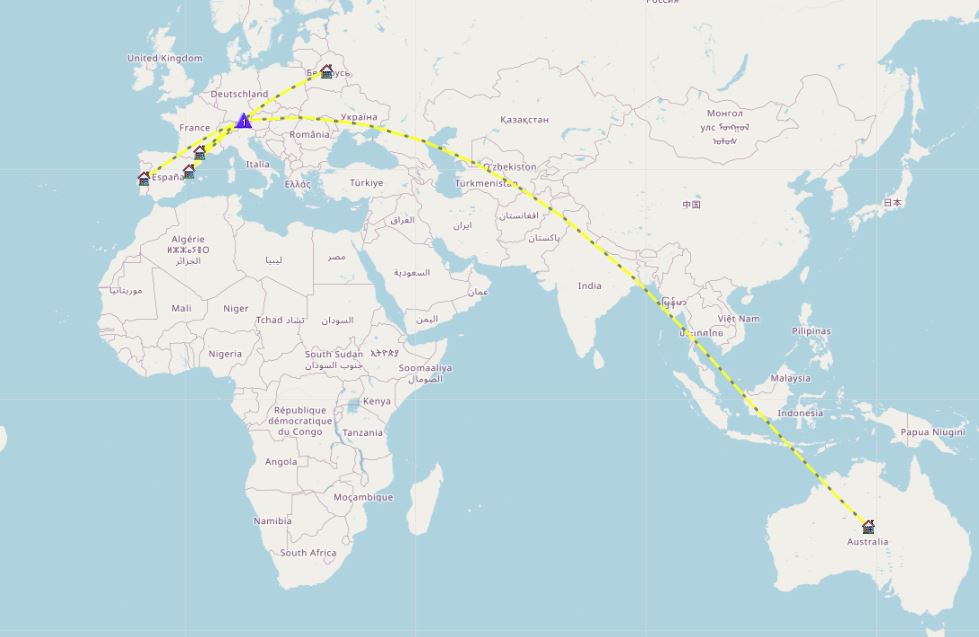
POTA Contacts Map

POTA DE-0024 NordlicherOberPfälzerWald NP

POTA Contacts Map

SOTA DM/BM-321 Fahrenberg

SOTA Contacts map

POTA DE-0017 OberpfälzerWald NP

POTA Contacts Map

Conclusions:

  • The weather was a problem mainly on the third day, combined with the mis-navigation that was a “bad” day – lesson learned to use the Smartphone map/tracking app when attempting to activate a new summit.
  • The Xiegu G90 continues to work surprisingly well even when only using the Komunica Power HF-PRO-2-Plus-T on a mag mount on the car roof. That park-to-park contact with Australia was a highlight of the trip.

73 ’til the next summit/park.


DD5LP/P – March 28th 2024 DL/AM-177 Kirnberg.

Preparation:

This activation was scheduled to get the 3 winter bonus points before the end of March. Unfortunately, the weather wasn’t so good over the last couple of weeks but it looked like Thursday the 28th before lunch should be a pleasant sunny time to enjoy an easy morning activation on this simple summit, and soak up some sunshine. The Wednesday was indeed a sunny morning with showers in the afternoon, so all looked good for Thursday being the same. Rather than testing new versions of antennas as I have been doing on recent activations. This time I would just take the 40m dipole and small (6 metre) mast. I chose to take the Spiderbeam 404-UL rather than the linked dipole as, as well as 20m, I hoped to try for some contacts on 10 metres as part of the current 10 metre challenge. The previous weekend however there had been some really hefty solar activity meaning that 10 metres was unlikely to open but by taking the OCF, I could easily switch bands from the radio without needing to change anything on the antenna.

The Activation

DL/AM-177 Kirnberg

As normal I woke 30 minutes before my alarm went off and was all packed and out of the door at 7:30 am as planned for a 9 am (0800 UTC) start on Kirnberg. I had not realised but the Thursday before Easter is one of, if not the, busiest days on the roads in Germany. A combination of normal traffic, plus people going early on their Easter holidays, people stocking up with food and drink for the long weekend and trucks trying to get their runs completed before being banned from the roads for four days starting on Good Friday. On my route home after the activation, a government road works department had decided this busiest day on the roads, day, was the ideal day to close half of a major road so they could replace some barriers at the side of the busy two-lane “A” road that have needed to be replaced for over a year! The workers put traffic lights in, making it a single-track road and immediately caused a long, long backup of traffic (luckily more in the southern direction as I was heading north). This caused twenty minutes or more delay for travellers within 30 minutes of them starting their work.

On arriving at the normal parking spot for Kirnberg (actually at a Gigersau farm) I was surprised to find a well-prepared parking area for about three cars and a new stoned path up to the summit cross from the parking area. Previously both of these had been a muddy mess, indeed some years ago, I got completely bogged in the parking spot and had to ask the farmer to tow me out with his tractor. These improvements have been paid for by the farmer, not the community and as the cross now forms part of a walking route will get used often.

The set-up for this summit was very simple, the Xiegu G90 radio and the Aerial-51 / Spidebeam 404-UL OCF dipole at 5 metres AGL.

Initially, I started on 20m and contacts from Spain, Finland and the UK before managing a more difficult contact with Ernie VK3DET in Australia. We agreed to try 10m but although I could recognise Ernie’s voice right down in the noise, apart from call signs, I could not understand what he was saying and he could hear nothing from me. this was not a surprise as 10m with the CME hit a few days earlier was opening later than it did the previous week and we were simply too early. Soon after this attempt some of the local feathered community came by as the hens from the farm did what seemed to be their daily round seeking out food in the ground. I had hoped to stay longer and enjoy the sunshine while working more stations today but it was getting colder and while, when I set up there was no wind, there was now an icy cold one and blue skies were starting to fill with clouds.

Back on 20m, I worked another Spanish station and another UK station and then decided to call it a day. I had got enough contacts to qualify the summit and get the winter bonus points but my hope for easy contacts on 10m in the sunshine never happened. 

There’s always another time.

Photos:

This slideshow requires JavaScript.

Equipment taken:

  • Mountaintop travelling 40-litre rucksack.
  • Xiegu G90 radio.
  • Screw-in sun umbrella base.
  • 6 Metre Lambdahalbe mast.
  • Komunica Power HF-Pro2-PLUS-T loaded vertical antenna and tripod (not used)
  • Aerial-51 404-UL 40 metre Off Centre Fed dipole.
  • 4 Ah Eremit LifePO4 battery.
  • 4 Ah LiHV battery(not used).
  • Painter’s thick plastic sheet.
  • Gardener’s kneeling pad.
  • Electrical hand warmer.
  • Lightweight headphones.
  • Smartphone for SOTA spotting.

Log:

DL/AM-177 Kirnberg


Contacts map

Conclusions:

  • You can’t trust weather forecasts. I’d have loved for this to be a longer activation on more bands however it was not to be.

  • The OCF and 6m mast along with the Xiegu G90 are still adequate to the task of bagging DX contacts although 10 metres didn’t play ball this time.

73 ’til the next summit.


DD5LP/P – March 8th 2024 DL/AL-169 Auerberg.

Preparation:

This activation was rescheduled three times because of bad weather. The aim was to activate DL/AL-169 Auerberg, DL/AL-170 Zweiselberg and DL/AL-172 Senklekopf. Thursday afternoon sunshine was predicted to start and continue through Friday.

 These are three different summits, with different levels of difficulty to reach and different amounts of space available for antenna installations.

Auerberg is a relatively easy summit but space is restricted, the wire beam I have been using will not fit in here. The OCF would be used on this summit as it enables quick band changing in what was likely to be cold conditions. The second summit, Zwieselberg has enough open space for the beam however is a difficult and long climb up a track but I wanted to use the beam from this summit. The last planned summit Senklekopf is even more difficult to get to along single-track farm roads and then up the edges of fields rather than tracks. Although there is enough room for the beam, the extra weight to carry up the steep route, meant that for this summit I planned to use my linked dipole. There was however a problem, with Senklekopf being in the afternoon, there was a good chance that 10 metres would be open to North America and my SOTABeams Linked dipole does not have a link in it (yet) for 10 metres.

I realised however, that if I took two of the the linked dipole elements that I had recently built and calibrated for the wire beam, I could easily build a linked dipole with those same bands (10, 12, 15, 17 & 20m) available. So a new feed-point plate with just two element connections was made up and put in the wire beam box.

All was set, three summits, three different antennas – set the alarm for 6:30 am – what could go wrong?

The Activation

DL/AL-169 Auerberg

As normal I woke 30 minutes before my alarm went off and was all packed and out of the door at 7:30 am as planned for a 9 am start on Auerberg. I normally combine Auerberg with Weichberg as they are close to each other but having already activated Weichberg this year I could not get any more points for it, so I effectively drove past the summit and onto Auerberg. There was some early morning fog which I hoped would clear. It did not, rather as I approached Auerberg, it got worse and worse so that I was slowly down considerably from my normal driving speed. Surprisingly as I arrived at the car park for Auerberg, I came out of the fog and into the sunshine however, all around was under about half a metre of snow. This is not such an issue at Auerberg as the walk from the car park up to the church which sits on the actual summit is up steps with a solid handrail. After sliding a little in the car park, however, I wished I had my shoe spikes with me (I did not).

  On arriving at my usual operating position at the rear of the church I was greeted with half a metre of frozen solid snow on top of the benches which need some good repeated kicks to clear off to make space to set down my rucksack and later the radio. I used my normal way to support the 6-metre mast here by “Bongo-tie”ing it to a fence post and running out the two wires from the balun to fence posts along the border of the drop at the rear of the Church. The coax was run back across the path and to the bench and the radio set up. It was 9 am (0800 UTC) exactly.

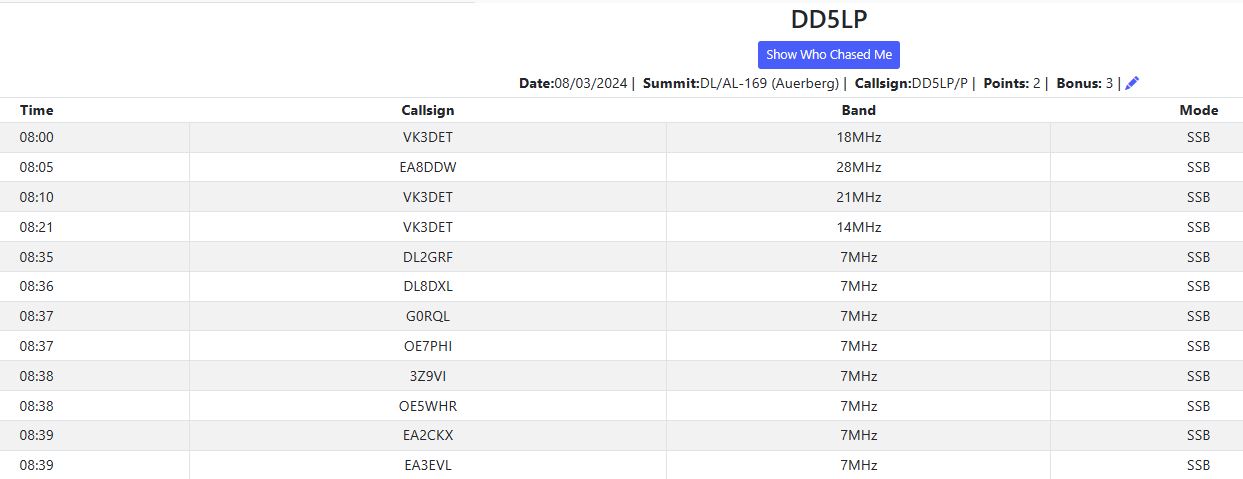
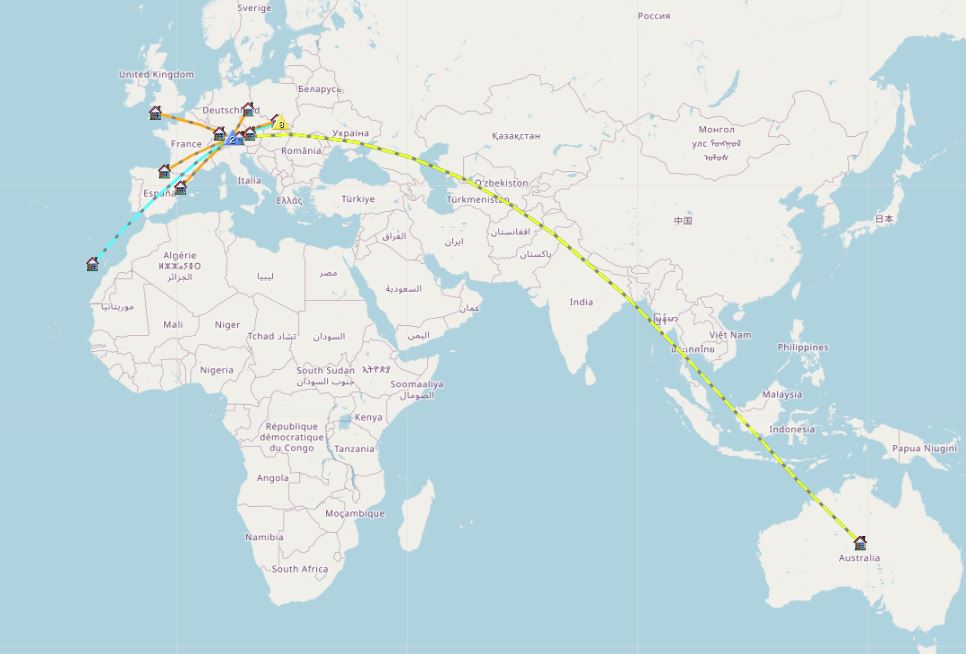
I had arranged with Ernie VK3DET to call him at this time, so I checked the Signal messenger and he said he was just about to leave 20 metres to try for a contact with Dave G4AKB on 17 metres but he would be back. Well, as he gave me the frequency on 18MHz, I simply went there and called him and we got a contact in before Dave had left 20m. The equipment was working! As Ernie was waiting for Dave on 17m, I went onto 10 metres put up a spot and was called straight away by EA8DDW from the Canary Islands (officially Africa – so that was two DX continents in the first two contacts). That was to be the only confirmed contact on 10 metres – even though I had half a contact to another SOTA summit in Poland – that would have been groundwave as it is far too close because of the skip distance on the 10 metre band and signals were at the noise level.

Following this I bagged Ernie VK3DET in Australia another two times – once on 15 metres where he was again waiting for Dave, who I could hear, but he could not hear me and also 20 metres which was so full of stations it was really difficult to find a free frequency (and this on a Friday morning).

Although I now had four (or maybe 5 with SP9JTR/P on SP/BZ-024) contacts, these were not 4 different stations, so I still needed a couple more contacts to officially “qualify” the summit. 

Moving to 40 metres gave me eight more contacts in four minutes, after which it was time to pack up and head to the next summit.

The fog still had not lifted and it was as though I was driving down into the clouds when I wound my way back down the road from the summit. I chose not to take the small farm road that the GPS was suggesting as the shortest way to get to the next summit and continued down into Bernbeueren to take the main road. All the time I was hoping that as I approached the next summit, the fog would lift and the snow start to disappear – neither did and as I got probably 90% of the way, I could see that the small roads around had not been cleared well enough for a normal car and that would also mean that the track to the Zwieselberg summit would most likely be blocked. I made the call and turned and headed home rather than heading to either of the other two planned summits. Senklekopf would have been even more difficult to approach as that requires about 10 minutes of driving along a single-track farm road to even get to the parking spot.

Photos:

DL/AL-169 Auerberg:

This slideshow requires JavaScript.

Equipment taken:

  • Mountaintop travelling 40-litre rucksack.
  • Xiegu G90 radio.
  • Screw-in sun umbrella base(not used).
  • 7 metre fibreglass mast (not used).
  • 6 Metre Lambdahalbe mast.
  • 10-metre band 2-element wire beam (manual switch version) (not used).
  • Komunica Power HF-Pro2-PLUS-T loaded vertical antenna and tripod (not used)
  • SOTABeams Linked Dipole (not used).
  • Aerial-51 404-UL 40 metre Off Centre Fed dipole.
  • 4 Ah Eremit LifePO4 battery.
  • 4 Ah LiHV battery(not used).
  • Painter’s thick plastic sheet.
  • Gardener’s kneeling pad.
  • Electrical hand warmer.
  • Lightweight headphones.
  • Smartphone for SOTA spotting.

Log:

DL/AL-169 Auerberg


Contacts map


Conclusions:

  • You can’t trust weather forecasts. Although disappointing, the cancellation of summits 2 & 3 was the right decision and hopefully if the weather improves, I may get a chance to activate them before the end of March (when the winter bonus points stop).

  • The OCF and 6m mast along with the Xiegu G90 are still adequate to the task although 10 metres does seem very quiet compared to other bands on the radio.

73 ’til the next summit.


DD5LP/P – February 21st 2024 DL/AM-178 Ammerleite (Schnalz).

Preparation:

This was to be another test of the beam antenna to take advantage of good propagation and terrestrial weather conditions and while I wanted to try to get some contacts into North America, this would be an afternoon activation rather than my usual early morning ones.

The equipment would be the same as the last time (no tripod) but this time also no antenna analyser, I am confident enough now that, as long as I connect everything up correctly, the antenna will be resonant on 20m and 10m.

As I wasn’t sure of the 10m performance of the trapped antenna variant the last time that I was out, I also packed the non-trapped 10m elements for the antenna. As I have not got a small plastic case where I can pack the beam, both the manually switched and the non-switched feed plates would be taken along.

The Activation

DL/AM-178 Ammerleite

An afternoon activation means that I have time to pack equipment in the car, have my lunch and then travel down to the summit (about a 45-minute drive). I was expecting a muddy track to the summit, but it wasn’t too bad. The main thing was that it was not raining or windy and in fact the sun had actually come out!

As I arrived two walkers were just leaving, so I had the whole area around the cross to decide where I would set the antenna up and which of the two seat benches, I would activate from.

Setting up the antenna has now become routine and the biggest issue is trying the get the screw-in base support fairly near to vertical (I still need more practice at this, as you will see from the photos).

The fact that the antenna has 4 support cords (the antenna elements plus their extender cords) makes the mast/antenna more stable than when just using a dipole.

Once the antenna was set up, I ran the coax back to the bench and set up the radio. I decided to start on 10 metres, as I could see some other activators were already on the band.

The first contact in the log was Rob DM1CM out on Auerberg, so a local Summit-2-Summit contact. He had been on two summits and had started in the morning. The second contact was a call from Holger operating as DL/OE7HPI from another local summit – Rentschen, so there was another S2S contact. This was a good start to the activation but contacts quickly dried up and I found that 10 metres sounded rather quiet when there was no signal present. This started me wondering whether this was a problem with the new antenna or perhaps the radio.

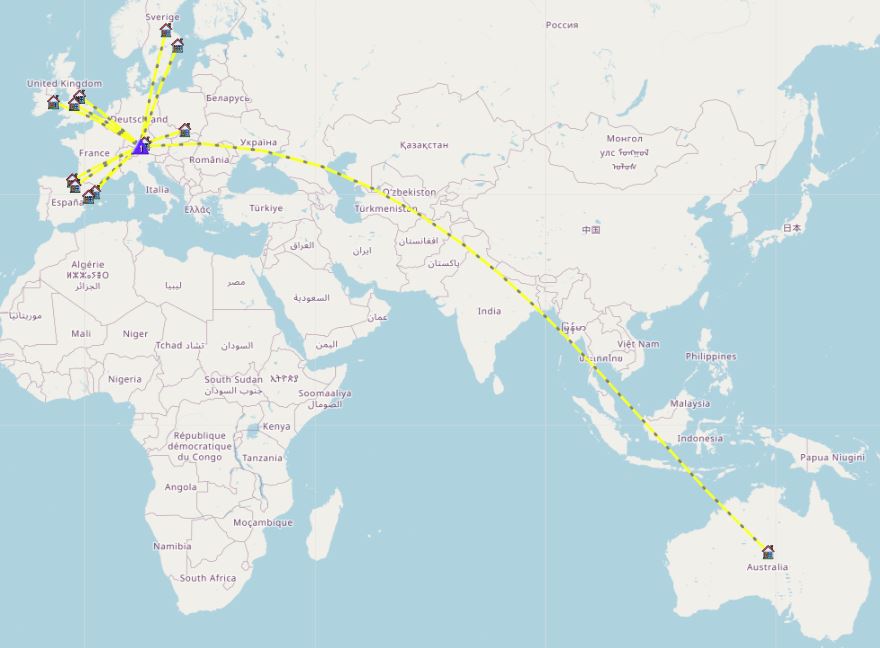
In any case, I decided to switch to 20 metres to see what was happening there and I got a stream of thirteen contacts from around Europe until that seemed to dry up. So I used this time to test the antenna while pointing west initially on some relatively strong signals that I found on the band, I turned the antenna from West to South, to North and back to West – each time needing me to lower the mast, turn the switch and raise the mast again and then wait for the monitored station to come on again. the results I got were the same as at Rösenau Kreuz. Turning the antenna away from the direction of a signal, dropped the signal 1 S-point when side on and 2 S-points when back-on to the station. This (rough) measurement tallies what the antenna models say.

I then switched the radio back to 10 metres again (this is the advantage of having a trapped antenna, that I don’t need to do anything at the antenna when I change between the supported bands).  Just tuning around, I found another SOTA activator who was very weak but was being worked by Sid ZS5AYC out of South Africa. This was the other activator’s frequency so I could not call in, so instead, I switched the antenna to radiate to the South, found a free frequency about 5 kHz higher, spotted myself and started calling CQ. After a couple of minutes – Sid called me, so that contact with Sid and his wife Adele ZS5APT were to be my longest contacts for the day. It was interesting to hear a warbling sound on the signals – which I put down to the Trans Equatorial Propagation.   

After getting those two DX contacts in the log, I tried calling CQ on 10 metres for a while but got no takers. I even tried calling a loud US station, who was calling specifically for low power stations but unfortunately, all the callers I heard, I know have high power stations and hence I and probably most other low power stations could not get through.

I decided to move back onto 20m to at least “reserve” my frequency for a sked I had set up with Caryn KD2GUT who was out in a POTA park on Long Island New York. I got another 10 contacts on 20m into the log but unfortunately, none of those were Caryn – I “think” I heard her voice once, deep in the noise but I’m not sure and it wasn’t long before some QRO station decided to sit 2 kHz off the frequency and splatter all of the frequency making any further attempts at the POTA to SOTA contact futile.

The afternoon was getting closer to dusk and the sun had gone, so I decided to “call it a day” and pack up. I was just finished packing up when a local, walking his dog arrived, so I left him the area – I suspect he might have been there to await the sunset.

Photos:

DL/AM-178 Ammerleite:

This slideshow requires JavaScript.

Equipment taken:

  • Mountaintop travelling 40-litre rucksack.
  • Xiegu G90 radio.
  • Screw-in sun umbrella base.
  • 7 metre fibreglass mast.
  • 10-metre band 2-element wire beam (manual switch version).
  • Komunica Power HF-Pro2-PLUS-T loaded vertical antenna and tripod (not used)
  • Lamdahalbe 6m mini-mast (not used).
  • SOTABeams Linked Dipole (not used).
  • 4 Ah Eremit LifePO4 battery.
  • 4 Ah LiHV battery(not used).
  • Painter’s thick plastic sheet (not used).
  • Gardener’s kneeling pad (not used).
  • Electrical hand warmer(not used).
  • Lightweight headphones.
  • Smartphone for SOTA spotting.

Log:

DL/AM-178 Ammerleite


Contacts map


Conclusions:

  • The wire beam antenna worked well with between 1 & 2 S-points difference on weak signals depending upon the direction it was switched.

  • Once I got home, I tried the G90 radio on the main antenna and while it was a lot more “active” than when out on the summit another point I had seen while out – that turning off AGC completely, had no effect on signals -was still there. So it looks like the “quiet 10 metres” is down to the radio more than the antenna. I then went into the settings and changed the RF gain from 50% to 72% and it made all the difference on 10 metres, the band sounded better and turning off the AGC had the expected effect of “boosting” weak signals. So I’ll be leaving the RF gain at 72% now. Unfortunately RF gain is one control which applies to all bands, there is not a separate setting for each band, which would be nice.

73 ’til the next summit.


DD5LP/P – February 12th 2024 DL/AL-179 Weichberg.

Preparation:

This was a re-try of the attempted activation from the previous Wednesday when high winds made me call off the activation from the car park before I climbed to the summit. This day was supposed to be a fine, warm, sunny day but as usual, two days before the activation, the forecasts changed to overcast, cold and possible winds.

Despite that, I was determined to be ready for an activation and as long as there were no high winds or torrential rain, I would activate. All the gear was packed in the back of the car on Sunday evening ready for an early start at 7:30 am the next day.

“All” this time was to include the surveyor’s tripod and the large feed-point board for the 20/10m wire beam – this would be the first real test on a summit of the ability to switch the antenna direction from my smartphone, something that had been giving me problems for the last six months. Of course, the usual backpack with radio, battery, masts, backup antennas, food and drink, would also be included along with the RigExpert Antenna Analyser.  

The Activation

DL/AL-179 Weichberg

On arriving at the car park for the summit, after an easy (and wind-free) trip down, the winds started to howl between the trees and some threatening-looking clouds were approaching. Despite this, I was determined not to call the activation off again as Ernie in VK3 was going to be available and Mike 2E0YYY/P was heading up to Mow Cop (HEMA G/HSP-020) so that we might make this a three-way contact today (at least on 20m, if not on 10).

After a hard trek up the forest path to the summit, with a loaded rucksack, the tripod over one shoulder and carrying a bag of documents, the antenna plate and antenna analyser in a shopping bag in the other hand, the top was reached and I put most of the gear down at the wooden table.

I unpacked the antenna, mast and Tripod and went straight to the complex installation including the relay board with Bluetooth switching and the trapped antenna elements. If this did not work, I could go back to the simpler setup as I had brought everything with me. Using my Rig Expert antenna analyser I could see that the antenna (initially set in the Long Path Direction (West)) was looking fine, so then I sent a message via the Signal app to the other two, who were both almost ready.

First in the log was Ernie VK3DET followed by Mike 2E0YYY/P a minute later. Both 5-8 to 9 signals on 20 metres. For once, it seemed the system was working well, the first time. My biggest problem was using the messaging app with frozen fingers. There was a light wind which grew over time but was always icy cold. The measured temperature would have been around 3°C but with windchill nearer to -3°C!

We actually managed an easy “net” between the three of us on 20m until Mike said 10m was open and he wanted to try there, so we moved up two bands and I switched the antenna to Short Path for Australia (East from my location). After trying several frequencies, we eventually found a free one and although Ernie was getting to me at around S2, he could not hear me. When Mike tried, I had to switch the beam around to West before I could hear him (again at about S2) again, he could not hear me. So the added problem I had was this need to switch directions to hear the two guys but as they could not hear me at all on 10m, nothing was really lost. they managed to make contact and I told them I’d head off spot myself and try to get some contacts in the log. To me 10 metres sounded rather quiet  compared to other days when I have use the simplified version of this antenna but this could also be propagation. in any case I was glad of a ground-wave call from Mario DJ2MX in Munich, so that I had at least one contact on 10m from the summit.

As I was still short of the needed 4th contact, I switched back to 20m, found a frequency, spotted myself and another 15 contacts came in, in quick succession. I was certainly getting out on 20m!

All of this time, I was fighting to have gloves on to try to stop losing all feeling in my fingers and taking them off when I needed to do something on the phone. Time was also passing, so when there seemed to be no more chasers, I called it a day, packed up, returned down the steep forest path and when I got to the car, it started to rain. That was lucky timing!

Photos:

DL/AL-179 Weichberg:

This slideshow requires JavaScript.

Equipment taken:

  • Mountaintop travelling 40-litre rucksack.
  • Xiegu G90 radio.
  • Surveyor’s tripod.
  • 7 metre fibreglass mast.
  • 10-metre band 2-element wire beam (full version).
  • RigExpert AA-30 Antenna Analyser.
  • Komunica Power HF-Pro2-PLUS-T loaded vertical antenna and tripod (not used)
  • Lamdahalbe 6m mini-mast and new metal base peg (not used).
  • Aerial-51 UL-404 OCF dipole (not used).
  • 4 Ah Eremit LifePO4 battery.
  • 4 Ah LiHV battery(not used).
  • Painter’s thick plastic sheet (not used).
  • Gardener’s kneeling pad (not used).
  • Lightweight headphones.
  • Smartphone for SOTA spotting.

Log:

DL/AL-179 Weichberg

Contacts map

Conclusions:

  • The antenna worked well with between 1 & 2 S-points difference on weak signals depending upon the direction was switched to.

  • It would be nice to have a method to have a one-button direction setting action rather than the 4 actions needed at the moment. Perhaps I will need to try to get another model of relay board to which I could script commands.

  • The 10m section of the antenna did not perform very well. Whether that was because of propagation or whether the capacitor does need to be a different value can only be tested by switching between models of the antenna (i.e. with and without the traps).

73 ’til the next summit.


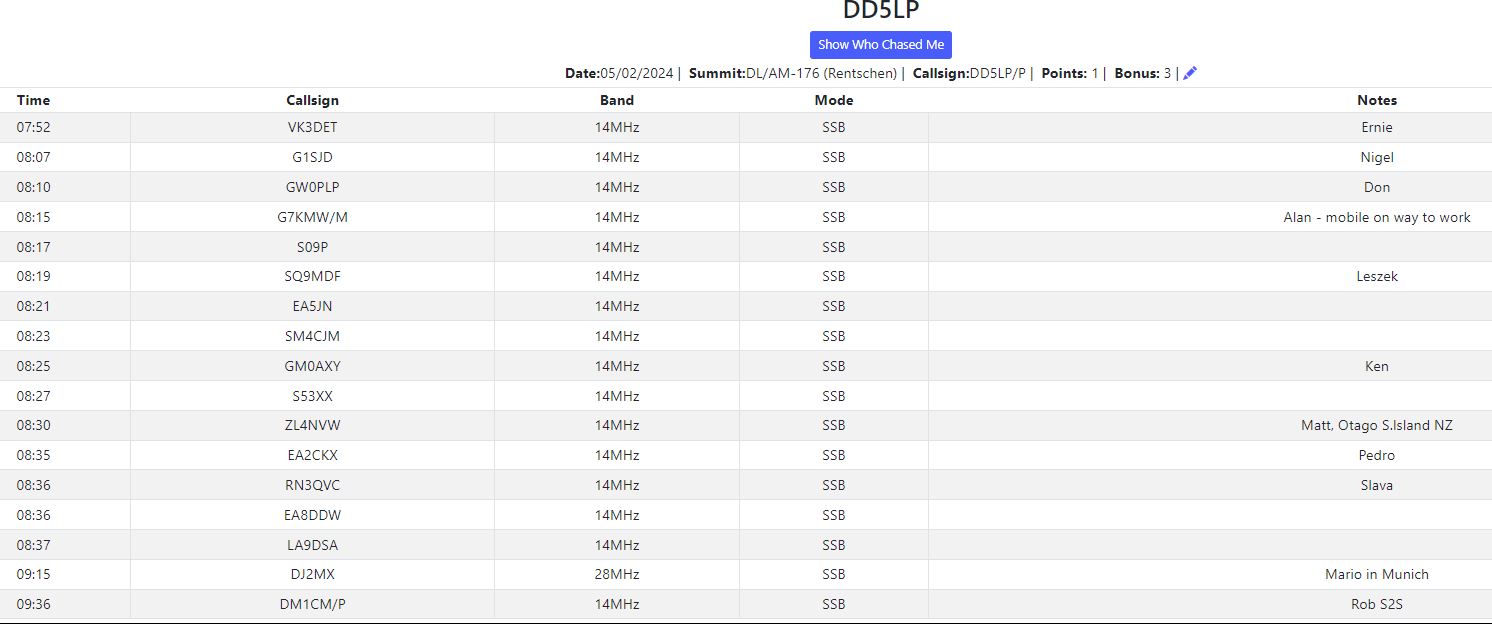
DD5LP/P – February 5th 2024 SOTA DL/AM-176 / HEMA DL/HBY-052 Rentschen.

Preparation:

With progress made on the 2-element wire beam and success at Peissenberg a week previously in the 10m only form, it was time to test the antenna this time with the trapped elements which should make the antenna a dual band antenna able to operate on the 10-metre and the 20-metre bands. This was not to be a test of the Bluetooth relay switching board but rather purely to test out the dual-band nature of the elements. Testing the full system with remote switchable direction will need to wait until another day.

After some days of rain showers, Monday had a good forecast with winds supposed to cease by 9 am and then the day to be sunny if not warm.

After a couple of tests in the muddy local field, the simple feed-point plate with the trapped elements had been trimmed to length, so everything was set for a test from a summit and so the surveyor’s tripod, the 7-metre mast, the antenna analyser and the antenna components were all loaded in the car on Sunday evening along with my 40-litre rucksack containing radio, battery and several antennas and masts, ready for an early start on Monday morning.

The chosen summit “Rentschen” is a plateau and as such a good summit for antenna testing with lots of space and few obstructions. This is a summit that is both in the HEMA and SOTA schemes and so is a “twofer” as POTA activators would say.

The Activation

The trip down was uneventful and I arrived at my usual car parking spot at around 8:15 am local time with my plan to be on the air before 9 am to catch the 20m long path into VK (I had set up a sked with Ernie VK3DET) and then to try the antenna also on 10 metres.

I chose a spot not far from the trig-point stone and I unpacked the mast, tripod and antenna first. These went up well, in the same way as I had installed them on the local field for the earlier tests and trimming. The four wires go out at 90° to each other and because of the combined length of the element and its cord extender (also acting as the guy cords for the mast), form a 56° angle with the vertical mast (the mast is a 7 metre mast but with the top section removed so that the feedpoint board sits at 5 metres above ground level). 

Before unpacking the radio, I attached the antenna analyser to make sure that all still seemed  OK with the antenna – it did. Then the Xiegu G90, headphones, battery and log book were unpacked and laid on my painter’s thick plastic sheet on the ground.

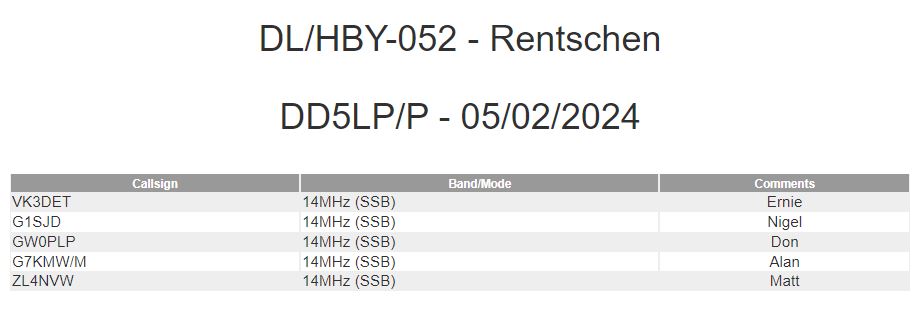
After sending a short Internet message to Ernie and agreeing on a 20m frequency that was free at both ends, I called Ernie and there he was – armchair copy, solid signal! I had the antenna “aimed” long-path (West from me) for this contact. When I needed to move to 10m, it would need to point short-path (East from me) so, rather than going straight on to 10m (a bad decision as it turned out), I decided to work more chasers (HEMA & SOTA) on 20m first.

In the middle of the SOTA callers on 20m,  Matt ZL4NVW from Otago on the South Island of New Zealand called in. This suggests that 20m would have still been good for contacts into VK for another hour or so at least.

Another surprise contact was Alan G7KMW actually mobile while heading into work in the midlands of the UK. An easy copy so I think the antenna is definitely working.

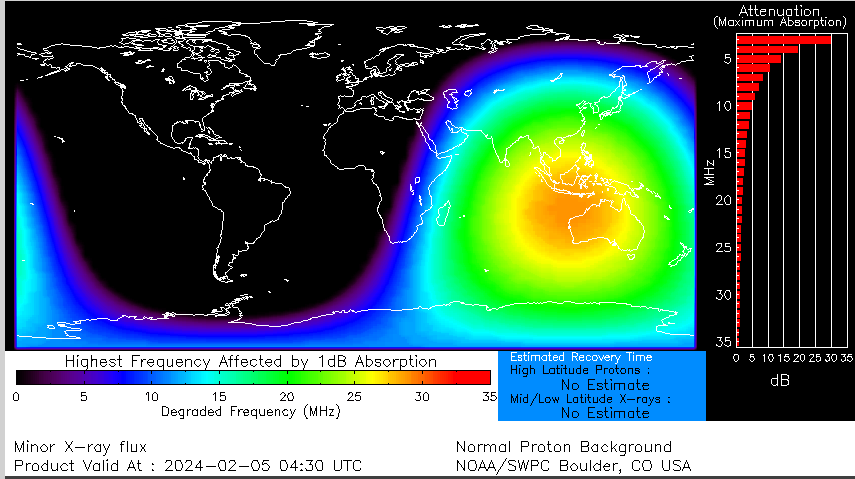
When I decided to switch to 10m it was getting close to 0900 UTC and after dropping the antenna, turning the feed-point board 180° so that the beam would be pointing short-path to VK and raising it again, Ernie VK2DET  and I tried for a 10m contact but if I hadn’t known he was calling I would have mistaken it for just part of the noise. The signal was so weak that there was no chance of Ernie hearing me (but I did try). What was strange was that two VK2 stations VK2CPC and VK2GM were both booming great 59 signals on 10m. Initially, I had thought my antenna wasn’t working on 10m but later I found it was most likely a propagation problem with an X-ray flare hitting the Ionosphere over Australia and pushing the MUF down over VKs 3,5,6 & 8 but not affecting VK2.

image

I only got one contact on 10 metres and that was off the side of the beam with Mario in Munich.

The next test will be to fit the Bluetooth-switched top board, to see if I can hear any difference in signal strengths as I “rotate” the static antenna electrically. I also want to see if I can support the mast with just a ground peg rather than using the surveyor’s tripod. On Rentschen at the start of the activation, there were only very light winds but when I went QRT, they had increased to a level where I may have had issues putting the antenna up so I had timed it right in that respect.

Photos:

This slideshow requires JavaScript.


Equipment taken:

  • Mountaintop travelling 40-litre rucksack.
  • Xiegu G90 radio.
  • Surveyor’s tripod.
  • 7 metre fibreglass mast.
  • 10/20-metre band 2-element trapped wire beam.
  • RigExpert AA-30 Antenna Analyser.
  • Komunica Power HF-Pro2-PLUS-T loaded vertical antenna and tripod (not used)
  • Lamdahalbe 5m mini-mast and new metal base peg (not used).
  • SotaBeams linked dipole (not used).
  • 4 Ah Eremit LifePO4 battery.
  • 4 Ah LiHV battery(not used).
  • Painter’s thick plastic sheet.
  • Gardener’s kneeling pad.
  • Lightweight headphones.
  • Smartphone for SOTA/HEMA spotting.

Log:

HEMA

SOTA

CONTACTS MAP

Conclusions:

  • The antenna worked well on 20 metres. The problem with getting through on 10 metres to VK3 was later found to be an X-ray flare hitting the atmosphere over part of Australia, explaining why VK2 and JAs were getting through but not VK3. Others in Europe experienced similar problems.

  • Once the band is open and DX stations are coming in, the “search & pounce” approach can be forgotten as there are too many high-powered stations with large beam antennas that believe it is their right to get in contact with the DX station and if they hear someone else calling ahead of them, they repeat their call after the portable station finishes to make sure that if the DX station goes back to the portable station, he/she can no longer hear the DX station because of the DQRM they are causing. Hardly in the spirit of ham radio!

73 ’til the next summit.
DD5LP/P – January 30th 2024 DL/AM-001 Peissenberg.

Preparation:

The saga of the 2 element wire beam has continued for some time (months in fact). First with physical feed point board mounting problems, then apparent electronic problems with the Bluetooth relay switching board, then I managed to blow that board by connecting the supply in reverse and when I got what I thought was an exact replacement it wasn’t, meaning that my direction switching scripts on my smartphone no longer worked and had to be replaced by single button switches in the app.

Then along came gale force winds, 30cm of snow and heavy rains in several different sequences delaying testing of the “fixed” electronics on the local field. While stuck inside not able to test the complete solution, I built up an elementary (no electronics) feed-point board, so that I could test out the straight elements and the elements with HF-Kits traps in them (making them suitable for 10 & 20m usage), without having to worry about electronics, Bluetooth or Smartphone issues. In this configuration, it is not possible to switch the direction of the beam, it points in the direction that it is erected for

After a couple of tests in the local field (still rather muddy, but with only three days of dry weather forecast I had to put up with that) the simple antenna was ready for use from a summit for which Peissenberg was chosen, being one of the closest that had room for my surveyor’s tripod, 7m mast and the wire beam. After a further test before lunch, where the trapped elements proved to still need some trimming but the simple 10 metre elements were spot-on, I decided to make this a 10-metre-only activation (even though a CME had just hit the Ionosphere, the MUF was still up above 30MHz) in the late afternoon when 10 metres had been opening up to North America.

The Activation

DL/AM-001 Peissenberg

On arriving at the car park for the summit, it was obvious that others were there, waiting (I believe) to watch the sunset while having a light meal.

I unpacked the antenna, mast and Tripod first before returning to the car for the radio later. I luckily had also brought my antenna analyser along that I had used during my tests in the morning, as after setting the antenna up, the 10 metre band sounded rather quiet and the ATU in the radio took some time to match it to the radio – a sign that something was wrong. I could have then tried the SWR scan feature in the G90 but while I had the Rigexpert AA-30 with me, I put that on and it was obvious that the antenna was not connected. I checked the PL-259 plug at ground level but it quickly became obvious that the problem lay on the feed point board up at 6 metres in the air, so down it had to come down.

The connection problem was traced to the BNC end of the RG-213 coax cable where it plugged into the BNC socket on the simplified feed point board. Once I detached and reattached the BNC plug to the socket on the feed-point board all worked OK for the whole of the activation. I need to find a better solution and indeed after returning home I have been able to make this connection a far more solid “match”. Should the problem re-occur I will solder the co-ax straight to the antenna element connectors.

 Once I had sorted out the connection, 10m sounded a lot more like it should on receive, but despite that and having spotted myself several times on the SOTA cluster, I was not getting calls that I had hoped for,  that was until I heard ZS5APT calling me!  This was Adele and after exchanging reports she said -please wait I have another South African ham that wants to call you – who was ZS5AYC – Sid (her husband). So my first two contacts on the new antenna were in South Africa! I should be happy at that except … the wire beam was pointing at the US (which is West of me), not South Africa (which is South of me). This simple (one direction) antenna would be receiving Adele and Sid off the side of the beam, they were both 5-6 and gave me 5-8/5-9 – not bad for 20w and a wire antenna.

But it left me thinking – would the signal have been better with a simple dipole? I obviously need to do some more testing to prove the directional properties of this antenna.

The next three-quarters of an hour were difficult, I was not getting calls and when I tried to call other stations which I could hear well from the US and Canada, I’d get hammered in their pile-ups.

Two semi-local German stations (DA20XOTA and DJ0AL/P) did persevere through the QRM and QSB, but after that, I could not seem to get any more contacts. Other SOTA activators who were out in the area were too close for me to get S2S contacts, I could hear people chasing them but not the activators themselves. 

I had just about decided to pack up as it was getting towards sunset and more campers were turning up so I used the magic words “LAST CALLS” – and who comes back to me?  Gary K3TCU, from Pennsylvania. He was 5-8 and gave me 4-4 which sounds like an honest report. He kindly ventured from his normal CW to SSB to give me a call.

Photos:

DL/AM-001 Peissenberg:

This slideshow requires JavaScript.

Equipment taken:

  • Mountaintop travelling 40-litre rucksack.
  • Xiegu G90 radio.
  • Surveyor’s tripod.
  • 7 metre fibreglass mast.
  • !0-metre band 2-element wire beam.
  • RigExpert AA-30 Antenna Analyser.
  • Komunica Power HF-Pro2-PLUS-T loaded vertical antenna and tripod (not used)
  • Lamdahalbe 5m mini-mast and new metal base peg (not used).
  • SotaBeams linked dipole (not used).
  • 4 Ah Eremit LifePO4 battery.
  • 4 Ah LiHV battery(not used).
  • Painter’s thick plastic sheet.
  • Gardener’s kneeling pad (not used).
  • Lightweight headphones.
  • Smartphone for SOTA spotting.

Log:

DL/AM-001 Peissenberg


Conclusions:

  • The antenna definitely works. It can be set up on a summit without too many problems but this time I used the surveyor’s tripod for support, next time I’ll try just the ground peg and the 6m mast rather than the 7m one.

  • If the feed cable issue re-occurs I have enough RG-316 coax (that’s the thin, lightweight stuff), so I will simply solder a length onto the feed plate element connectors and put a PL259 plug on the other end.

73 ’til the next summit.


DD5LP/P – January 22-23 2024 – Short Break to Füssen with POTA & HEMA/SOTA activations.

Preparation:

A short 3-night break with the family to Füssen near the Austrian/German border brought the chance of some portable radio activations. The problem of planning ahead with this trip was the uncertainty of the weather and indeed two of the days were ruled out due to high winds or constant rain but a POTA activation and a combined HEMA/SOTA activation could take place. See previous reports to explain how a summit can be in both HEMA and SOTA. As my new wire beam has, because of long-term sub-zero temperatures and snow cover, not been able to be tuned as yet (and its supporting surveyor’s tripod could not be taken along due to lack of space in the car), the good old 6m telescopic fishing pole with a linked dipole would be the antenna of choice on any summits and the Komunica HF-Pro2-Plus-T on a mag mount on the car roof for the POTA activation which would be again a PLOTA (Parking Lot on the air) from a car park, just within the boundaries of the park. 

The Activations

Monday 22nd January – POTA DA-0003 Ammergauer Alps NP.

This POTA park is quite large and the last time I activated this, it was a joint activation with the SOTA “Laber” summit which is in the East of the park. This time I would be activating from the western edge of the park.

After checking into our hotel and dropping off my wife at the Spa, our dog Bonnie and I drove to the parking area that I had found on the map to be within the park’s boundaries. Of course, before starting operating, a higher priority was to take the dog for a walk up into the forest on the side of the hill. Once this was taken care of I could set up the station in the car. The G90 radio and its battery were put on the front passenger seat and the antenna was located on the magnetic mount on the roof.

I had decided to start on 40 metres as normally this is a sure way to get a few contacts in the log and with POTA 10 contacts are needed to qualify the park. This was more difficult than expected with the spot on the POTA site not bringing the expected flood of calls. I tried a different frequency in case there was someone, that I could not hear on my chosen frequency and after a little while longer I managed four contacts but then the calls dried up. It was about noon and perhaps this is not a good time for 40 metres? 

So after a switch to 20m and re-adjusting the antenna, we had a totally different story with lots of calls getting into the log. Indeed the final count was 23 contacts in 45 minutes, with a few of those being a little longer than the usual report exchange.

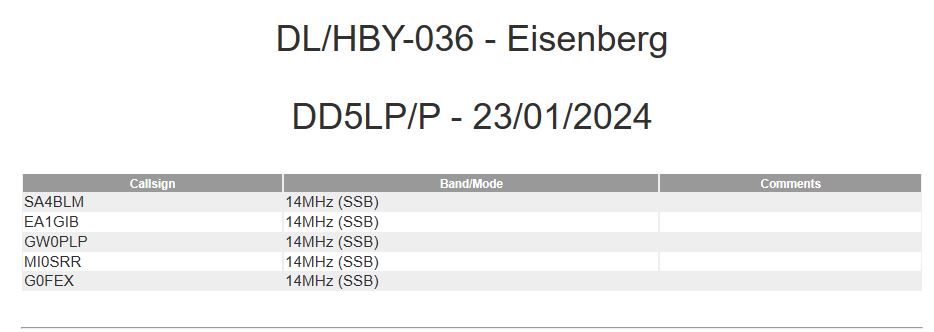
Tuesday 23rd January – HEMA/SOTA DL/HBY-036 Eisenberg / DL/AL-171 Eisenberg.

I had considered activating some summits closer to Füssen, that I had not activated before, however as most tracks were still snow-blocked and some others simply dangerous at this time of year, I decided to drive a little further and activate a summit that I know well and have activated several times over the last few years. Eisenberg has a publicly accessible castle ruins on its summit with a wooden platform added to one end, where I normally set up.

En route the rain that had started soon after I left the hotel stopped just as I was arriving at the starting point for the climb. The walk up from the (unfortunately closed) Schlossalm Zell restaurant needed me to fit my shoe spikes as the path was thick ice and as I got closer to the summit, the winds were increasing.

I was not worried as I knew I had a good strong point to strap the mast to and could shelter alongside the wall on the platform. On arriving at the platform, I was surprised to see a new fence across it as it seems half of the platform has rotted away and is awaiting repair. This messed up the idea of setting up on the platform so I searched around in the ruins in the hope of finding a large enough area to string out the antenna and at the same time have some shelter from the winds.

No such spot was to be found but I did find a sheltered spot with enough room to put up my backup antenna, the Komunica HF-PRO2-Plus-T on its tripod with radial wires. This was going to have to be the option and as I could see further clouds heading towards me, I wanted to make a fairly quick activation (for both HEMA and SOTA only 4 contacts are needed to qualify the summit)

Learning from the previous day’s experience I decided to start on 20 metres rather than 40 metres and given the incoming weather, this was going to be a single-band activation.

This activation racked up 17 contacts in 14 minutes (several of these regular chasers who I had not yet talked to in 2024) before I packed up and headed back to the car at which point the incoming rain started – I had been lucky with the weather.

At this point, an activation of Falkenstein (another summit with castle ruins on it), had been planned for either Wednesday or Thursday but very strong winds on Wednesday and constant rain on Thursday, meant that activation never took place.

 Photos:

POTA DA-0003 Ammergauer Alps National Park

This slideshow requires JavaScript.

HEMA DL/HBY-036 / SOTA DL/AL-171 Eisenberg

This slideshow requires JavaScript.

Equipment taken:

  • MountainTop 40-litre rucksack.
  • Xiegu G90.
  • Komunica Power HF-Pro2-PLUS-T loaded vertical antenna. (used with magnetic mount for the first activation and on a tripod with radials for the second activation).
  • Three-magnet car roof antenna mount.
  • Modified mini photo tripod with clip-on radials
  • Lamdahalbe 6m mini-mast (not used).
  • SotaBeams linked dipole (not used).
  • 4 Ah LifePO4 Eremit battery.
  • 4.5 Ah LiHV battery.
  • Painter’s thick plastic sheet and gardener’s kneeling pad.
  • Lightweight headphones.
  • Smartphone to spot and back-channel comms. 

Logs:

POTA DA-0003 Ammergauer Alpen NP

POTA Contacts Map

HEMA DL/HBY-036 Eisenberg

SOTA DL/AL-171 Eisenberg

SOTA Contacts map:

Conclusions:

  • The weather was a problem mainly on the second two days, stopping the hoped-for third activation.
  • The Xiegu G90 continues to work reliably.
  • Again the Komunica Power HF-PRO-2-Plus-T – again saved the day on the summit activation.

73 ’til the next summit/park/island.


DD5LP/P – December 18th 2023 DL/AL-179 Weichberg.

Preparation:

After being unable to activate for some time due to a long bout of Influenza followed by Covid (thanks to the thoughlesss person who decided it was more important to go and buy their coco pops or whatever from the supermarket rather than to self-isolate and in the supermarket, not even wearing a mask to protect others!), followed by a week where we had one metre of snow to block everyone in, I was ready to get out and do a simple activation.

I chose Weichberg as it is one of the closest SOTA summits at about 30 30-minute drive away from home. It also turns out that the last time that I activated it was April this year, it was after the Winter Bonus had finished, so while I wouldn’t get the 1 normal activation point for the summit, this time I would get the 3 Winter bonus points.

As often is the case, I decided to try some new equipment. Not the 20 & 10m wire beam that I have been working on but simply a new mast base spike after my previous two from DECATHLON failed on me. The last one on my Cyprus “mini.DXpedition”. I have bought two meal peg bases but as they are meant for the thinner carbon-fibre masts, I also made an adapter arrangement consisting of half a broom handle that pushes up inside my small 5-metre fibreglass mast.

Apart from the new base (I also packed the old sun umbrella screw-in base as well) the rest of the equipment would be the tried and tested Xiegu G90 radio and the SOTABeams linked dipole (with a couple of backup antennas as well of course).

I spotted for a 0830 UTC ():30 am local) start in the hope of catching the Long Path on 20 metres down into VK. This meant I would need to get up at about 6:30 am local to be on the summit on time.

The previous 4 days, the bands had been terrible due to one of the largest CMEs of the last 20 years hitting the Ionosphere but I was hoping it would have cleared by Monday morning.

I alerted on SOTAWatch and checked with Mike (2E0YYY) and Ernie (VK3DET) to see if they would be around and indeed Mike agreed to go up to his local HEMA Summit – G/HSP-020 Old Man of Mow.

The Activation

DL/AL-179 Weichberg

Well, I was up long before the alarm went off and rose at 5:30 am rather than 6:30 am, despite taking my time, this still meant that after an uneventful drive down, I was set up and calling CQ by 07:48 UTC. I started on 40 metres hoping that I might catch some DX via the Greyline but I think I was probably about 30 minutes too late.

I did however get a good pile-up of European chasers and despite the mast on the new peg almost falling over at one point (ground problem not a peg problem – once I moved it, it was fine), I managed twelve contacts in fourteen minutes.

At this point, Ernie and Mike sent me messages to say they were almost ready so I lowered the mast, unlinked the 20m links in the antenna and put it back up. Initially, the 20m band was empty but despite that, Ernie put out a call and I could hear him at around 5-3 to 5-4 level – unfortunately, he could not hear me strong enough to work. The difference between an S0-S1 noise level at my end and an S4-5 level at Ernie’s end along with the fact that Ernie was running 400w and I was only running 20w added up to a believable reason but what was to turn out to be the biggest problem was that the propagation skip distance was short (probably as the Ionosphere hadn’t yet recovered from its battering over the last four days). Signals from the UK and even local signals within Germany were 5-9+. Normally on 20m, I struggle to hear stations in the UK, but when I called John M0JWK, we exchanged 59+ reports despite his beam pointing Stateside!

Now I tried for a QSO with Mike 2E0YYY/P and to my surprise he was only about a 53 signal but gave me a 59 report. We wondered how that was possible. Due to high winds, his antenna was lower than usual but that should not make a great difference (if at all, as we both have height through being on top of hills). Mike runs 50w portable to my 20w so if anything Mike should be putting a stronger signal into me than I do into him – and usually he does.

Only later did Mike realise that he was not putting out the normal power level – indeed he could see almost nothing on the output meter. After getting home, Mike investigated further and it turned out to be a faulty cable between the microphone and the radio (we were both running SSB) – so very little audio equates to very little power output.

Overall, for my first activation after Covid, I was happy with the results but I could have done without the icy winds that gave a chill factor taking temps down to -2 or -3°C.

Photos:

DL/AL-179 Weichberg:

This slideshow requires JavaScript.

Equipment taken:

  • Mountaintop travelling 40-litre rucksack.
  • Xiegu G90 radio.
  • Komunica Power HF-Pro2-PLUS-T loaded vertical antenna and tripod (not used)
  • Lamdahalbe 5m mini-mast and new metal base peg.
  • SotaBeams linked dipole.
  • 4 Ah Eremit LifePO4 battery.
  • 4 Ah LiHV battery(not used).
  • Painter’s thick plastic sheet (not used).
  • Gardener’s kneeling pad.
  • Lightweight headphones (x2).
  • Smartphone for SOTA spotting.

Log:

DL/AL-179 Weichberg

Conclusions:

  • The radio conditions on 20m were short skip due to recent disturbences so although I could hear Ernie, VK3DET, a two-way contact was not possible.
  • All equipment (including the new mast spike) worked well.
  • I’m glad I went out despite the cold weather – after all, “Wintertime is SOTA activation time” Right?

73 ’til the next summit.