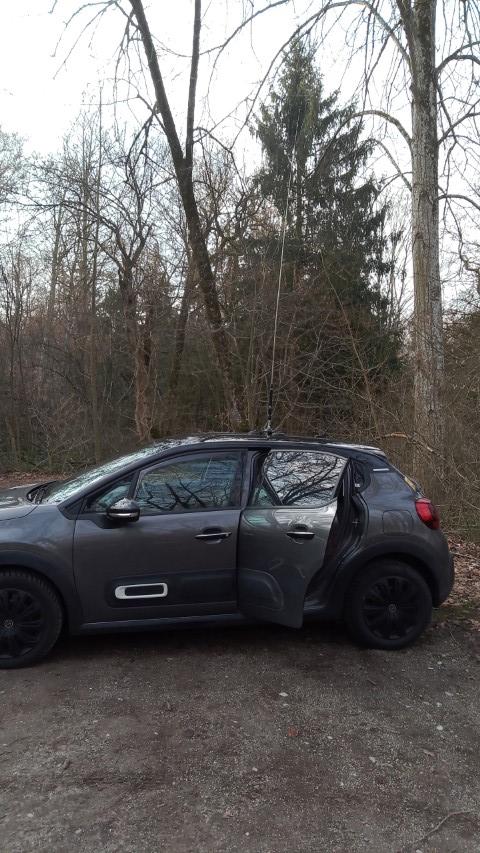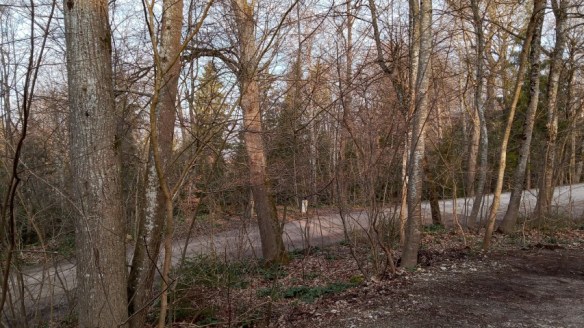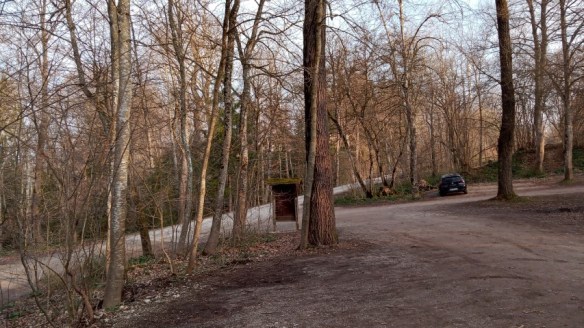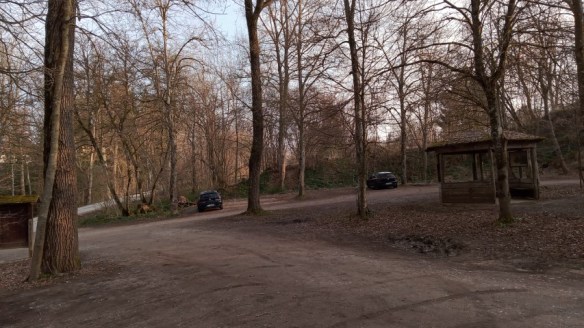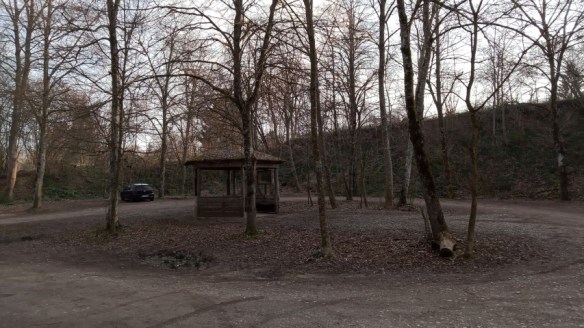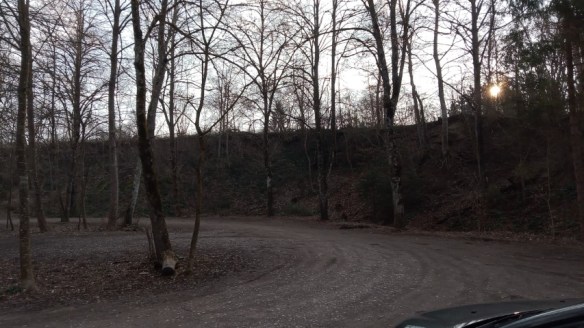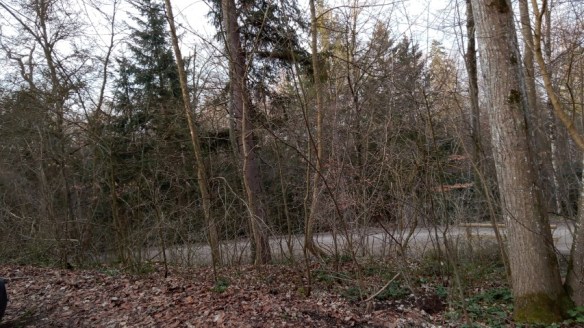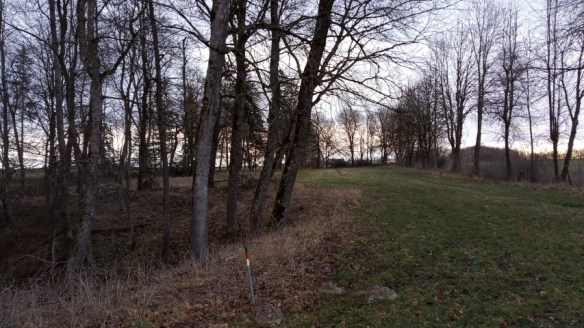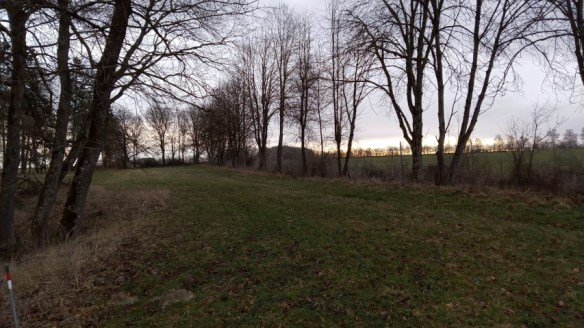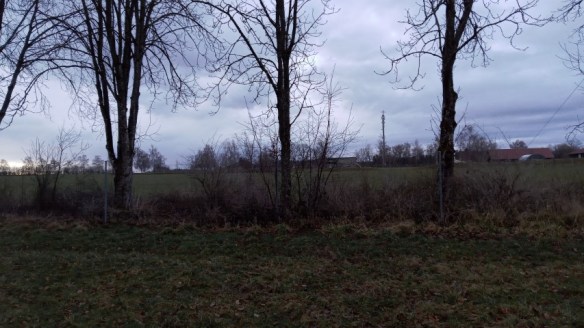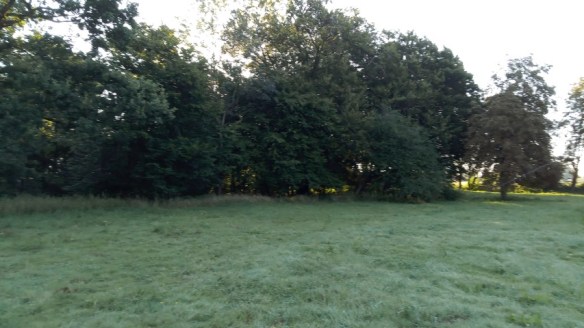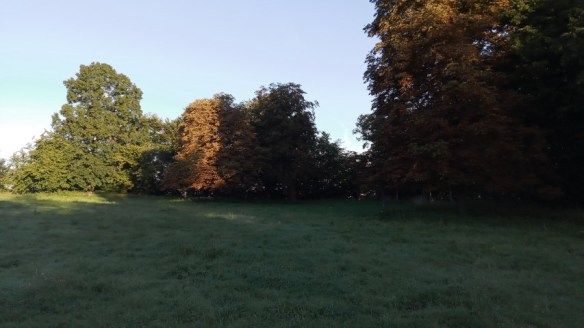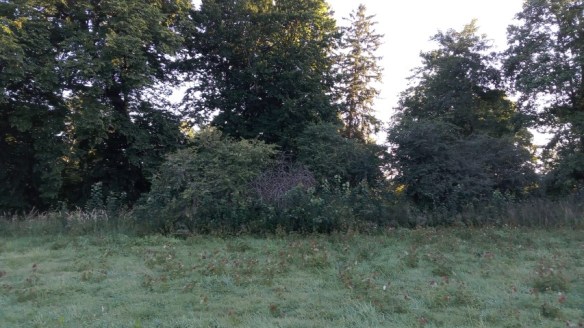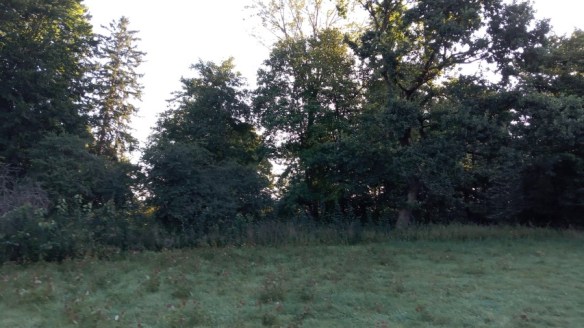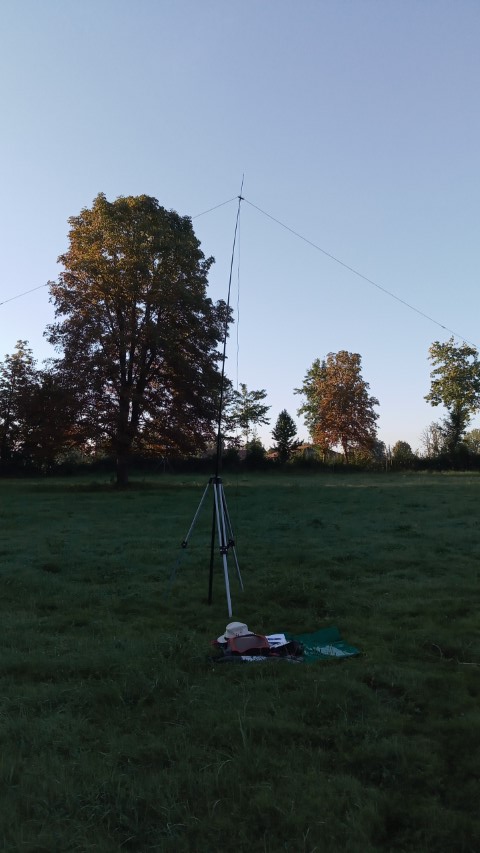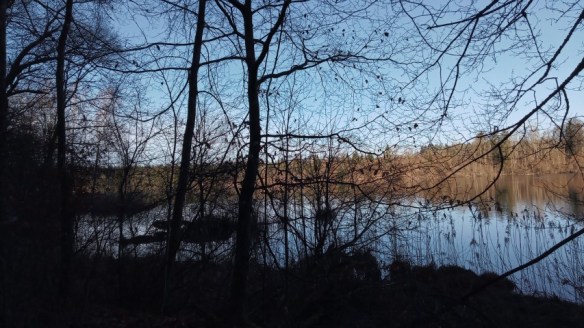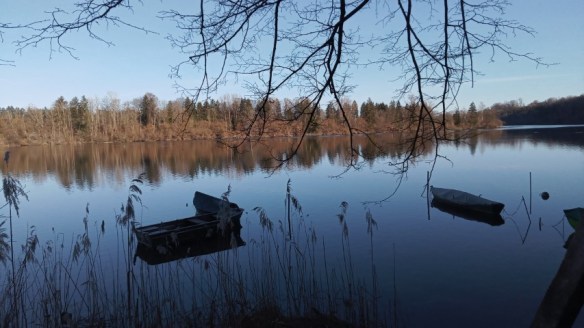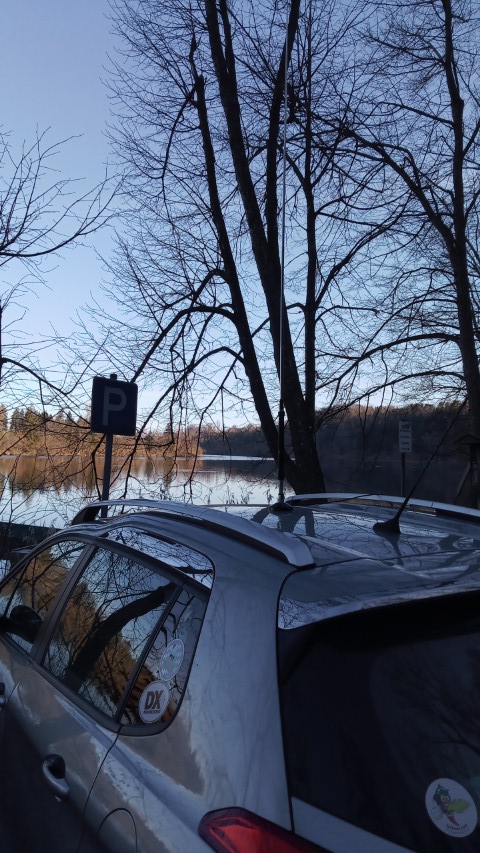
DD5LP/P – March 21th 2026 – PLOTA activation of 2-fer POTA – DE-0663 Lechpark Possinger Au and DE-1058 Lech Zwischen Hirschau & Landsberg

Preparation:

Having just got a new Radioddity HF-010 antenna and after a week of book editing, I decided it was time for me to get a break, do some POTA, contact my friends in VK-Land and test out the antenna, car-mounted using my 3-magnet base.

I decided on Friday afternoon to test out the antenna, roof-mounted on my analyser, so that I could note down what the slider setting on the loading coil needed to be for each band, as I did not intend to take the antenna analyser with me. In short, initial impressions were VERY good apart from its size, on the car roof, it is a MONSTER!
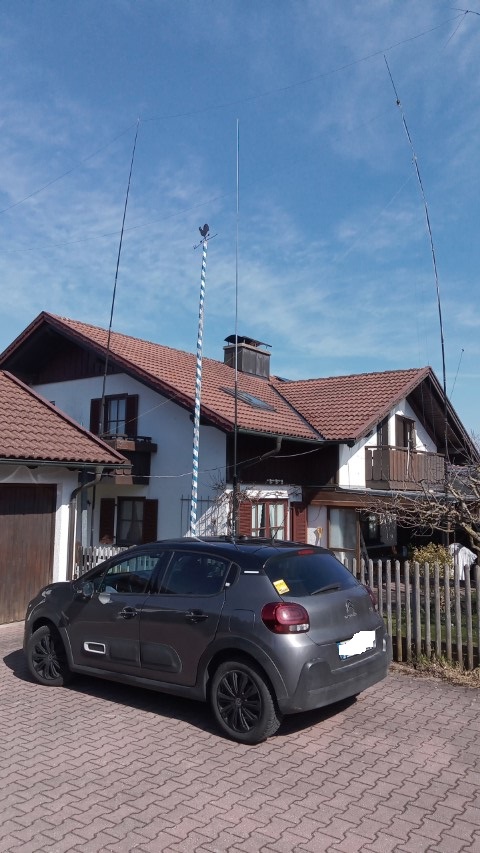
Once I calibrated my settings, I decided to try the antenna out for real with a contact or two on 20m. So (as I had been calibrating with fewer extender rods on 10m), I rebuilt the antenna for 20m and did a quick check on the analyser. It was no longer resonant where it was before. I checked everything I could think of, but was unable to find what had changed. In this state, I could not rely on it for the following day’s early morning activation, so I switched to my usual Komunica HF-PRO2 antenna, which worked fine, and I made two quick contacts up into the UK before packing the car ready for the next day’s early trip. To be fair to the HF-010, it is intended to be ground-mounted on its own tripod with radials, so what I was asking it to do is not in the user manual. Perhaps for the next (non-PLOTA) activation, I’ll take the antenna along and set it up as per the handbook. It is VERY well built and looks like it could be a great antenna.

The Activation

POTA DE-0663 / DE-1058

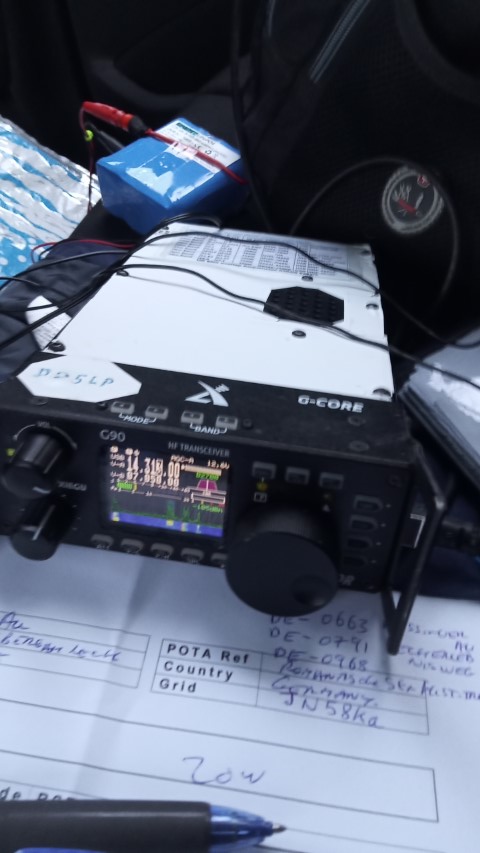
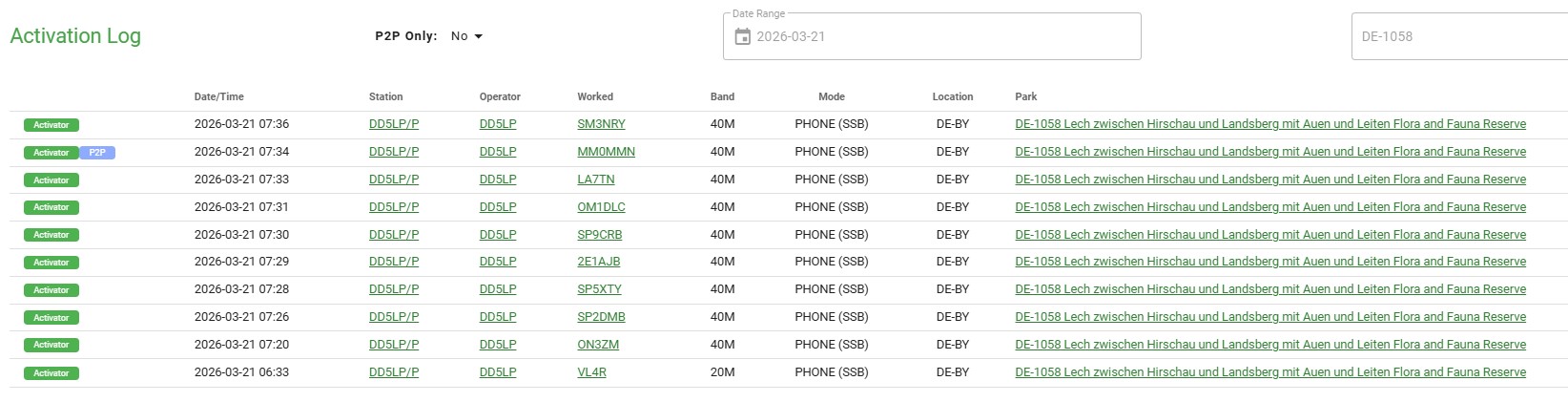
After arriving at the car park, set-up was prompt, and I had good hopes when I saw an S1 noise level and several stations showing on the G90 bandscope. My “test” QSO, to make sure the station was operating, was with VL4R at 06:33 UTC. He was taking part in the annual “John Moyle Field Day contest” in Australia.

 After that, I could hear several John Moyle field day contest stations and other stations out of VK, including one VK6 station, but they were either chatting with mates (both VK-VK and VK-UK) or when they did call CQ, the pile-up was major! Had there not been the pile-up with a Vanuatu station, I could have made that contact, I think.

I then messaged my friends in the UK and Australia to find what frequency they were on, and we tried several times to make contact, but without success. I could hear them at S2 or S3, but they could not hear me – there was one of the team that said the Kp index was up at 7 following a storm the previous UTC evening. I decided to take a break from 20m, which had by this point bottomed out, and I was just hearing DL, RA, I and SV stations and moved to 40m.

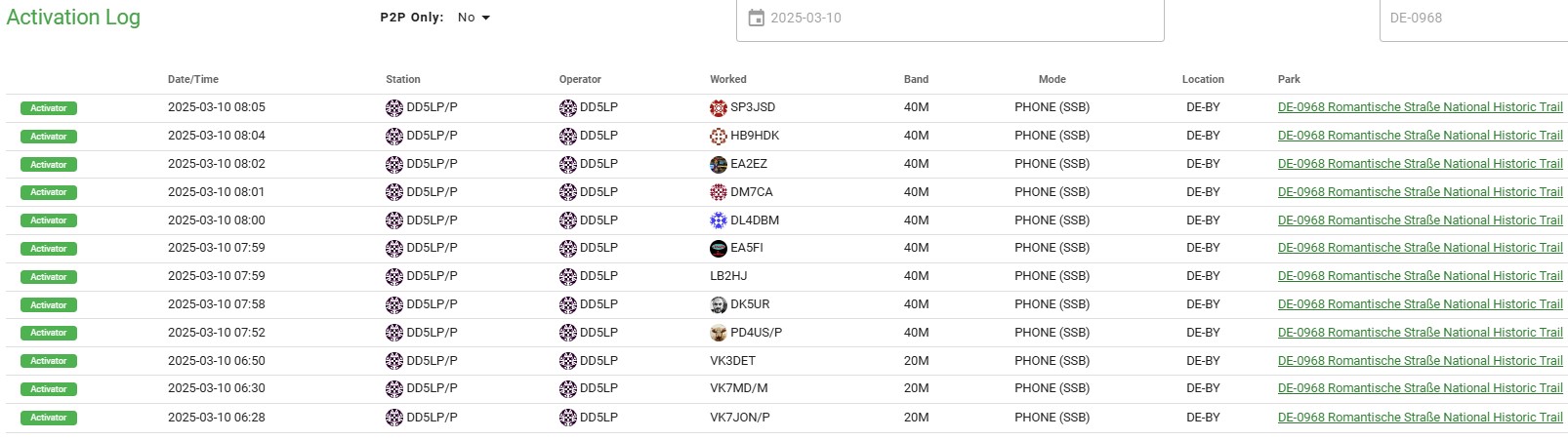
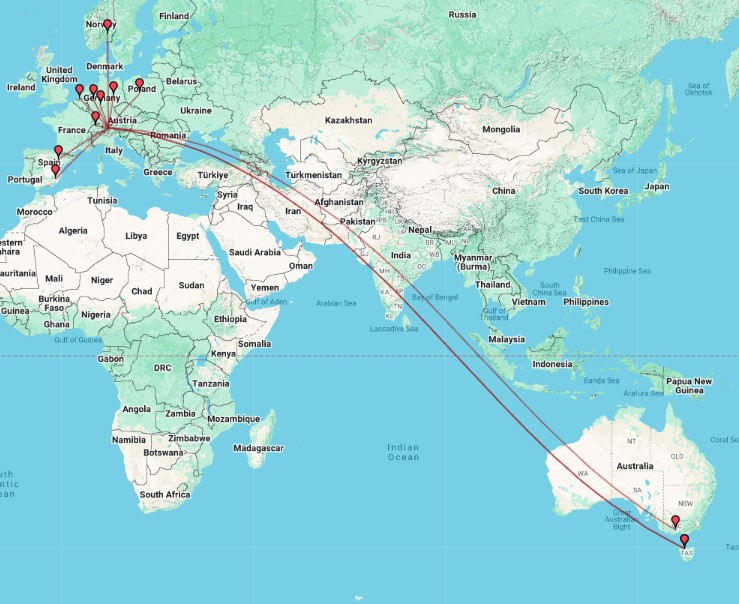
On 40m, it was FULL with European stations (I guess a lot had moved from 20m), but I managed to find a free frequency and logged 9 POTA contacts to add to the VL4R contact to make the needed 10 contacts. SM3NRY was the last contact there, and he said there had been a major Aurora with him last night, which would account for the Kp index of 7. When I then came back to 20m, it was a little better and in the next 40minutes, I could hear all of the stations – Ernie VK3DET at about S3, Jon VK7JON and Mike M9MMM/M at about S2 but none of them could hear me, I suspect I was close to their noise levels, so having 100W rather than 20W (or indeed having the “monster” HF-010 antenna working) today may have made all the difference. 

Well, at least I got out – I would have liked to have tried the new antenna, but while it is inconsistent on the analyser, it can’t be used for an activation.

Photos:
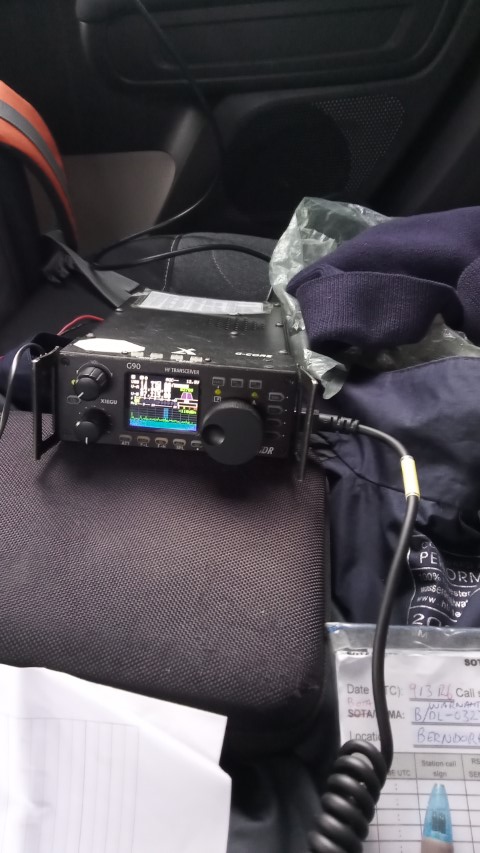
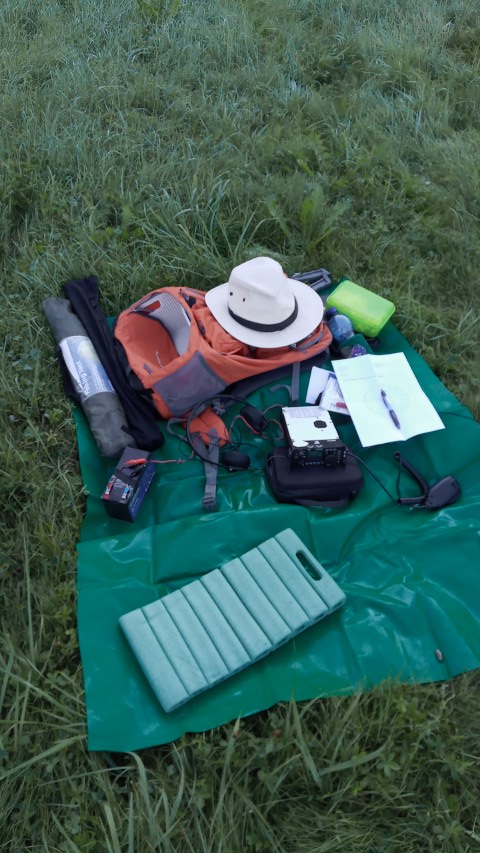
Equipment taken:

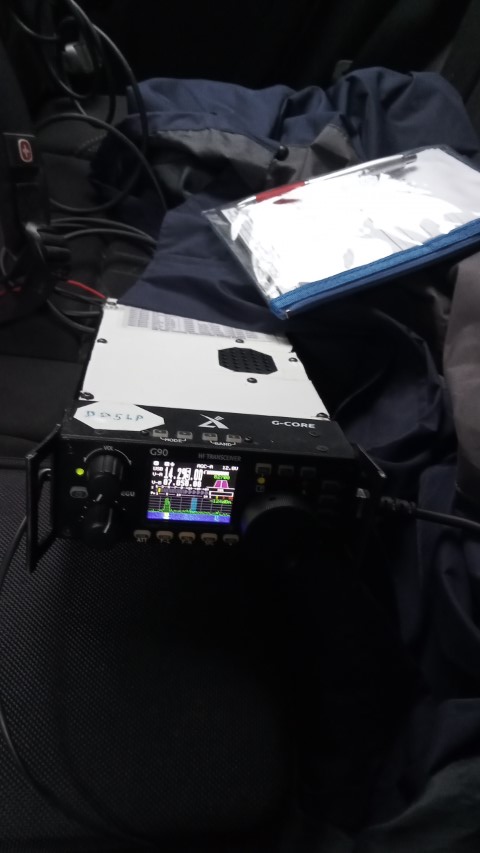
  • Xiegu G-90 HF 20W radio.
  • Three magnet car roof antenna mount.
  • Komunica Power HF-PRO2-PLUS-T loaded vertical whip.
  • 8 Ah LifePO4 battery.
  • Lightweight headphones.
  • Smartphone for spotting.

Log:

POTA DE-0663/ DE-1058
Conclusions:

I think today was definitely a day of relative noise levels. The location in the car park, in the park, is not always brilliant. It is next to a caravan park, and when it is a holiday weekend, there can be so much electronic noise coming out of there that I just have to pack up and go elsewhere, but today I can’t complain. I think while the others were fighting higher noise levels, I had a true S1 noise level (compared to S5 or S6 at home). 

73 ’til the next activation!

DD5LP/P – March 11th 2026 – Activation of 2-fer POTA – DE-0663 Lechpark Possinger Au and DE-1058 Lech Zwischen Hirschau & Landsberg

Preparation:

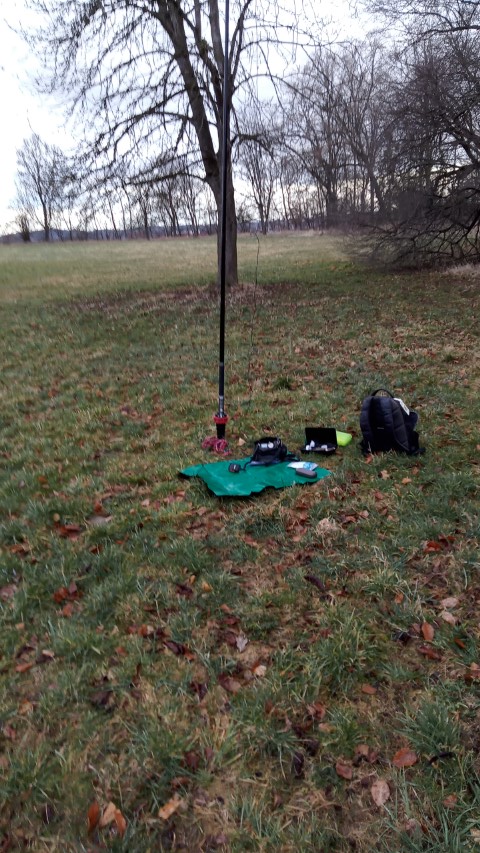
After a failed attempt at activating summit Berndorfer Buchet (HEMA DL/BY-064) and Bunker Warnamt X (DL-BOTA B/DL-0327) two days earlier (broken co-axial lead to the linked dipole antenna), this activation in my nearby park was to check the repair on the antenna and to try out the little G106 5w radio with the new microphone that I have for it. This would be a “proper” portable activation, not from the car and an early start might just bring a contact with Ernie VK3DET in Australia (although with the low power, it was questionable).

The Activation

POTA DE-0663 / DE-1058

This park is literally 10 minutes (maximum) away from my home and as such serves well for tests. Indeed with another 15 minutes walk, it contains a spot that is a POTA 4-Fer and in range of a Bunker but today, just two POTA references will do.

Set up time was short and as I warily turned ion the radio, I was relieved to hear lost of stations on 20 metres, so at least for receive the antenna is working again. To test getting out, I called a strong station calling CQ but he went back to someone else who was even stronger. I sent a message on our WhatsApp comms-testers group and Ernie was there after agreeing a frequency away from interference at each end of the path, my first contact in the log was indeed Ernie, VK3DET a clear 53/54 with me but Ernie was struggling to hear me and gave me a 33 report. The difference in power levels and my lower background noise level accounts easily for this difference. It was a valid contact and the first in the log, which it turned out was important as it took me another 18 minutes before I got contact number two in the log. Had the contact with Ernie had failed, I could have easily decided something was not working after 20 minutes, packed up and gone home.

Contacts were difficult to get on both 20m and 40m today. Of course part of it was the lower power level, however some contacts were giving me 58 and 59 reports, so I was getting out. I think part of the problem was the early hour, where some hams are still in bed and those who are up are running power and causing QRM. I had to move frequency four times because of stations splattering over the frequency I was on, meaning, hearing calling stations who were not strong, became difficult. However after a hour and ten minutes, in a damp and still cold field, I had 12 contacts in the log and packed up to go home. Both the antenna and the radio worked well, so this “test” activation of the two overlapping parks was a success.

Photos:

Equipment taken:

  • Xiegu G-106 QRP radio with ABREE microphone.
  • SOTABeams Linked dipole antenna.
  • Lambdahalba 6m mini mast and screw-in base.
  • 2 Ah LifePO4 battery.
  • 4Ah Eremit LifePO4 battery (not used).
  • Lightweight headphones.
  • Smartphone for spotting.

Log:

POTA DE-0663/ DE-1058
Conclusions:

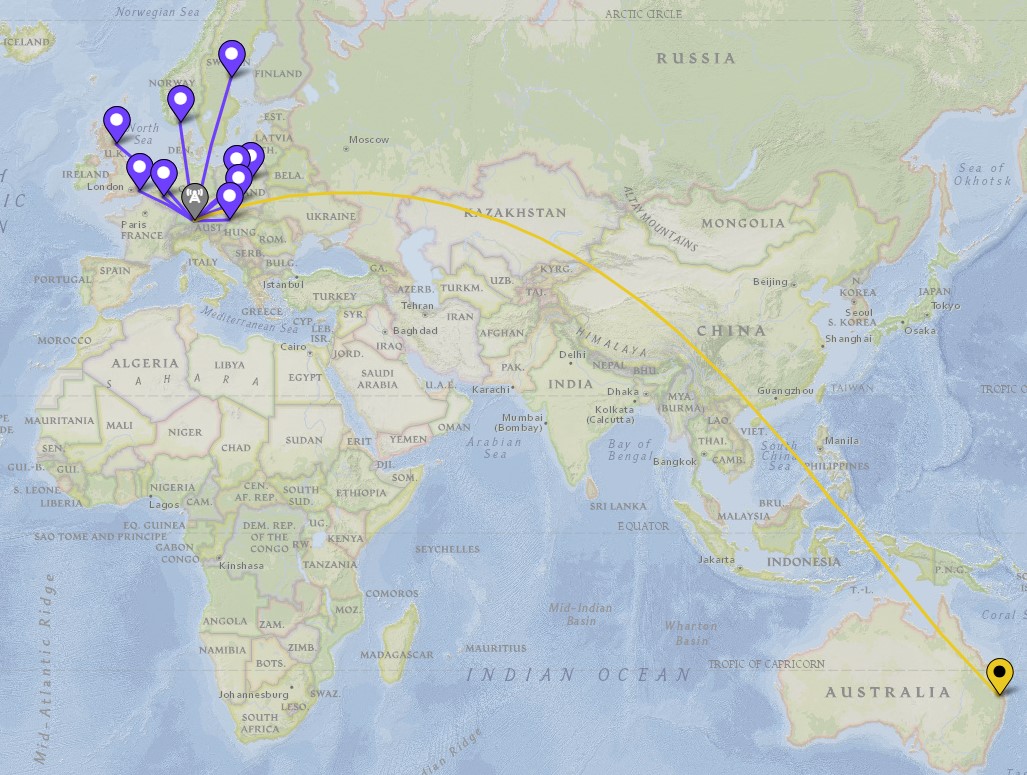
The contact into VIC, Australia, and the 2-Fer to 2-Fer P2P contact into France were the highlights of this activation. Getting contacts was hard work but the action was to check that the radio and antenna are now working as they should and that was proved.

73 ’til the next activation!
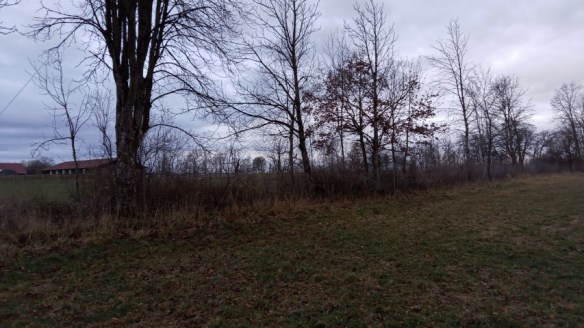
DD5LP/P 26th August 2025 – POTA DE-0663 Pössinger Au & DE-1058 Lech zwischen Hershau and Landsberg (for International Dog Day, as DL0DOG)

Preparation:

This activation was to be a POTA activation using the special event callsign DL0DOG, as this day, Tuesday 26th August, is the actual International Dog Day, although the special event call sign runs all month. I chose my local park for this action as I knew I could set up easily out of sight of most, but 100% within the park boundaries.

To give me a better chance of some DX contacts (hopefully also into the US, so that the IDD award chasers in the US would have a chance of getting a European “Dog station”). I would take my 10 metre mast, rather than the normal 6m one. This also means the need to take my surveyor’s tripod to support it. Luckily, the distance from where I park my car to where I would set up is only about 70 metres. As I also wanted to try 17 & 15m, the recently repaired linked dipole would be the antenna of choice and at 10m above ground, it ought to perform well. I would also take my 20/15/10m wire beam in case the higher bands were open.

Of course, as always, there would need to be backup, and in this case, that was an off-centre fed dipole and my HF-PRO2 loaded vertical, both of which were to stay in the car unless needed.

The day prior, I monitored the bands and was happy to see good conditions up to 15 metres with contacts into the US and Oceania. An early start was needed to be on-air by 0600 UTC, and I also booked slots with the other SES operators to use the DL0DOG call sign.

As usual, all radio gear was packed into the car on the Monday evening for the Tuesday activation, and only my pack-up would need to be added the following morning.

UPDATE: At the start of September 2025 a new park DE-1058 was added to POTA which overlapped where I operated for this activation. Under POTA rules, previous activations may be claimed even when they took place before the park was added.

The Activation

On arrival and after unloading the equipment that I would take to the site, I was surprised by the heavy morning dew on the grass and by the time I got to the site, my shoes, socks, and the bottom of my jeans were all soaking wet. OK, I wasn’t going to stop because of this, and soon the sun would come out and dry me off, right? The sun only came out nearly two hours later.

I set everything up only to find that my 10m mast was bending terribly just with the weight of the thin coax and dipole T-piece, and in trying to straighten it, one of the clips on the Dipole T-piece broke, so I changed to my usual 6m mast.

As usual, I had let my friends in Australia know that I would be out, and the first two contacts in the log were Ernie VK3DET and Jon VK7JON/M, both at a reasonable strength on 20 metres. Ernie and I tried 17 and 15 metres – nothing. I could hear a few VK stations in a net on 17m, but nothing at all apart from FT8 on 15 metres. So all contacts in this activation were made on 20m.

It appears that there is a problem (again) between the various DXCluster sites, where posting to one (in my case, using a smartphone app) DOES NOT propagate the spot to all of the others. As the IDD chasers may be watching their favourite cluster or the one on the hamlog.online landing page, this lack of transfer of spots between the sites meant my spots were not being seen.

The QRM got so bad on 20m that I could not hold a frequency; other stations simply, without even asking, started calling CQ on the frequency I had been on for 15 or 30 minutes. Others just ran carriers on and off for over 30 minutes. That wasn’t just tuning their antenna. Another Rusky nattering with his mate actually mentioned International Dog Day, so he knew he had started up on the frequency I was using. A real pain. Then later skip went short, making it even worse. In the end, I decided to pack up and run my remaining planned 40m and a late 20m IDD activations from home.

Photos:

Equipment taken:

  • Xiegu G-90 radio.
  • Komunica Power HF-PRO2-PLUS-T loaded vertical antenna (not used).
  • 10m DX-Wire mini-mast (erected but subsequently taken down).
  • Surveyor’s tripod.
  • Aerial-59 UL-440 off-centre fed dipole (not used).
  • 20/15/10m wire beam (not used).
  • Lambdahalbe 6m mast.
  • Linked Dipole antenna.
  • 8Ah LifePO4 Battery.
  • 2 x 4 Ah LifePO4 batteries (one used).
  • Small headphones.
  • Smartphone for spotting.

Log:

POTA DE-0663/DE-1058

Conclusions:

The quality of ham radio operators is deteriorating – the use of DQRM during a contest is one thing, but to crush a low-powered portable special event station is totally unacceptable.

73 ’til the next activation!

DD5LP/P 21st March 2025 – DE-0663 Pössinger Au, DE-0791 Lech Erlebenisweg & DE-0968 Romantische Straße National Historic Trail (3-Fer)

Preparation:

This was originally going to be another attempt at the park near FFB (DE-0591 Amperauen) that I have not as yet activated, to coincide with Helen VK7XYL and Jon VK7JON being out portable in Tasmania (along with Mike 2E0YYY in England, and as it turned out, also Ernie VK3DET in Victoria, Australia). The problem with the FFB park was that as the start time was around 0700 UTC and the FFB park sits on a small but very busy commuter route, the trip would take too long, so I decided to head to my local park, which conveniently has two POTA trails running through it and one small parking area qualifies for all three making the activation a “3-Fer”.

As I had just received another 4 Ah LifePO4 battery for my trip to Cyprus, this activation would serve to test that and also to test that it recharges without problems.

The Activation

POTA DE-0663 / DE-0791 / DE-0968

Although my alarm was set for 6:30 am (CET), I was already up and about at 5:30 AM, so leaving the house at 7:15 (0615 UTC) meant that I was on-site at 06:25 UTC.

Unfortunately, the forestry commission had also decided this was a good day to trim some trees around the small car park and two large machines were already there to start work. After a chat with the tractor driver, he clarified where they would be working and it would be fine if I parked just about where I had parked the last time that I was here.

As I had loaded everything in the car the previous day, all that remained to be done was to connect the HF-PRO-2 loaded whip on the roof and the battery to the radio. I immediately heard Helen VK7XYL/M at around S5 but she was talking with Mike 2E0YYY whom I could not hear at all.

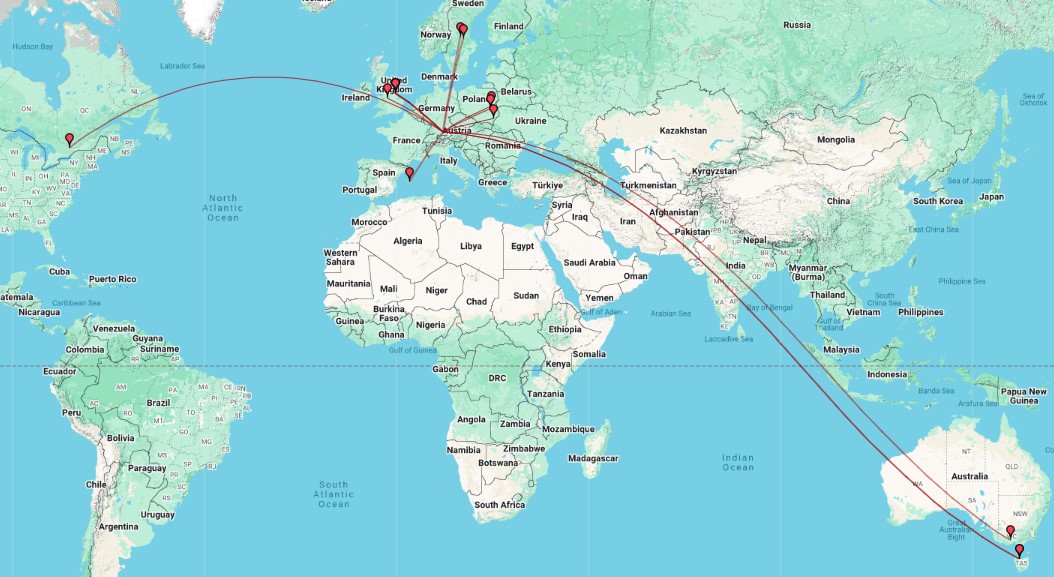
After making contacts with Helen VK7XYL/M and Mike VK7MD/M and having received only 3-1 reports from them, I decided to take a look at my antenna. I logged the correct loading coil settings about a week ago using the same antenna on the same car roof with my RigExpert antenna analyser, however now checking with the in-built SWR scan in the G90, it was not as good as I expected and adjusting the coil improved things. I wondered why this was but at the time I was more concerned with making contacts again. After this adjust I became several contacts from Poland, the UK and even one from Canada.

Considering the situation afterwards, I suspect the large tractor, towering over my car may easily have de-tuned the antenna.

Getting contacts on 20m took some time, which considering the distance I was getting, I would have thought there would be more contacts but later a caller commented there was a strong station (who I could not hear) a couple of KHz away, splattering over the frequency I was on – this may be part of the reason for a lower number of calls than normal.

As I packed up the forestry guys were also finished and stopping for a coffee.

Photos:

Equipment taken:

  • Xiegu G-90 radio.
  • Komunica Power HF-PRO2-PLUS-T loaded vertical antenna.
  • OPEK single-magnet car roof antenna mount.
  • 2 x 4 Ah LifePO4 battery.
  • Lightweight headphones.
  • Smartphone for spotting.

Log:

POTA DE-0663 / DE-0791 / DE-0968

Conclusions:

The activation went well. The new battery worked without issues, so it becomes part of the equipment I will take to Cyprus.

73 ’til the next activation!

DD5LP/P 10th March 2025 – DE-0663 Pössinger Au, DE-0791 Lech Erlebenisweg & DE-0968 Romantische Straße National Historic Trail (3-Fer)

Preparation:

My previous activation attempt failed without any contacts being made from a park near FFB (DE-0591 Amperauen) that I have not as yet activated. The problem was that the ever-reliable G90 radio for some unknown reason kept losing power and when that happened, the radio reset various settings and indeed following one re-power-on, it started to squeal and flash an error message on the screen in red. As I could not do anything in the back of the car, I had to abort and head home.

At home my actions included reloading the radio’s two firmware files, doing a factory reset, replacing the microphone lead as well as building a new power lead for the radio. This was all tested in the shack and the problems did not re-occur but of course, the only true test is to run the radio in the field again. As this was the configuration that I intended to take with me on my holiday to Cyprus in a few weeks, I needed to know that all was now fixed so planned this activation.

Rather than heading back over to FFB, I decided to just head down to my most local park (DE-0663) / trail (DE-0791) (2-fer) which is about a 10-minute drive away from home. In fact, after completing the activation, I saw that a brand new trail has been added to POTA (DE-0968) and it also runs through my exact location, so this has become a 3-Fer activation, not just a 2-Fer!

The Activation

POTA DE-0663 / DE-0791 / DE-0968

Saturday and Sunday saw major Solar Storms, with high noise levels and a suppressed MUF expected for Monday morning. Nevertheless, I set my alarm for 6 am (CET) to be at the site and set up by 0615 UTC as originally Dave G4AKC (who was on holiday in Cyprus) had planned to come on, but unfortunately, he was not feeling well. 20 metres often opens “locally” across Europe before the long path opens down to VK and hence I had hoped to get a contact with Dave on the rocks alongside the Mediterranean Sea.

Surprisingly after setting up, I could hear Jon VK7JON/P in Penguin on the north coast of Tasmania and we managed a contact despite an S6-S7 noise level at his end. Next in the log was Mike VK7MD/M about 10 km down the coast from Jon. It took a little longer before I made a scratchy contact with Ernie VK3DET, but the signals improved a little later. This was very early for 20m long-path. Mike 2E0YYY was also out portable at Merryton Low near Stoke on Trent but despite trying many times during the 2 hours that I was operating, I was unable to make contact with Mike today. “0 metres was not a good band today – apart from the usual Italian, Greek and Russian stations and the three VK stations, I heard no one on the band.

Switching to 40 metres enabled me to collect enough POTA hunters to qualify the activation. Some told me they had listened for me on 20 metres and heard nothing as the band was so bad.

The main result of this activation, however, was that the radio had operated normally and while I will make at least one more test activation before leaving for Cyprus, I am relieved that this one went so well.

As I packed up rain started and persisted for the next 3-4 hours, so I was lucky after all with the early start.

Photos:

Equipment taken:

  • Xiegu G-90 radio.
  • Komunica Power HF-PRO2-PLUS-T loaded vertical antenna.
  • OPEK single-magnet car roof antenna mount.
  • 4 Ah LifePO4 battery.
  • 8 & 2Ah Eremit LifePO4 batteries (not used).
  • Lightweight headphones.
  • Smartphone for spotting.

Log:

POTA DE-0663 / DE-0791 / DE-0968

Conclusions:

The activation went well. The bonus that I will be listed as the first activator of yet another new trail is a nice bonus. If the next activation using the same equipment goes without issues, I will be more happy with the equipment planned for the Cyprus trip.

73 ’til the next activation!

DD5LP/P – January 14th 2025 – Activation of POTA DE-0663 Pössinger Au & DE-0791 Lecherlebnisweg (2-Fer) (revised report).

Preparation:

Having not been out portable for some time, I was eager to return to nature. The problem is the sub-zero temperatures that we have here in Bavaria in January. Given that it is allowed to operate from a vehicle in the POTA scheme (not so in HEMA, GMA or SOTA), I decided to see if I could activate from the car, just with the HF-PRO2 loaded vertical antenna on the car roof, so that the only action outside (apart from taking photos) would be attaching and detaching the antenna – everything else would be prepared the day before inside the car (on the passenger’s seat).

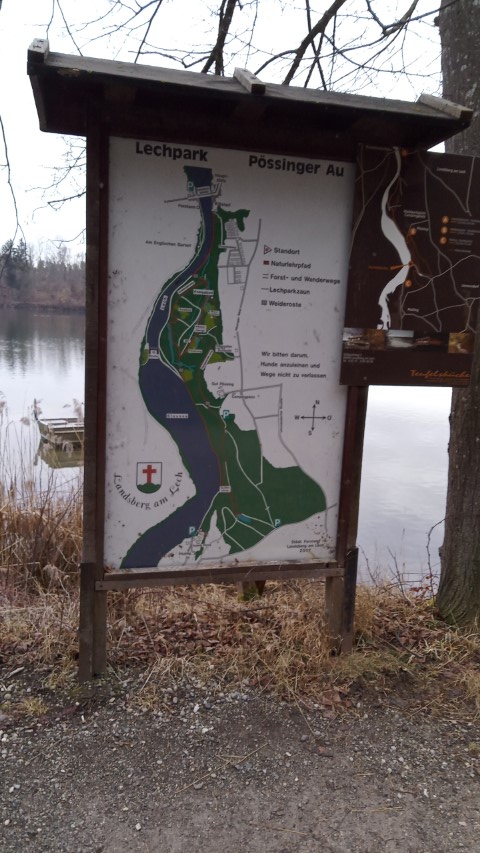
Looking for a location, I have two POTA entities close by. One is DE-0663 Pössinger Au Park and the other DE-0791 Lecherlebnisweg Trail. At a few points these combine (such as when within the animal park south of Landsberg am Lech. The problem is that no cars are allowed in the “Wild Park”. However, at the southern end of the Au (forest), a small car park fits my hopes of combining the two entities into a “2-Fer” as it is still in the “au” and on the “weg”.

It was only the day before the planned activation, that I read some comments on Google Maps that the car park is private and only for use of residents of Pöring, where it is located. I did have a reserve location but I decided to go and see for myself and if there were any issues, then drive to the alternate location – which was in the park but not on the trail, so it couldn’t be a 2-Fer activation.

The equipment was all packed into the car and set up on Monday afternoon for an early start on Tuesday to catch the 20m long-path propagation opening to Australia (somewhere around 0730-0800 UTC).

The equipment would be the ever-reliable Xiegu G90 and the Komunica HF-PRO2 antenna on a magnetic mount on the car roof. I planned to operate only on 20 metres.

The Activation

POTA DE-0663 & DE-0791

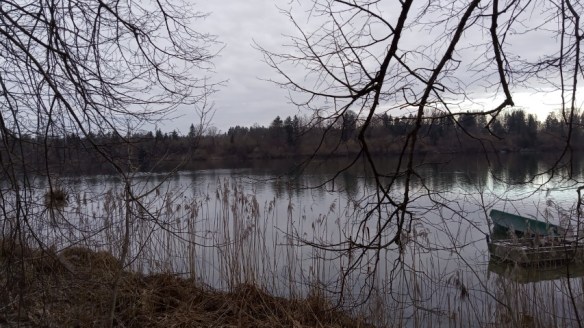
The weather was not nice—around minus nine degrees when I set off on the 10-minute drive to the parking spot. Thankfully the small country roads were not iced over as they had been a couple of days previously. The trip to the spot was uneventful and when I arrived the small (perhaps 5-car,) parking spot was empty. There were no signs restricting its use only one saying please leave space for two fisherman’s cars. This spot has a small ramp and (as you’ll see in the pictures) a few dingies moored in the water. The footpath that leads from this spot goes to the well-known “Devil’s Kitchen” restaurant and I suspect the issue is that in summer, the fishermen can’t get to the ramp for cars parked here by those walking along the river to the restaurant rather than using the (further away) allocated restaurant car park in the woods. In winter, it seems, people park here and go for walks, with or without their dogs. So no problem with my using the spot.

It was literally a 5-minute set-up time and then I found a spot on the (empty apart from Russian amateur stations) 20m band. I got no replies to start with. Then John EA5JMN called from 80km west of Alicante in Spain, with a very British accent he was a good 59 signal and gave me a 58 as we chatted for almost 10 minutes. He was not a POTA chaser and had just heard me calling and wanted to let me know I was getting out. What a gentleman. So the day started with an ex-pat to ex-pat contact! The contact with John was followed by two more Spanish and one French contact before things went quiet again – at this point Ernie let me know that he was heading to his shack and 5 minutes later we tried for a contact but while I could give Ernie a 52 report, he could not hear me. The third of our merry group, Mike 2E0YYY/P was setting up on Merryton Low (a GMA summit in the UK) but as he was also suffering the cold weather he would also operate as I was doing from inside his car (coincidentally also a Peugeot). At 0813 UTC we managed an exchange at 31 both ways, the band certainly had not opened up fully yet. 4 minutes later however I had a contact into eastern Cornwall to Steve G4BVB in the Taemar valley with 59 +10dB signals both ways – indeed I was off the back of his beam! it looked like conditions may be getting better so at 0825 UTC I managed to contact Mike 2E0YYY/P and Ernie VK3DET at 53 all around. Mike had some of his club members on frequency, who wanted to try for a contact with Ernie, so I said my goodbyes as I still needed several more contacts to “qualify” the park & trail. Ten contacts are needed in POTA whereas only 4 are needed in the mountain award schemes. It could be worse the WWFF scheme needs 44 contacts!

I managed another 6 new contacts in the following 10 minutes, so with a total of 12 different contacts in the log, I went back to see how Mike and Ernie were getting on. The band had really changed now and both were good 59 signals so I called again to say I was closing down and heading home to the warmth but to also say that 0845 UTC rather than 0745 UTC now seemed to be the best time to get onto 20 metres for some SSB contacts half-way around the globe! Next time I should try for 40m Greyline into New Zealand first as the greyline should once again become useful for DX contacts and it is less affected by solar storms.  

Photos:

This slideshow requires JavaScript.

Equipment taken:


  • Xiegu G-90 radio.
  • 6-metre mast and linked dipole (not used).
  • Komunica Power HF-PRO2-PLUS-T loaded vertical antenna.
  • Three magnets, car roof antenna mount.
  • 8 Ah LifePO4 battery.
  • 2 Ah Eremit LifePO4 battery (not used).
  • Plastic painter’s sheet and seat pad (not used).
  • Lightweight headphones.
  • Smartphone for spotting.

Log (same for both POTA entities):

DE-0663 Pössinger Au & DE-0791 Lecherlebnisweg 


Conclusions:

  • Operating from the car does work fairly well, once set up, especially in sub-zero temperatures.
  • 0845 UTC is when I should have been starting, not 0745 UTC.
  • There needs to be a better map showing all POTA trails – at the moment, they are only shown as one dot, somewhere along their length.

73 ’til the next activation!