DD5LP/P – November 11th 2022 – POTA DA-0006 Augsburg Westlische Wälde naturpark.

Preparation:

This was to be my first POTA (Parks on the air) activation. POTA is like WWFF (an award scheme in which I haven’t taken part) but was formed in the US as a follow-on from the ARRL National Parks on-the-air celebration. It has taken off in the US and now is spreading internationally. They have a good spotting and logging web infrastructure, which is essential nowadays. The award definitions are very varied and nothing like the other schemes that I take part in. A minimum of 10 contacts are required to qualify a park activation and the activation itself can take place anywhere within the park’s boundaries. For some POTA awards, the park can be activated more than once a year.   

What attracts me is that this park is only a 30-40 minute drive away from my home (in fact it’s even closer but I picked a nice spot by a large lake to go to). There are no rules forbidding motorised transport or operating from a parked car, so for this first one, I decided to do just that. I wouldn’t even put up the mast and linked dipole, rather I would use the Komunica HF-PRO2 on a three-magnet mount on the car roof and operate from within the car. as it turned out with temps between 4 and 8 degrees centigrade, this was a wise plan!

I installed the appropriate POTA spotting App on my phone and checked it was working. 

This activation would take place late morning, so that I could take the dog for her morning walk before leaving and get back just after lunchtime having spent about 90 minutes operating. Nothing needed to be loaded in the car until the morning of the trip with this later-than-usual start.

This was going to be a trial of this “luxury” set-up and my, chosen from maps, location to see if it was indeed accessible.

The Activation

POTA DA-0006

I decided to take the country road route rather than the autobahn as according to Google it would only take about 5 minutes longer. This was true however the number of small villages this took me through was a pain, so the return route would be via the Autobahn.

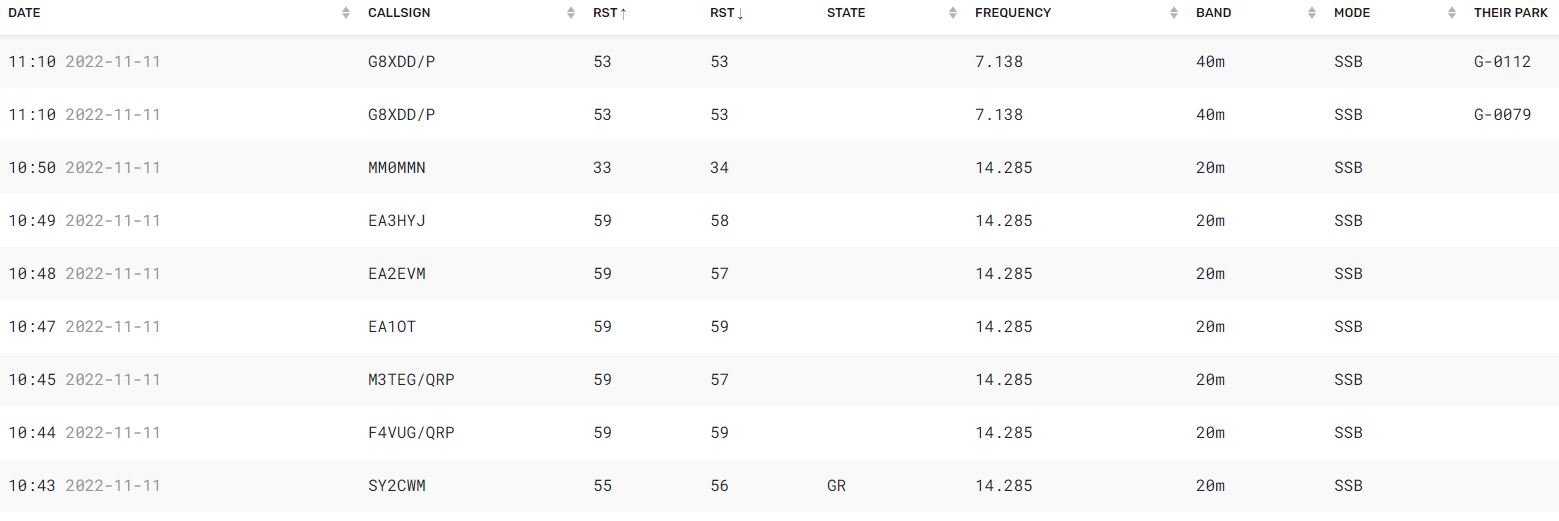
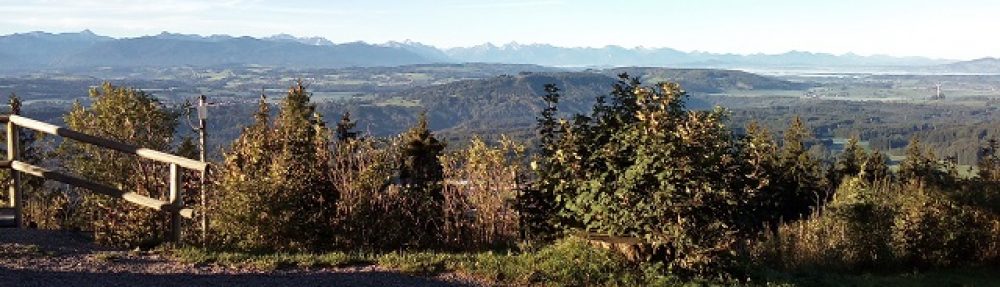
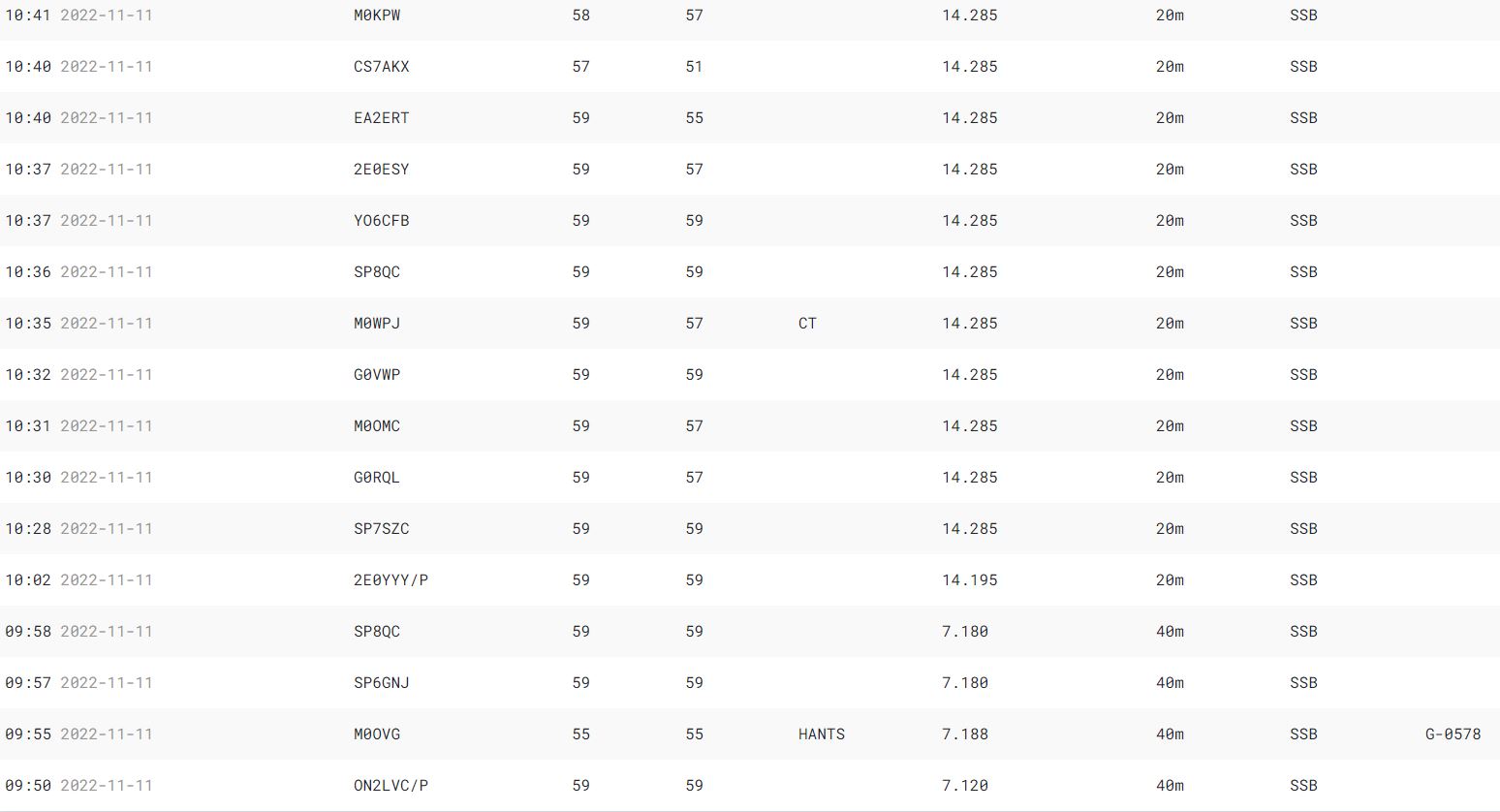
On arriving at my site, I took a walk around and made some photos before returning to the car, setup up the radio and antenna and tuning around to see what I could hear. I started on the 40-metre band which was full of stations from end to end (and this was a Friday, not a weekend). I found one portable station calling CQ, so I decided to give him a call to make sure I was getting out. No Issues – a short, 59 each-way contact with Luc, who was actually activating a WWFF park location.

I then saw another POTA activator on the spotting page and called Stuart M0OVG for my first “park-to-park” contact with 55 reports each way.

Now that I was happy that everything was working, I found a free frequency and spotted myself on the POTA website and got a couple of calls from Poland. At this point, I managed to contact Mike 2E0YYY who was still out in his local park (not POTA), so I moved to 20m to work him and to test out the new QRP radio – a Xiegu G-106 which I had along as well as the Xiegu G90. Tests were performed and while the little G106 with my external RF-Clipper speech processor was workable it was down a couple of S-Points on the more powerful G90 radio, which was running 20 watts of the speech-compressed signal.   I still have the feeling that the G-106 is not as loud as it should be however in these tests the 20m band was up and down with QSB and so a really accurate test was not possible.

When I finished with Mike, I re-spotted myself on the POTA website on 20m and the calls started. I ended up with 20 contacts in 45 minutes. A lower rate than when I do a SOTA activation but not bad for a scheme that is still new in Europe. I finished off back on 40m to get another Park-to-Park contact with Dave G8XDD/P who was in two different parks at the same time, in the UK.

All in all, I think this went very well for my first POTA activation. Although the site was fine, I may try a different location the next time that I activate this park, given that there are locations all over the 1100 square kilometre park to choose from!

 Photos:

POTA DA-0006:

This slideshow requires JavaScript.

Equipment taken:

  • Mountaintop travelling 40-litre rucksack.
  • Xiegu G90 radio & Xiegu G-106 radio.
  • Komunica Power HF-Pro2 loaded vertical antenna with a three-magnet car roof mount base.
  • Lamdahalbe 6m mini-mast (not used).
  • SotaBeams linked dipole (not used).
  • 4 Ah and 2Ah Eremit LifePO4 batteries.
  • 4 Ah LiHV battery (not used).
  • Painter’s thick plastic sheet (not used).
  • Gardener’s kneeling pad (not used).
  • Lightweight headphones (not used).
  • Smartphone for spotting.

Log:

DA-0006 Augsburg Westlische Wälde Naturpark
Conclusions:

  • For a first activation, this went well but I think (unless the weather stops it), I’d prefer to operate away from the car in the future.
  • I’m still not convinced that the G-106 radio is performing as I expect it to. It’s good that the added speech processor is making it easier to hear but I’m not sure that I could rely on its signal if I used this radio on holiday. Receive is fine but there’s something “lacking” on transmit, even for a 5w QRP radio.

73 ’til the next summit(s).


DD5LP/P – October 18th 2022 – DL/AM-060 Laber.

Preparation:

The plan was to try out my new ultra-small QRP Xiegu G-106 radio from a summit. I had tried it from a park and in fact, made a contact with GB22NH at the UK’s National Hamfest from my back garden, using the small radio and small antenna but the advantage of being on a SOTA summit is that once you spot yourself on SOTAWatch you will undoubtedly get lots of calls (especially for this 6-point summit). In fact I realised later that this summit is also within a POTA park and hence all contacts count for that award scheme as well as for SOTA. I had a report of corrupted audio previously, possibly caused by RF getting into the radio and since that report, I have added clip-on ferrites and more radial wires to the antenna base. I also found that the microphone gain was set too high – hopefully, this test session on the Laber summit will clarify if I still have a problem or not. 

The cable car starts at 9 am local time (0700 UTC) so by the time I would be on the summit, it would most likely be too late for any of the DX contacts we have been seeing over the last few weeks into VK on 20m SSB.

Rather than just take my new small radio and its also small, Diamond RHB-8B antenna, I decided to take my normal G90 radio and its antennas as well. The Kommunica HF-PRO2 loaded vertical and the linked dipole and 6-metre fishing pole.

My normal location at Laber is close to the top station of the cable car but looking at the map, there is another area that may have some more space and is still within the activation zone. I would try to go there and see how that was as I could always go back to my normal location if needed. As I wanted to be in the first cabin up, I packed the car and set the alarm for 6:30 am, Monday evening for a not SO early start at 7:45 am on Tuesday morning.

The Activation

DL/AM-060 Laber DA-0003 Ammergauer Alpen region

The drive down was uneventful – a route I have taken many times before. I arrived at the cabin lift’s car park at 8:50. The parking fees like most things have gone up – it is now €5 for 4 hours of parking where it used to be only 3, and the machines only take coins but I was aware and prepared for this.

After buying my lift ticket, I waited for the cable car. This is a small lift, in fact, the oldest still running in Bavaria, perhaps even Germany and there are only 4 cabins on the system, each coming about every 15 minutes. I indeed got in the first car and alone, so that I did not need to worry about COVID but wore my mask anyway (it is no longer compulsory but I’d say about 10-15% of people still wear them when inside public areas and the mandatory wearing is likely to come back in the next few weeks in any case).

On the way up the mountain, I checked the spotted SOTA activators and saw that Andrew VK1AD was still out and working stations in Europe. For that reason, I decided to go straight to my usual spot – a bench on a rise about 30 metres from the lift building and I set up the HF-PRO2 vertical antenna as putting the dipole up here is difficult and would have taken more time. Once I had the equipment set up, I tuned to Andrew’s spotted frequency only to hear an Italian station chatting there. So either Andrew was below this signal or he had already called it a day. I later heard a couple of other VK, home stations one of which I tried to call but there were too many high-powered home stations calling him that I stood no chance.

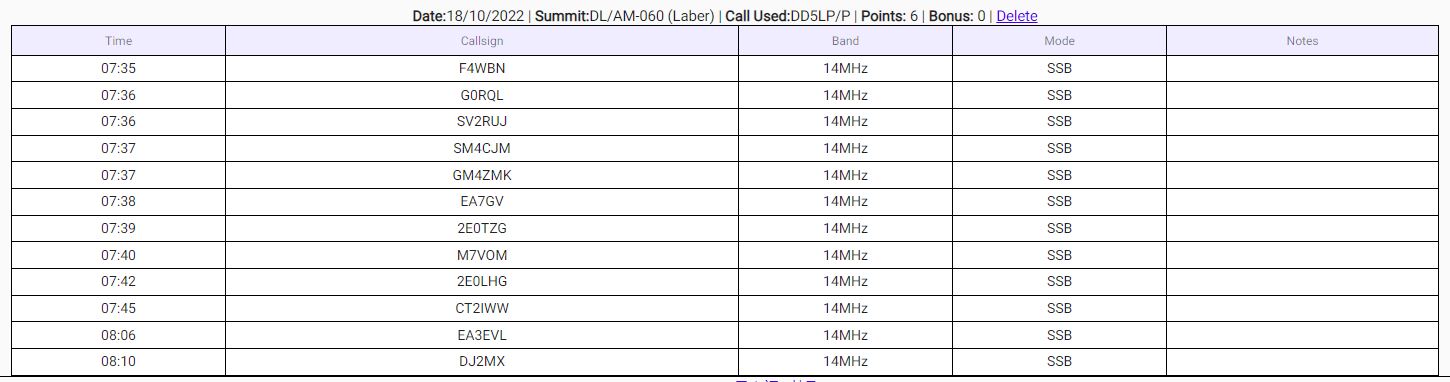
I wanted to see how I was getting out with the Komunica vertical, so I found a free frequency on 20m, spotted myself and started calling CQ SOTA. The calls came in thick and fast and within 9 minutes, I had 9 contacts in the log, all of them giving me very good reports – often over 5 and 9. These were all stations within Europe as the band had changed to short skip, which is normal from around 0730 UTC at the moment.

Once the calls dried up, I decided to set up the QRP radio as well, after all, I was there to test the new radio. there was enough room to set up both radios and both antennas so that I could switch between to do checks.

My next call on the 20w radio was Mario DJ2MX in Munich – he was a good signal – not as strong as some of the french and UK stations that I had worked earlier but I was pretty sure that Mario would help me with my tests, so I explained the two different radios and antennas and he agreed to make a comparison. On receive Mario was the same strength on both radios but he could not hear me on the G106 with the Diamond antenna. I checked and found the power was down on the low setting of about 1w, so I changed that to the high setting of at least 5W, usually nearer to 7w – he still could not hear me. I also have two microphones for the g106 – the stock one and a modified HT microphone with higher output. None of this helped. Mario said he could hear “something” in the noise but could not really tell that it was me. The next test, once I found the needed BNC to SO239 adapter, was to try the G106 with the Komunica HFPRO2 antenna instead of the Diamond RHB8B. An immediate result! He could now hear me but he also reported what sounded like RF Ingress getting into the audio. again I switch microphones and adjusted the mic gain but nothing helped. I still have a problem when operating with a portable antenna and the g106.

Time was getting on and I wanted to get home around noon, so I thanked Mario for his help (he had to go as well) and then packed up and went to await the next cable car back down the mountain.

Some would say this was a disappointing activation – not making any DX contacts and not working anyone with the small antenna / small radio combination but as my intent was to test the new radio and see where I am with it – it was (in my eyes) a successful trip. The Komunica HFPRO2 performed brilliantly again, the diamond antenna on the other hand was a letdown. I am really happy that I suffered the extra weight of taking both the normal station and the new station up the mountain as had I just taken the G106 and the Diamond antenna, I would most likely have got very few contacts – if any at all.

The weather was also kind, despite a couple of small showers on the way down, the summit was dry and sunny. Not warm but sunny. The views once the mist lifted were also worth the trip.

Photos:

DL/AM-060 Laber

This slideshow requires JavaScript.

Equipment taken:

  • Mountaintop travelling 40-litre rucksack.
  • Xiegu G90 radio.
  • Xiegu G106 radio
  • Komunica Power HF-Pro2-PLUS-T loaded vertical antenna with a modified mini photo tripod with clip-on radials.
  • Diamond RHB8B loaded HF vertical antenna with modified ultra-small support tripod and counterpoise wires.
  • Lamdahalbe 6m mini-mast. (not used)
  • SotaBeams linked dipole (not used).
  • 2 Ah Eremit LifePO4 battery (for G106).
  • 4 Ah Eremit LifePO4 battery (for G90).
  • 4000maH LiHV battery (not used).
  • Painter’s thick plastic sheet (not used).
  • Gardener’s nealing pad (not used).
  • Lightweight headphones.
  • Smartphone for SOTA spotting.

Logs:

DL/AM-060 Laber

Conclusions:

  • The “star of the activation” was certainly the Komunica HF-PRO2-PLUS-T antenna, and the flop was the Diamond RHB-8B antenna.
  • Band conditions had just changed to short skip so it seems 0600-0730 is the best time for long path contacts into VK on 20m SSB at the moment.
  • The G106 still needs some work to improve the transmitted audio and it needs a better antenna than the Diamond but it needs to be small as the intention with the G106 is to have an ultra-compact “holiday station”.

73 ’til the next summit(s).