VK2JI – SOTA AUSTRALIA – “Reccy” of future VK2 Sydney region summit – Canoelands Ridge 25th. August 2013

Canoelands Ridge – likely to become VK2/SY-001 SOTA Summit

IMPORTANT NOTE TO PROSPECTIVE ACTIVATORS!

The location described below while OK for chasing, is NOT acceptable as a location to activate from as there is a dip between the actual summit and this piece of land. The actual summit is on private land and has a 33KV electricity tower sat on it – so you will need to find an alternative location within the activation zone. See the flooded to 25m from summit graphic below, as you’ll see there “ought” to be more options back towards Canoelands itself.

canoelands 25m activation zone

Background:

With all regions of the VK2 association now submitted by Andrew VK2UH ( thanks Andrew ) to the SOTA Management Team in the UK for verification and acceptance, I decided it was time to check out another likely (easy) future SOTA summit “close” to where I live. Close is relative when it comes to roads outside of Sydney as while the summit is not so far away from my home as the crow flies, it takes 1.5 hours of hard driving with no traffic jams to get there.

Canoelands Ridge is in the Marramarra National Park.

Before going, I took a good look at the summit and it’s access using Google Earth, Google maps and the NSW governments SIX maps. As it turns out the actual summit is on private ground right where the 33KV electricity feed comes across however the height difference from the road (which runs along the top of the ridge) to the summit is marginal – in fact looking from the road you cannot see any height difference to the actual summit. This means that under the activation zone ” within 25 vertical metres” rule almost anywhere along side the road is acceptable. Here is the next problem however as all of the houses in the area have their nicely maintained gardens going right up to the road side, so a simple pull-off is not possible.

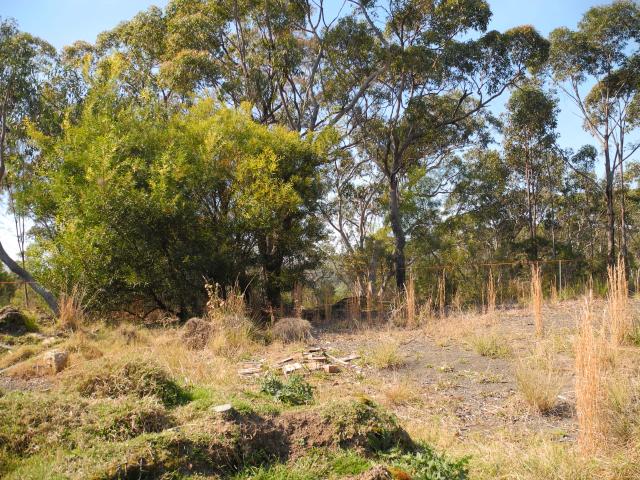
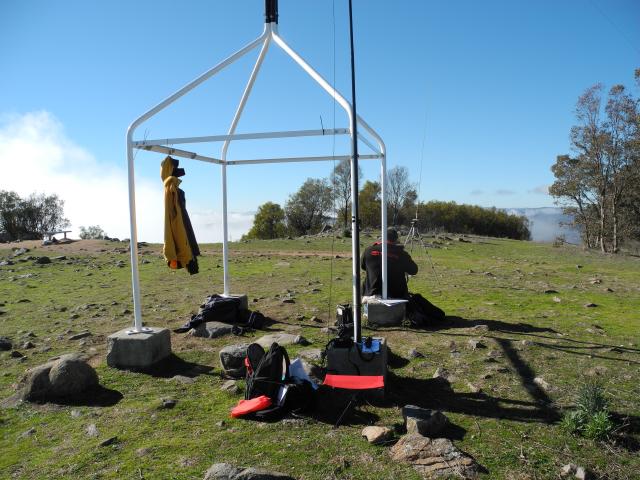
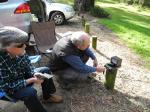
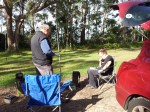
After going back to Google Maps and using “street view” to “walk” along the road, I found a likely spot on a junction from Canoelands Road with a smaller (unnamed) road which occurred before the road started to drop in height (Google Maps references this as No. 61 Canoelands Road for any others who may look for this spot in the future). I decided this is where I would head for and if not suitable continue my search from there. Luckily this spot of waste land with it’s dumped wood and barbed wire was where I expected it and indeed suited the purpose. I drove about a kilometre in all directions from this spot and found nothing better, so I set-up there. This waste land was crossed by 440V power and telephone lines (as you will see in one of the photos below), luckily however these caused no interference and in fact this site appears extremely RF Interference clean.

As this was only a “reccy” and a chance to chase a few VK1 & VK3 activators, I drove to site and didn’t perform a walk out / walk back into the activation area but this will need to be considered when it is used as a SOTA summit as to drop 25m vertically using the access tracks would probably entail walking 10 kilometres or more !

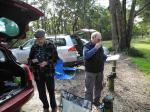
I had headed out early leaving home at 7am to be set-up in-time for the first activators that were scheduled for 9:30am local time. Well they were a little early but so was I due to finding the site without issues. My first contact was with Al, VK1RX/P on VK1/AC-030 with an amazingly strong signal. Following Al I called and worked several other activators (see list below) three of them both before and after UTC change-over. It’s amazing what can be done with QRP and a good site, as I realised later. You see I had caught the power setting on the FT-817 and even though I had an external battery connected, the rig was in fact only putting out ONE WATT for the first 6 contacts and when I realised something was wrong, I changed the setting, to what I thought was 5W but after arriving home, I found that in fact my 7th, 8th and 9th. contacts were still not at “full” power as the FT817 was in fact set to 2.5W output at that stage.

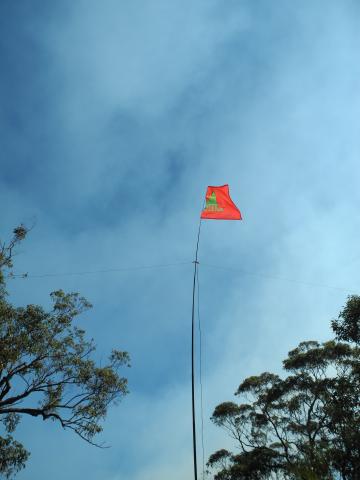
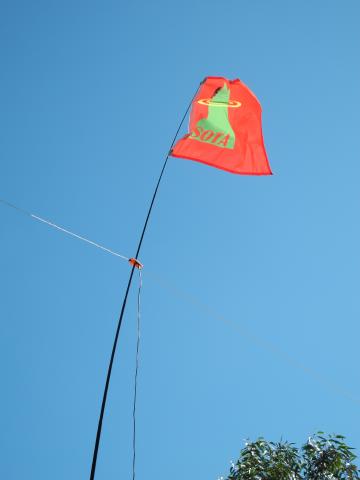
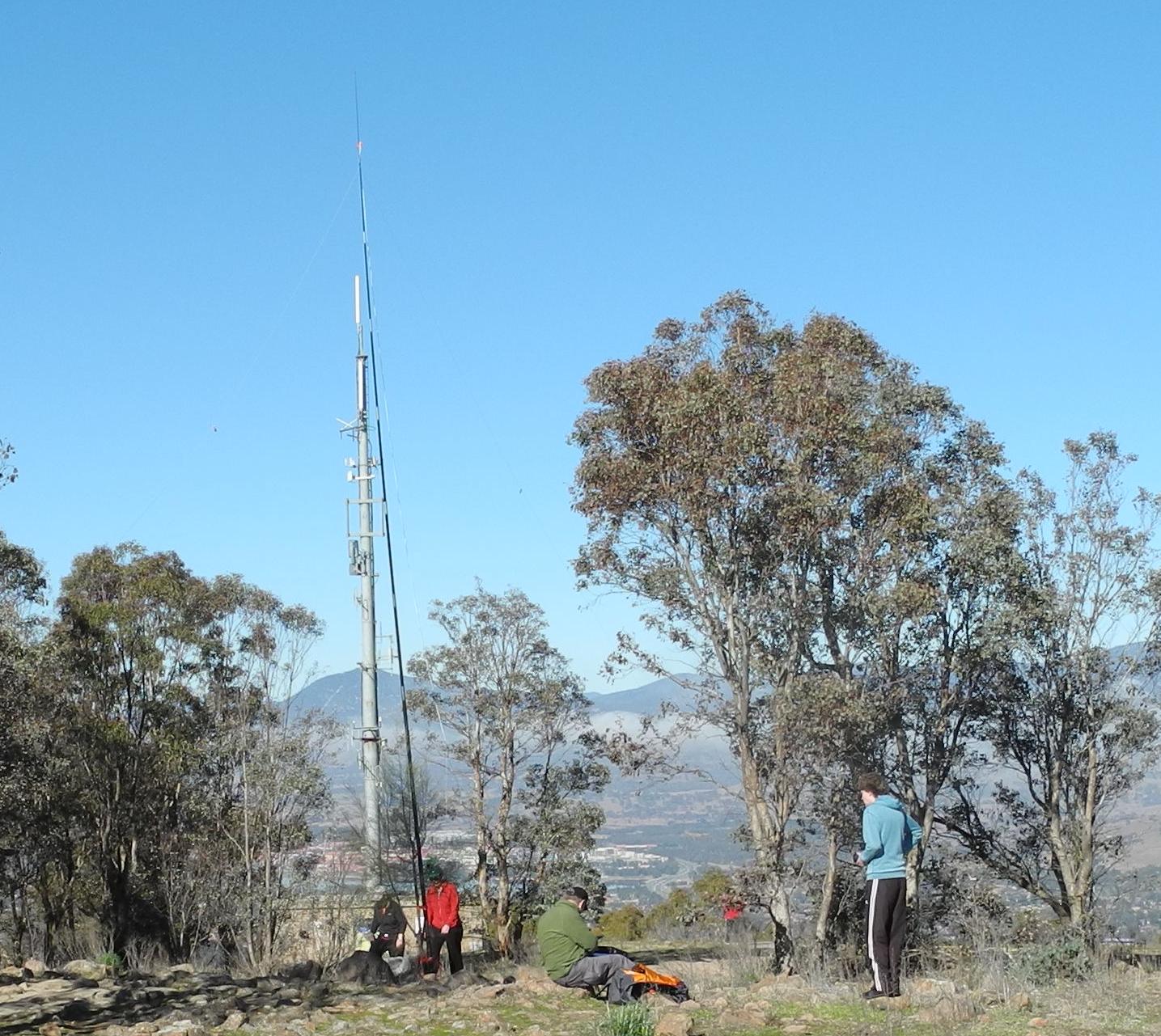
The rest of the equipment used was a 6m squid pole, a SOTABeams linked dipole antenna and of course the SOTA flag – now modified by soldering Alligator clips to it so that it clips easily to the top section of the squid pole.

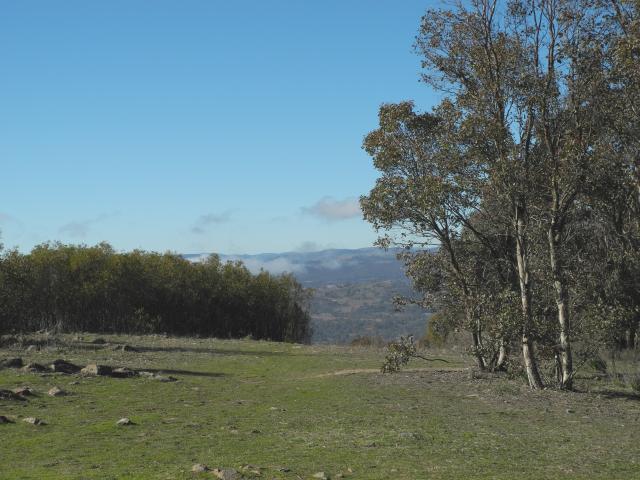
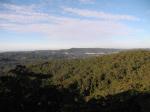
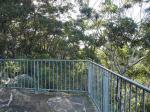
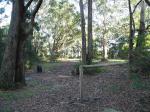
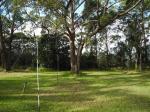
Canoelands Ridge - Scrub land.

Canoelands Ridge – Scrub land.

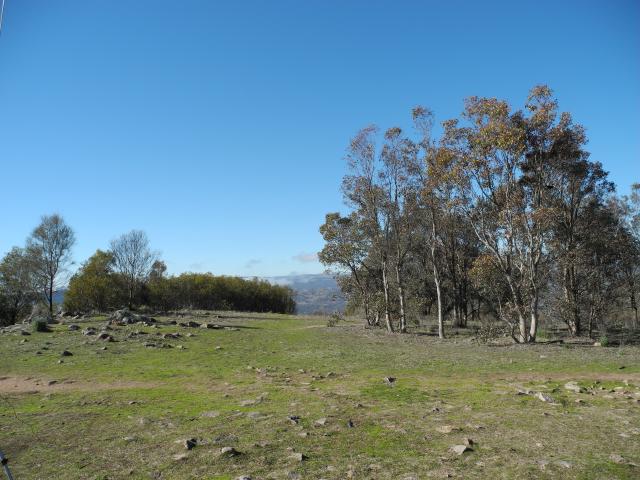
Canoelands Ridge - Scrub land.

Canoelands Ridge – Scrub land.

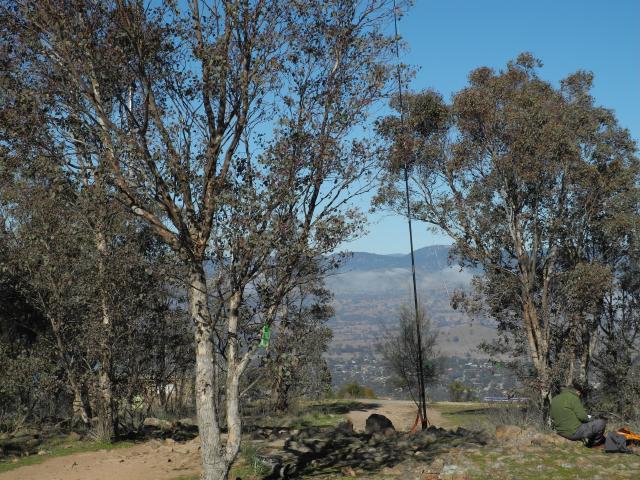
Canoelands Ridge - overhead cables

Canoelands Ridge – overhead cables

Canoelands Ridge - Antenna

Canoelands Ridge – Antenna

Canoelands Ridge - SOTA Flag flying!

Canoelands Ridge – SOTA Flag flying!

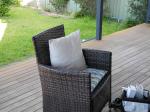
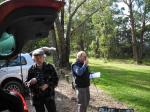
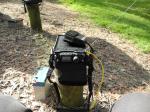
Canoelands Ridge - Equipment "table".

Canoelands Ridge – Equipment “table”.

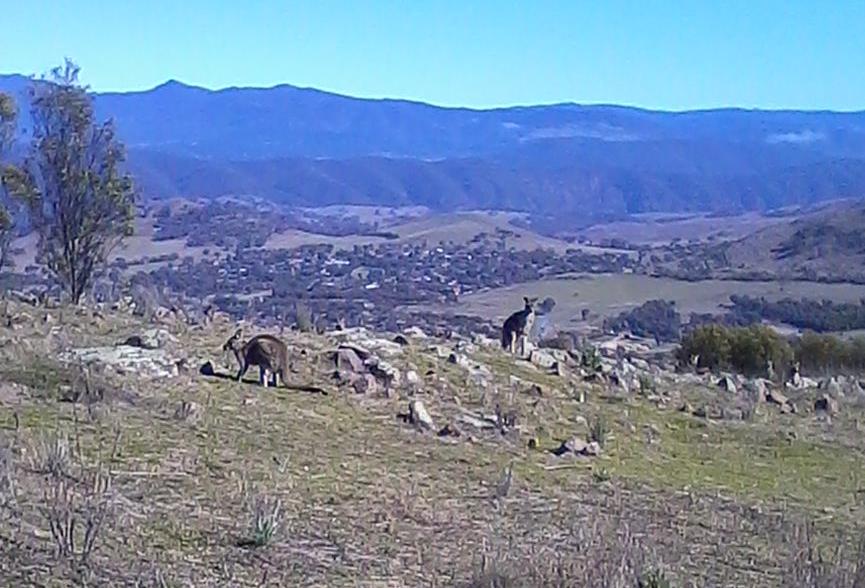
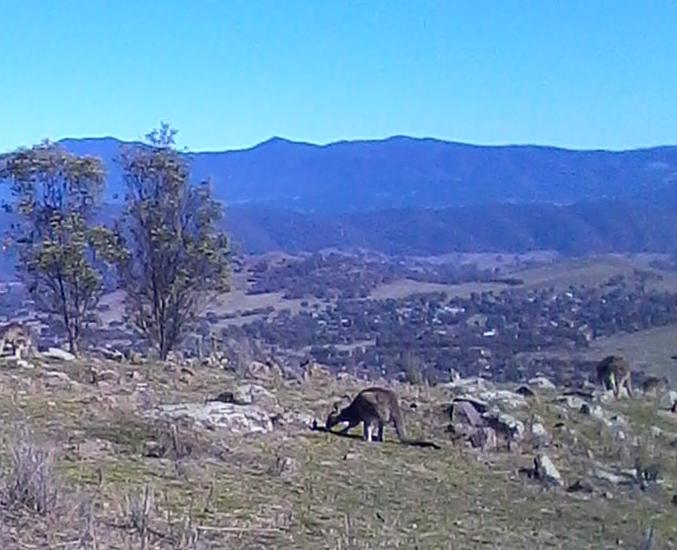
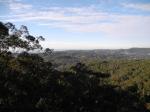
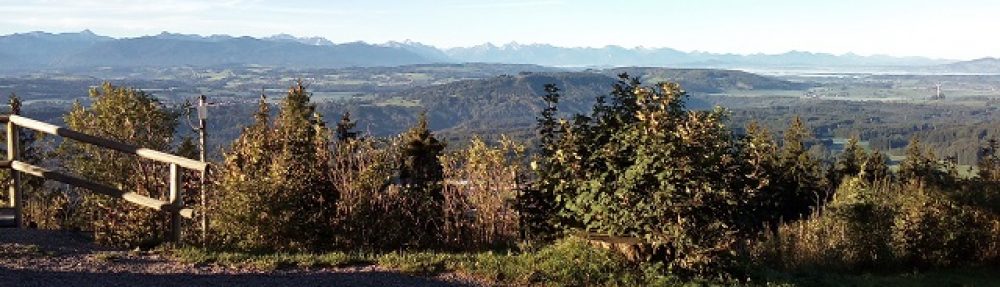
Canoelands Ridge - view to bush in the direction of the Hawkesbury river.

Canoelands Ridge – view to bush in the direction of the Hawkesbury river.

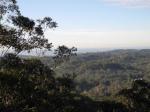
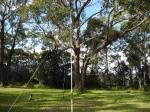
Canoelands Ridge - lots of trees - possibilities for other antenna set-ups?

Canoelands Ridge – lots of trees – possibilities for other antenna set-ups?

Stations worked on 1W:

Al VK1RX/P with Andrew VK1NAM on VK1/AC-030 Mt Yarara (twice, once before and once after UTC change-over).

Allen VK3HRA/P on VK3/VE-230 Mt Glenrowan (twice, once before and once after UTC change-over).

Peter VK3PF/P on VK3/VT-065  (No name mountain) (twice, once before and once after UTC change-over).

Stations worked on 2.5W:

Glen VK3YY/P on VK3/VC-008  Hyde Hill

Tony VK3CAT/P on VK3/VN-027 Mt Matlock

Ian VK1DI/P on VK1/AC-025 Mt Tennent

Thanks to all the activators that were out today – those above that I worked portable and the others that I managed to catch when I got home.
VK2JI – SOTA AUSTRALIA – My first VK Summit activation – Mt Taylor VK1/AC-037 11th. August 2013

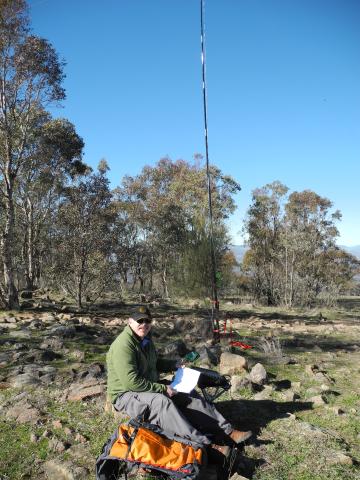
Leaving site
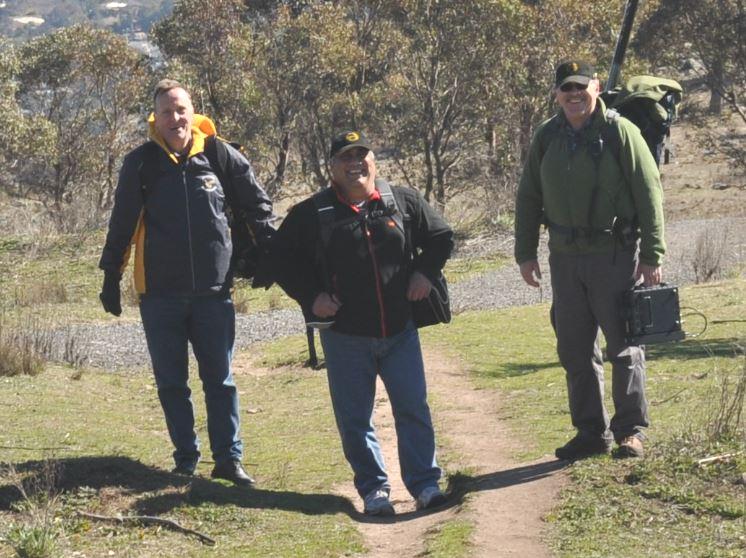
VK2JI, LC & LAX on Mount Taylor for 6 months of SOTA in VK1 event.

Although a lot closer to my home location than the previous four activations, Mount Taylor involved a longer drive of over 4 hours from the Central Coast into the ACT (Australian Capital Territory).

This action was part of the celebration of 6 months of SOTA in the VK1 (ACT) association organised by Andrew VK1NAM, who encouraged involvement of all operators interested in SOTA to take part in the event.

Rod VK2LAX traveled down on the Saturday however Jim VK2LC and myself made the journey only on the Sunday morning and with a planned 9:15 am start, this meant rising at the ungodly hour of 3am to be on the road by 4am. The drive down was uneventful apart from fog along the whole on the federal highway, adding about 30 mins to the journey.

The temperature on Mt Taylor dropped once the fog listed but the views (that we saw nothing of, on the climb up) were amazing.

As planned, I set up my equipment on 20m, (FT817 plus inverted V dipole on a 6m squiddy) and Rod and Jim set up for 40m, Rod using an FT897 and a similar SOTABeams linked dipole, but this time set to 40m and Jim with an FT817 and a loaded vertical antenna.

This was Rod’s & Jim’s first summit activation and were rewarded with many contacts on 40m. My decision to run 20m was not as successful with no contacts on that band despite self-spotting, but two on 40m (using the 20m dipole) and, as I had remembered to bring the Wouxon dual-band HT along, thirteen contacts on 2m FM, many of them summit to summit.

So all three of us all well and truly “activated” this peak.

Mt Taylor is a favorite destination for people walking their dogs and running for fitness so we have several visitors asking what on earth we were doing! With a little more preparation this could have been a great opportunity to capture one or two new prospective radio amateurs – maybe at the next one ….

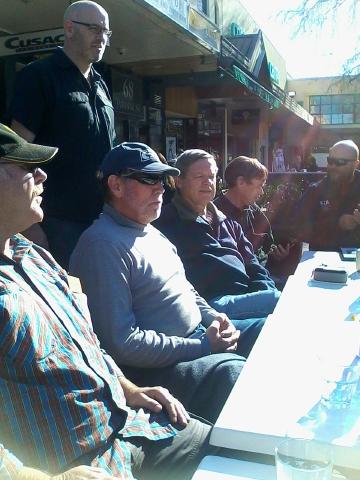
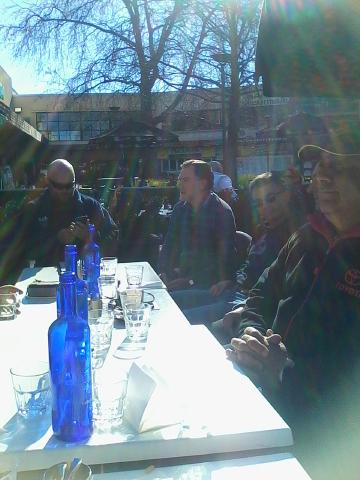
The day rounded out very nicely with most of the activators meeting up at a Canberra cafe for lunch together. A chance not only for the VK2 “interlopers” to meet the VK1 activators but also for some VK1 activators to meet fellow VK1 activators that they had not met previously.

All in all a great day and thanks goes to Andrew VK1NAM for organising it all.

PHOTOS

Radio Operations.

VK2LAX (1/2)

VK2LAX busy working 40m pile-up.

VK2LC (2/2)

Jim VK2LC taking a breather between contacts.

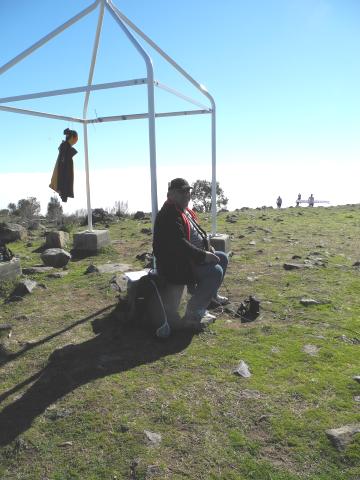
Mt Taylor Trig point "radio active"

VK2LC and Vertical antenna in background, my (VK2JI) equipment in foreground.

Video of VK2LC/P1 operating 40m – his first SOTA summit activation.

Views.

View3-640 View2-640 View1-640 Rod-cropped K2-640 K1-640

Further pictures, those from our event photographer Matt Jarman can be found here:  http://s269.photobucket.com/user/opdu/library/SOTA%20Mt%20Taylor

Activators lunch.

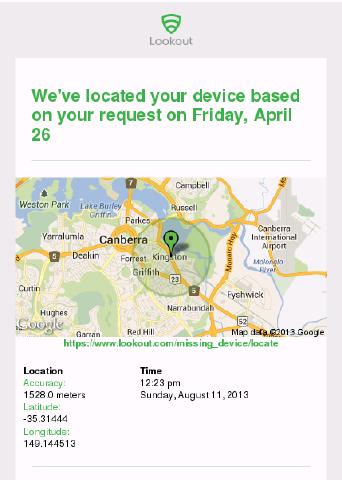
Location of cafe

Location of cafe based on phone location request from April!

Lunch table LHS

Activators lunch participants (1/2)

Lunch table RHS

Activators lunch participants (2/2)

Stations worked:

40m: Paul VK5PAS/P (S2S), Peter VK3PF/P (S2S)

2m: Michael VK1XYZ, James VK1DR/P (S2S) both before and after UTC change-over, Matt VK1MA/P (S2S) both before and after UTC change-over, Andrew VK1DA/P (S2S), Murray VK1UU, Ian VK1DI/P (S2S), Glen VK1FB/P (S2S), John VK1JST/P (S2S), Andrew VK1NAM/P (S2S), Peter VK1IRC/P (S2S), Mark VK1MDC/P (S2S),

SOTA EUROPE – 17th. July activation of Hohe Salve OE/TI-517

Video

Being less than two hours drive from Munich where I was staying, a quick outing into another association seemed like a good idea. It turned out to be a very good idea. The run down & back took little longer than expected due to a lot of roadworks but when we got there, we were rewarded with wonderful sunny weather both in the valley and on the summit. The new (3 or 4 years old) cabin lift in Hopfgarten took only about 15 minutes to takes us from the valley to the summit of the Hohe Salve mountain in two stages.
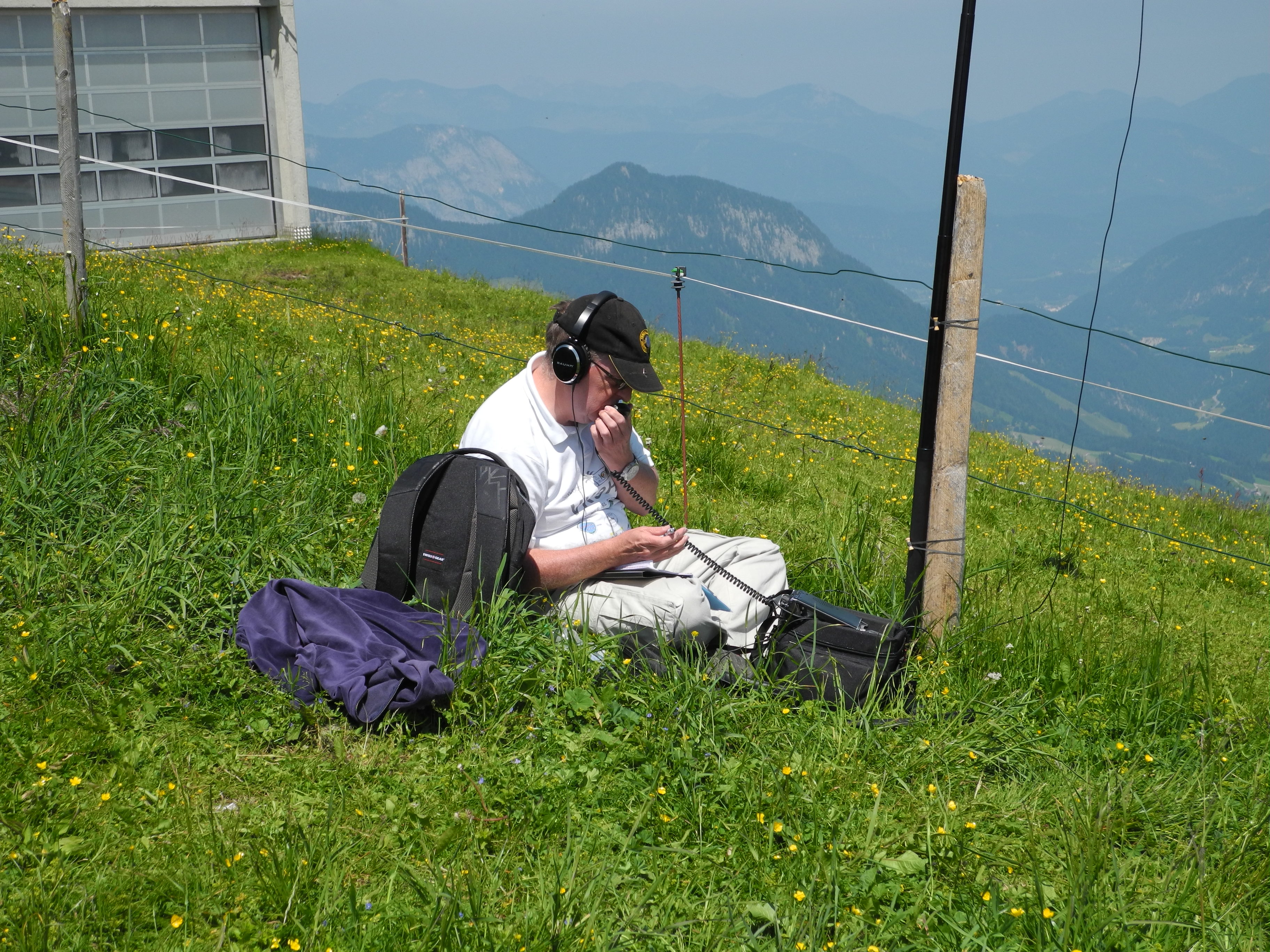
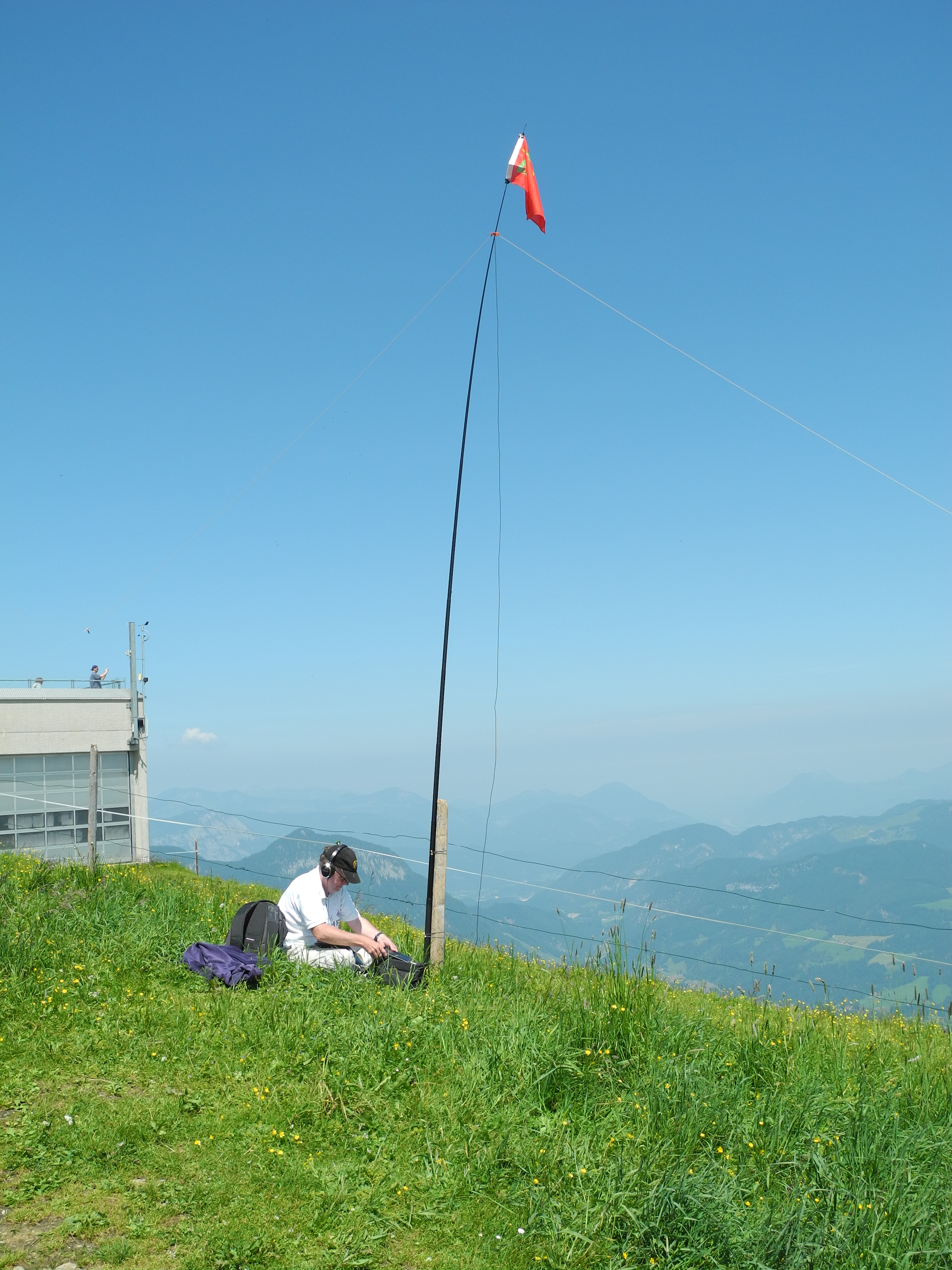
Once we were on the summit after walking in and out of the activation area, I found a spot behind the church (which sits on the actual summit) and was operational pretty much to the planned time. I made my first ever S2S contact with LA8BCA/P who was on LA/OL100 as my first contact of the day. Once again I had problems being able to self spot either via the Internet or via SMS but Ken G3XQE kindly spotted me and  as normal the result was more than enough chasers calling me. I think I managed to work them all but several reported very deep QSB making the contact difficult from their side with my low powered signal – thanks to all the chasers for managing to make the contacts (I had no problem copying any of the calling stations).
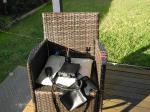
I had one technical problem when the FT817 decided to turn itself off because the battery voltage had dropped (I was sure I had recharged it after the Zugspitze activation but it would seem I did not charge it long enough). Thankfully I also had the AA battery pack with me with a set of fully charged AA cells in it, so after a couple of minutes I was able to continue the contact with Anton ON6NL.

Equipment used – same as used for Zugspitze on the previous weekend (with the addition of the SOTA flag).

Stations worked:

LA8BCA/P (S2S), G3XQE, ON6NL, G4OBK, DL8UVG, EA2CKX, M6BLV, OE7HPI/7 on GMA summit OE0/TI1074, G0RQL, M3XIE, SV3IEG, OK1SDE, DL4YAR, OH3GZ, CT1BQH, GM0AXY, DG1BP, M0BKV.

Hohe Salve activation

Hohe Salve activation

SOTA flag on 20m inverted V pole

SOTA flag on 20m inverted V pole

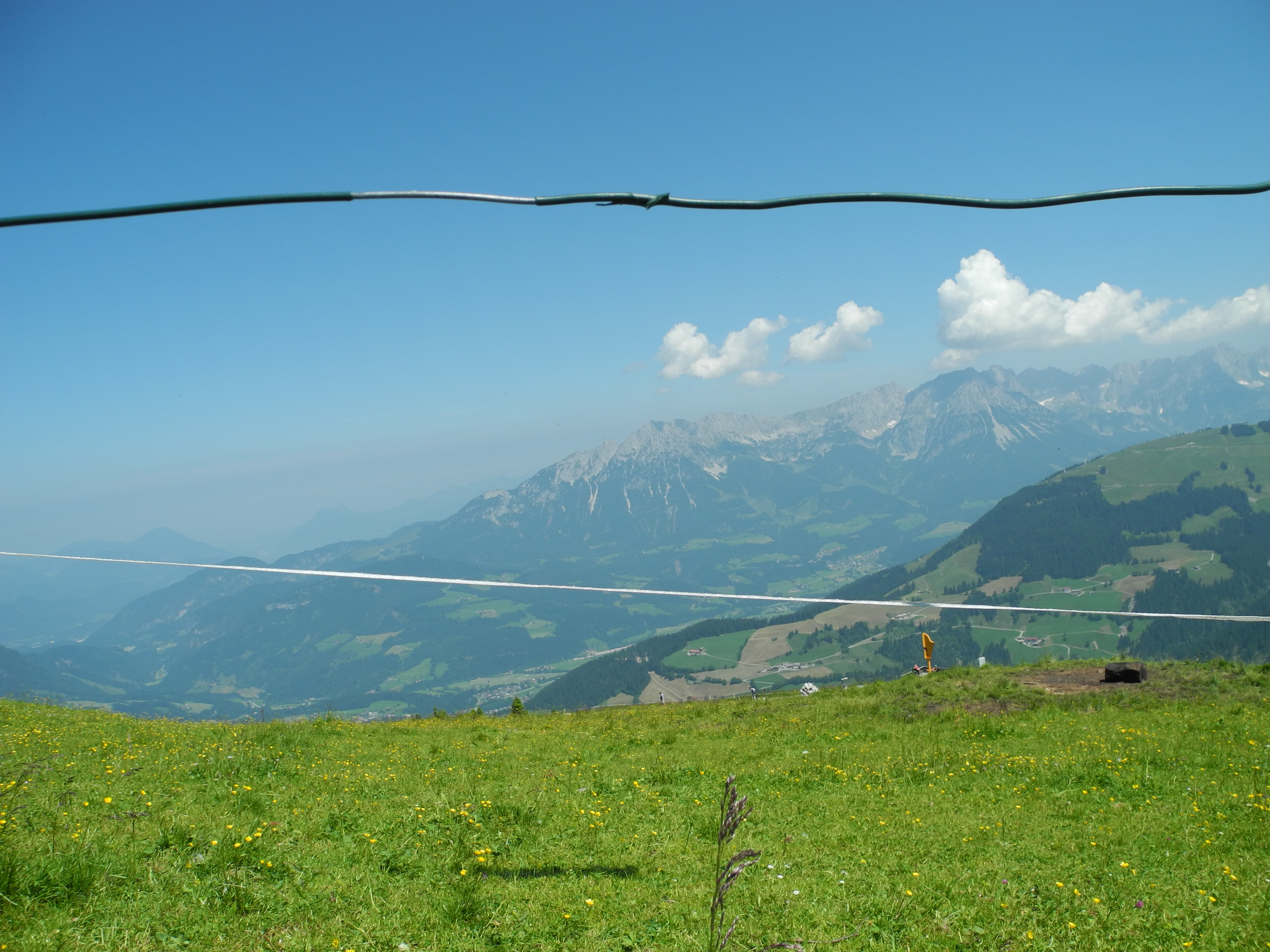
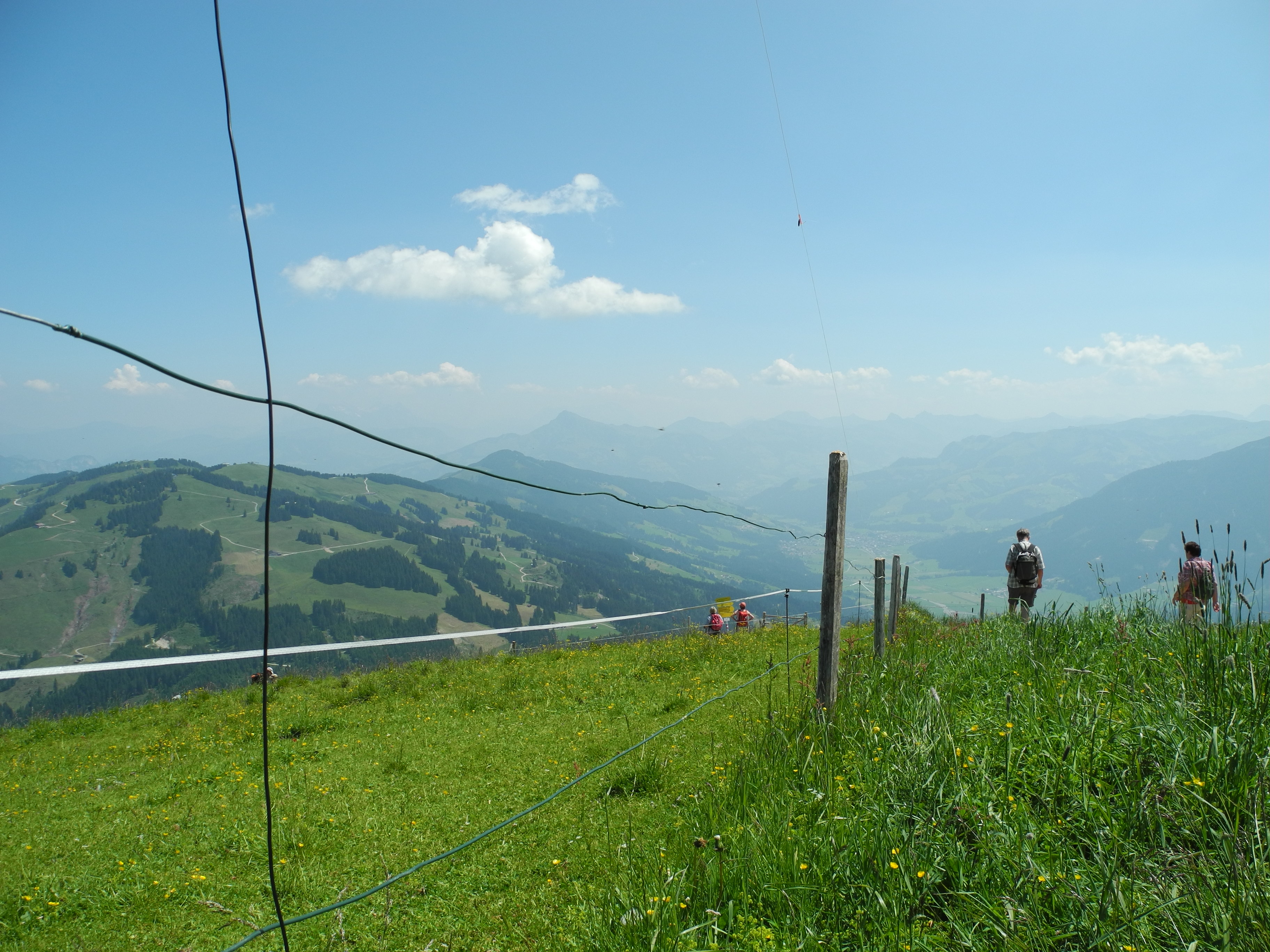
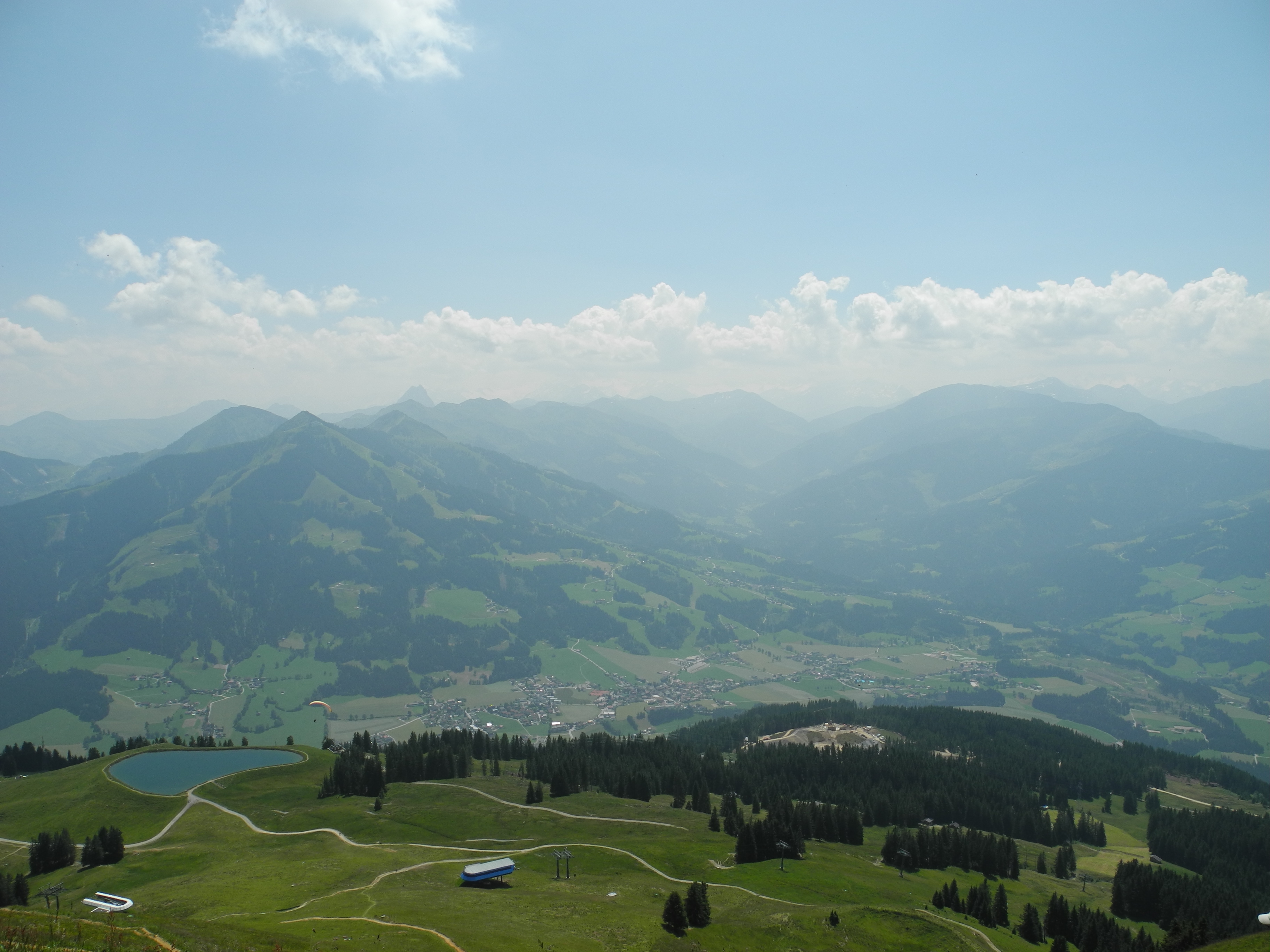
View from Hohe Salve 1

View from Hohe Salve 1

View from Hohe Salve 2

View from Hohe Salve 2

View from Hohe Salve 3

View from Hohe Salve 3

Here is a short video of the first contact of the activation – a Summit to Summit with Serje LA8BCA/P in Norway.

SOTA EUROPE – 13th. July activation of Zugspitze DL/WS001

In Germany the school holidays in various regions are starting and many, many cars head south through Bavaria to Mediterranean countries causing lots of long delays (stau s) on Bavarian roads so we decided on an early start (8am) from Munich and this was a very good decision as we had a clear run to Ehrwald/obermoos from where we took the Tiroler Zugspitzebahn. As the Zugspitze mountain belongs to both Germany & Austria, there cable cars from both countries. This was the first time I had tried the access from Austria. I can highly recommend it. As well as being cheaper than the German options, with the modern Austrian cable car you go from the valley to the summit in just less than 10 minutes in one stage, whereas from the German side it takes longer partially as you have to change cars to get to the summit.

EQUIPMENT USED:

FT817 – 5W
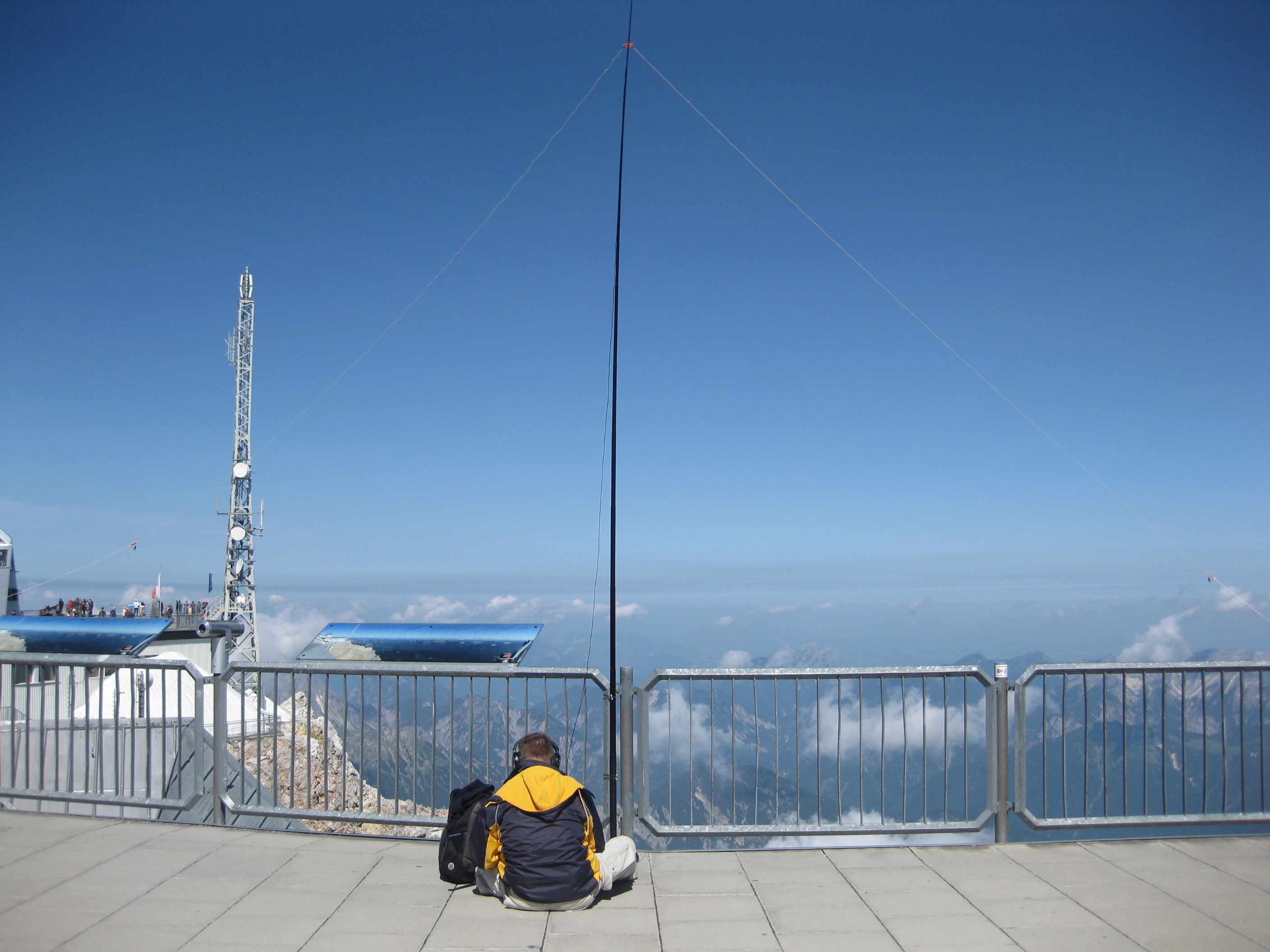
20m only section of SOTABeams bandhopper antenna as inverted v dipole.
6m sqidpole mast (purchased at Friedrichshafen for 30 euros)

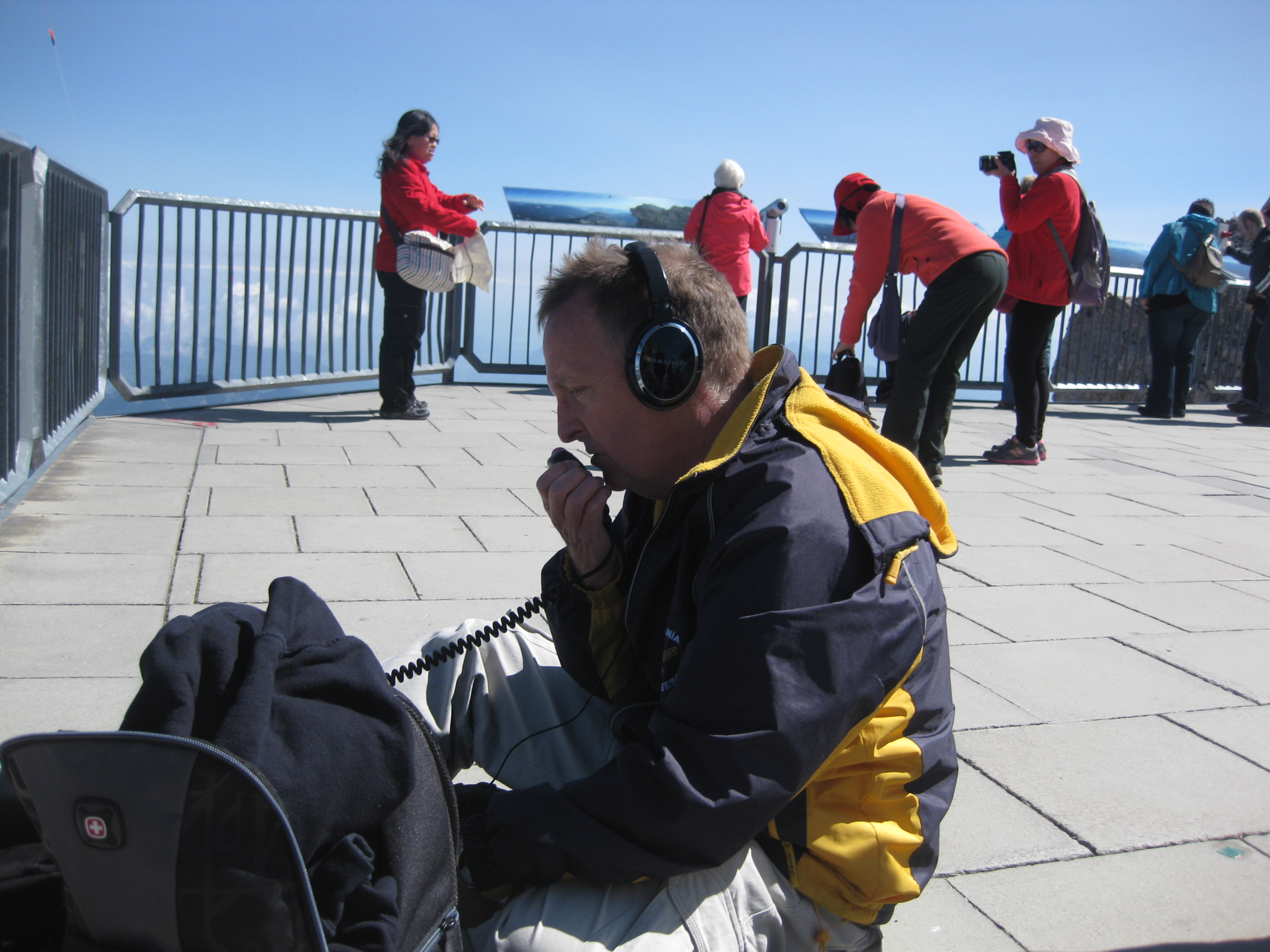
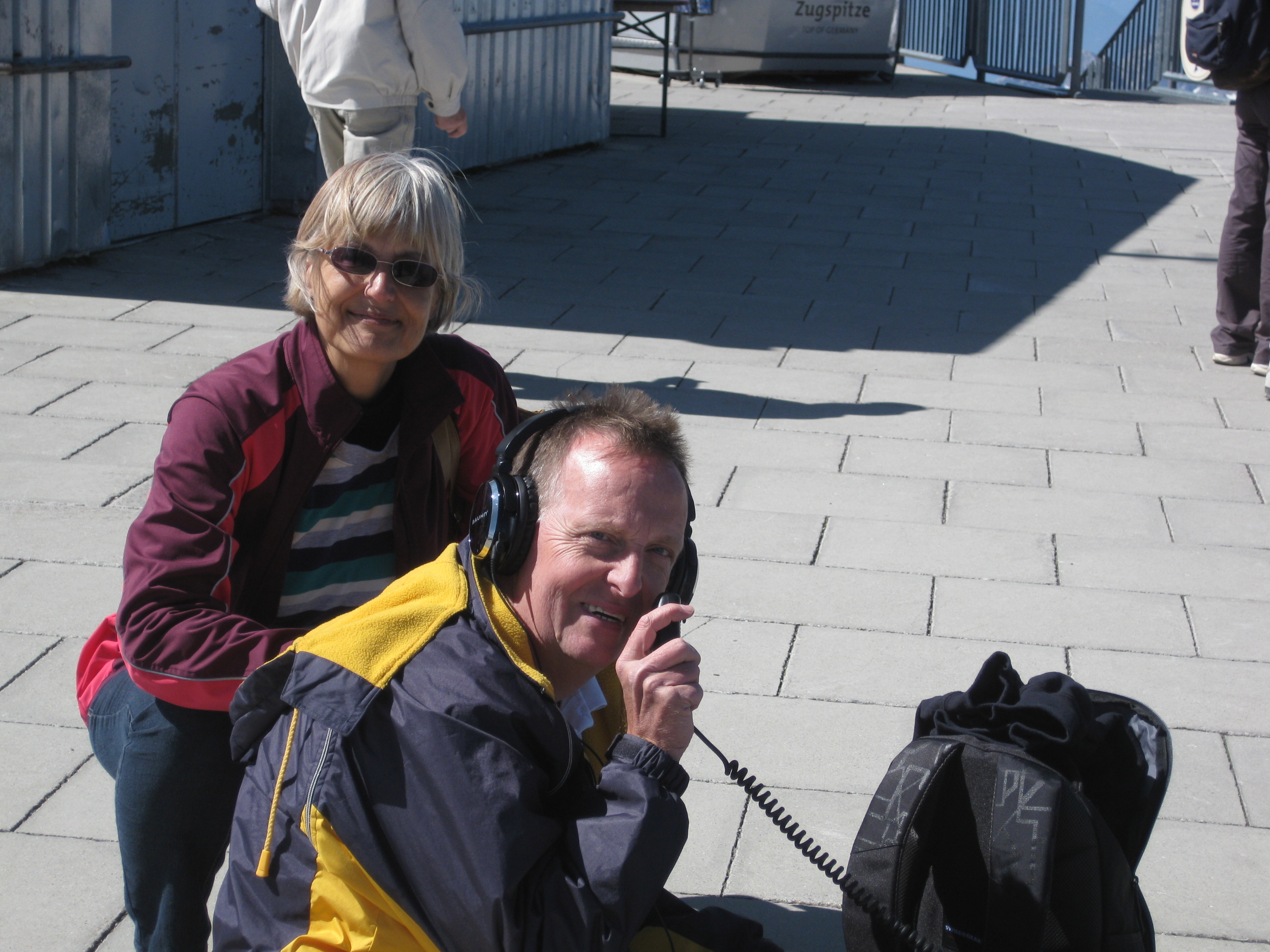
I operated from the viewing platform nearest the actual summit (on the German side of the border). Even though it was early there were already a lot of people around so I needed to take my spot quickly. Some of the railings are slanted so these are no good for fastening the ‘sqid pole’ (aka fishing pole) to. Luckily I found some vertical railing and with the help of my wife and her friend (both of whom had never been on the Zugspitze before and totally enjoyed the day) I managed to erect the antenna quickly between gusts of cold wind (temperature on the Zugspitze during my visit was 2 degrees Celsius).

I took a quick look around and found that my planned frequency of 14.285 Mhz appeared free so switched to the smartphone to self spot. After my problems with Internet access the previous week, Andy kindly set me up with SMS spotting capability. I had tested this earlier in the week and it had worked fine, so it ‘should’ work fine here as well, but it didn’t as I had lost phone service when I went into Austria and now the phone needed to be manually set back to a suitable mobile network provider. Of course all of this happened in sunlight where I can hardly see the screen of the phone and when I was in rush to start before my fingers froze (I had gloves of course but operating and writing with gloves on is difficult).
I decided to simply put out a call even though I was a good 30 mins ahead of my planned schedule and thankfully Martin DF3MC came back to my call with a BOOMING strong signal. Martin had helped me with advice about several German SOTA summits, so I had hoped to work him. I had hoped to contact Rudi HB9MKV/OE7WRJ who also helped me in my preparations for the Zugspitze, however that contact was not to be. Thanks to both Martin & Rudi for their very useful advice.
Once Martin ‘spotted me’ on SOTAWatch, as the old saying goes – the rest is history. I had a pile-up of many more stations than I could hope to work, so I apologise here to those who called but I could not get back to, before I had to pack-up because I had lost feeling in my fingers and the area where I was, was becoming busier with more public arriving on each cable car.

STATIONS WORKED:
DF3MC  EA2DT GI4ONL G0RQL EB2JU EA2CKX M3XIE EA1DFP LY2AE DJ1SD M6BLV G4APF G0TRB EB2CZR M0BSV PA0B GW4ZHI.

Anrtenna setup

Zugspitze setup

Operational on Zugspitze

In operation

Having fun

Support and assistance from XYL

Working into the distance from above the clouds!

Working into the distance from above the clouds!

Next activation OE/TI-517 Hohe Salve on Wednesday 17/7/13 around noon local time – 14.285MHz.

SOTA EUROPE – July 7th. Activation of Jenner mountain DL/BG-062 as DL/VK2JI/P

Sunday 7th. July 10:10 local (8:10 UTC) and I had set up my FT817 and EFHW antenna just down from the top of the Jenner mountain (1874m asl) near Berchtesgaden in Bavaria. It was a beautiful sunny morning but I only had 30 mins to activate the summit because of other plans. I tuned on the FT-817 on 40m to be hit my a barrage of stations splattering across the usual SOTA frequencies. I put out a couple of calls on 7.090 as it was less conjested than 7.118 (my planned frequency). No answers. I then tried to self spot but got an error in rucksack radio that I could not read in the bright sunlight. I tried again on 7.118 and to my relief Milos S53EO came back to my call, he did not have Internet connectivity and so could not spot me but OE7HPI who I worked next did and further calls followed but by this time the QRM from stations near to the frequency was becoming really bad. I was lucky to manage two more contacts with DL3HXX & HB9AAQ meaning I can claim the summit but by the end of my available time the QRM had got so bad that I would not have been able to work any more stations. I had hoped to operate on 20m as well but simply ran out of time.

What I have learnt from this is that I need to find why spotting from my phone didn’t work and try 20m first next time. The next planned activation has limited space for a 40m wire in any case so is likely to be using just the whip on 20m. The next summit is the Zugspitze at 2962m, the highest place in Germany.  Place check SOTAWatch as date may change. As I have to drive there from Munich, the activation will probably be too late for a contact into VK even if the path were open.

Jenner - way to the summit

Jenner – way to the summit

Jenner - view from summit

Jenner – view from summit

STATIONS WORKED:

S53EO, OE7HPI, DL3HXX, HB9AAQ.

SOTA EUROPE – July 2nd. Bishop Wilton Wold G/TW-004 – My first SOTA summit activation.

Since VK2 (New South Wales in Australia) where I live, isn’t classified yet for SOTA, why not activate a summit in another association – indeed why not in the original SOTA association G?

While visiting relatives I got the chance to activate a simple, 1-pointer, summit G/TW-004 Bishop Wilton Wold (known from my childhood as Garrowby Hill). It was a very simple set-up with the FT-817 and the end fed half wave – laid across the top of a nettle patch by the side of the lay-by. After walking out and back into the activation area I managed to work 9 stations on 40m  in less than half an hour and tried 2m as well  but without any response on that band.

Well, I now have one activator point – only 999 to go to the mountain goat!

SOTA G/TW-004

STATIONS WORKED:

G6TUH, G6LUZ, G8MIA, G0RQL, M0MDA, GM0AXY, G3XQE, M6WSB, M3XIE.

24th. June Miracle Whip antenna tests

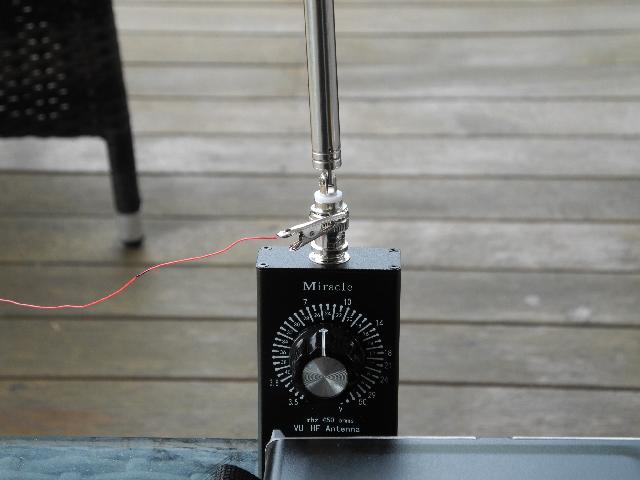
There has been a lot of comment recently on the SOTA Australia list about the effectiveness (or not) of the “miracle whip” antenna and its derivatives. Well I have a Chinese version of this design and have found the tuner component to be very effective when used to tune an End Fed Half Wave antennas against their counterpoises. The EFHW is a larger set-up than simply using the telescopic whip on the tuner. Having read that adding a counterpoise improves what is otherwise a “not so good” performance. I decided to to test out this statement. I was able to add a tab to the BNC plug that holds the whip, by using a solder tab ring that would normally sit behind a round BNC socket.

This done I used my antenna analyser to come up with a resonant length of the wire wrapping 30 AWG tin covered copper wire that I use. This length turned out to be  9 metres 87.5 centimetres. This provides a dip both on 40m (1/4 wavelength long) and 20m (1/2 wavelength long). The result on received signals was immediate – an increase in signal strength of 2 S-Points compared to the whip without a counterpoise. As yet I have not managed to make a contact, so the transmit side remains a question mark – maybe tomorrow.

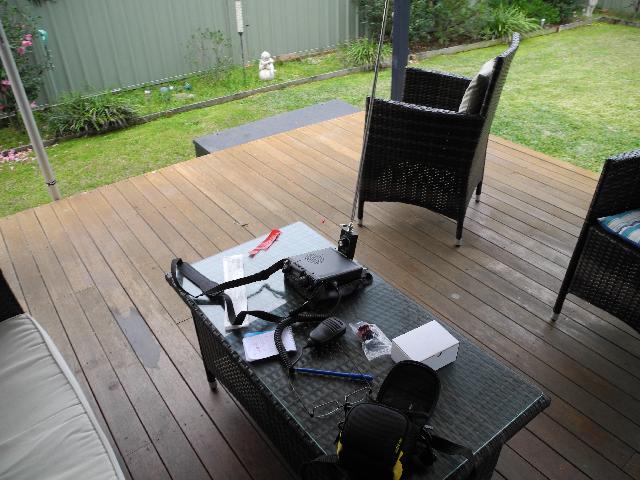
Here are some pictures of the (very simple) set-up on the back deck of my house.

Overview of test set-up. FT817 running off internal batteries, Miracle Whip tuner, telescopic antenna and counterpoise going off into the garden.

Overview of test set-up. FT817 running off internal batteries, Miracle Whip tuner, telescopic antenna and counterpoise going off into the garden.

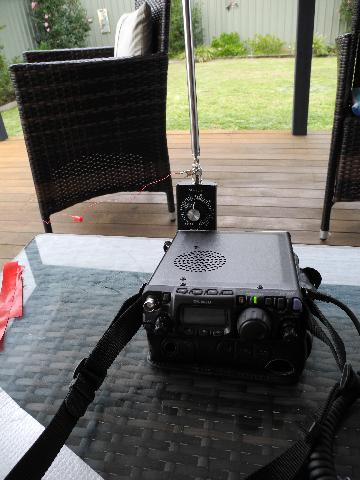
Operating position with ft817 sat on its bag and the Miracle whip connected.

Operating position with ft817 sat on its bag and the Miracle whip connected.

Close up of counterpoise connection to the whip.

Close up of counterpoise connection to the whip.

22nd. June – Further Antenna Tests at Mt. Elliot

Test twice – use once.

Following the work on the end-fed wires in the back garden, the time had come to try them out on a summit. So with Jim VK2LC, Col VK2ZCO, Rod VK2LAX and Graham VK2GRA, it was off to Mount Elliot again. As I have said before, this is a very easy summit to get to but will probably be the only SOTA classified summit within 2 hours driving time for those living in the southern part of the NSW Central Coast. It has the advantage of many options to support an antenna – trees and bushes abound as do wide open areas where squid pole based antennas such as my 40m horizontal loop antenna can be erected as I did on my last visit here. This time however I was looking for the most simple of set-ups for the end-fed and found it in a small area of grass and bushes where I simply laid the antenna out, touching the plants between 1 and 1.5m off the ground. Jim had brought a tripod based vertical antenna along and local reports gave it about a 1 S-point advantage  which given its extra height is not surprising. That antenna wont fit in a trouser pocket as my full set of HF band end-feds will though.

The highlight of the day was hearing and then working Andrew on 40m SSB who was operating as VI100ACT from VK1/AC-018. He was a good strong 5-9 signal and came straight back to my call of just 5W into the end-fed antenna from the FT-817.

The “lowlight” if we can call it that, was that the the rig started cutting out. At first I suspected the use of the rig on the 20m version of the end-fed had caused this perhaps because of a bad VSWR but it turned out simply to be that the battery had discharged. I had forgotten to charge it up since its last outing and to add insult to injury, the rechargeable AA cell battery pack that I had brought along as backup was no better. It later turned out that 4 of the new 8 NiMH cells were faulty and not holding charge.

I can hardly believe myself how well the end-fed laid simply on bushes works – for the ultra-light QRP portable station, this is definitely my recommendation when teamed-up with a very small and light antenna coupling unit – I use the one that is part of the Chinese version of the Miracle Whip that I bought.

Here are a few pictures illustrating the set-up at Mt Elliot.

A short video is up on YouTube at – http://youtu.be/crvdx5xn98U


Operating position - FT-817 antenna tuner and wire antenna on a fold-up chair.

Operating position – FT-817 antenna tuner and wire antenna on a fold-up chair.

Wire antenna leaving operating position over chair arm.

Wire antenna leaving operating position over chair arm.

Wire antenna simply drapes over fence and into bushes.

Wire antenna simply drapes over fence and into bushes.

Antenna laying simply across the top of the grass.

Antenna laying simply across the top of the grass.

15th and 16th June – Antenna Tests

First failure, then success.

Following a disappointing first test of my end-fed 40m wire antenna up at a local high-spot on Saturday 15th. (I could hear all very well, but no one could hear me!) some re-thinking and investigations took place overnight. I found differing lengths specified for the driven and counterpoise elements on the antenna from different internet websites. My feeling was that the antenna was not resonant but the “miracle antenna” auto-transformer ACU was matching it to give a good VSWR to the rig but the antenna was not radiating well as would be the case if the length was wrong.

I measured off wires to the new lengths (19m driven element and 10.5m counterpoise) ready for testing on Sunday 16th.

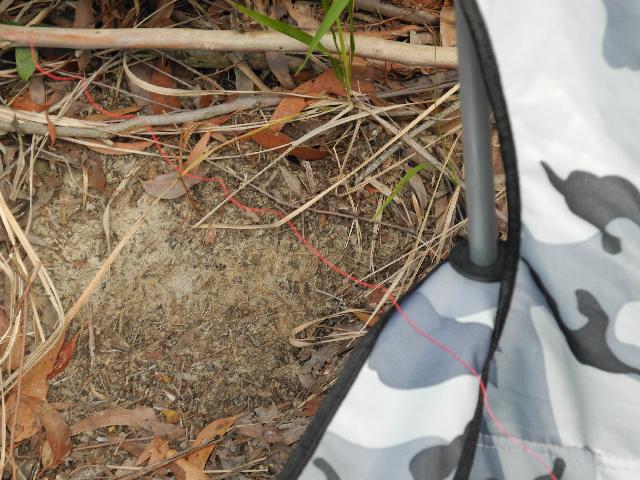
I laid out the antenna simply over bushes in my back garden – about 1.5m above ground level. Testing first of all using a Rig Expert antenna analyser I had to extend the driven element another 3m before resonance came down to 7.1MHz.

I then attached the FT-817ND to the ACU and antenna and listened around – again receive working fine, but what about transmit? First I called a strong local station – Bill VK2XT and although I was a relatively weak signal, I managed a nice QSO with this great gentleman who has been licensed for over 80 years.  As I now knew I was getting out I was more confident and when I heard Ron VK3AFW/P up on VK3/VW-009 calling CQ SOTA – I thought “give it a try” and sure enough Ron came back and we exchanged 5-4 reports in both directions. Later I was also able to call and work Marshall VK3MRG/P on VK3/VN-027. It’s really amazing what can be worked running just 5W at each end and very simple antennas!

Here are a few photos of the very basic antenna set-up (click on the photos to see the larger format) – the thin red line you can (hopefully) just see in the pictures is the AWG24 wire wrapping wire (usually used to patch connections under printed circuit boards).

Monday June 10th. 2013 Mt Elliot – SOTA Antenna and Transceiver tests

Mt Elliot being the only likely future SOTA summit near Gosford, NSW and being a 5 star easy summit – Drive up, walk a little, lots of area to set up, toilets on site, electric BBQs on site, benches and cover, makes it an ideal test site for equipment to be used on more difficult peaks later.

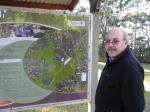
Here are some photos from the days activities – some pictures of the area, the views and then some radio work – those shown in the pictures are Rod VK2LAX the one looking at information board and in other shots, Dave VK2DLS in a few shots wearing the cap – a new convert to SOTA, he came up to see what it was all about after a conversation with me via the local 2m repeater on the way up and in the last shot myself operating the FT-817 and lightweight version of  a 40m horizontal loop antenna. Please note, although sat near the cars, no power was coming from them, in the spirit of SOTA the rigs are powered either by internal of SLAB batteries. (still waiting in connectors for my Lipo battery).

I am glad to report the tests of the 40m full wavelength loop antenna using lightweight 3m squid poles, mini-tripod supports, very thin, single core, “wire wrapping wire” and a Q-section of  RG-179 coax of the correct length (based on its velocity factor) worked very well indeed. Initially we used my FT-817 at 5W but for a couple of calls after lunch I decided to really test the antenna with 100W from Rod’s FT857 – all worked without issue. as a comparison the a buddy pole “seemed” about 1 S-point down on receive compared to the loop.

Thanks to the following activators for their contacts from this /P site – Wayne VK3WAM/P on VK3/VS-014 & VS-011, Peter VK3ZPF/P on VK3/VN-028, Rik VK3KAN/P on VK3/VE-001, Mark VK3PI on VK3/VC-034,  Paul VK5PAS/P on VK5/SW-011, Brian VK3MCD/P on VK3/VC-001 and Darren VK3FDJT/P on VK3/VN-016.

I have just received a Chinese copy of the “miracle whip” which I intend to test out next weekend also using its ATU with a 40m end-fed and counterpoise, again made with the ultra thin connection wire.