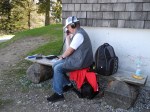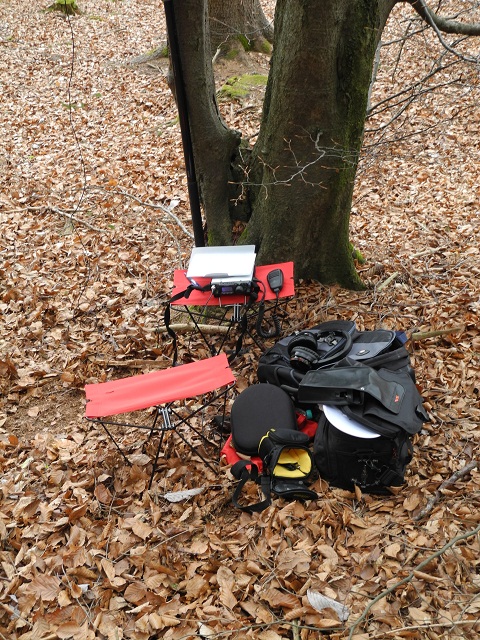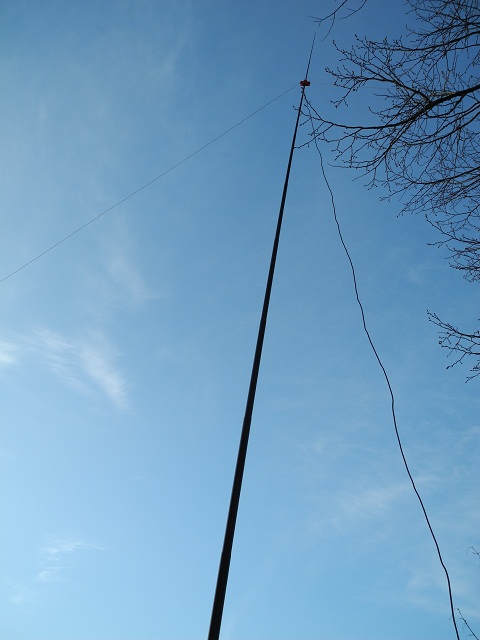
DD5LP – SOTA EUROPE – April 25th. 2014 – DL/AL-169 Auerberg.

Preparation:

As April 25th. was ANZAC day in Australia, it is a public holiday, so there may be some activators out and it is also one of only 3 days in the year when the AX prefix for Australia can be used instead of the usual VK prefix.

The plan for this activation was again to work chasers from VK and if possible also work Rod VK2LAX/P as a Summit-to-Summit contact. Martin DF3MC unfortunately had to work (as it is not a public holiday in Germany) and so could not make this activation either, maybe the next one.

Wx forecast – Sunny and fine.

Wx previous day – fine.

Wx forecast for following days – rain.

Actual Wx -sunshine but cool in the shaded area where I positioned myself.

Stats:

Total contacts: 44

Summit to Summit Contacts: 2 (both with Australia)

Contacts with VK/AX stations: 6

Total contacts 20m: 15

Total contacts 40m: 29

Time on Summit: 1.5 Hrs.

The Location:

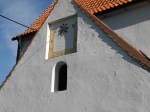
Auerberg has easy road access with very little walking required. This is similar in some ways to Peissenberg with a church located on the absolute summit and a restaurant / cafe located next door. As my wife (who offered to come along) had twisted and badly bruised her ankle a couple of days previously, a summit with a lot of walking was out of the question.

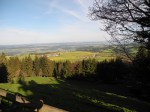
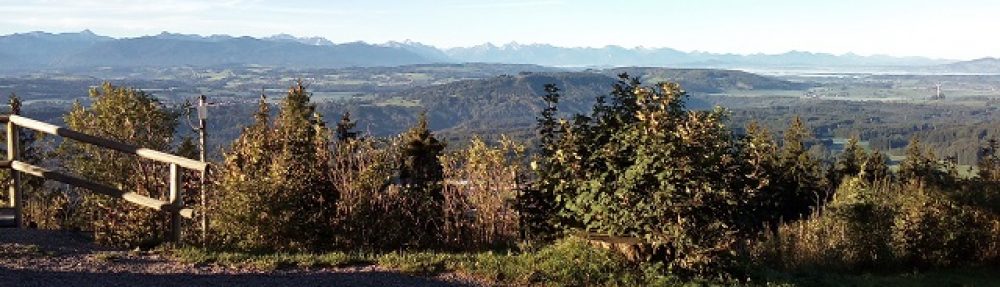
Unlike the previous two summits that I activated, this summit has wonderful views for 360 degrees around it. The drive was just over an hour and I was set up and operational by 9am local (0700 UTC). This is a later start than my previous activations as I wanted to see how long the long path window to VK from DL was and indeed after about forty minutes the window closed and no more DX contacts were possible.

map

The Activation:

 This beautiful location of course attracts the public, but being a Friday morning, before lunchtime very little was happening. Around 11am a lot of motorcyclists and some more cars arrived, but by this time I was packed up and enjoying a warm drink at the cafe before we left. All in all a successful activation however band conditions on 20m were not nearly as good as the previous Sunday (they were exceptional that day). Once I switched from 20m to 40m, I was flooded with calls – a good pile-up for about 25 minutes. Remembering this was a Friday when many people are at work, I suspect an activation of a summit on a weekend could be quite a thrill.

I am also glad to report that my first contact was with Rod – AX2LAX/P a S-2-S contact as Rod had gone out to Mount Elliot (VK2/HU-093) to make some more chaser points. One more s-2-S and chaser contacts were made into VK all with more difficulty than during the activation the previous Sunday.

During the activation I was again faced with the situation where a station came up on frequency while I was using it. This time however I did not move frequency but rather kept calling and after two extremely strong Spanish and Italian stations called me for the SOTA contact the Eastern European stations (Rumania?) decided THEY should move. So a win for the little guy with the help of some high power chasers – thanks guys!

Equipment:

FT817ND

Ramsey QRP amp.

SOTABeams Linked dipole

Log:
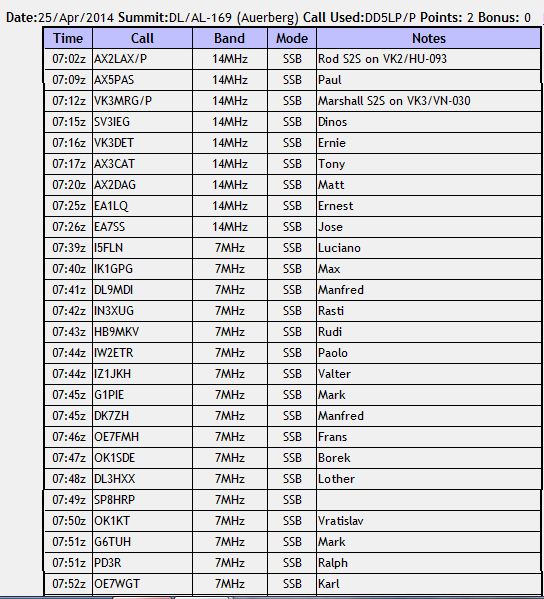
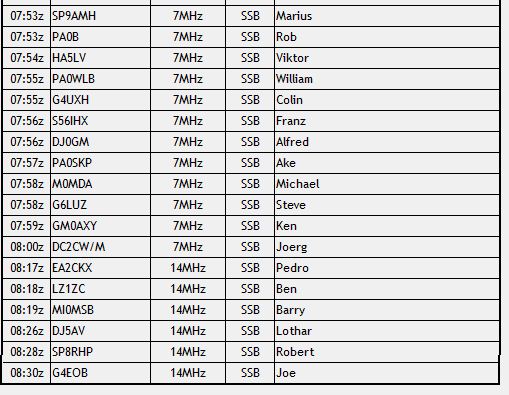
log-1-of-2 log-2-of-2

73 ’til the next Summit!

DL/VK2JI – SOTA Europe – April 20th. 2014 – DL/BE-094 Irschenhausen

Preparation:

As my German call sign came through, this activation was done as DD5LP/P. This was the first time I had used my new call sign.

The plan for this activation was again to work chasers from VK and if possible also work Rod VK2LAX/P as a Summit-to-Summit contact. Martin DF3MC had asked if he could come along as he had not yet managed an S2S to VK. Unfortunately as it turned out he could not make Easter Sunday, so perhaps I’ll have to find another summit in the next few weeks and do it all again (not that I needed an excuse for that).

Wx forecast – RAIN!

Wx previous day SNOW!

Actual Wx – no rain, sunshine but still only 2 degrees at 7:30am local time Brrrrrr!

Stats:

Summit activated (first 4 contacts) completely with VK calls (2 of these S2S).

4 x S2S (3 VK and 1 GM).

8 VK contacts.

22 contacts in all from VK1,2,3&5, KA3, EH1, YO7&8, YL2, EA1&2, LA, OH, LZ1, GM and G.

The Location:

Irschenhausen is a country village located about 10 km South East of Starnberg which itself is located about 20km South West of Munich in Bavaria. The “summit” is actually a hill within a forest adjacent to the village. In some ways similar to my previous activation (Berndorfer Buchet) which was also in a forest, views are limited. I found during my “reccie” a day earlier however in this case there were small trees still in place suitable to fasten the antenna squid pole to. Access from the public road is about a 15 minute brisk walk up reasonable tracks. No actual climbing was required however the summit itself was under about 3 inches of fallen leaves. Luckily I found a very broad tree stump to set up my station on and had the antenna (proudly flying the SOTA flag) attached to a small tree about 3 metres away.

DSCN1703-640 DSCN1706-640 DSCN1709-640 DSCN1712-640 DSCN1715-640 DSCN1722-640

The Activation:

I had measured the time required to get to site however as I woke up earlier and there was less traffic than the previous day, I arrived a good 30 minutes earlier than the planned UTC 06:00 start.

I took a little extra time to install my small linear amplifier in circuit as a test and I estimate that this raised the output from 5w PEP to perhaps 10w PEP. I had to run it straight from an 11v LIPO rather than from the 13.8v inverter that for some reason didn’t seem to want to work, so output from it’s, at best 14w output would be reduced.

As soon as I had the linked dipole antenna up and the FT817 and amplifier turned on, I could hear VK stations. Paul VK5PAS was blasting in while working Peter VK3PF, so I waited and gave Peter a call. He was pretty weak but we managed the S2S contact. After that an easy contact with Paul VK5PAS, followed by Matt VK1MA who also was putting in a strong signal from Mount Ginini and the forth contact needed for me to have officially activated the summit came from Ernie VK3DET. So I managed to activate this German summit purely with VK contacts – this was not planned but was a nice bonus especially with two of them being S2S contacts.

I am also glad to report that we managed the DD5LP – VK2LAX S-2-S contact.

During the activation I was constantly changing frequencies, not only to find stations but also to move away from QRM from either adjacent stations or a station who decided to put a carrier on the frequency I am calling on!

 Take a listen to the pile-up that Matt VK1MA had in the video below and see how badly some operators were operating.

Please consider adopting the DX Code of conduct whether you are a SOTA activator or chaser as the rules are as valid for SOTA as for DX chasing.

DXcochttp://www.dx-code.org/


In conclusion though the activation was very successful and as always an activation is only successful when there are chasers there looking out for you!

Video:


Log:

Activator Log

Activator Log

73 ’til the next Summit!
DL/VK2JI – SOTA Europe – April 10th. 2014 – DL/AM-180 Berndorfer Buchet

Convenient parking just down the road from the start of the track.

Convenient parking just down the road from the start of the track.

DSCN1666-640

Animal feeding point just before final climb.

For my second SOTA activation after moving to Germany, I decided on a very local summit (only 20 mins drive from where we are staying). Berndorfer Buchet (DL/AM-180) is a small hill in a forest between the Ammersee and Starnbergersee lakes about 30 km SSW of Munich in Bavaria.

I had managed a quick “reccie” the preceding Sunday and access was reasonably straight forward with about a 10minute walk from the road (the track is forestry services only) and then a steep climb of about 5 minutes to reach the summit. Being a forest, one issue I realised was that there were very few small trees where I could strap the “squiddy” pole. Most trees were very tall meaning the dipole wires would be touching the wood (not a good idea).

Initially I planned the activation for Tuesday the 8th. of April however as the weather forecast was not good for Tuesday or Wednesday, I decided to go with Thursday again, when a beautiful, sunny, dry day was forecast…..

Although I have a small amplifier that works well on 40m and helps a little on 20m, for simplicity, I decided to run just the FT-817 with the internal 2200maH LIPO, which I used on Peissenberg the week before.

So all was charged up and packed ready by Wednesday evening. When I woke up on Thursday expecting a nice sunny morning the sky was grey and it had rained overnight. Not deterred as it wasn’t “actually” raining I set off as planned.

On reaching Berndorfer Buchet, it was still grey and cold, but no rain although the track and especially the climb up the hill (now carrying several kilos of gear), was slippery so it took a little longer to ascend than on Sunday.

Climb up to summit - lots of slippery leaves!

Climb up to summit – lots of slippery leaves!

I had found just one small tree on my Sunday and checking around I concluded this one was the only option. Unfortunately this small tree had several branches and twigs at a height I could not reach but blocked the direction that I wanted to run the dipole in. In trying to get the dipole wire over some of these branches, I managed to get the antenna stuck and in trying to clear it, the wire broke. I then still had part of the dipole stuck and one final tug resulted in the wire coming down but also me catching and scrubbing skin off my fingers on the side of the tree. Not a good start to the activation!

After applying some plasters and stripping and winding together the broken wire, I had a second go at getting the antenna up. On the basis that any antenna is better than no antenna, I decided to run the antenna at a slightly lower height, so as to miss most of the branches.

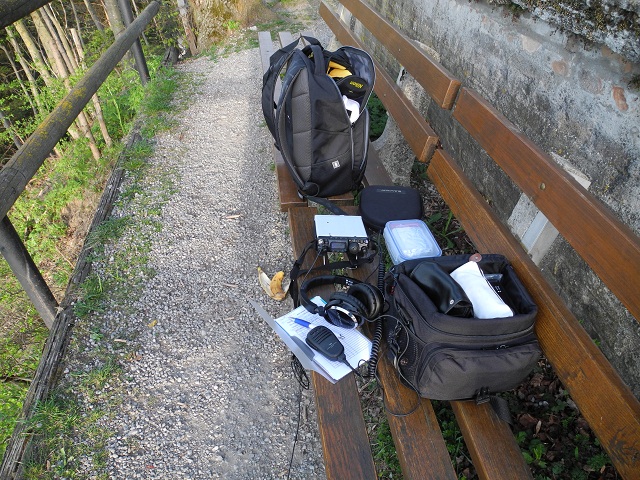
Station set-up.

Station set-up.

The start of the activation at 07:00 UTC was not encouraging, despite the band being full of stations (several very strong indeed) I could not get a contact. I thought perhaps the antenna was now faulty (even though I checked the SWR after the temporary fix and all seemed OK), I was happy to get my first call from RV3DSA – Serg near Moscow in Russia. It did take a while to even get the minimum 4 contacts to qualify the summit as being activated and get the 1 activator point. After several self spots on SOTAWatch and moving frequency when other stations simply started transmitting on the frequency I had been calling on for several minutes, I did start to get a few calls and the final log looked like this:

RV3DSA   EA1LQ   LZ1ZC   VK3DET   EA2BSB    MW3PZO   EA7PY   SV2OXS   F4FWO

(Ernie VK3DET was a good 5-7 signal but I know he had to really fight the QRM and QSB to make the contact – Thanks Ernie).

By UTC 08:00 the (20m) band had closed and as I finished the contact with F4FWO, the rain started, so I decided to call it a day.

What did I learn from this activation?

  1. It appears the best window from long patch EU-VK contacts at the moment is 06:00-08:00 UTC.

  2. Don’t pull so hard on the antenna if it gets stuck in the branches.

  3. More power is needed, 5W is really on the border line for contacts, 20W is more likely to get through.

  4. The LIPO battery installation within the FT-817 works very well.

On returning home my new German Amateur Radio licence (which I had applied for just two days earlier) was in the post box. So from now on the activations will take place as DD5LP – a reciprocal call that I had 20 years ago ! DD calls are usually only allocated to clubs nowadays, but as I had had it previously and it was not taken, I was re-issued it.

73 until the next activation.

DL/VK2JI – SOTA Europe – 3rd. April 2014 – DL/AM-001 Peissenberg

Now that I have moved back to Europe from Australia, I did not want to lose contact with my friends in Australia, especially those involved with SOTA. My main station is still en-route from Australia however I carried my SOTA kit with me on the plane, so I have at least some equipment available to try to get contacts back to VK-land. I am presently in rented accommodation, so setting up antennas here could be an issue, so why not from a summit.

Rod VK2LAX and I planned this first 2014 European SOTA activation for me, but I was confused with the correct time as based on the times I know we have had good contacts into Germany from New South Wales, Australia, was around dusk & sunset in Australia and I thought dawn in Germany. But this simply does not tie up with the Grey Line map – according to that at dawn in Germany, contacts should be possible into the US but not into VK. I later got confirmation of my suspicions that the contacts EU-VK were long path not the short-path indicated by the grey-line prediction websites. In any case, Rod and I decided to “give it a go”.

Given that dawn in Bavaria is at 7am local (UTC 05:00) currently, I was up at 5am to be able to get ready, drive the 45 minute journey, walk to the peak and set-up before sunrise. I was on the air at 04:45 UTC, it was still VERY cold and there were very few stations around on 20m. I wondered whether my rig was working or whether some damage had occurred  in transit. Then I heard W1AW/3 in Pennsylvania USA, gave him a call – he got  part of my complex call sign (DL/VK2JI/P) but then went back to another station. A second attempt about 10 minutes later “bagged” this special call and more importantly proved the FT817 (5w SSB running from the internal LIPO battery) and the SOTABeams linked inverted-V dipole was indeed still working. Actually working very well.

The first 45minutes of operation was patchy with contacts being spaced out quite a lot but as I crossed 05:30 UTC things got a lot better with contacts around Europe and Scandinavia as well as contacts back into VK2, 3 & 5. As 9am local (UTC 0700) approached activities died down again and after putting out a couple of CQs with no response a couple of UK stations called to keep me company. Thinking that conditions had died and since more walkers were appearing at the summit, I decided to close down and pack up. I later found that this had just been a dip in conditions and the following hour would have been better than the previous one. This appears to show that hours 1-3 after sunrise appear to be the best time for long distance contacts, so my next activation will be planned for 06:00-08:00 UTC rather than 05:00 – 07:00 UTC.

Here is the log of stations worked:

DL-AM001_activator_log


Here are some photos of this beautiful summit, like many summits in Bavaria, a Barock style church has been built on the summit.

DSCN1649-640

DL/VK2JI/P station set-up on handy benches.

DSCN1652-640

The 20m Inverted-V antenna atop the 6m “squiddy””.

DSCN1651-640

View from Peissesnberg to the South.

DSCN1654-640

Barock Church at Peissesnberg.

DSCN1663-640

View from Peissesnberg to the North.