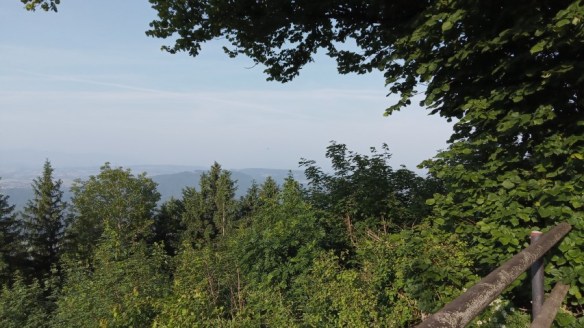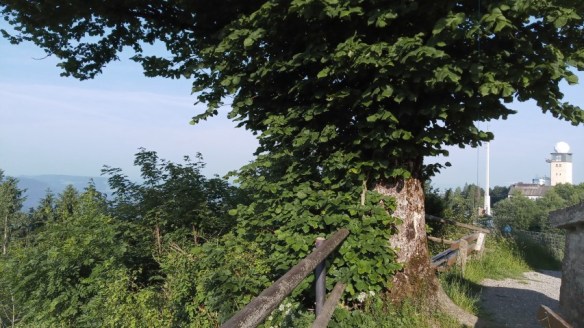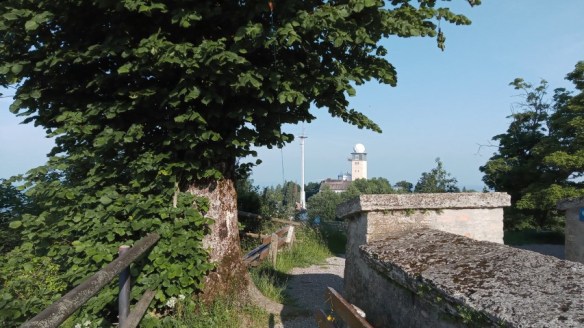
DD5LP/P – November 11th 2025 – Activation of 3-Fer POTA trails – DE-0594, 0595 and 0797 and SOTA DL/AM-001 Hoher Peißenberg.

Preparation:

After several “PLOTA” activations (operating from within the car), I wanted to get out and do a “proper” activation with my 6m mast, linked dipole, and Xiegu G90 set up. Rather than the “usual” 20m long path to contact Ernie VK3DET in Victoria, Australia, the VOACAP HF page predicted that the Gray Line should be over Europe and at least New Zealand and possibly the east coast of Australia at 0700 UTC (8 am local since we have changed back from summer time in October). The Gray Line (the terminator between night and day – at dawn and dusk) throws a “channel” over different points on the Earth at different times of the year, this is because the Earth’s axis is not straight up and down relative to its orbit around the Sun, but rather at a bit of an angle, so different points on the earth are under the line at different times on different days of the year. November is the month for dawn in Europe to be on the same line with dusk in New Zealand and Australia. I compare the use of the Gray Line terminator to transfer radio signals as being somewhat similar to ducting on VHF in that the signals are carried along the line and, as a result, are generally stronger than if transferred by F-layer skywave propagation bouncing off the Earth and ionosphere. The result is, when it works, it produces stronger signals with lower power. It is very, very rare that Grayline works on bands above 10 MHz, and so it is normally used on 40 and 80m (60m should be fine as well; however, Australia does not have a 60m amateur radio band at the moment).

Everything was packed in the car on Monday evening, so that I could leave early on Tuesday morning without waking anyone.

The Activation

POTA DE-0594 / DE-0595 / DE-0797 SOTA DL/AM-001

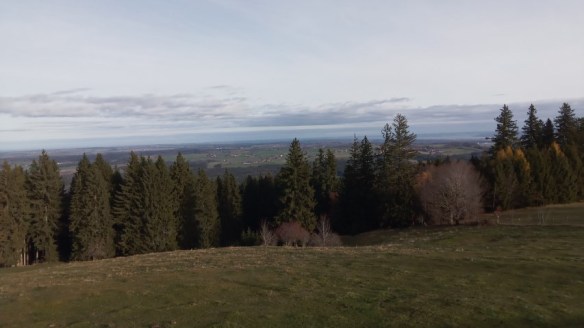
I could probably drive the route to this summit with my eyes closed, and on some previous winter mornings in thick freezing fog, I had in fact effectively done that. This time, however, the weather was kind and the trip took around 45 minutes, with some delays caused by school buses as 7 am is the time the children are bused to their schools in Germany, and lots of tradesmen are on their way to their first jobs of the day.

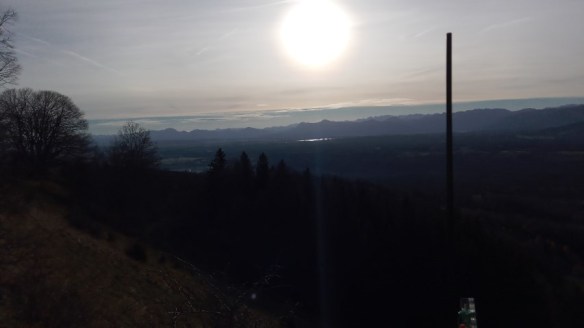
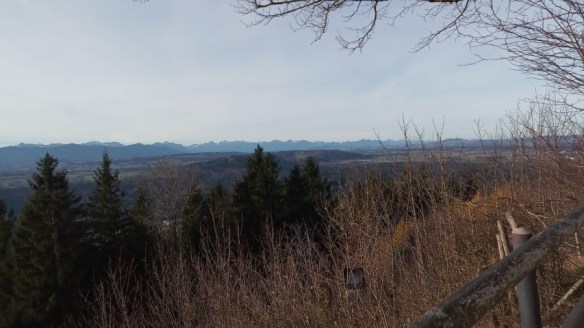
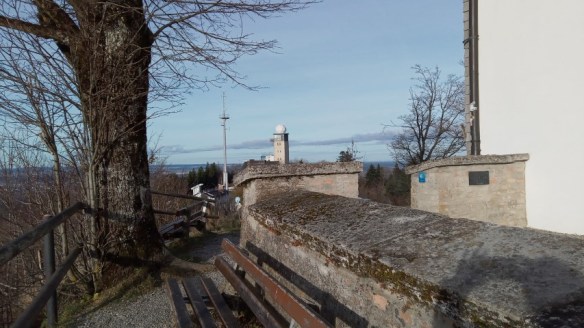
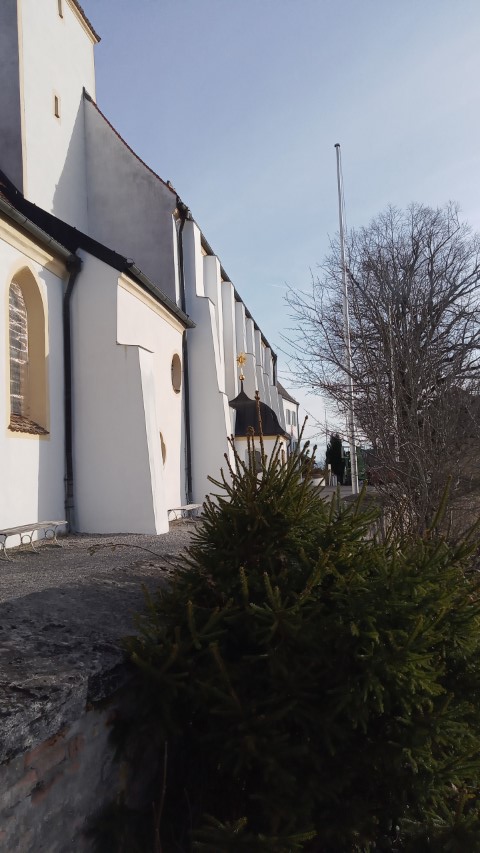
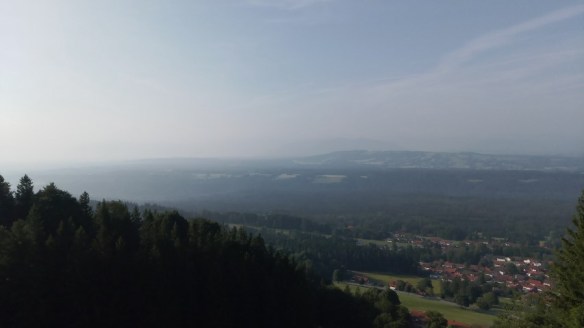
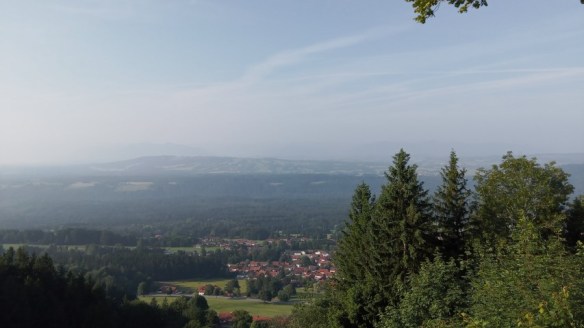
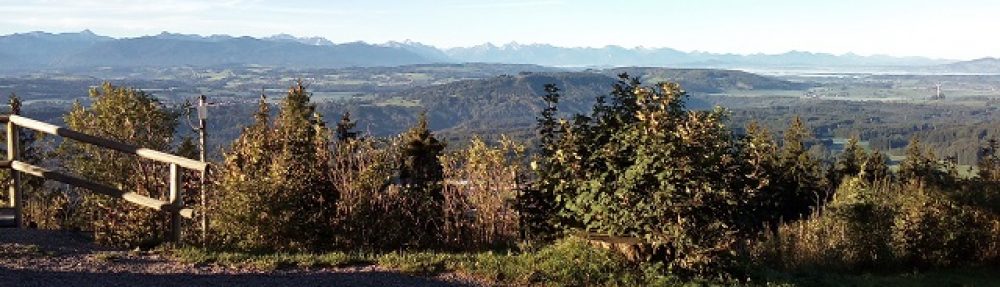
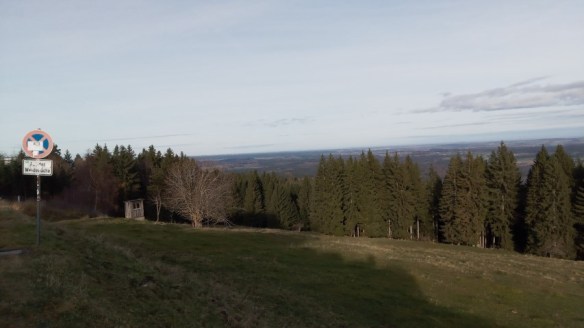
After buying a 3-hour ticket (€2) for the car park (using all of my small change as the card reading device in the parking ticket meter was not working). I headed up to my favourite seat alongside the church, looking out over the valley. I had a bad feeling at this point as it was 0645 UTC and VOACAP had told me that Dawn would be at 0700, but the sun was already over the horizon, meaning I should have been setting up at least 30 minutes earlier. The window of use of Grayline is often an hour at best, and I confirmed after getting on to 40m that I had missed it.

After spotting myself on SOTA and POTA sites, I also sent Ernie VK3DET a message, but he could hear nothing from me. I suspect that even if I had been on time for the Gray Line he may have been too far away from the line at his end and another possibility was that other stronger home stations were blocking my signal as the 40 metre band was packed with SSB stations, A little surprising for so early on a work day, but perhaps they were also looking for Grayline propagation? In any case, after spotting myself, I had to fight to keep my frequency after other QSOs (in at least one case, two other QSOs) started up on the frequency that I was using without checking first that it was free (as I had done). Luckily, many of the calling SOTA Chasers and POTA hunters had strong S9+ signals and crushed the other QSOs. I was amazed how my 20w and low linked-dipole was receiving (true) 59 reports for the majority of my contacts. This certainly proved that the 40m portable set-up still works very well! The pile-up only paused a couple of times, and I got 41 contacts in the log in just over 45 minutes. Once the contacts finally dried up, I considered trying 20m despite the threat of incoming CMEs but decided, rather, to call it a day and head home to the warm, happy that even if I was too late for the Grayline propagation, the equipment is still working very well.

Photos:
Equipment taken:

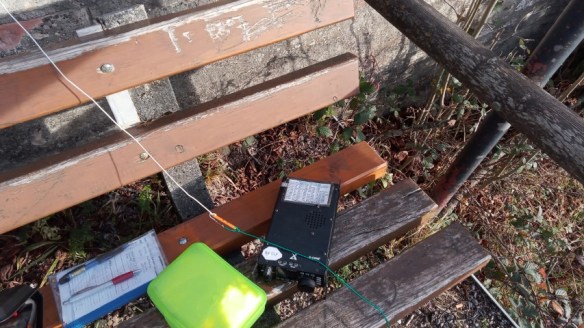
  • Xiegu G-90 radio.
  • Linked Dipole antenna.
  • 6m lambdahalbe mast.
  • 8 Ah LifePO4 battery.
  • 2 x 4Ah Eremit LifePO4 batteries (backup not used).
  • Lightweight headphones.
  • Smartphone for spotting.

Log:

POTA DE-0594 / DE-0595 / DE-0797

SOTA DL/AM-001

Conclusions:

The activation was a failure as regards Grayline; however, I know that at the right time on the right day, this can bring good results, so hopefully, I will get out again this month to prove that contacts via Grayline are still very possible. The equipment is certainly still working very well.

73 ’til the next activation!

DD5LP/P – June 11th 2025 – Activation of 3-Fer POTA trails – DE-0594, 0595 and 0797 and SOTA DL/AM-001 Hoher Peißenberg.

Preparation:

After several “PLOTA” activations (operating from within the car), I wanted to get out and do a “proper” activation with my 6m mast, linked dipole, and Xiegu G90 set up. As Ernie VK3DET, Mike 2E0YYY/P, Jon VK7JON/M, Helen VK7XYL/M and John VK7MD/M were planning to be on the band, this seemed to be an ideal opportunity to get back “into the field”.

As the Long Path on 20 metres has been opening around 7:30-8:00 am local time recently, this would be an early start with the alarm set for 6:15 am. The location needed to be a simple one to get to one and while I considered a HEMA/POTA location, when I realised that these three POTA trails go over the top of the SOTA DL/AM-001 summit, and this one-pointer is a drive-up, it won the choice.

Everything was packed in the car on Tuesday evening, so that I could leave early on Wednesday without waking anyone.

The Activation

POTA DE-0594 / DE-0595 / DE-0797 SOTA DL/AM-001

I could probably drive the route to this summit with my eyes closed, and on some previous winter mornings in thick freezing fog, I had in fact effectively done that. This time, however, the weather was kind (if still cold) and the trip took around 45 minutes. After buying a 3-hour ticket (€2) for the car park (it used to be free, but like many well-visited locations, someone decided they could make more money out of tourists). I headed up to my favourite seat alongside the church, looking out over the valley, on a very misty morning.

I had arranged a sked with Ernie VK3DET and Mike, and contacted them just as Ernie was finishing with Mike and packing up. I was told that Jon VK7JON/M/M, Helen VK7XYL/M and John VK7MD/M had all cancelled because of bad weather in Tasmania.

Never mind, for once, the terrestrial weather with me was good, indeed, even warm!

I set up the linked dipole set to 20 metres in my usual position and took a listen around the band. I could hear Mike 2E0YYY/P and Dave G4AKC/BM, but very little else on the band. Conditions were going to be a challenge. Ernie had just finished working Mike; however, I could hear nothing of Ernie. There was, however, another station, VK3USA, who joined Dave’s groups, and after Mike, I tried, but although we got reports across, I would not call it a real contact. The additional 10 dB loss from the UK to Southern Bavaria of the last hop, combined with my reduced power compared to Mike’s, was simply too much for a true contact to be possible.

I spotted myself separately for SOTA and POTA and had two different sessions for each award scheme, but at the end of the day, contacts were hard to get in the log with the radio conditions, the way they were.

Overall, the activation (my first SOTA of the year and first outside POTA (i.e. not PLOTA) was a success, as all the equipment worked as it should, and I got to sit out in the sunshine for 90 minutes before it started to get more crowded, and I decided to call it a day.

Photos:

Equipment taken:

  • Xiegu G-90 radio.
  • Linked Dipole antenna.
  • 6m lambdahalbe mast.
  • 8 Ah LifePO4 battery.
  • 2 x 4Ah Eremit LifePO4 batteries (backup not used).
  • Lightweight headphones.
  • Smartphone for spotting.

Log:

POTA DE-0594 / DE-0595 / DE-0797 SOTA DL/AM-001

Contacts Map Activation Log

Conclusions:

The activation was worthwhile to test out the equipment, even if the radio contacts were not all that they could have been. I hope the fine weather continues, and I’ll be heading to some more HEMA or SOTA summits in the next few weeks.

73 ’til the next activation!

G8GLM/P – September 24th & 26th 2024 – First ever activation of POTA GB-2021 Cotgrove Country Park and UKBOTA B/G-0655 Burton Joyce ROC Bunker.

Preparation:

Linked with my visit to the UK to visit my brother & sister and to attend the national Hamfest in Newark, I wanted to do some radio activations using my new Xiegu X6200 transceiver. As I left Germany, it was not clear which SOTA, HEMA, POTA, COTA or UKBOTA sites I might get to activate. I had planned to activate Bardon Hill – a SOTA summit (G/CE-004) on the way from the airport to where I would be staying but the weather was terrible with many roads in the UK closed because of flooding and as the access to Bardon Hill starts with a trek over a field, on the way driving there, I decided to cancel and concentrate on getting safely to my destination.

The Activations

POTA GB-2021 Cotgrove Park  & UKBOTA bunker B/G-0655 Burton Joyce ROC

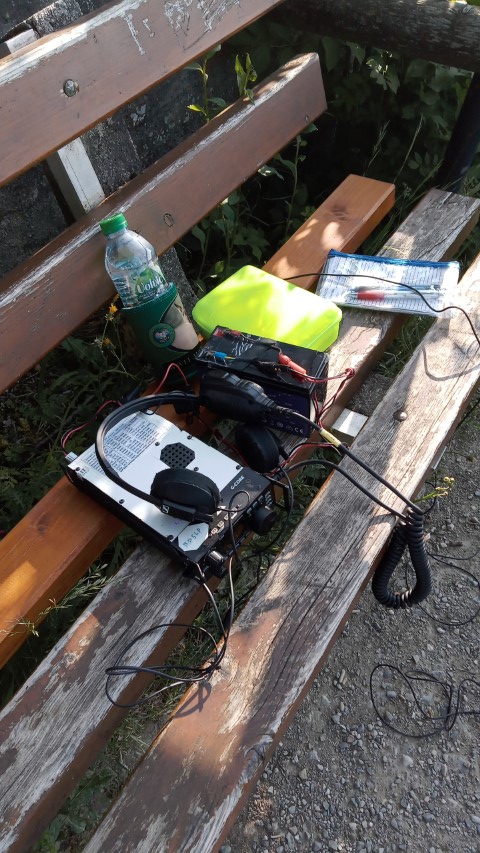
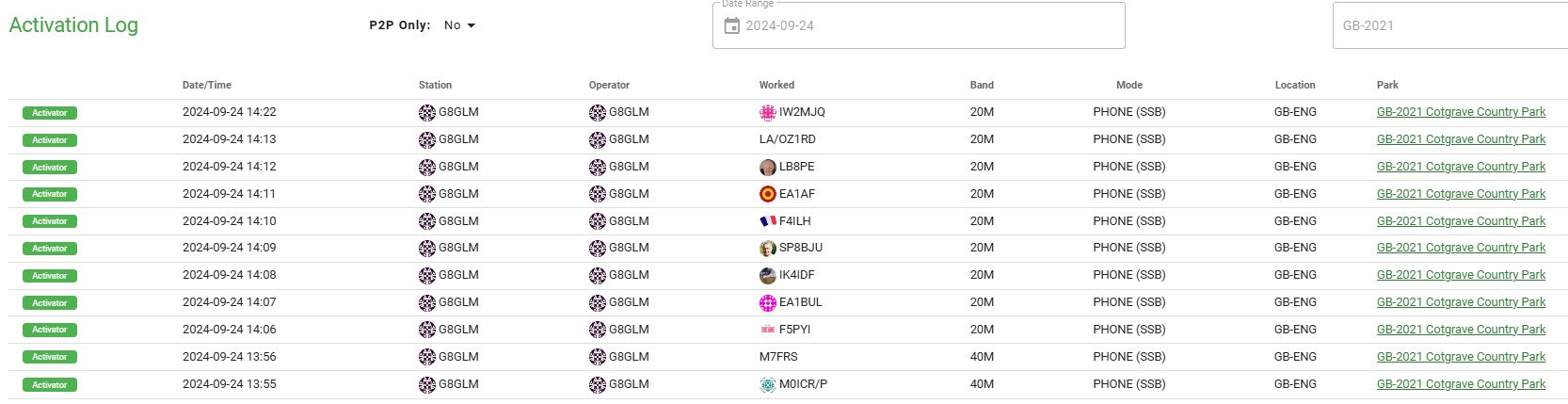
I had the opportunity on Tuesday to combine the activation of a POTA park near Nottingham, which for some reason, no one had yet activated, with taking my sister to visit a friend. Cotgrove Park has a housing estate in the middle of it but also some tributaries of the River Trent, near to one of those I found an area of grass large enough to set up the linked dipole and operated on 20 & 40m from a bench. There was some interest from passersby – mainly from their dogs – this seems to be a favourite dog walking park. Initially, I was only able to get contacts by search and pounce of strong stations but then after calling CQ for some time, I managed to get a flow of contacts ending up with 11 (one more than needed for a POTA activation). I then had to curtail operations as I needed to pick up my sister from a friend’s house where I had dropped her off earlier. The drive back to the other side of Nottingham was horrible. flowing traffic had changed into crawling traffic around the Nottingham ring road but at least I could chalk up an activation. I had started to think that my bringing the radio gear had been a waste of time. 

On Thursday I went to a point within a kilometre of a UKBunkers site about 20 minutes away from where we were staying. My originally planned set-up point was in a car park shown on Google Maps, which turned out to be a private one with locked gates at a (closed) sports centre, so I went further down the riverside and found a parking spot just before the Ferry Boat Inn at Stoke Bardolph. During my visit to the UK a year ago, I tried to get to one of two bunkers near where we were staying in the Lake District. The first was inaccessible as the fields were both overgrown and flooded, the second I managed to get to and operated from the top of the entrance but conditions were not kind to me and I got no contacts from there. This year, I checked the rules more carefully to find that I only needed to be within one kilometre of the bunker and could therefore activate from the road, from inside the car. The result however was not a lot better than the year before, with only two completed contacts.

Photos:

POTA GB-2021 – Cotgrave Country Park

This slideshow requires JavaScript.

UKBOTA B/G-0655 Burton Joyce ROC

This slideshow requires JavaScript.

Equipment taken:

  • Xiegu X-6200 radio.
  • Linked Dipole (used for POTA activation)
  • Six-metre mast (used for POTA activation).
  • Komunica Power HF-PRO2-PLUS-T loaded multiband vertical, tripod and radials (Used for UKBOTA activation).
  • 4Ah Eremit LifePO4 battery.
  • Plastic painter’s sheet and seat pad.
  • Lightweight headphones.
  • Smartphone for spotting.

Logs:

POTA GB-2021 Cotgrove Country Park.


UKBOTA B/G-0655 Burton Joyce ROC


Conclusions:

  • The activations could have gone better – whether that was conditions, lack of chasers or just not a big enough signal from the 8w X6200 (my normal G90 is a 20w radio) I am not sure. I question whether the extra effort of taking the radio gear was worthwhile (especially with the recent cases in the Middle East of exploding amateur radio transceivers making airport security more careful). I was the first activator of the POTA park, just beating another ham who activated the following day. 

73 until the next activation!


DD5LP/P – July 24th 2024 – First ever activation of POTA DE-0797 König Ludwig Weg & SOTA DL/AM-001 Peißenberg.

Preparation:

This is the second preservation/nature trail I have submitted for inclusion in the POTA award system and it was also accepted.  This trail is very interesting, starting as it does at the spot where King Ludwig was found drowned on Lake Starnberg and finishing near his world-famous Neuschwanstein Castle (think of the well-known Disneyland castle – that was a copy of this real-life one). Along its route, it entails a ferry trip across Ammersee a visit to the UNESCO-listed Weichkirche church and at least one SOTA summit. The route runs right past the seat that I use to activate the DL/AM-001 SOTA summit.   

One reason for this activation was to be the first to activate from the trail and to do that one does not have to walk the 6-day long trail but rather just set up somewhere along its route. Although I have already activated the SOTA Peißenberg summit this year and hence won’t get any points for it, I chose to do the combined activation as then I could call on two groups of chasers for contacts and my second reason for the activation would benefit from having as many contacts as possible. The second reason was to test out equipment prior to its use during the International Lighthouse and Lightship Weekend in August. I had found on previous ILLW activations, that the signal from my 20w radio was getting stomped on by other stations, so (as well as using the two-element wire beam this time), this year would have some more power on board, specifically 50-70w RMS (over 100w PEP) depending upon the band in use. I have worked at trying to get a Chinese amplifier to work reliably for a couple of months but with the MOSFETs blowing regularly it did not look promising and I decided to buy a commercial HF amplifier. Now those designed for ham bands are expensive, however, those designed for the CB bands are a lot cheaper and can be modified to work across the complete HF spectrum (3-30 MHz).  I bought an RM-Italy KL-203P unit. The missing component in a 27MHz amplifier is protection against harmonic emissions. In an amplifier designed for amateur radio use, switched low-pass filters are used to block any harmonic signals. As I had, from my work with the Chinese amplifier a switchable LPF board I cased this up and cabled it to follow the amplifier and precede the ATU-100 tuner. While the LPF box uses Butterworth filters, it can operate on transmit and receive.  So, as you can see, the station for the ILLW event is made of several, cabled together units and this combination needed to be tested in a portable operation before relying upon them for my ILLW station. This activation would be that equipment test.

Map where POTA nature trail and SOTA summit meet.

The Activation

POTA DE-0797 / SOTA DL/AM-001

Originally planned for Tuesday but rescheduled to Wednesday as some strapping components were delivered later than promised by Amazon and so I would have had no chance to do a dry run from the home station – that test took place on Tuesday with a contact with Leif LA9BM in Norway. He commented that the G106 with my RF Clipper speech processor and the amplifier and other components after if, while OK, the audio sounded a little deep and muffled. This report was also received later during the activation and the adjustment to the speech processor is an outstanding action to be completed.

As regards the activation itself, I had the alarm set for 6 am, was on the road by 7 am and set up and running at 8 am (all local times – UTC+2).

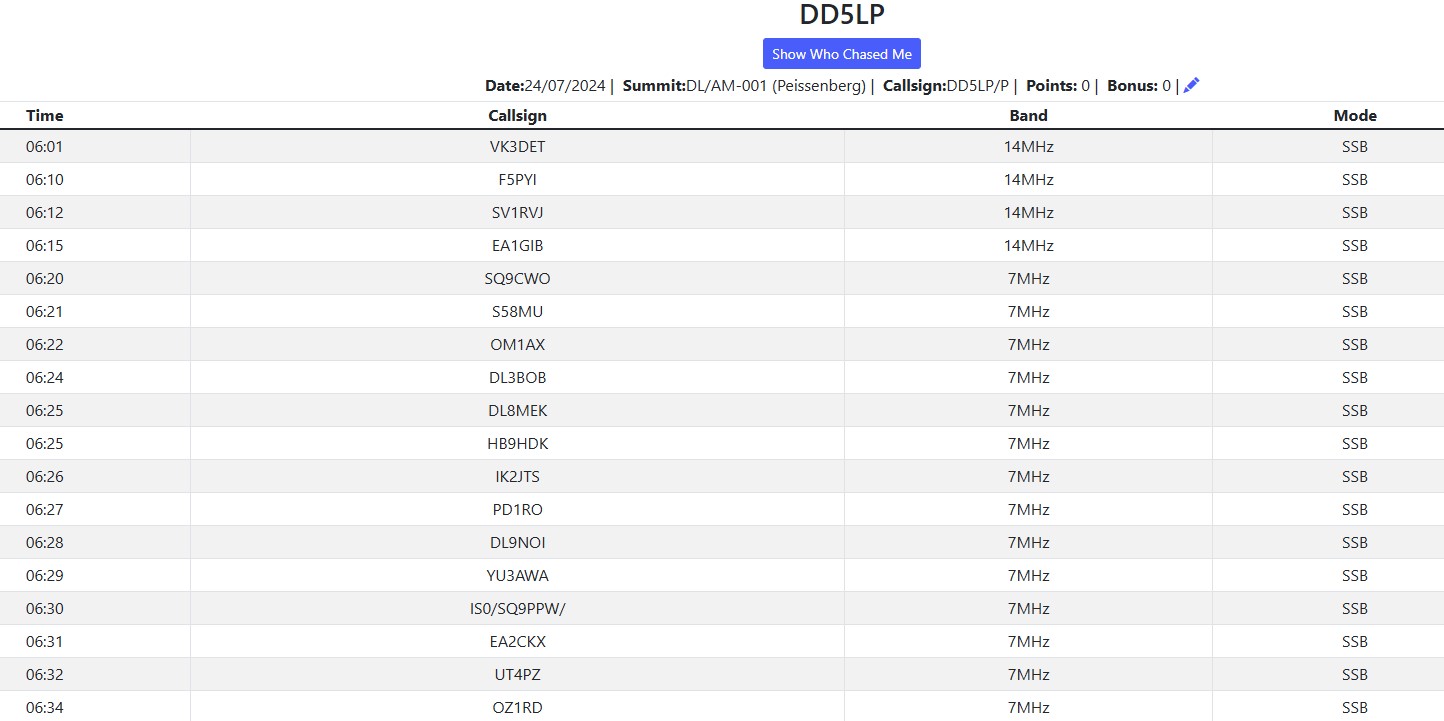
A quick tune of 20m showed a couple of US stations booming in. First in the log was Ernie VK3DET and we exchanged the same report on signal strength with Ernie running 100w, that seems a good start. It took a while to get the needed 4 contacts to qualify the summit. I put this down to the crowded part of the 20m band where I was operating. I could have moved to another frequency on 20 metres but rather I decided to change to 40 metres, as another test of the equipment. On 40 metres I had no problems finding the extra 6 contacts needed to qualify a POTA trail, indeed I had 18 contacts in 35 minutes and then, as the skies were darkening again, I decided to call it a day with the new combination of units working well together. Three further callers commented on the audio being a little difficult to read, so this confirmed what I already thought to be the case and that will get looked at while at home.

When I got home, I calculated that I had drained 2 Ah from the 8 Ah battery in just over 35 minutes so I will need to take a spare battery (or two) along for the (longer) ILLW activation next month.

Photos:

This slideshow requires JavaScript.

Equipment taken:

  • Xiegu G-106 radio.
  • DF4ZS Mini-RF-Clipper speech processor.
  • RM-Italy KL-203 P amplifier.
  • Switch LPF filters box.
  • ATU-100 tuner.
  • Aerial-59 OCF UL-404 dipole antenna.
  • Six metre mast.
  • Komunica Power HF-PRO2-PLUS-T loaded multiband vertical (not used).
  • 5-band linked dipole antenna (not used).
  • 8Ah LifePO4 battery.
  • 4Ah Eremit LifePO4 battery (not used).
  • 4 Ah 3S LiHV battery (not used).
  • Plastic painter’s sheet and seat pad.
  • Lightweight headphones.
  • Smartphone for spotting.

Logs:

POTA DE-0797 König Ludwig Weg.

SOTA DL/AM-001 Peißenberg

Contacts Map

Conclusions:

  • The activation went well, I was the first activator of this POTA trail, and the radio equipment performed well. The battery drain level will need to be watched at the higher power levels and the speech processor needs to be adjusted.

73 until the next activation!