DD5LP/P 17th March 2025 – DE-0663 Lechpark Pössinger Au RP

Preparation:

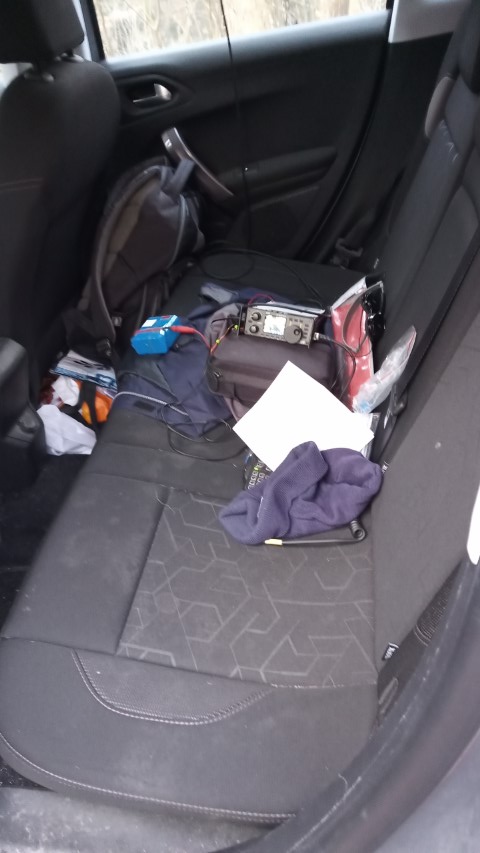
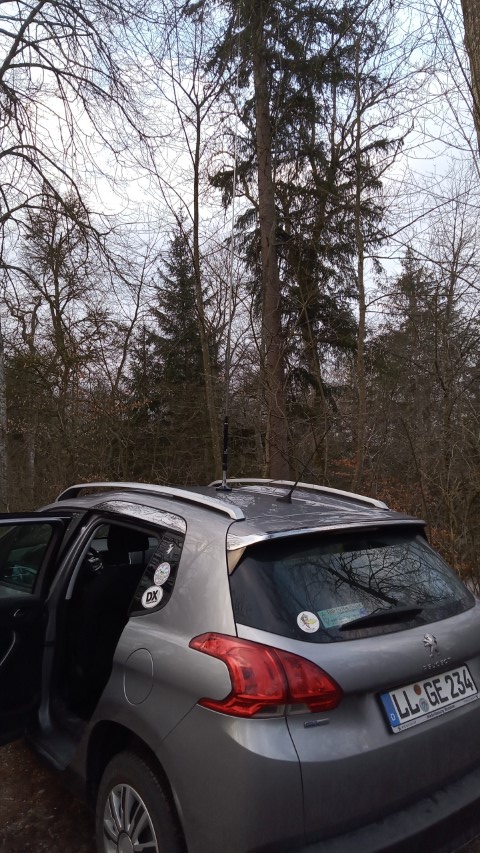
As Dave (G4AKC) was going to be out, possibly for his last time in Cyprus, the usual culprits, Mike 2E0YYY, Ernie VK3DET, Jon VK7JON, Steve G4NVF and I decided to get on to work him from around Australia and Europe. Target activation time for me was 7:15 am local time (0615 UTC) to coincide with Dave’s plans – so my local park “Pössinger Au” was chosen for the activation and to keep things even simpler, I would head to the official car park, rather than the car parking area where 3 POTA entities come together. As per the last operations, all was packed in the car and the magnetic antenna mount was put on the car’s roof the Sunday before the Monday morning activation. One test change to the radio configuration, planned for use in Cyprus in 3 weeks was a smaller set of headphones, that would pack better for transport. Apart from that change, everything was the same – Xiegu G90, 4Ah battery and HF-PRO2-PLUS-T antenna (which I even preset to position to save time the next day).

The Activation

POTA DE-0663

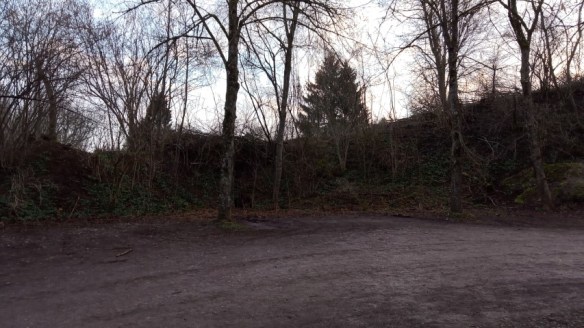
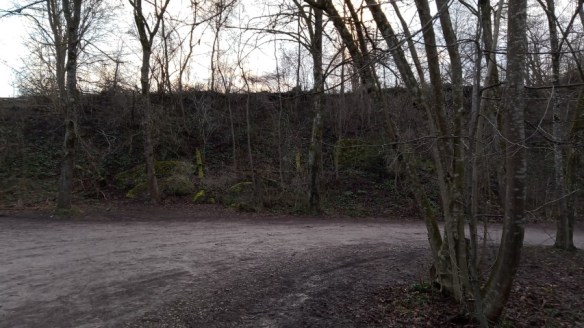
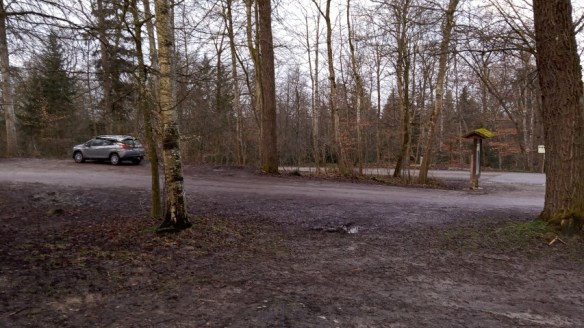
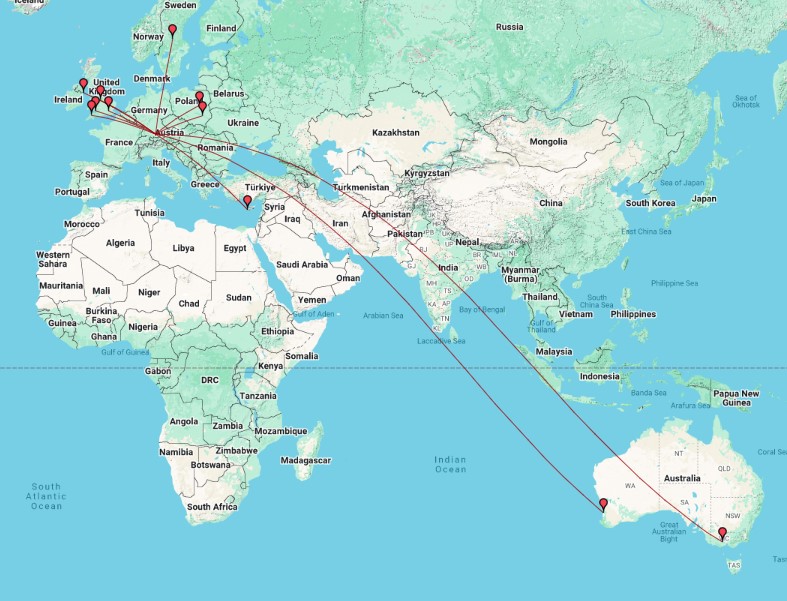
The Monday morning was a little cold at -2°C as I left home at 6:55 am however the run over to the park went without issue and I was the first in what is a walkers car park. As soon as I mounted the antenna and took a few photos, I already got a message from Dave saying he was set up and ready for calls. On tuning to his frequency, I found Ernie VK3DET calling Dave and after a couple of minutes, we had a three-way QSO going. While I had expected to hear Dave, Ernie from Victoria, Australia coming in with a strong signal so early in the morning was a surprise. Apparently, it is normal once Spring starts that the long path opens earlier.

A few minutes later we were joined by Jon VK7JON/M in Tasmania. He had a good signal but also local S6 noise so he could not hear me. Later when the local noise had died down we managed a contact. Over the next hour, the stations from the UK joined, however, I could not hear them – which is not unusual on 20 metres at that time of day. Later however I also got contacts with Steve G4NVF-Byclcle Mobile and Mike 2E0YYY/P.

Just to be able to qualify the park with at least 10 contacts, I left the group and hunted for an available frequency to call CQ POTA. It was not easy and only after trying three different frequencies, the first two gaining QRM after I had been on them for 15 minutes, did I get some calls and was in the end able to have 11 in the log.

Photos:

Equipment taken:

  • Xiegu G-90 radio.
  • Komunica Power HF-PRO2-PLUS-T loaded vertical antenna.
  • OPEK single-magnet car roof antenna mount.
  • 4 Ah LifePO4 battery.
  • 2Ah Eremit LifePO4 battery (not used).
  • Super small headphones.
  • Smartphone for spotting.

Log:

POTA DE-0663

Conclusions:

The fact that the VK stations came though about an hour earlier than expected, indicates that the Ionosphere has switched into “Spring-mode” and these early morning contacts should continue to be possible – probably still once I am in Cyprus for my holiday in a few weeks. The equipment now seems to be behaving itself again, which is a relief.

73 ’til the next activation!

DD5LP/P – April 11th 2024 – First ever activation of POTA DE-0663 Pössinger Au NP.

Preparation:

This was originally planned as a HEMA/SOTA activation to Berndorfer Buchet to try out the latest version of my 2 element portable wire beam however when the news came through that my application to have the local nature park added to the POTA system had been approved, there was a quick change of location, so that I could get to activate the new park first.

The purpose remained the same – to test the latest revision of the portable beam, for which I needed contacts from different directions so that I could see the effect of electrically switching the antenna between North, East, South and West. Rather than SOTA and HEMA chasers, I would rely upon POTA chasers. 

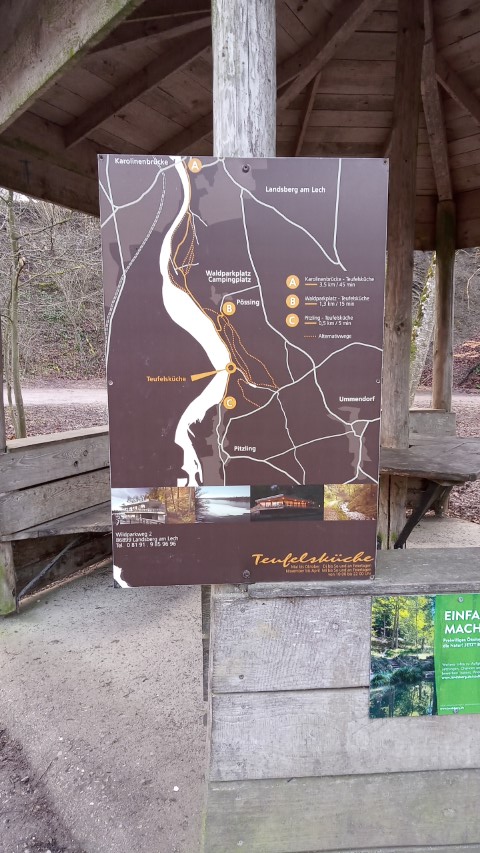
Pössinger Au runs south of the centre of the Medieval town of Landsberg am Lech down to the village of Pitzling along the eastern side of the River Lech. It contains an animal park with wild boar and deer, small lakes, lots of woodland walks and even an outdoor water playground. There are several car parks in the “Au” but this was not going to be a PLOTA (Parking Lots on the Air) activation, rather one a little way away from the car, so all equipment would need to be carried. For stability, I would take the surveyor’s tripod that I have which is very good to keep a mast stable and vertical but is an awkward and quite heavy thing to carry.

The Activation

POTA DE-0663

Being so close an early start was not needed as the drive was less than 10 minutes. Once parked, I unloaded and went to a spot where I could set up without blocking any of the trails. Unfortunately, this was a little down in a dip so some directions may well be impacted, however as this was to be an HF activation, the impact (I hoped) would be minimal.

As usual, I had arranged that Ernie VK3DET would be kindly listening for me and Mike 2E0YYY had also decided to head out to a local GMA summit, however as my main band was planned to be 20 metres the chances would be slim that I would hear Mike in the UK. 10 metres is no longer open from Central Europe as it has been for a few weeks.

The setup of the new board with its double cable (combined coax and DC power) on the top of my 7-metre mast, supported by the surveyor’s tripod went OK although I had to adjust the 4 elements (which also act as guy ropes) a few times to get the antenna right as the ground was not totally level.

First in the log, was, as usual, Ernie VK3DET and I could tell a slight difference in “electrically pointing” the beam due west for the long path compared to other directions. Mike had several other local UK hams lined up to talk to Ernie and as I could not hear Mike, I gave my apologies and went off to collect some more contacts to qualify the park.

This turned out to be a difficult task, despite spotting myself on the POTA cluster, I got very few calls. 20 metres was very busy and I suspect some other station was on the same frequency, that I had checked was free before spotting it, so I changed my frequency and re-spotted. Still nothing. I even tried 10 metres but it was dead and looking at PROPQUEST the MUF in Central Europe never got high enough for 10 metres to open. While on 10m however I tuned to the local beacon and tested antenna direction against it and it was very clear that all was working as it should with clearly the strongest signal when the antenna was pointing South – the direction where the beacon is. I even made a video of this test and will try to attach it here. After more calls on 20m I eventually got a call from IW9FFI which I was very grateful for. My signals were getting to Australia but it seems there were only a few European POTA chasers up so early in the day.

The beam was configured for 10 & 20m and I did not really want to take it down to put up a different antenna for 40m. So I decided to use the range of the internal ATU within the Xiegu G90 radio to match the 10/20m antenna. It would not be radiating a lot but after seeing S55G/P spotted in a Slovenian park (actually in three overlapping ones, SI-0073/72/93) I called him on 40m using the 20/10 beam and we managed a contact. This was still only my third contact of the day, so I still needed another 7 contacts to qualify the park. I persevered and even had a small run of contacts on 40m but then the last one took another 10 minutes that seemed like an eternity but with F8FSC in the log, that was the needed 10 contacts. After announcing “last call” and expecting the usual 2 or 3 late callers, there were none, so I started to pack up all the gear.

Once I had packed up and got back to the car I had a chance to look around at how beautiful this part of Bavaria is and ended up chatting to a local man for about 20 minutes before I could head home.

All in all, with a very cold 2°C start but later a little warmer with some sunny weather this was a successful test of the portable HF beam although, I now need to be able to deploy it without the tripod and indeed a smaller version of the feed point board is already being planned.

Photos:

This slideshow requires JavaScript.

Video of tests receiving local 10m beacon.

Video

Equipment taken:

  • Xiegu G-90 radio.
  • Portable HF 2 element, trapped wire beam for 20m & 10m) electrically switchable from ground between N, E, S and W.
  • Special coax and DC supply cable (10 metres long).
  • 4Ah Eremit LifePO4 battery.
  • 4 Ah 3S LiHV battery (not used).
  • Plastic painters sheet and seat pad.
  • Lightweight headphones.
  • Smartphone for spotting.

Log:

DE-0663 Pössinger Au

POTA Contacts Map

Conclusions:

  • The activation went well for a rushed “First activation” of a park. I was however surprised at the lack of callers on 20 metres while the band was busy with lots of QRM, the number of POTA callers was disappointing.
  • 10 metres sounds “wrong” on receive – it’s almost being pushed down by interference (perhaps from outside of the band). I have seen a similar situation on both the G106 and from home on the IC-7300, so I don’t think the G90 is faulty, just that 10m with no signals is a very quiet band.

73 ’til the next activation!