DD5LP/P – November 2nd SOTA NA-EU S2S event – DL/AM-176 Rentschen.

Preparation:

The annual North America to Europe S2S event day had arrived again and (as usual), the weather forecast looked good until the day before when it changed from foggy in the morning and sunny in the afternoon (when the event is), to being cold, damp and foggy all day. Despite that, I decided to go ahead with the activation with the hope of getting some easy S2S contacts from this 1-pointer plateau summit. 
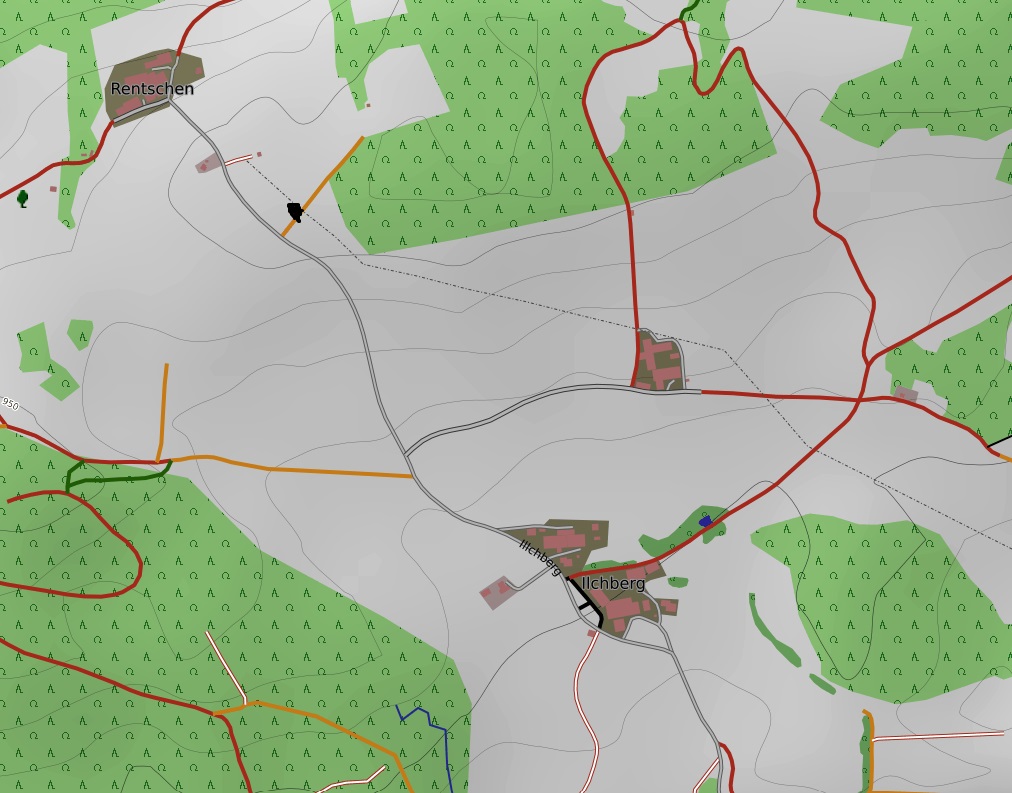
Rentschen is the summit I choose for testing new antennas on as it is a flat plateau and so provides plenty of space.

I decided to play it safe for this afternoon’s activation. I packed not only the electrically switchable trapped tri-bander beam but also the manually switched 5-bander and my linked dipole, each with its own masts and supports.  To be safe I also packed the antenna analyser, a complete spare radio station (G106 plus 100w amp tower) and 4, 8 & 12 Ah batteries. (I was hoping that the weather may improve so I would have the opportunity to compare various combinations). The weather didn’t change and most of the equipment stayed in the car as it turned out. This is thankfully a drive-on summit.

The Activation

It is rare that I only head out in the afternoon for a SOTA activation – usually, I am eager to get to the summit just after daybreak to work VK via the long path but in this case, where North America was the target the clock difference made a morning activation the wrong options and all of the many SOTA activators who would be out had alerted to be on from around 1300 UTC (or 2 pm local time here) – so that was my target to get on site and set-up.

The run down to Rentschen, I know very well and it was good that I did as the fog came in reducing visibility along the roads for a fair distance. On arrival at the summit, visibility was around 30 metres and it was a very damp fog. As Rob DM1CM was also going to join me I got started straight away with setting up the antenna and station.

As usual, the 2 element wire beam antenna was installed using the screw-in base with the four wires going out at 90° to each other, the combined length of the element and its cord extender (also acting as the guy cords for the mast), formed a 60° angle with the vertical mast, this after looking at a model of the antenna appears to be a better value than the normally stated 56° (the mast is a 7-metre mast but with the top section removed so that the feed point board sits at 6 metres above ground level). 

As I was finishing up the set-up, Rob arrived and we took a listen around 10 metres (which I had expected to be the “money band” for this event going by recent radio conditions. Initially, the band was empty but then about 15 minutes later it filled up with stations from Russia and the US. It seems skip was not going to allow me to get any contacts inside Europe but the first in the log was Jörg signing as DL/HB9BIN/P from Laber DL/AM-060 – which, if there wasn’t a forest in the way, would have been line-of-sight from where we were. Watching the SOTA spots on my smartphone, I saw more & more European and UK stations spotting that they were out however when I tuned to their frequencies I could not hear them. I suspect the skip distance on the 10m band at the time was too long. This was in some ways confirmed by the strength of the US home stations. Unfortunately, the US SOTA activating stations all seem to have been using either CW or data so were not an option for me. I put out several CQ calls and was eventually rewarded by calls from three US SOTA chasers calling me.

The cold damp temperatures and the lack of contacts eventually decided me to cut the activation short and head home to the warmth. As I approached home, it was obvious that the weather at home had not been nearly as bad as where Rob and I were located.

There are positive points out of this action. The wire beam works well (even though I set it up 45° off the intended direction). It would have been nice to compare the linked-elements version against the trapped elements but the work involved in the wet and cold was not justified. The G90 radio with its 20 watts output on SSB, continues to “do the job” and the new 12 Ah LifePO4 battery also got another test.

Photos:

This slideshow requires JavaScript.

Equipment taken:

  • Mountaintop travelling 40-litre rucksack.
  • Raddy rucksack. (not used)
  • Xiegu G90 radio.
  • Xiegu G106 radio plus RMItaly amplifier, LPF box and ATU-100. (not used)
  • Screw-in mast base.
  • 7 metre fibreglass mast.
  • Surveyors tripod and 10m mast. (not used)
  • 10/15/20-metre band 2-element trapped wire beam.
  • 10/12/15/17/20-metre band 2-element linked elements wire beam.
  • SOTA/HEMA logbook & pens.
  • Komunica Power HF-Pro2-PLUS-T loaded vertical antenna and tripod (not used)
  • 6m mini-mast (not used).
  • SotaBeams linked dipole (not used).
  • 4 Ah Eremit LifePO4 battery (not used).
  • 8 Ah LiFePO4 battery (not used).
  • 12 Ah LifePO4 battery.
  • Painter’s thick plastic sheet.
  • Gardener’s kneeling pad (not used).
  • 2 x Lightweight headphones (one pair not used).
  • Smartphone for SOTA/HEMA spotting.

Log:

Conclusions:

  • The NA-EU SOTA S2S event is “jinxed” every year it is accompanied by bad terrestrial weather (at least here in Southern Germany).

  • The equipment used worked well and it was a nice “social” meet-up with Rob.

73 ’til the next summit.

DD5LP/P – August 6th 5th 2024 SOTA DL/AM-176 / HEMA DL/HBY-052 Rentschen.

Preparation:

With progress made on the 2-element wire beam by adding a trap for 15m operation and reconfiguration of the speech processor that I use with my G106 radio, I needed to test both out on a summit. The results of these tests would also help me define what equipment I would take to Lindau, two weeks later for the International Lighthouse and Lightship Weekend.

Unfortunately, the sun is not on my side again, with a very active sun sending flares and CMEs which suppress the maximum usable frequency (MUF) since the weekend. I was hoping that things would be relatively back to normal on Tuesday (the activation had initially been planned for Monday).

As Rentschen is a drive-on one-pointer summit, I packed the “G106 Pack” and the normal G90 radio and accessories into the car the day before. Looking at the previous week, 21 MHz was unlikely to open before 0700 UTC (9 am local time), so it would be a 7:45 am departure from home to allow for the 45-minute drive and set-up time on the summit. The alarm was set …

The Activation

The morning of the activation arrived and the terrestrial weather looked nice. The trip down took a little longer than expected as I hit some of the morning commuter traffic but I arrived at around 8:30 am as planned and found a spot right next to the trig-point stone – the marker of the absolute summit point and set-up. I had a sked with Ernie VK3DET and we would try 20m and then move to 15m.

The antenna was installed using the screw-in base with the four wires going out at 90° to each other, the combined length of the element and its cord extender (also acting as the guy cords for the mast), form a 56° angle with the vertical mast (the mast is a 7-metre mast but with the top section removed so that the feed point board sits at 6 metres above ground level). 

I had two aims with this activation – one was to check that the speech compressor which I use with the G106 and amplifier, now sounds better. I know the built-in one in the g90 is fine. The second aim was to make a contact on 15m with the wire beam, now that I had added the 15m traps to it.

I hadn’t expected problems with the “G106 Stack” ( G106 radio – CB amplifier – LPF filter box – ATU-100 ) as it had worked fine the last time that I used it, but OF COURSE – something went wrong there and instead of over 100w PEP that I got last time (70w RMS) – I got 20w RMS at best. I could hear the VOX relay in the amplifier chattering, suggesting it was not getting enough drive. This is at least something that I can test at home without needing to go /P again. Depending upon what I find, I could match the amplifier+LPF+Tuner up with the g90 on low power for ILLW. We’ll see.

As for the antenna test on 15m, my test with Ernie VK3DET was too early and we gave up because the band was empty of DX. I said 73 to Ernie, switched to the G90 20w radio and went back to bag some contacts on 20m to get the necessary 4 contacts to “qualify” the summit (which, as I have already activated this summit this year for both SOTA and HEMA brought me no points). Rather than the usual quick signal report exchange, I managed a few chats with hams who were interesting and a couple were interested in the wire beam I was using, so we exchanged website URLs and agreed to check out each other’s work. That was a nice interlude in the warm weather on the summit but I still wanted to know whether the beam would actually work on 15m so when I got no further replies to my CQs I went back to 15m

To my surprise there were stations now on the band and from 08:15 – 08:25 I happily listened in to a 15m net on 21.270 with Dave VK6IE, Steve E51CZZ on Aitutaki Isl (South Cook), Paul EA5JZ and a VK3 – It could have been VK3MH Brendan but I think I heard the others call him Andrew, so I may have that call wrong – he was the weakest of them all. The South Cook station was easier to listen to and that was SHORT PATH! I did “turn” the beam (via relays) and there was a difference, this was definitely short path VK-EU from 0800 UTC onwards. After trying to call into the net unsuccessfully – although Dave said he heard “someone” after I called – I gave up on the effort as one of those things, found another frequency, spotted myself on SOTA and called CQ for 5 minutes with no replies.
One thing is clear – the beam receives on 15 metres OK, whether it works also on transmit will have to wait until another day.

Photos:

This slideshow requires JavaScript.

Equipment taken:

  • Mountaintop travelling 40-litre rucksack.
  • Raddy rucksack.
  • Xiegu G90 radio.
  • Xiegu G106 radio plus RMItaly amplifier, LPF box and ATU-100.
  • Screw-in mast base.
  • 7 metre fibreglass mast.
  • 10/15/20-metre band 2-element trapped wire beam.
  • Komunica Power HF-Pro2-PLUS-T loaded vertical antenna and tripod (not used)
  • 2 x 6m mini-mast (not used).
  • SotaBeams linked dipole (not used).
  • 4 Ah Eremit LifePO4 battery.
  • 8 Ah LiFePO4 battery.
  • Painter’s thick plastic sheet.
  • Gardener’s kneeling pad (not used).
  • 2 x Lightweight headphones.
  • Smartphone for SOTA/HEMA spotting.

Log:

HEMA

SOTA

CONTACTS MAP

Conclusions:

  • The antenna worked well on 20 metres and received fine on 15 metres (with directivity). I hope transmit on 15m will work fine as well but the conditions on 15m were so variable with the MUF bouncing below and above 21 MHz, it wasn’t a good day for the test.

  • The problem with the “G106 Stack” will need to be investigated – the fact that I could hear the input VOX relays “chattering” in the amplifier suggests to me that it wasn’t getting enough drive.

  • I will need to consider what I take for ILLW (International Lighthouse and Lightship Weekend) on two counts – firstly the antenna – the beam needs more space than a simple dipole and it doesn’t cover 40m, which could end up being the band of choice depending upon radio conditions. As for which transmitter, I would like to have more than 20w to “fend off” those stations who simply sit on my frequency and start calling CQ because they are either deaf or rude B’s. I could use the G90 with the amplifier rather than the G106 with the knowledge that if there is a problem, I can fall back to using the G90 “barefoot”.

73 ’til the next summit.

DD5LP/P – February 5th 2024 SOTA DL/AM-176 / HEMA DL/HBY-052 Rentschen.

Preparation:

With progress made on the 2-element wire beam and success at Peissenberg a week previously in the 10m only form, it was time to test the antenna this time with the trapped elements which should make the antenna a dual band antenna able to operate on the 10-metre and the 20-metre bands. This was not to be a test of the Bluetooth relay switching board but rather purely to test out the dual-band nature of the elements. Testing the full system with remote switchable direction will need to wait until another day.

After some days of rain showers, Monday had a good forecast with winds supposed to cease by 9 am and then the day to be sunny if not warm.

After a couple of tests in the muddy local field, the simple feed-point plate with the trapped elements had been trimmed to length, so everything was set for a test from a summit and so the surveyor’s tripod, the 7-metre mast, the antenna analyser and the antenna components were all loaded in the car on Sunday evening along with my 40-litre rucksack containing radio, battery and several antennas and masts, ready for an early start on Monday morning.

The chosen summit “Rentschen” is a plateau and as such a good summit for antenna testing with lots of space and few obstructions. This is a summit that is both in the HEMA and SOTA schemes and so is a “twofer” as POTA activators would say.

The Activation

The trip down was uneventful and I arrived at my usual car parking spot at around 8:15 am local time with my plan to be on the air before 9 am to catch the 20m long path into VK (I had set up a sked with Ernie VK3DET) and then to try the antenna also on 10 metres.

I chose a spot not far from the trig-point stone and I unpacked the mast, tripod and antenna first. These went up well, in the same way as I had installed them on the local field for the earlier tests and trimming. The four wires go out at 90° to each other and because of the combined length of the element and its cord extender (also acting as the guy cords for the mast), form a 56° angle with the vertical mast (the mast is a 7 metre mast but with the top section removed so that the feedpoint board sits at 5 metres above ground level). 

Before unpacking the radio, I attached the antenna analyser to make sure that all still seemed  OK with the antenna – it did. Then the Xiegu G90, headphones, battery and log book were unpacked and laid on my painter’s thick plastic sheet on the ground.

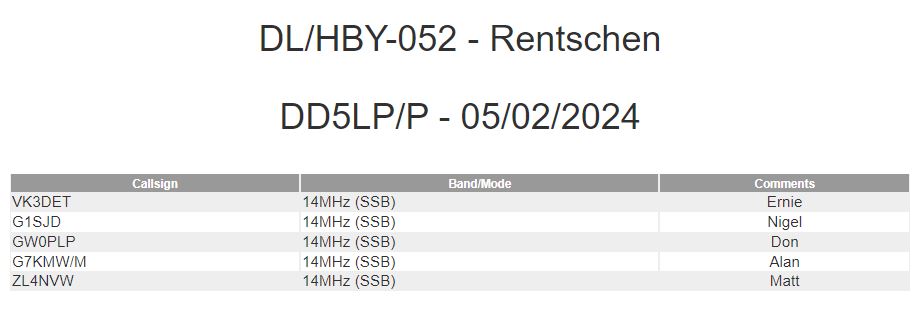
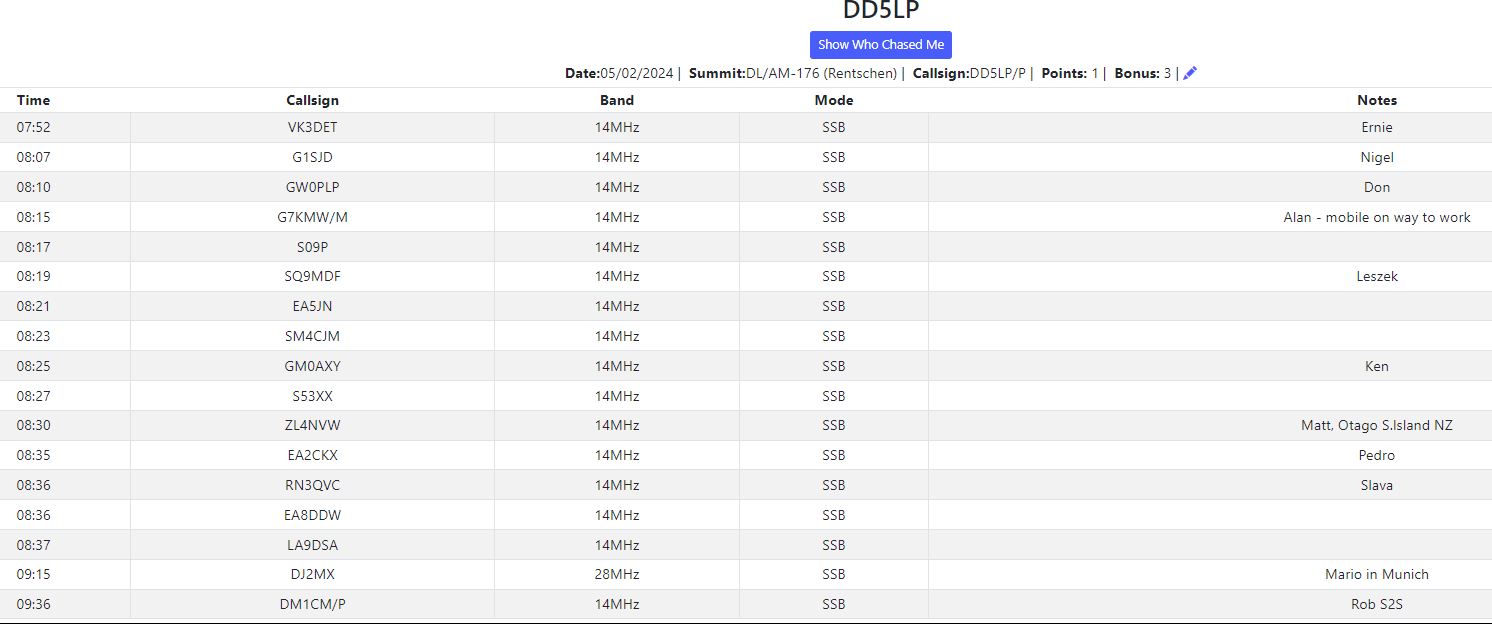
After sending a short Internet message to Ernie and agreeing on a 20m frequency that was free at both ends, I called Ernie and there he was – armchair copy, solid signal! I had the antenna “aimed” long-path (West from me) for this contact. When I needed to move to 10m, it would need to point short-path (East from me) so, rather than going straight on to 10m (a bad decision as it turned out), I decided to work more chasers (HEMA & SOTA) on 20m first.

In the middle of the SOTA callers on 20m,  Matt ZL4NVW from Otago on the South Island of New Zealand called in. This suggests that 20m would have still been good for contacts into VK for another hour or so at least.

Another surprise contact was Alan G7KMW actually mobile while heading into work in the midlands of the UK. An easy copy so I think the antenna is definitely working.

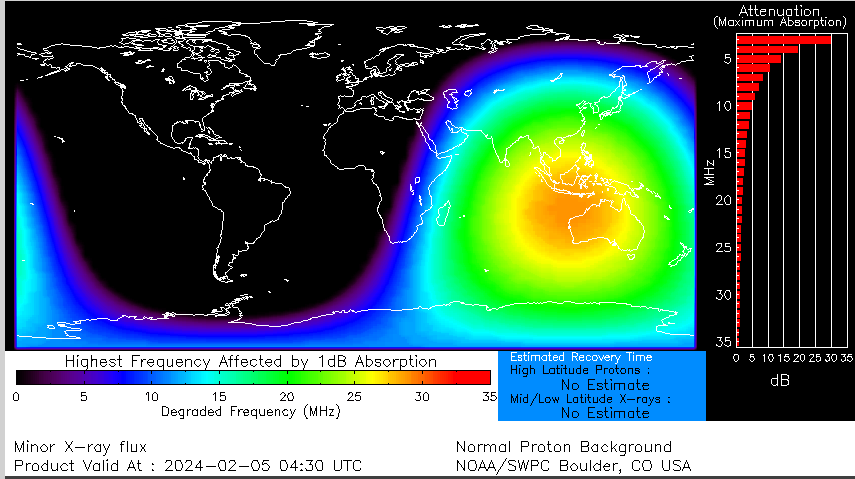
When I decided to switch to 10m it was getting close to 0900 UTC and after dropping the antenna, turning the feed-point board 180° so that the beam would be pointing short-path to VK and raising it again, Ernie VK2DET  and I tried for a 10m contact but if I hadn’t known he was calling I would have mistaken it for just part of the noise. The signal was so weak that there was no chance of Ernie hearing me (but I did try). What was strange was that two VK2 stations VK2CPC and VK2GM were both booming great 59 signals on 10m. Initially, I had thought my antenna wasn’t working on 10m but later I found it was most likely a propagation problem with an X-ray flare hitting the Ionosphere over Australia and pushing the MUF down over VKs 3,5,6 & 8 but not affecting VK2.

image

I only got one contact on 10 metres and that was off the side of the beam with Mario in Munich.

The next test will be to fit the Bluetooth-switched top board, to see if I can hear any difference in signal strengths as I “rotate” the static antenna electrically. I also want to see if I can support the mast with just a ground peg rather than using the surveyor’s tripod. On Rentschen at the start of the activation, there were only very light winds but when I went QRT, they had increased to a level where I may have had issues putting the antenna up so I had timed it right in that respect.

Photos:

This slideshow requires JavaScript.


Equipment taken:

  • Mountaintop travelling 40-litre rucksack.
  • Xiegu G90 radio.
  • Surveyor’s tripod.
  • 7 metre fibreglass mast.
  • 10/20-metre band 2-element trapped wire beam.
  • RigExpert AA-30 Antenna Analyser.
  • Komunica Power HF-Pro2-PLUS-T loaded vertical antenna and tripod (not used)
  • Lamdahalbe 5m mini-mast and new metal base peg (not used).
  • SotaBeams linked dipole (not used).
  • 4 Ah Eremit LifePO4 battery.
  • 4 Ah LiHV battery(not used).
  • Painter’s thick plastic sheet.
  • Gardener’s kneeling pad.
  • Lightweight headphones.
  • Smartphone for SOTA/HEMA spotting.

Log:

HEMA

SOTA

CONTACTS MAP

Conclusions:

  • The antenna worked well on 20 metres. The problem with getting through on 10 metres to VK3 was later found to be an X-ray flare hitting the atmosphere over part of Australia, explaining why VK2 and JAs were getting through but not VK3. Others in Europe experienced similar problems.

  • Once the band is open and DX stations are coming in, the “search & pounce” approach can be forgotten as there are too many high-powered stations with large beam antennas that believe it is their right to get in contact with the DX station and if they hear someone else calling ahead of them, they repeat their call after the portable station finishes to make sure that if the DX station goes back to the portable station, he/she can no longer hear the DX station because of the DQRM they are causing. Hardly in the spirit of ham radio!

73 ’til the next summit.