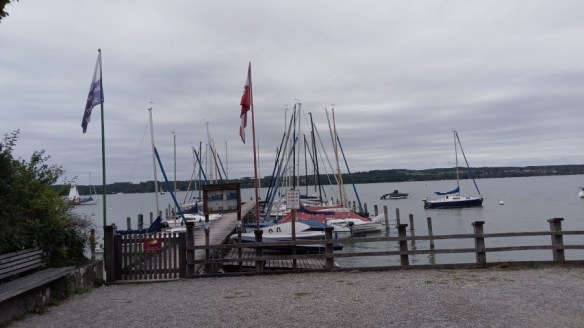
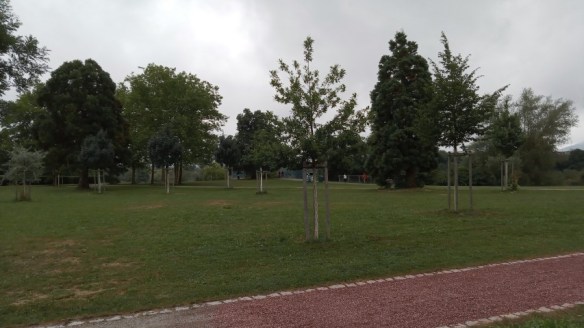
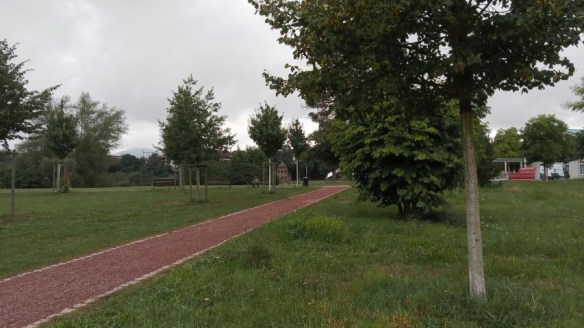
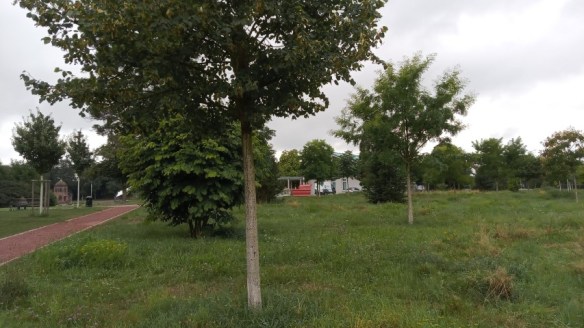
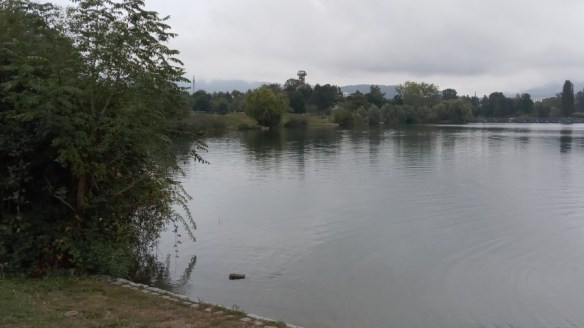
This park looked like it would be a challenge to operate within, being a lake – perhaps the only way is from a boat or from the end of a pier? I searched maps to find a location within the officially defined Natura 2000 area linked to from the POTA parks data page, and I found that there are one or two “boggy areas” on the banks of the lake, where you can activate without having to be in or over the actual water. One of those spots was just a few kilometres north of a museum/art gallery, which my wife visits when a new painter is featured, and indeed, there is a new one that she would like to see, so again, a combined trip was planned.
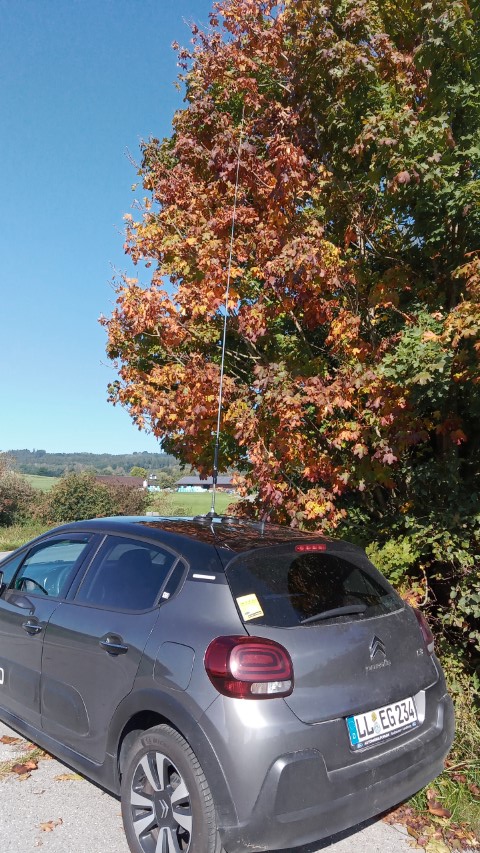
As you can see from the picture above, I found a small concreted field entry off the side of the main road that marks the edge of the park at this point on the lake’s shore. Again, this would be a PLOTA, but with more time, a “real” portable operation would be possible as between my parking spot and the cycling track, which goes through the park, there is a nice grassed area. Perhaps I will set up there next time when I have more time.
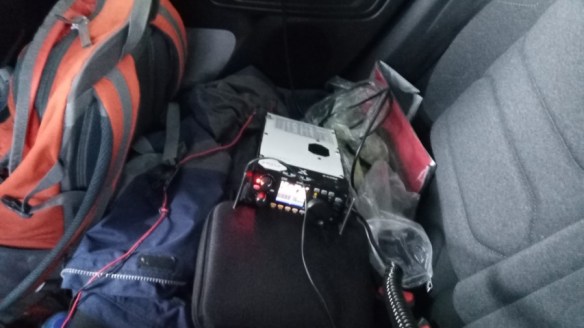
The plan was to again use the car-based set-up with the G90 and the HF-PRO2 antenna from the back seat of the car..
The Activation
POTA DE-1065
The morning started at under 3°C, and although sunshine was forecast, there was going to be an icy cold wind for most of the day, so this was another good reason for a car-based activation. The drive to the museum/art gallery went without incident, a route we have driven several times before. From there, it was just a few minutes up the road to my chosen spot, and I was glad to see it free and looking as I had seen it via Google Street View. As the radio was already set ready to go on the back seat, I only needed to put the loaded whip antenna on its magnetic mount on the roof, connect up the radio to the battery, and I was set.
I started on 20 metres and could not believe the level of noise on the band – some device was wiping out the bottom half of 20 metres, and while the G90 is an SDR radio, heavy AGC was being applied to the whole of the band, making signals that I could find at the top of the band very weak. I realised what was happening (see pictures below) and turned off the AGC in the radio, which improved things, but despite calling stations and spotting myself and calling, 20 minutes of calls brought no callers. To make matters worse, the problem I have had on the last three activations returned, so the indicated power output dropped from 20 watts to under one watt. I say “indicated power” as I am not yet convinced that the actual power is being dropped, and rather suspect it may be the SWR/Power sensor circuit that has gone intermittent. I tried my usual checks without any success in sorting out the problem. The noise on 20 metres (I suspect a military source in Eastern Europe) was getting even worse, so I decided to switch to 40 metres as I had a limited time to get my needed 10 contacts.
After switching to 40 metres and adjusting the antenna loading, I found that with loud speaking, I was seeing 10 watts output now indicated, and so decided that would have to be enough. My activity on 40 metres was a mix of spotting and calling CQ for some time – often resulting in only one or two calls, and search and pounce of any strong signals or indeed other POTA operators who were spotted on the band. With a 3-fer P2P with Paul G4BWQ, I managed to break the 10-contact limit, and after a couple more CQ calls with no replies, I decided to give 20 metres another chance before packing up. I’m glad I did, as well as being called by three of my regular hunters, I was also called by K2UPD out of the US.
Photos:
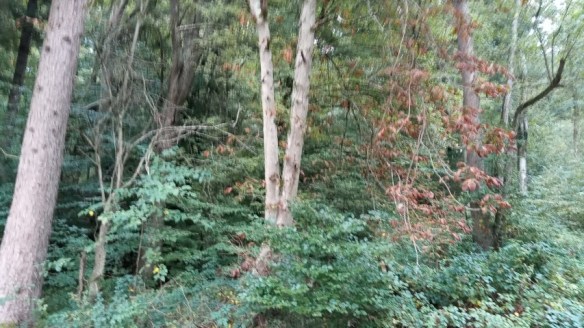
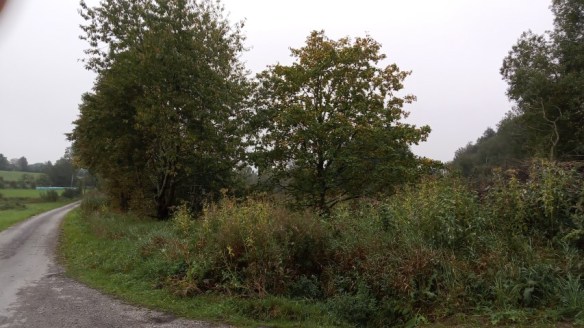
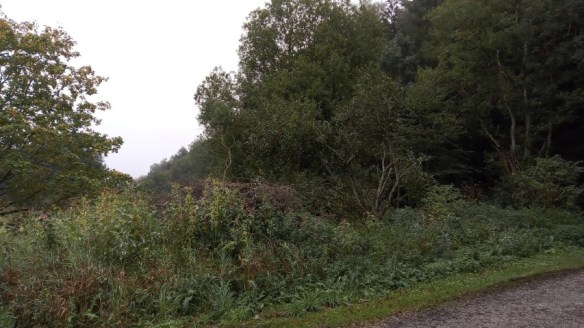
View around site.
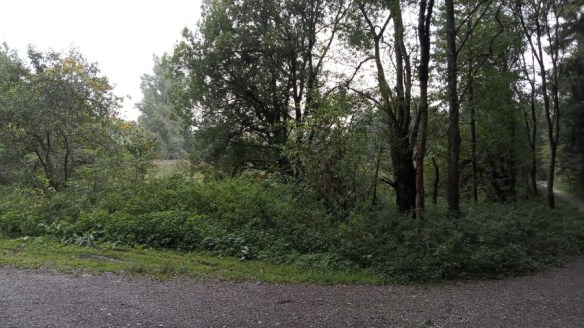
View around site.
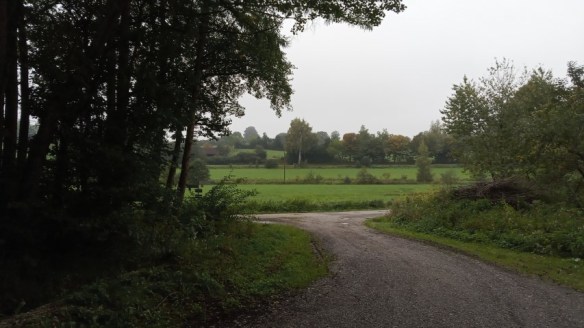
View around site.
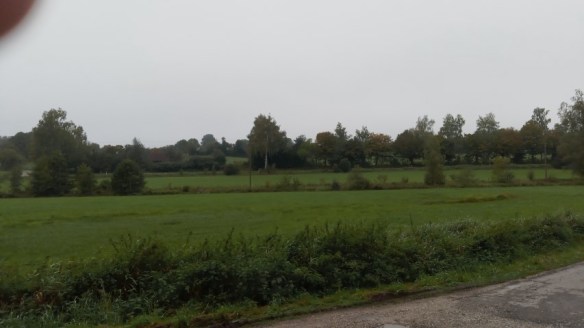
View around site.
View around site.
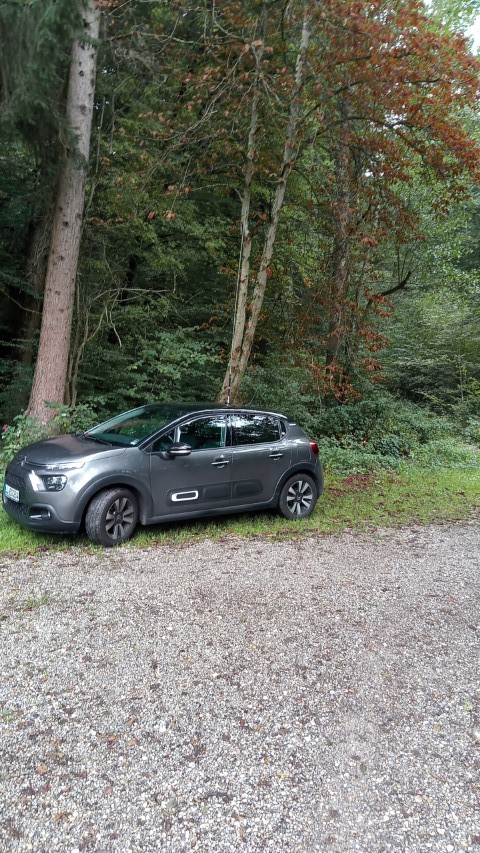
Station.
14MHz heavy QRM.
Antenna.
Equipment taken:
Xiegu G-90 radio.
Komunica Power HF-PRO2-PLUS-T loaded vertical antenna.
3-magnet car roof mount and single magnet mount (single not used).
8 Ah LifePO4 battery.
2 x 4Ah Eremit LifePO4 batteries (not used).
Lightweight headphones.
Smartphone for spotting.
Log:
POTA DE-1065
Conclusions:
The bands started off horribly, well, with the K Index over 5 following a G2-level solar storm, which should not have surprised me, but with the skip distance being shortened, the megawatts of Ukrainian or Russian jamming within the amateur band, I was lucky to get any contacts at all!
That annoying power level problem is still there, and I think I will have to go in and inspect the area around the antenna socket for dry solder joints.
The first of the two parks in the title is a brand-new park, taken over from WWFF into POTA, I believe. The second is one that I activated as the first activator on September 9th. The new park is very large, and I managed to find a spot where the two parks border with each other, making this a 2-fer. Given the current weather, the fact that that point was in the middle of a parking area made this another PLOTA (operation from the car) activation opportunity.
So the same equipment as used for the last few activations was packed into the car, and the just over 30-minute drive to the planned spot started.
The Activation
POTA DE-1061 / DE-1067
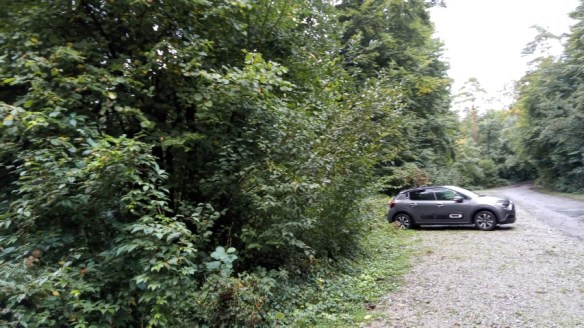
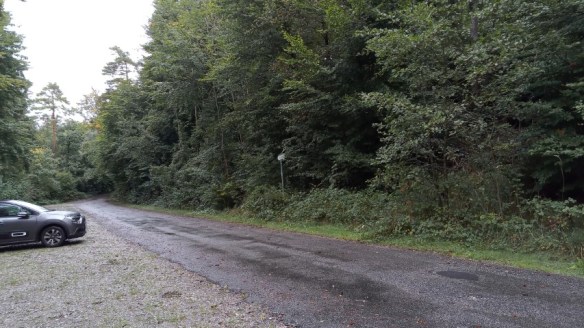
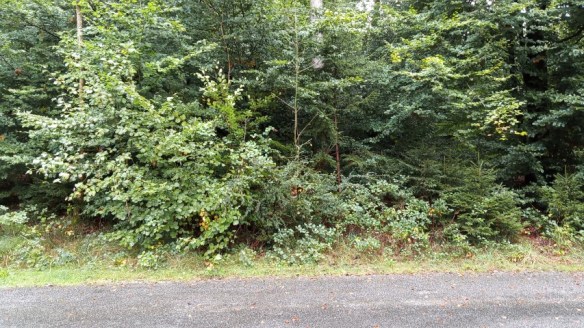
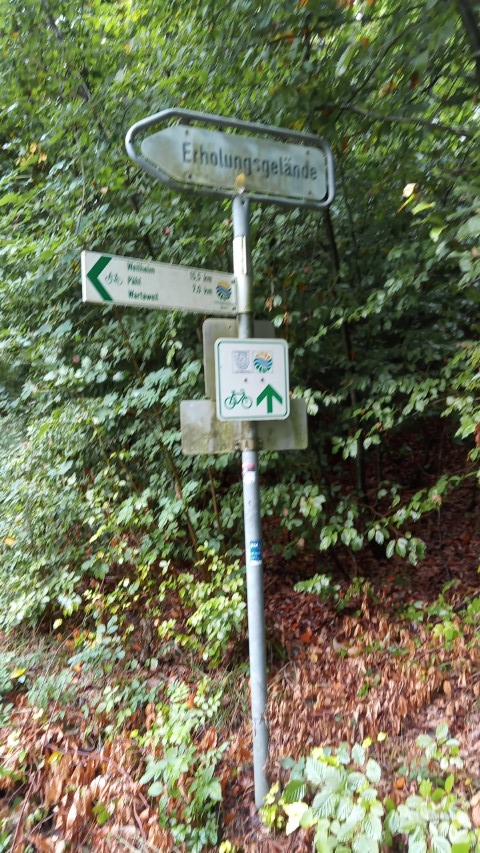
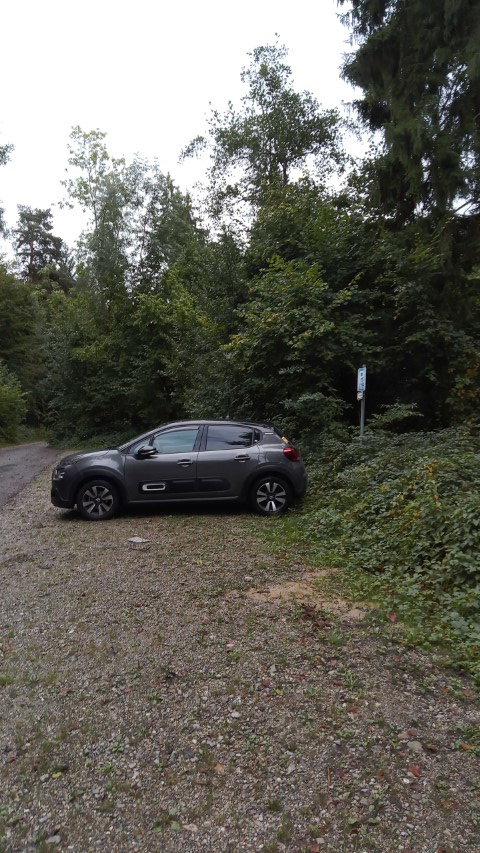
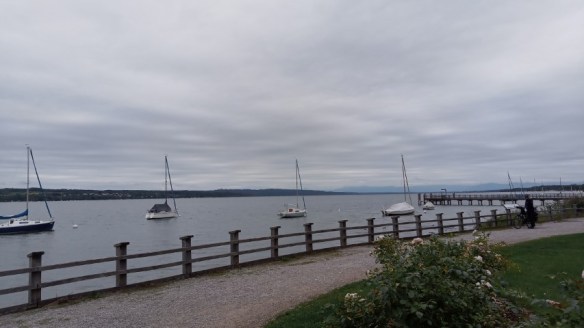
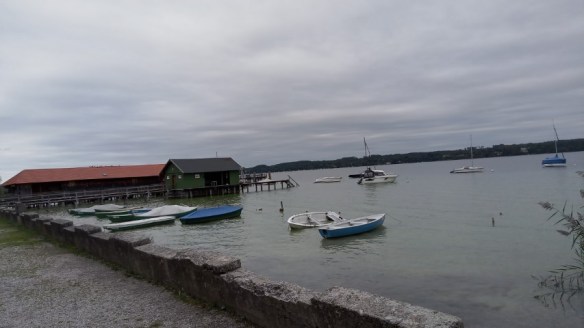
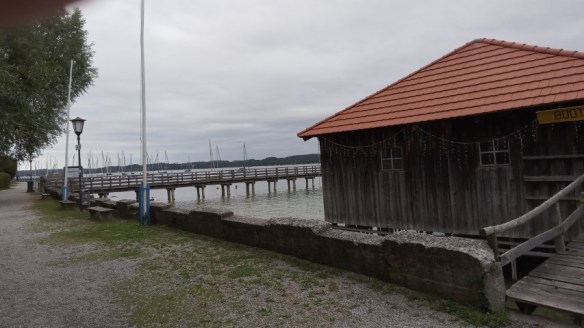
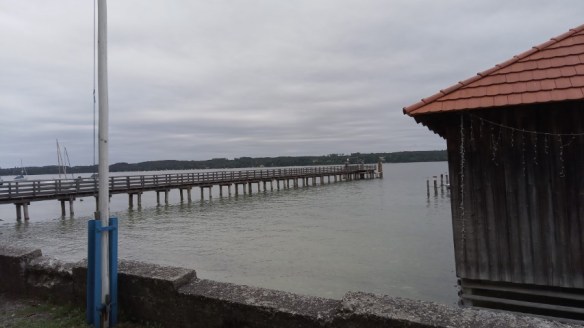
The drive started in heavy rain; however, upon arrival in the (empty) parking area, the rain stopped, only to restart as I set off home, having completed the activation. The entry to the parking area is not well sign-posted; indeed, one entrance to it has been completely closed. Being close to the banks of Lake Ammer, I’m sure this parking spot will be full in the summer months, but on a cold, rainy autumn day, I had it all to myself.
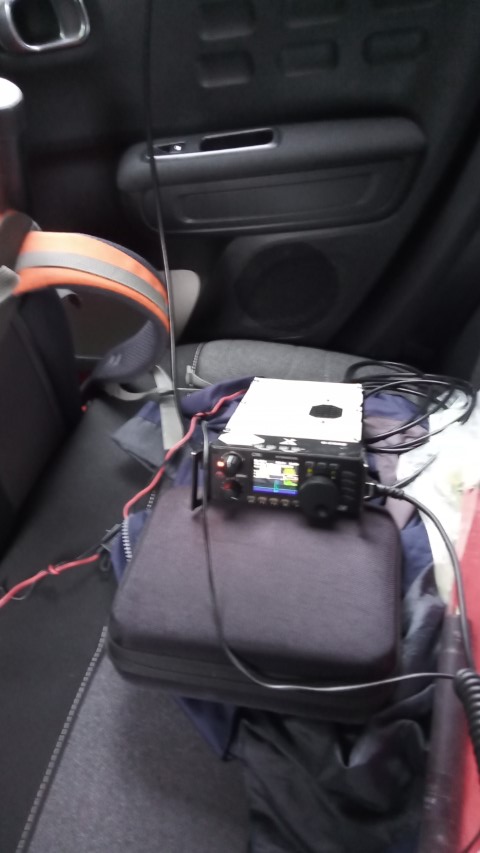
After mounting the HF-PRO2 on the magnetic mount on the roof and connecting up to the battery, the station was ready to go, so I tuned around the band first of all, to get a contact in the log book and test the equipment before searching for a free frequency to start calling CQ POTA on. That first strong station that I found was SM/LB9JE in another POTA park, so I was able to start the log with a P2P contact and happy that the equipment was working well, I went and found a free frequency, spotted myself on the POTA cluster, and 14 contacts came in quick succession. The 15th contact with I0XVZ/QRP, however, did not go to plan. Halfway through the contact, the power output dropped from the usual 20 watts to under 1 watt. The same problem that I experienced in the last activation. Unfortunately, swapping the microphone cable around end-to-end did not fix the issue. I could have simply packed up at this point, as I had more than the required 10 contacts, but I wanted to at least finish the contact with the Italian station. Amazingly, with 800 mW, he was still hearing me, and we finished the QSO almost as if nothing had happened! I was then called by SP8DPY, and that QSO was also completed with under 1 watt of RF from me.
One thing I hadn’t tried the previous time this problem happened was to change to a carrier-based mode and check what the output was. I switched to FM and … still just one watt output, so that proves the issue is not in the audio chain. Switching between and trying different modes, however, fixed the issue (unfortunately, I don’t have a logical reason as to why). At least I was fully operational again.
I was tempted at this point to call it a day, but looking at the POTA Cluster, I could see other activators had just come up, and I finished the activation with three more Park-to-Park contacts (at 20 watts).
Photos:
View around the site
View around the site
View around the site
View around the site
View around the site
View around the site
View around the site
View around the site
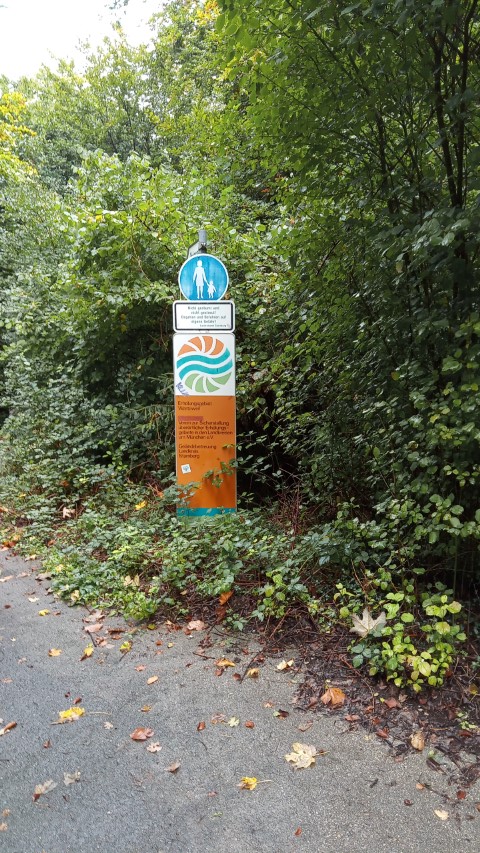
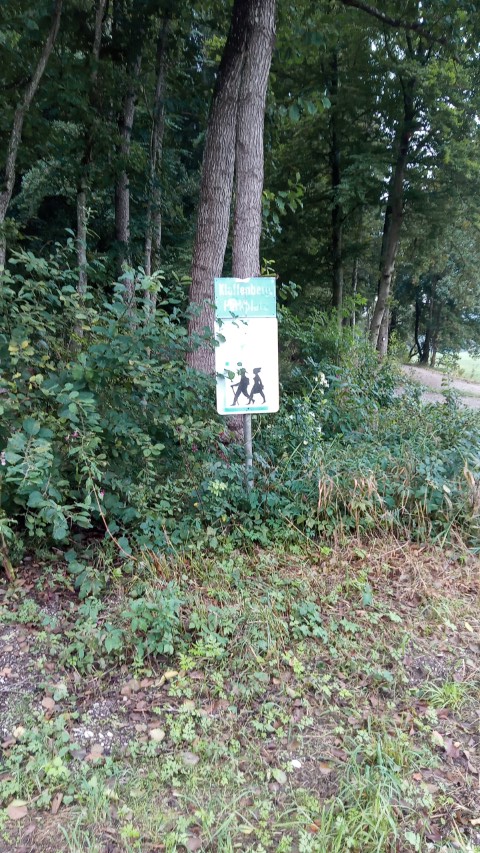
Signs
Signs
Antenna
Station
Equipment taken:
Xiegu G-90 radio.
Komunica Power HF-PRO2-PLUS-T loaded vertical antenna.
3-magnet car roof mount and single magnet mount (single not used).
8 Ah LifePO4 battery.
2 x 4Ah Eremit LifePO4 batteries (not used).
Lightweight headphones.
Smartphone for spotting.
Log:
POTA DE-1061/ DE-1067
Conclusions:
The problem from the last activation has returned. This time, it did not take long to fix it; however, I am not happy with this fix, as it looks like this may happen again at any time. In future, I may have to take a spare radio along if I can’t find a solution for this.
This was a catch-up activation near to the Oberschönenfeld Monastery which my wife and I had planned to visit about 10 days earlier but had to cancel. This was again a 2fer, but two entities (one park, one trail) that I had already activated in different locations previously, indeed, this (very large) park was my first-ever POTA activation a few years ago.
This would again be a PLOTA activation from the car, as I only had limited time, combining it with my wife visiting the galleries at the Monastery. So the same radio gear as used for the last activations was packed into the car, ready to operate. Despite the fact that I had used the 3-magnet base since replacing the PL259 on its cable, I still packed the single magnet mount, just in case. I did not expect any problems; however, that was not the case.
The Activation
POTA DE-0006 / DE-0597
The drive to Oberschönenefeld was a challenging one, especially in the morning mist. Small roads through many small villages mean that you really must want to get to this monastery to take the drive. It is a beautiful area, but access is less than simple.
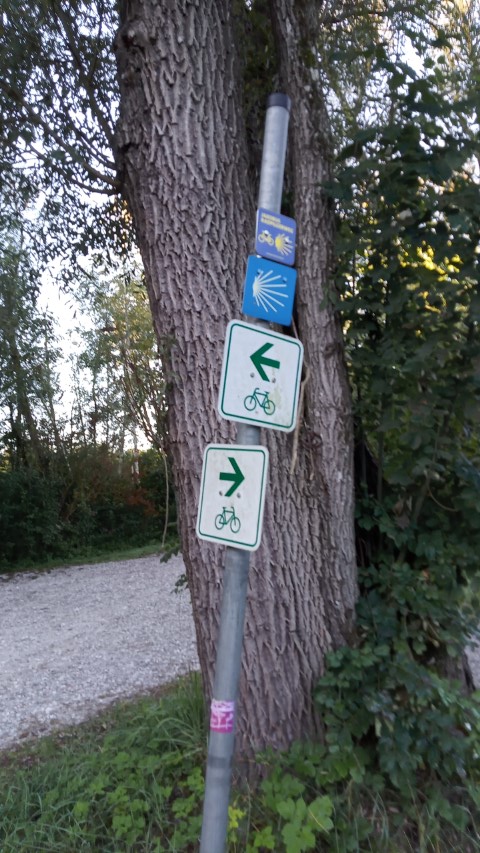
After dropping my wife off at what later turned out to be the goods entrance at the monastery, I back-tracked and drove to a “Wanderparkplatz” (walkers parking spot) that I had planned for the activation, as it is on the Jakobsweg trail as well as within the park.
The setup went as normal. I had set up for 20 metres, which, late morning, was still quite busy. No out-of-Europe DX that I could here (too late for the Long Path to VK). I came across a strong station, GS0RIV, and so gave him a call to get an immediate response. This turned out to be the Inverness radio club on a DX Pedition to the Island, North Uist (EU-010). Dave, who was running 500w watts to a hexbeam, and I exchanged 5-9 signals before I said 73, and his pile-up returned. So my 20w and a loaded whip on the car roof seemed to be working fine!
Unfortunately, on the next station I called, I could see something was wrong – the radio was indicating less than 5 watts output instead of the usual 20 watts. I had seen this before when the PL259 on the antenna mount had failed. I exchanged the antenna mount with its coax, the problem was still there. So what seemed like a good start to the activation had suddenly turned bad.
I conducted the following tests/substitutions:
Replaced mag mount with spare – no change
Checked Mic gain/power/ATU settings – all fine
Replaced battery and power cable – no change
Performed a factory reset on the radio – no improvement
Changed the cable on the microphone for my spare – no change
The final action was to reverse the microphone cable end-to-end, and then, thankfully, the radio worked correctly again. This would suggest there is an inconsistent contact in the microphone socket within the radio or within the microphone’s RJ45 sockets. I was just happy and had to get busy hunting contacts as I had lost 40 minutes of my planned 90-minute activation and soon would have to leave to pick up my wife (who had left her phone at home).
Luckily, I was able to go through the spotted POTA activators and make Park-to-park contacts with them – five in all. Once that was done, I was still short four contacts for the minimum ten needed to qualify a park activation, so it was now amtter of finding a clear frequency, spotting myself and calling CQ – Luckily the hunters were waiting for my new frequency spot and I got a total of 12 contacts before the point in time that I had to pack up and gead off to pick up my wife.
So a somewhat stressful activation in rather damp conditions, but at the end it was a nice trip-out.
Photos:
Park Signs
Park Signs
Park Signs
Park Signs
Park Signs
Park Signs
View around site
View around site
View around site
View around site
View around site
View around site
View around site
View around site
Antenna.
Station.
Equipment taken:
Xiegu G-90 radio.
Komunica Power HF-PRO2-PLUS-T loaded vertical antenna.
3-magnet car roof mount and single magnet mount (both used).
8 Ah LifePO4 battery.
2 x 4Ah Eremit LifePO4 batteries (one used).
Lightweight headphones.
Smartphone for spotting.
Log:
POTA DE-0006 / DE-0597
Conclusions:
Even though the antenna connector problem from a couple of weeks ago was fixed, there can always be another problem that comes along, and this underlines how important it is to have alternatives that can be substituted to help in a methodical fault-finding process.
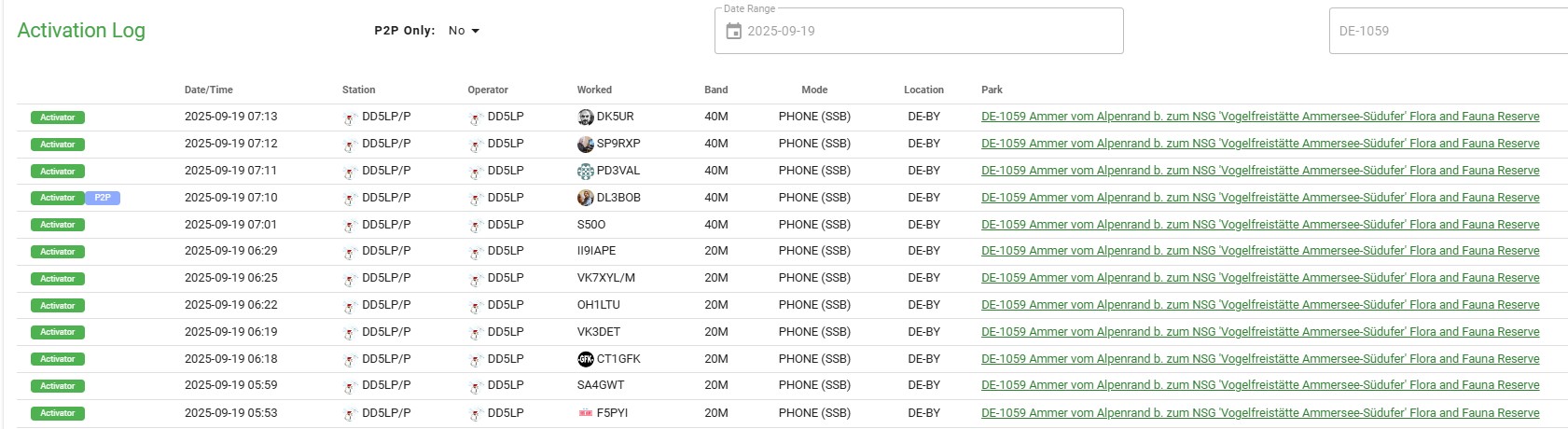
DE-1059 was another new POTA park added from the WWFF scheme (I believe), and I wanted to get my name on it as the “First activator” (#36 for me). As my wife had an appointment in Weilheim, I was able to find a spot where the POTA trail DE-0595 (that I had already activated as part of a 3fer earlier) crossed this park, right on the River Ammer. The wife’s appointment in Weilheim was at 8 am, so this meant I should arrive at my spot (a 10-15 minute drive south) in time for some long path DX into VK if propagation was favourable.
Again, given the limited time available, this would again be a “PLOTA” operating from the car. So the same radio gear as used for the last activations was packed into the car, ready to operate, the day before. There was one change, however, in that the horrible, faulty crimped PL259 plug on the coax to the 3-magnet antenna mount had now been replaced by a “real” soldered-on PL259. I also packed a backup single magnet mount.
The Activation
POTA DE-1059 / DE-0595
After dropping off my wife in Weilheim, the drive to the location was uneventful. The ideal (concreted) parking area was closed as road workers were using it to park their large machines. I had already seen a warning about this on Google Maps and found another, hidden-away parking area at the start of a trail where the locals take their dogs for a walk at the other side of the river and directly (as you will see from the pictures) on the trail. When I arrived, it was empty so I parked long-ways so that the vertical antenna would be clear of the trees. When I left, the spot was full with three other cars that I hadn’t heard while I was operating with my headphones on.
The activation itself was interrupted by a phone call, which lasted over half an hour, so I was a little rushed to get the needed 10 contacts to qualify the park and trail.
Conditions were not as good as I had hoped, and after fighting for contacts on 20 metres (albeit including 2 into VK), I moved to 40 metres to get the needed extra contacts as the time approached when I was to pick up the wife and drive another 1,5 hours to visit a friend in hospital.
I tried many times for a park-to-park with a VK4 station, operating from a beach in a park in VK2, but the pile-up was terrible – had I got enough attention, we could have made the contact. In POTA “Park-to-Park” doesn’t have the priority that “Summit-to-Summit” has in SOTA, where another chaser that hears you trying to get through will normally tell the other summit station to listen for you. The POTA hunter community seem to be more self-self-self. A real shame.
Photos:
Station
View around site
View around site
Trail signs
View around site
View around site
View around site
Antenna
Equipment taken:
Xiegu G-90 radio.
Komunica Power HF-PRO2-PLUS-T loaded vertical antenna.
3-magnet car roof mount.
8 Ah LifePO4 battery.
2 x 4Ah Eremit LifePO4 batteries (one used).
Lightweight headphones.
Smartphone for spotting.
Log:
POTA DE-1059 / DE-0595
Conclusions:
it seems that I have found and fixed the antenna connector problem from the last activation. Given the relatively poor conditions, I think the work of those two VK operators speaks a lot for their efforts. I would have loved to make the DL-VK Park-to-Park contact, but thanks to the POTA Hunters, that was not possible.
Having spotted some new POTA parks in my area, I wanted to get my name on them as “First activator”, this was the park that I had planned to do on Tuesday, but as my wife had her physiotherapy appointment in the village rescheduled, the activation of DE-1060 Ammerseegebeit Bird Sanctuary was also rescheduled to Friday. Unfortunately, the day before (Thursday), the new park was activated by another ham. Oh well, you lose some, you win some!
The same radio gear used for Tuesday’s alternative activation would be used again and was packed into the car in time for this late afternoon activation.
The Activation
POTA DE-1060 / DE-0594
The trip to Schondorf on Ammersee was only about 30 minutes from home, despite some road closures. After I dropped my wife off, I had to get to the hoped-for location quickly, as her appointment was only 40 minutes long in total, so this would need to be a short activation. But, what could go wrong ….
I had intended to operate on 40m as that would normally give me plenty of contacts in the short time available. I had already set up the “station” in the back of the car, so after parking, I just needed to extend and attach the HF-PRO-2 antenna on the mag-mount on the top of the car, plug in the battery and off we go … or so I thought.
As always, I ran the tuner to do the final match on the antenna all looked fine. I then tuned the band to find what was a free frequency and put out a call to ask if the frequency was in use, but horror of horrors, there was very little RF being indicated on the radio’s RF output scale. I changed:
Microphone cable
Power cable
Battery
ran the built-in antenna analyser and tuner (no problems indicated)
checked the loading coil on the vertical antenna on the magnetic mount on the car roof.
did a complete system reset and check of all power level settings in the radio TWICE
The only other variables were the radio itself and the coax to goes to the magnetic base. which I could not change out, as it is connected to the base. It comes back into the car simply through the door edge, so it can have been damaged there, in the PL259 plug or in the base.
I was getting full 20W output for perhaps a second and then low output. This can sometimes be caused by a bad SWR shutting the radio down. While the tuner and built-in antenna analyser use low power, they might not get the issue that occurs when 20W is used on a (possibly) faulty coaxial cable.
With some moving of the coax, I managed to get a reliable contact, and now, under time pressure, I worked hard to get the needed 10 contacts to qualify the park & trail. I achieved this in just over 30 minutes.
On arriving home, the radio was tested and it was fine. Today (Saturday), I have tested the three-magnet magnetic roof mount. Inch by inch from the mount back, especially around where it would have been trapped in the door rubber – nothing! But when I got back to the PL259 plug …. Moving it around, broke contact, and it was the braid connection, not the core, which broke at some angles. Taking the plug apart, I found this was a plug where the braid is connected through a crimp method, putting contacts through the rubber insulation. REALLY! This is an expensive radio accessory, and they cheap-skate on the connectors? That plug and a couple of inches of coax were cut off and thrown away, and a REAL PL259, solder-on plug was added to the cable. All tests show good now, but to be sure, on the next activation, where I want to do a “PLOTA”, I’ll take a second (single magnet) antenna base along as well.
Photos:
Station
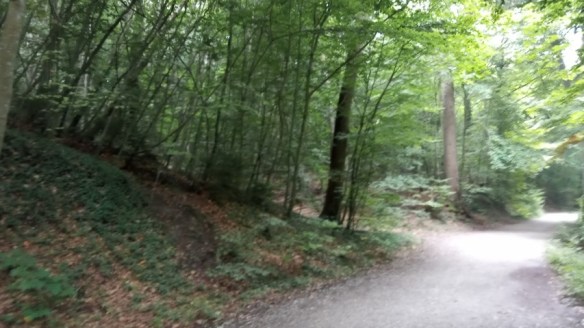
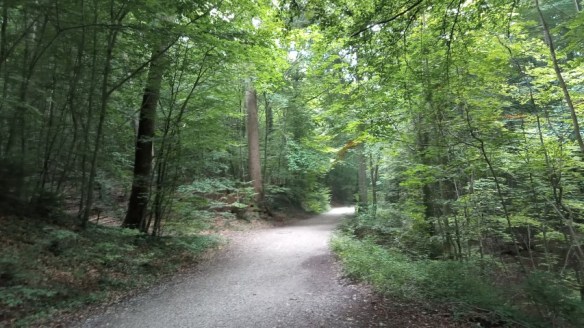
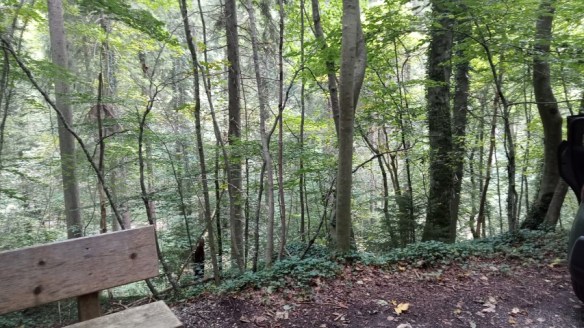
Lakefront location views.
Lakefront location views.
Lakefront location views.
Lakefront location views.
Lakefront location views.
Lakefront location views.
Lakefront location views.
Lakefront location views.
Lakefront location views.
Lakefront location views.
Lakefront location views.
Lakefront location views.
Lakefront location views.
Lakefront location views.
Equipment taken:
Xiegu G-90 radio.
Komunica Power HF-PRO2-PLUS-T loaded vertical antenna.
3-magnet car roof mount.
8 Ah LifePO4 battery.
2 x 4Ah Eremit LifePO4 batteries (one used).
Lightweight headphones.
Smartphone for spotting.
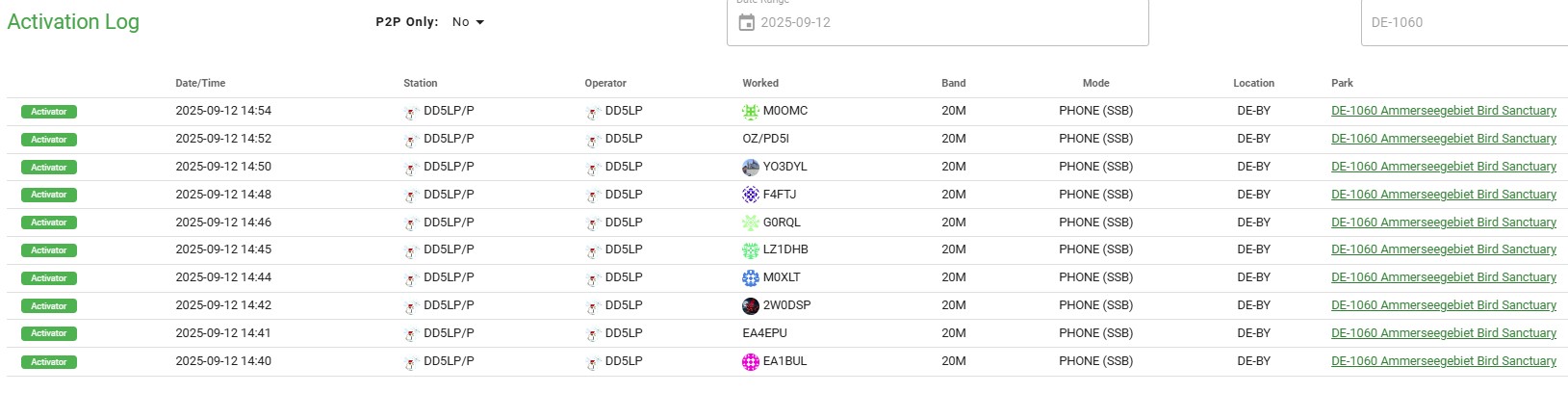
Log:
POTA DE-1060 / DE-0594
Conclusions:
You can NEVER rely on equipment that has rarely given problems working “when it matters,” and the ability to substitute parts on-site during the activation is always a good thing.
Having spotted some new POTA parks in my area, I wanted to get my name on them as “First activator”, and as my wife had a physiotherapy appointment in a village near one (DE-1050 Ammerseegebeit Bird Sanctuary), I decided this was a great use of the waiting time for her appointment. Unfortunately, the day before, the practice called and cancelled as the therapist was sick. A new appointment (after some pressure) was made for Friday (2 days later). Having already prepared the radio gear for the activation and packed it in the car, we decided to go to the other side of Lake Ammer, where another new park had been added to POTA. This one ended up being a 3-fer if activated from one specific point, which I scouted out, and the plan was set. Depending on the weather, we would head out to this other new park. While my wife took a walk along the lakefront, I would head up into the forest and activate. The other park, with any luck, I would catch as the first activator for that one on Friday.
The Activation
POTA DE-1061 / DE-0594 / DE-0797
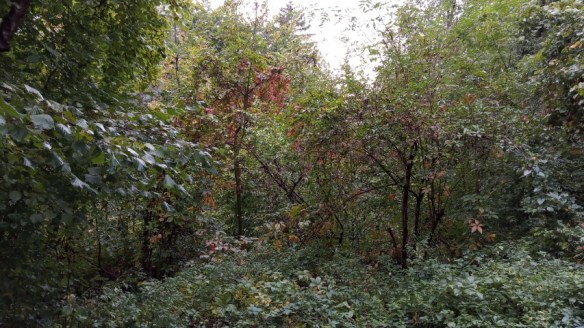
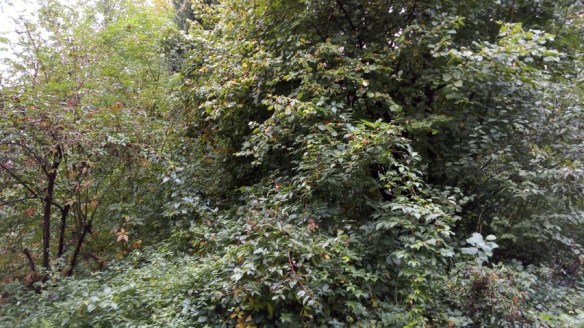
The day started with thick fog with a thin rain haze within it, so I was wondering whether this would work out, but luckily, as we drove cross-country, the weather slowly got better. It was never going to be a warm day, but as we arrived in Herrshing, it was not raining. The forecast was for heavy rain to arrive at 11 am (and it was already almost 10 am), so this would need to be a short activation.
Mike 2E0YYY was also out testing a new radio, and I was hoping to get set up and running before he had to leave his (GMA) summit in the UK, and indeed that’s how it worked out. For me, once I was parked at the trail head, inside the park, I only needed to put the antenna on the car roof and plug in the DC cable to the 8Ah LiFePO4 battery that I had brought with me.
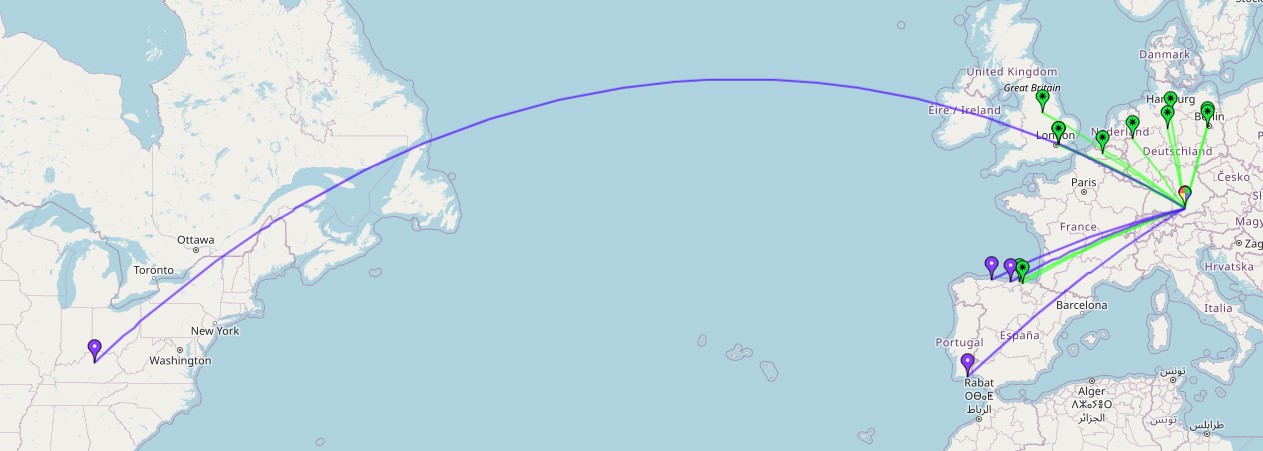
After working Mike, who had switched to a backup radio as the new radio was unfortunately giving problems, I spotted to the POTA website and slowly got some contacts into the log. as is often the case in these activations, I would get two or three stations and then no one as the band (20 metres)= changed, eventually I managed 12 contacts and was able to pack up and go and collect my wife from the cafe where she was keeping warm on the lake front. Just as we arrived home, the rain started.
So a short activation, but a nice spot (but it may get busy at the weekend and is only served by a single track road) and another new park for me in my activation logs.
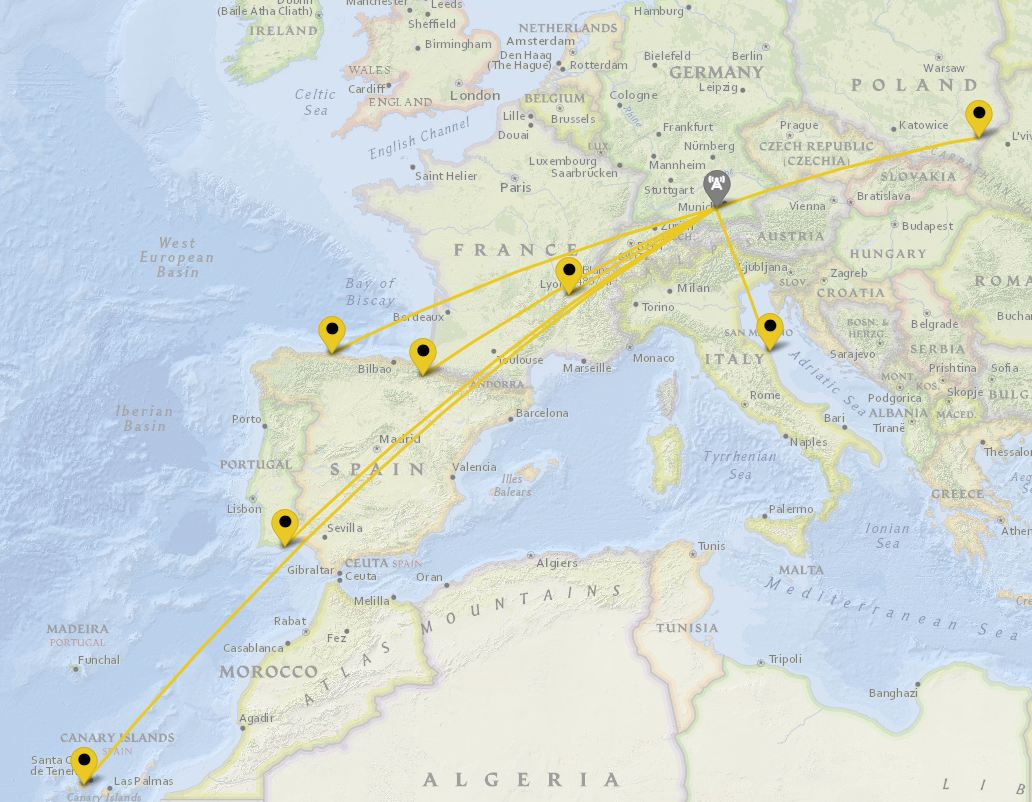
There was no extreme DX in this activation; however, two separate stations from different Canary Islands in Africa were not a bad result.
Photos:
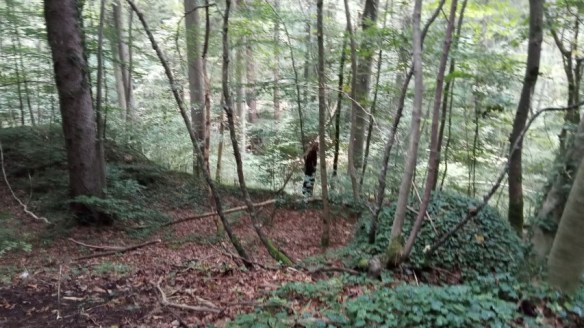
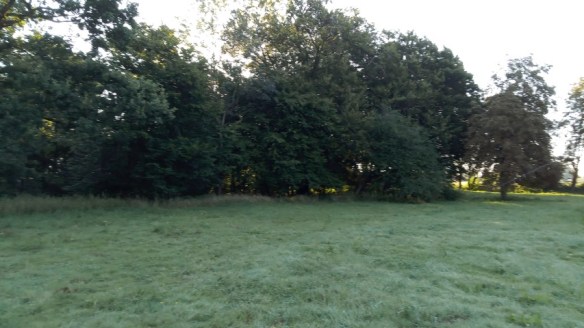
View around site.
View around site.
View around site.
View around site.
View around site.
View around site.
View around site.
Station.
Antenna.
Equipment taken:
Xiegu G-90 radio.
Komunica Power HF-PRO2-PLUS-T loaded vertical antenna.
3-magnet car roof mount.
8 Ah LifePO4 battery.
2 x 4Ah Eremit LifePO4 batteries (backup not used).
Lightweight headphones.
Smartphone for spotting.
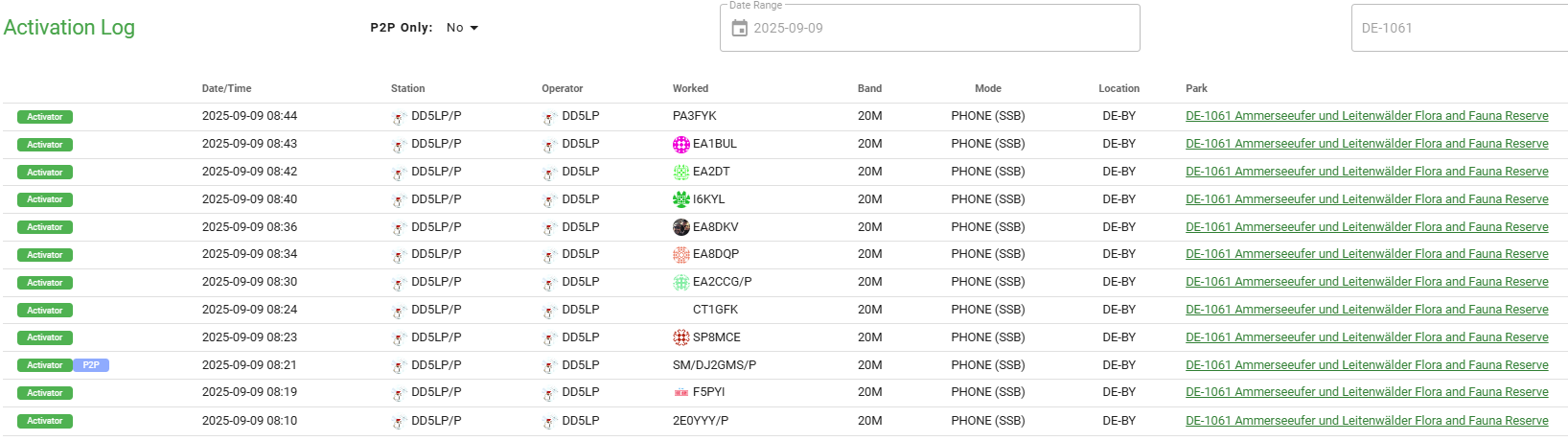
Log:
POTA DE-1061 / DE-0594 / DE-0797
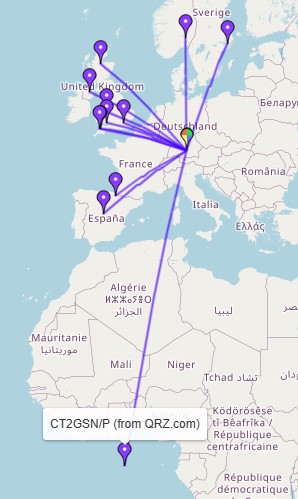
Contacts Map Activation Log
Conclusions:
It’s good to see the POTA organisation continuing to add more parks & trails to the scheme in my area, while the SOTA scheme is taking them away..
This activation was to be a POTA activation using the special event callsign DL0DOG, as this day, Tuesday 26th August, is the actual International Dog Day, although the special event call sign runs all month. I chose my local park for this action as I knew I could set up easily out of sight of most, but 100% within the park boundaries.
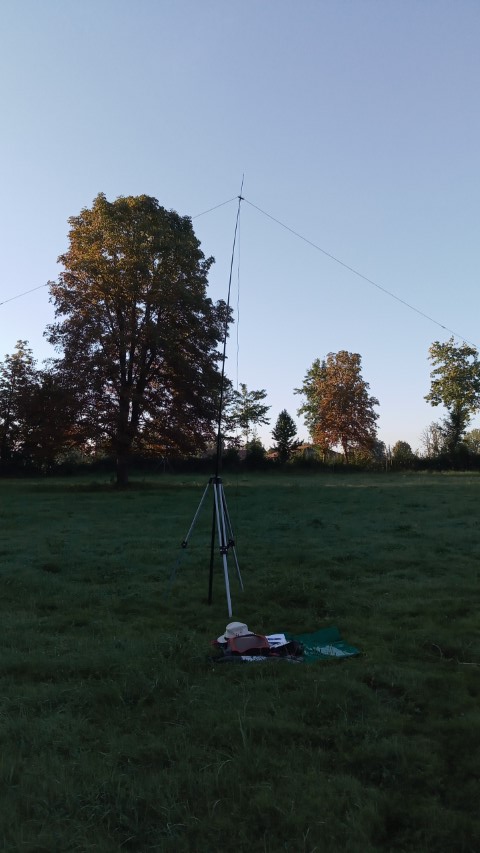
To give me a better chance of some DX contacts (hopefully also into the US, so that the IDD award chasers in the US would have a chance of getting a European “Dog station”). I would take my 10 metre mast, rather than the normal 6m one. This also means the need to take my surveyor’s tripod to support it. Luckily, the distance from where I park my car to where I would set up is only about 70 metres. As I also wanted to try 17 & 15m, the recently repaired linked dipole would be the antenna of choice and at 10m above ground, it ought to perform well. I would also take my 20/15/10m wire beam in case the higher bands were open.
Of course, as always, there would need to be backup, and in this case, that was an off-centre fed dipole and my HF-PRO2 loaded vertical, both of which were to stay in the car unless needed.
The day prior, I monitored the bands and was happy to see good conditions up to 15 metres with contacts into the US and Oceania. An early start was needed to be on-air by 0600 UTC, and I also booked slots with the other SES operators to use the DL0DOG call sign.
As usual, all radio gear was packed into the car on the Monday evening for the Tuesday activation, and only my pack-up would need to be added the following morning.
UPDATE: At the start of September 2025 a new park DE-1058 was added to POTA which overlapped where I operated for this activation. Under POTA rules, previous activations may be claimed even when they took place before the park was added.
The Activation
On arrival and after unloading the equipment that I would take to the site, I was surprised by the heavy morning dew on the grass and by the time I got to the site, my shoes, socks, and the bottom of my jeans were all soaking wet. OK, I wasn’t going to stop because of this, and soon the sun would come out and dry me off, right? The sun only came out nearly two hours later.
I set everything up only to find that my 10m mast was bending terribly just with the weight of the thin coax and dipole T-piece, and in trying to straighten it, one of the clips on the Dipole T-piece broke, so I changed to my usual 6m mast.
As usual, I had let my friends in Australia know that I would be out, and the first two contacts in the log were Ernie VK3DET and Jon VK7JON/M, both at a reasonable strength on 20 metres. Ernie and I tried 17 and 15 metres – nothing. I could hear a few VK stations in a net on 17m, but nothing at all apart from FT8 on 15 metres. So all contacts in this activation were made on 20m.
It appears that there is a problem (again) between the various DXCluster sites, where posting to one (in my case, using a smartphone app) DOES NOT propagate the spot to all of the others. As the IDD chasers may be watching their favourite cluster or the one on the hamlog.online landing page, this lack of transfer of spots between the sites meant my spots were not being seen.
The QRM got so bad on 20m that I could not hold a frequency; other stations simply, without even asking, started calling CQ on the frequency I had been on for 15 or 30 minutes. Others just ran carriers on and off for over 30 minutes. That wasn’t just tuning their antenna. Another Rusky nattering with his mate actually mentioned International Dog Day, so he knew he had started up on the frequency I was using. A real pain. Then later skip went short, making it even worse. In the end, I decided to pack up and run my remaining planned 40m and a late 20m IDD activations from home.
Photos:
View around site.
View around site.
View around site.
View around site.
View around site.
View around site.
View around site.
View around site.
View around site.
Station.
Antenna.
Equipment taken:
Xiegu G-90 radio.
Komunica Power HF-PRO2-PLUS-T loaded vertical antenna (not used).
10m DX-Wire mini-mast (erected but subsequently taken down).
The quality of ham radio operators is deteriorating – the use of DQRM during a contest is one thing, but to crush a low-powered portable special event station is totally unacceptable.
This activation was to be a “PLOTA” with showers on and off through the day, rather than lose a day, the compromise of operating from the car in a car park, within a POTA park, is a good fall-back option.
As my wife wanted to visit two museums/galleries in the centre of Freiburg during our short break in the area, the choice of the town’s large recreational park was a good option.
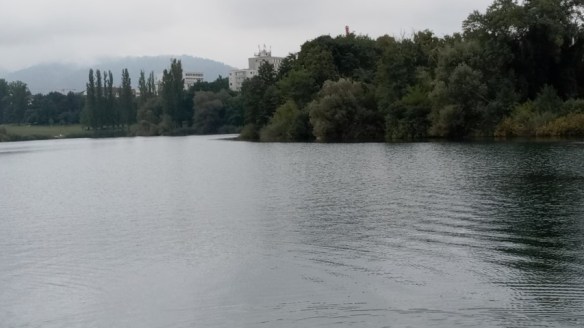
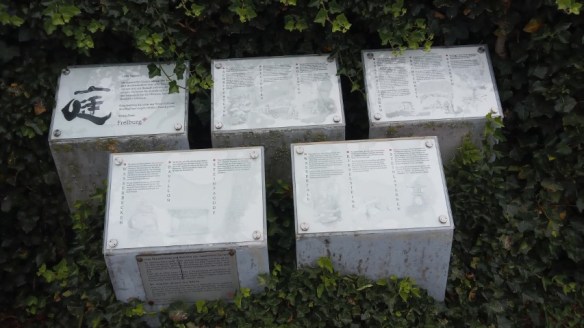
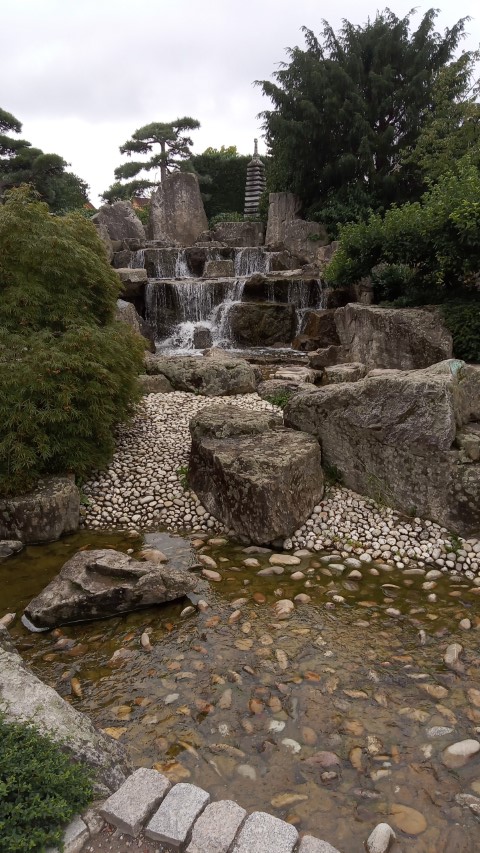
The park, as it turned out, was quite an interesting one, with a large lake where all can swim, run model boats or simply sit by the side of it and relax, nice walking tracks through gardens, a Japanese Garden, as well as a sports centre.
The Activation
POTA DE-0422
As it turned out, while overcast with a couple of light showers, the terrestrial weather was not bad, and I had time to take a walk around at least some of the park before starting to operate.
The set-up was the usual, 3-magnet mount on the car roof supporting the Komunica Power HF-PRO2 loaded vertical antenna and the G90 inside the car.
My first relief was that the radio worked. After having to cut short the activation on Schauinsland the previous day due to an extremely high VSWR, I was relieved to find the problem must be in the Inverted-V antenna (it could have been an internal connection in the G90 that had failed).
I started on 40 metres but, finding no contacts there, moved to 20 metres where it seemed several other park activators were operational. In all, in the 1 hour of operation, I made six park-to-park contacts and a total of 21 contacts in all. One of those was from the US! How W1OW heard my little signal, I will probably never know, but for a restricted setup with just the loaded whip antenna, I’m rather happy with that and all the other contacts around Europe.
With drive time and my wife’s schedule, the one-hour operation was all that I could manage, but it certainly was a successful hour of operating.
Photos:
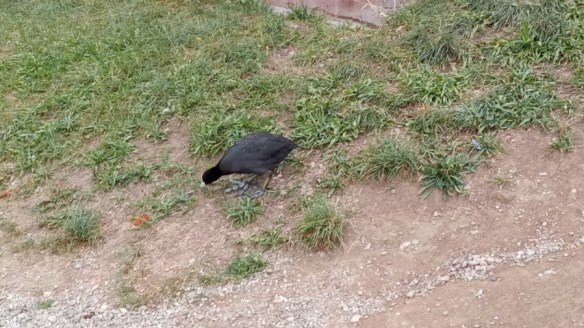
Views around the seepark.
Views around the seepark.
Views around the seepark.
Views around the seepark.
Views around the seepark.
Views around the seepark.
Views around the seepark.
Views around the seepark.
Views around the seepark.
Views around the seepark.
Views around the seepark.
Views around the seepark.
Views around the seepark.
Views around the seepark.
Views around the seepark.
Views around the seepark.
Views around the seepark.
Views around the seepark.
Views around the seepark.
Views around the seepark.
Views around the seepark.
Views around the seepark.
Views around the seepark.
Views around the seepark.
Views around the seepark.
Views around the seepark.
Views around the seepark.
Views around the seepark.
Views around the seepark.
Views around the seepark.
Equipment taken:
Xiegu G-90 radio.
Komunica Power HF-PRO2-PLUS-T loaded vertical antenna.
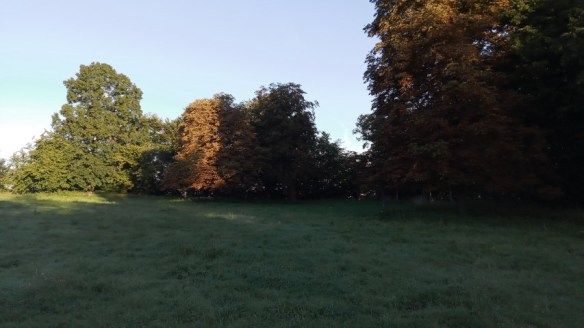
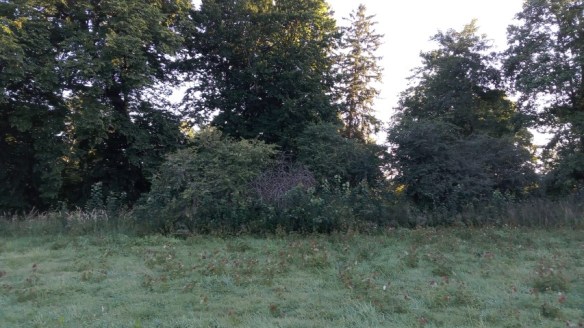
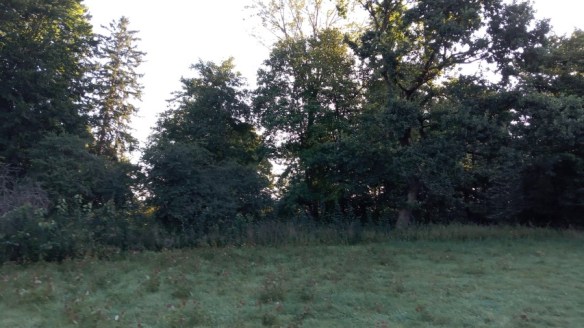
Three–magnet car roof antenna mount.
2 x 4 Ah LifePO4 battery.
Small headphones.
Smartphone for spotting.
Log:
POTA DE-0422
Conclusions:
The Simple fallback – activation worked well this time. Conditions were not fantastic but also not bad, and the fact that such a simple configuration with just 20 watts and a loaded vertical whip can allow these contacts to be made is part of the magic of amateur radio.
As part of a holiday trip to the Freiburg area of Germany, on the French border, I planned an activation of Schauinsland, which is in both the SOTA and HEMA award schemes as a valid summit and also in the Parks on the Air POTA scheme as the summit sits within the Southern Black Forest National Park.
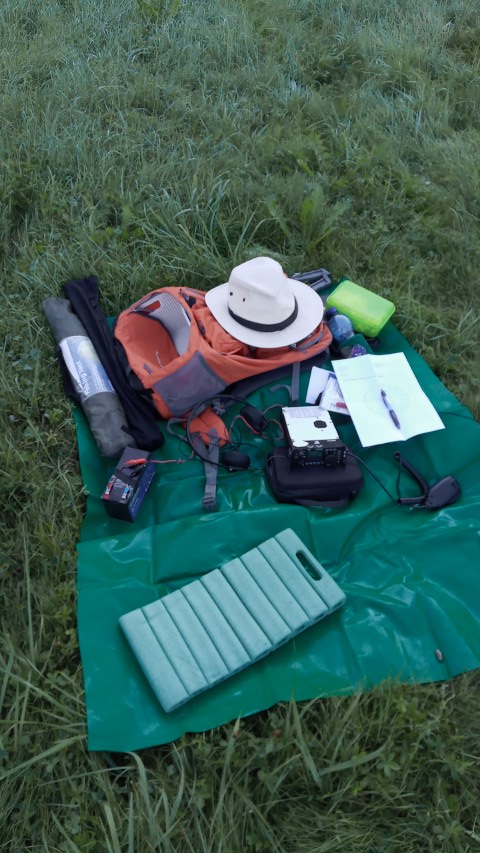
For equipment, I decided upon the usual G90 plus 6m mast and linked dipole antenna with tripod and HF-PRO2 as backup, all in my 40L rucksack.
The ActivationTuesday, 19th August 2025
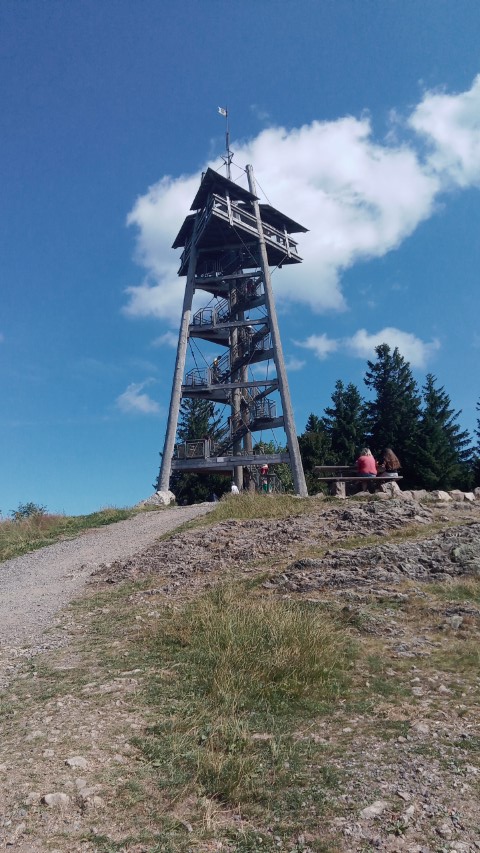
This summit is relatively easy to access with a road up to the restaurant and then a short climb up to the actual summit, which has an observation platform on top of it. Access is via a well-marked walking track, and while not wheelchair-friendly, there were some mothers pushing baby seats up the track.
Upon arrival, the area directly around the observation tower was unsuitable due to the large number of tourists arriving and departing. Luckily, the adjacent field was relatively easy to access and gave enough space while keeping the public behind a wire fence.
Apart from a worrying warning about ticks, the location seemed perfect and I was set up in about 20 minutes, while the temperatures were not too bad (I applied sunscreen, however, as this location was in direct sunlight and the temperatures rose quickly as it was already nearly noon. I was glad, later that I had).
The bands were still a little noisy from a recent CME, and at this time of day, 20m is already dead, so I decided to stick to 40 metres to get enough contacts to qualify the park (10). I ended up with 16 contacts over 20 minutes, most of which, I believe, were SOTA chasers. There were summit-to-summit contacts. I had intended to stay longer, but after that 16th contact with Bernd, DL2DXA, the antenna’s VSWR shot up to an extent that the radio reduced output power. At that time, I suspected a bad connection on one of the links, but I could not see anything obvious and would not be able to fault-find to any level on the simmit. In these 20 minutes, the temperatures had shot up and even the radio was too hot to touch, so it was time to close down, pack up and head back down to the restaurant where my wife was waiting.
I was also unable to look at the antenna in our accommodation, so the Komunica Power HF-PRO2 loaded vertical would be the antenna in use for any further activations. Once home after our vacation, I tested the antenna for any DC breaks, and while I found nothing, I set the antenna up in the garden and put my antenna analyser on it – it showed an SWR between 8 and 10 to 1 across the whole HF spectrum. Something was definitely wrong. My presumption at this point was that with the excessive heat, the QRP balun may have failed, and so I took this out of circuit (it’s not essential when running low power to a centre-fed dipole). After doing this, I once again did a DC check on the antenna, and while I had connectivity to all the links, I also had a short between the outer and inner of the coax cable! It may be that the Balun was OK after all, but it’ll stay out of circuit for now. I then inspected the inside of the PL259 plug, and while there was nothing obvious, resetting the cable and re-testing removed the fault, and I could not make it recur. So now, I took the antenna back outside for testing on the analyser and now that 8 or 10:1 VSWR was 1.0:1 at 7.1MHz with the antenna set to 40m. Fault found and resolved.
Photos:
Route up to summit.
Route up to summit.
The observation Tower on the summit.
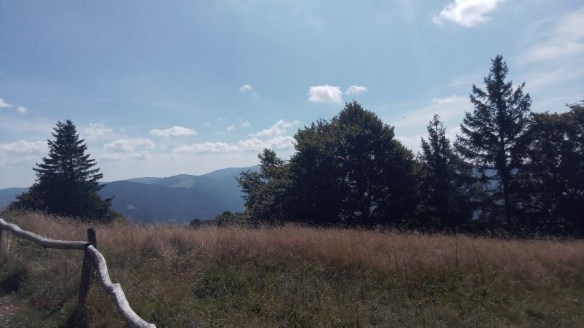
View around the summit.
View around the summit.
View around the summit.
View around the summit.
View around the summit.
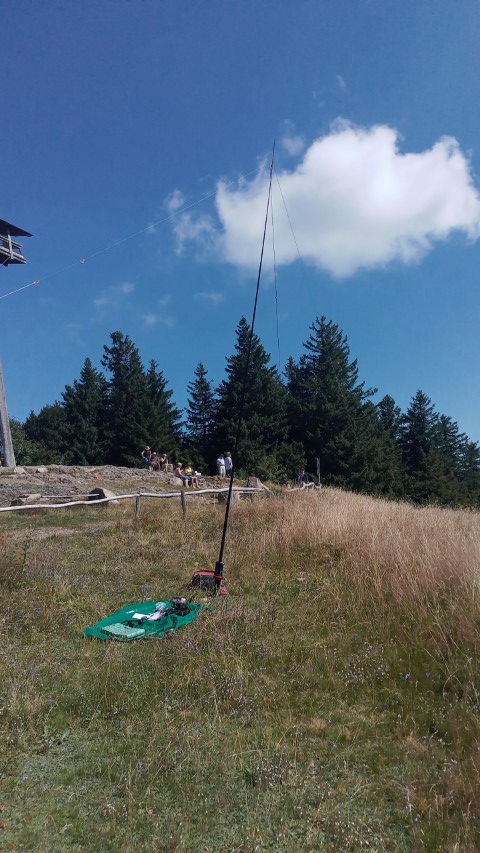
Antenna.
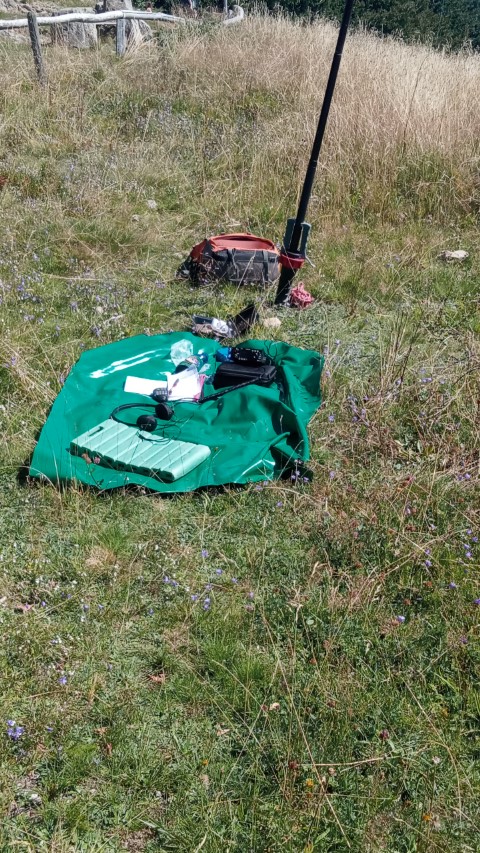
Station.
Equipment taken:
Xiegu G-90 radio.
Komunica Power HF-PRO2-PLUS-T loaded vertical antenna (not used).
Tripod with radials (not used).
2 x 4Ah LifePO4 batteries.
40L Rucksack
Inverted-V linked dipole
6 metre fibreglass mast
Screw-in sun umbrella base
Small headphones.
Smartphone for spotting.
Log:
HEMA DL/HBW-042 and SOTA DMBW-008 Schauinslandplus POTA DE-0004 Südschwarzwald
Conclusions:
It was good to get an activation in, with bad weather threatening the following days. The sudden antenna failure was possibly heat-related or possibly just through constant use and packing, and unpacking. Now that I’m home, I will see on the next activation whether the fault is solved or whether it is time to replace the complete feedline to the antenna.
With a holiday trip planned for the coming week and that to include some new (to me) summit & park activations, I needed to test out my gear as I have not been out for some time due to a combination of bad terrestrial and atmospheric weather. Coincidentally, Colin M1BUU was planning new HEMA summit activations in the Scottish islands on this Wednesday and Thursday, so HEMA-to-HEMA contacts may be a possibility.
On Wednesday, I was hopeful of a contact into VK however Colin’s travel to the new summit involved a ferry ride, which meant it would be approaching lunchtime when he got on-air, so I chose as late a time as I thought long path might be open, and planned (for me) an extended activation, hoping to fit in the contact with Colin as well.
On Thursday, the trip would be later as it was planned that I would take my wife to the swimming baths, which are on the route to the second HEMA summit, collecting her on my way home. On the day this plan changed as my wife decided she wished to stay at home, but by then the schedule was set, so this activation would have the main purpose, again, of testing equipment and a contact with Colin.
For equipment, I decided upon the usual G90 plus 6m mast and linked dipole antenna with tripod and HF-PRO2 as backup all in my 40L rucksack. As there is more space at rösenau Kreuz, I would take the wire beam antenna in its own camera bag and use it with the 6m mast, rather than the usual 7 metre and surveyors tripod.
The Activations
Wednesday 13th. HEMA DL/HBY-064 Berndorfer Buchet
This summit is one of my local summits and, up until 3 months ago, was in the SOTA award scheme as well as the HEMA one; however, it has never had the needed 150m prominence, so it was always a matter of time before it would be removed from SOTA.
On arriving at my (usually deserted) parking area, there was someone organising parking, so there was some country event about to take place, it seems. No problems, I explained I was heading into the forest and nothing to do with his event and parked up as normal.
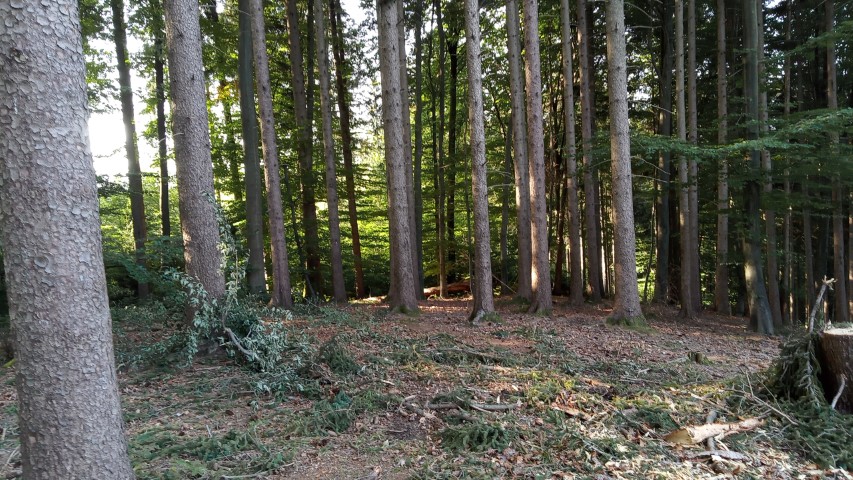
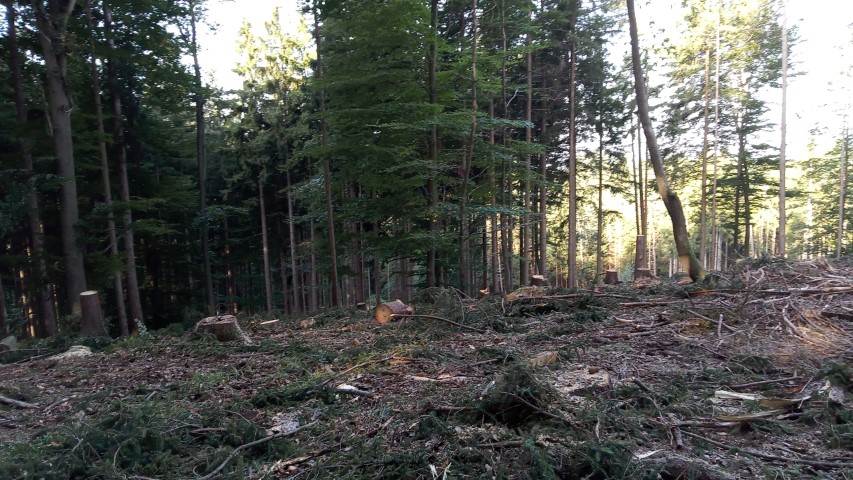
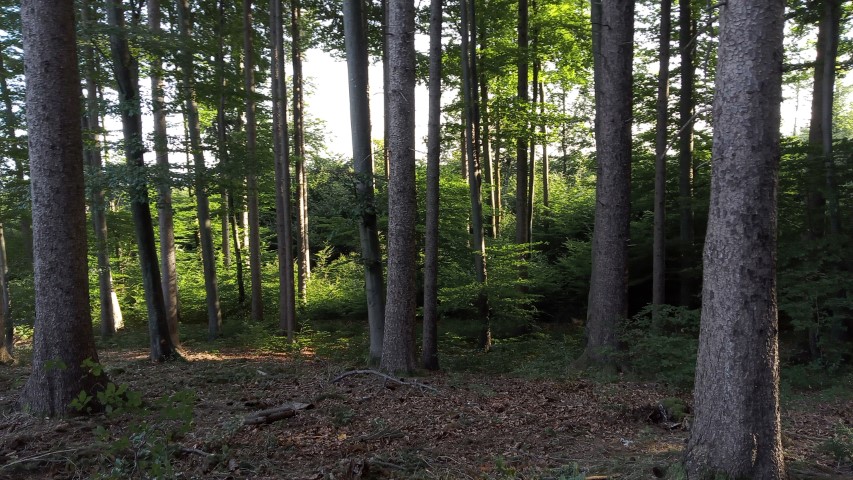
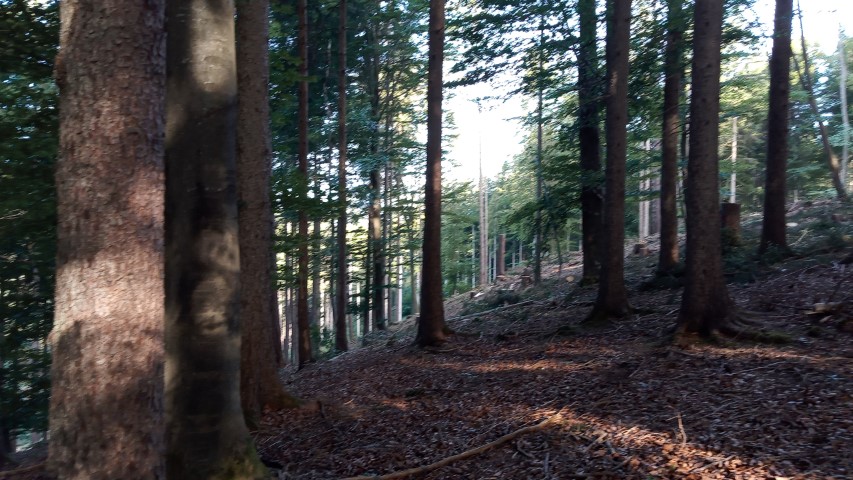
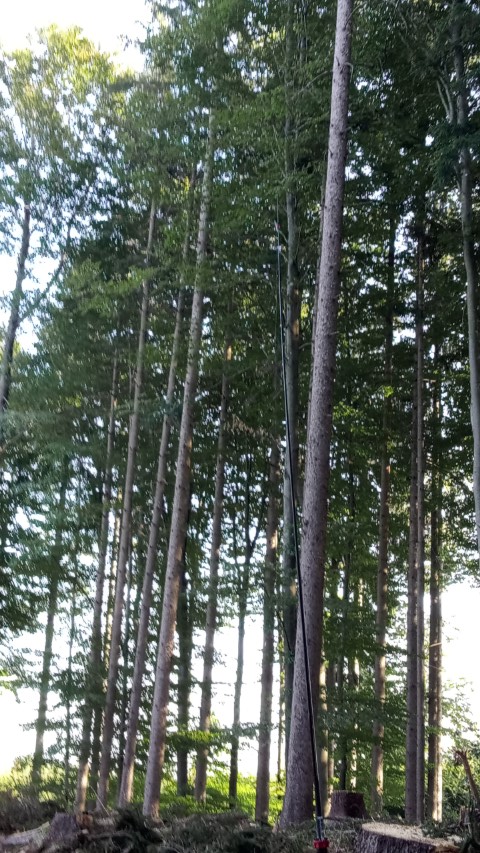
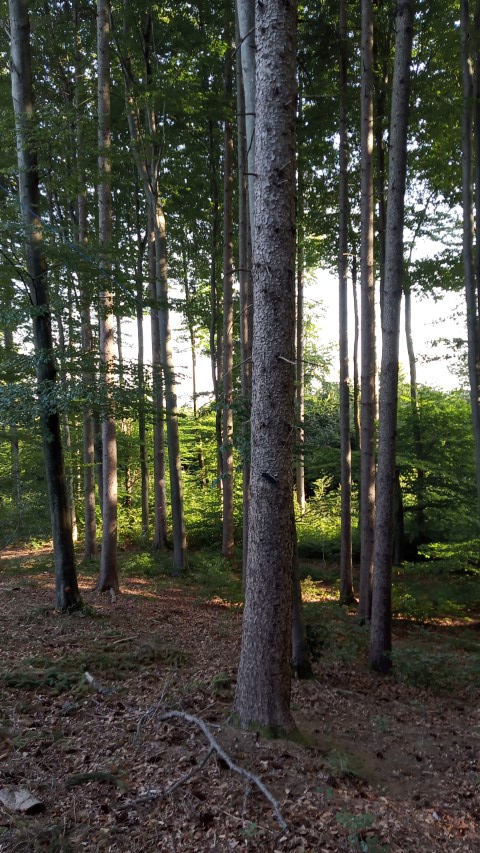
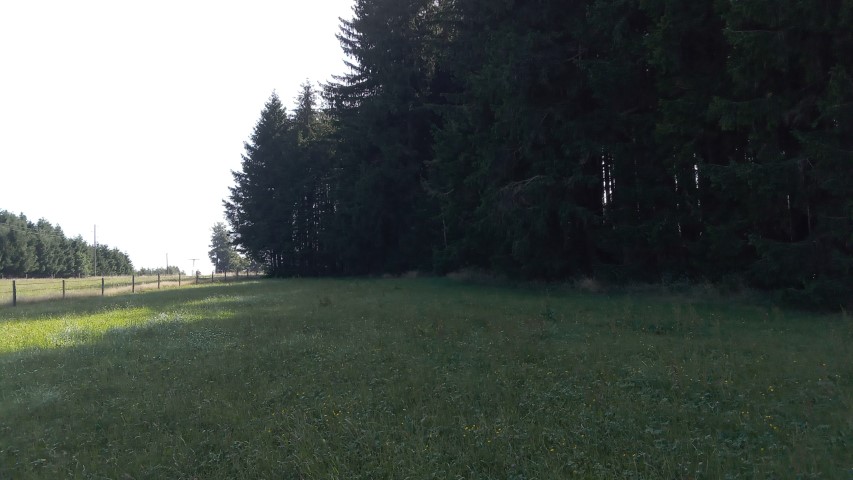
As I walked along the forest trail, it was obvious that the forestry commission had been harvesting trees, and indeed, about 60% of the trees on the summit have gone. This kind of action takes place every 10 years or so, to let the smaller trees have space to grow. The final climb to the summit was made more difficult due to lots of small wood branches all over the ground left by the log cutting crews, but with care, the way to the summit was possible.
On reaching the summit, I was surprised by how cool it was under the remaining trees and was glad of that fact as noon approached (however, at the moment, the high 30s temperatures are hitting us at around 4pm local time).
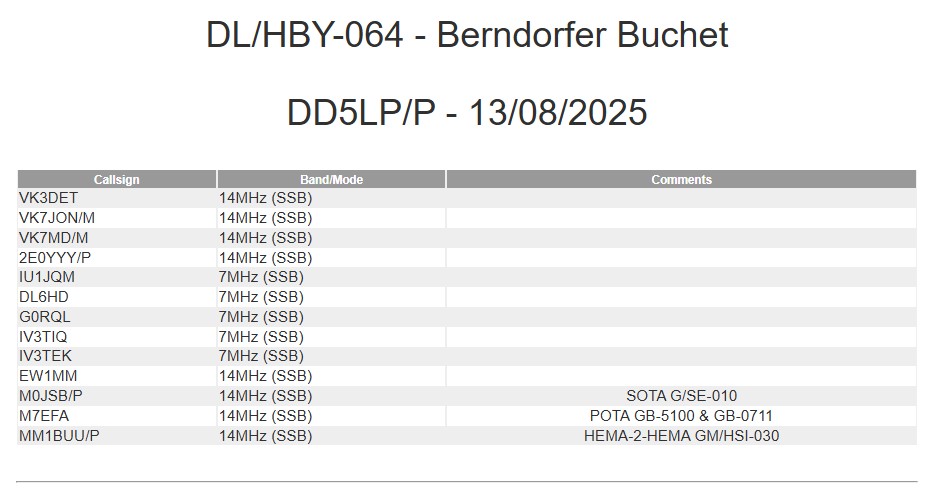
As is often the case, my friend Mike 2E0YYY was also out portable and we corresponded by WhatsCrapp, where our friends in VK also monitor. So the log started well with contacts with Ernie VK3DET, Jonathon VK7JON/M and Mike VK7MD/M being the first three in the log. Mike 2E0YYY/P came in as number four with the skip on 20m being long; it was easier to work those in Australia rather than Mike in the UK. This is normal at the time of day (0830 UTC).
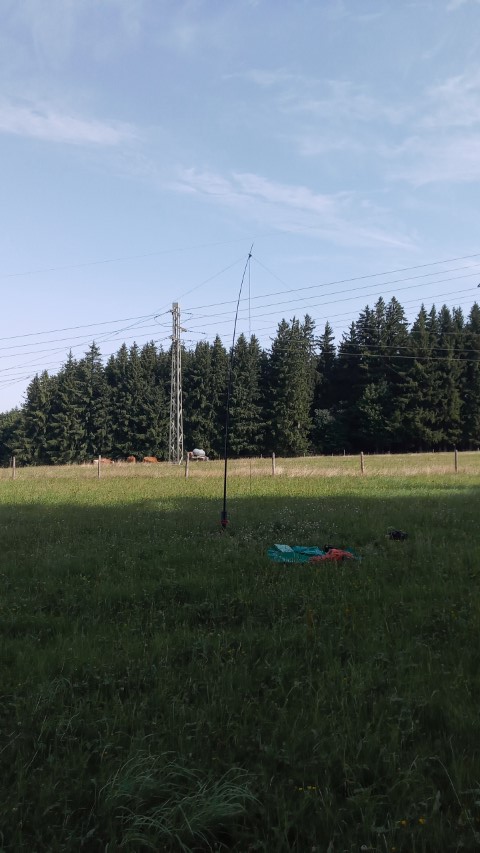
After the initial contacts on 20m, the linked dipole was lowered, and the 20m link at each side was replaced to make this into a 40m antenna, as I wanted to give some of the closer HEMA chasers a chance to get some contacts. In effect, I can’t say when someone calls whether they are calling for the point for the HEMA summit or just as they have taken pity on my constant CQ calling. Either way, it’s always nice to see some calls in the log that I recognised.
Mike was keeping in contact with Colin as best he could as Colin climbed to his summit and relaying status to me, and when it seemed Colin should be on the air in the next 30 minutes, I changed back to 20 metres as a 40m contact over the distance at that time of day would be unlikely.
Before Colin came on as MM1BUU/P, I also managed to pick up a SOTA contact with M0JSB/P and a POTA one with M7EFA, so it was clear that my signal was making it into the UK.
At 0910 UTC, contact was made with Colin on G/HSI-030 at 57 both ways, followed by a final call with Mike on 20m.
After 3 hours of operation, I packed up and headed home.
As mentioned in the introduction, this was originally planned to be combined with the wife going to the swimming baths. With her last-minute cancellation, the schedule did not change, and my arrival at Rösenau Kreuz was around 0805 UTC, and I was set up and running by 0830 UTC. Well, that’s not entirely true …
When I arrived at this summit and set up, I again made contact with Mike 2E0YYY/P, but when I pressed the PTT to talk to him, the radio indicated I was only transmitting with 0.2W (200mW). As I have in the past had issues with a bad connection on the microphone lead, I had a spare packed with the station. After switching that out and even reversing the ends of the cable, the problem was still there. At this point, Mike messaged me to say he could hear me testing, and while I was weak, I was workable. So I went on air and explained the problem to him and said I would investigate further.
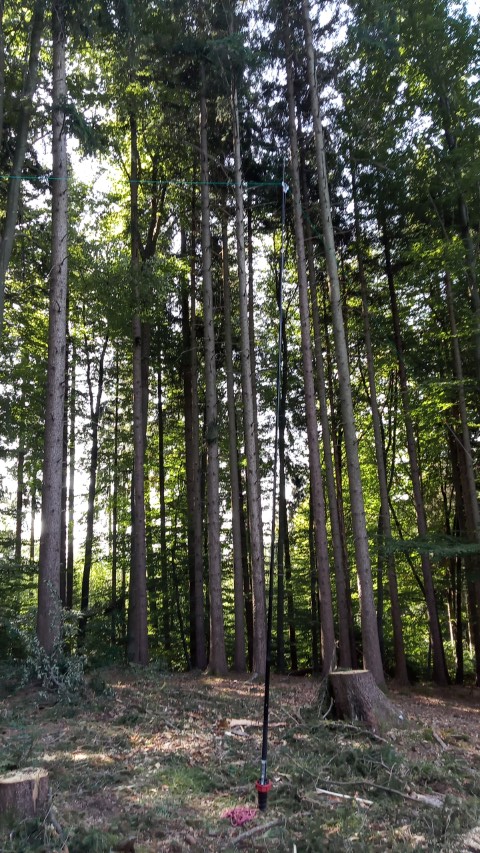
Switching from 20 metres to 40 metres, I suddenly had the full 20 watts output again. Should I suspect the antenna in some way – I don’t think so, as the ATU in the Xiegu G90 would match the coax run to the antenna and pump the full 20 watts into that had for some reason the 20m section not be attached but on a linked dipole the 20m section has to work for the 40m one to work as the RF currents pass through it as well. I stopped for a second and thought, what else have I changed? To switch from 20m to 40m, I had used the dual VFO feature as I normally leave VFO-A on 20m and VFO-B on 40m. So… what if I change the band on VFO-B to 20m? Well, it worked – I again had 20w on 20m. The way that the G90 radio works, it keeps all settings separate by band and VFO selected, so something in the settings for VFO_A has been corrupted (more than likely on the previous day when I ran one of my two 4Ah LifePO4 batteries down to a voltage when the G90 simply turned itself off). This can cause issues, and afterwards, things like output power ha.ve to be reset, but it looks like that is not the case here, as on VFO-A and VFO-B, 20W is indicated in the settings.
The best solution at this point is to do a factory reset (which I should have performed after the sudden power loss on Wednesday), but I had a problem. I could not remember which key combination is used to perform the reset, and before I did more harm, I decided to continue by just using VFO-B for this activation. Later, when I got home, I did that reset, and all was fine with the radio again – I have now added a note in with the radio pack, defining how to do a factory reset in case I make the mistake with the battery again.
In this activation, I stayed on 20 metres the whole time with the band being a “challenge”, the QSB taking S9 stations down to nothing in a matter of seconds. Again, I got plenty of contacts from around Europe, finishing up with a far more difficult one than on the previous day with Colin, who was now on GM/HSI-042 on 20m.
Before packing up I switched back to 40m to see how Colin was doing, and he had a big pile-up going as he had HEMA, WAB and Trig Point chasers all trying for a contact, as this area has not been activated before. I could hear all of the chasers but not Colin, so I was grateful for the 20 metre contact.
This activation achieved what it was done for – to test the equipment before the following week and to get another HEMA-HEMA contact with Colin. I did not put the 20/15/10m wire beam up, as with the QSB on the band comparisons between signals would have been meaningless.
Photos:
DL/HBY-064 Berndorfer Buchet
The view around the summit.
The view around the summit.
The view around the summit.
The view around the summit.
The view around the summit.
The view around the summit.
The view around the summit.
The view around the summit.
The view around the summit.
The view around the summit.
The view around the summit.
The view around the summit.
The view around the summit.
The view around the summit.
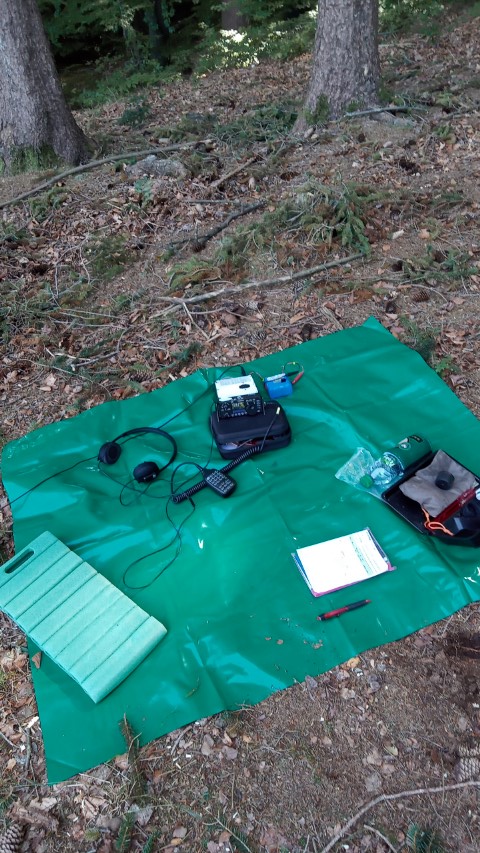
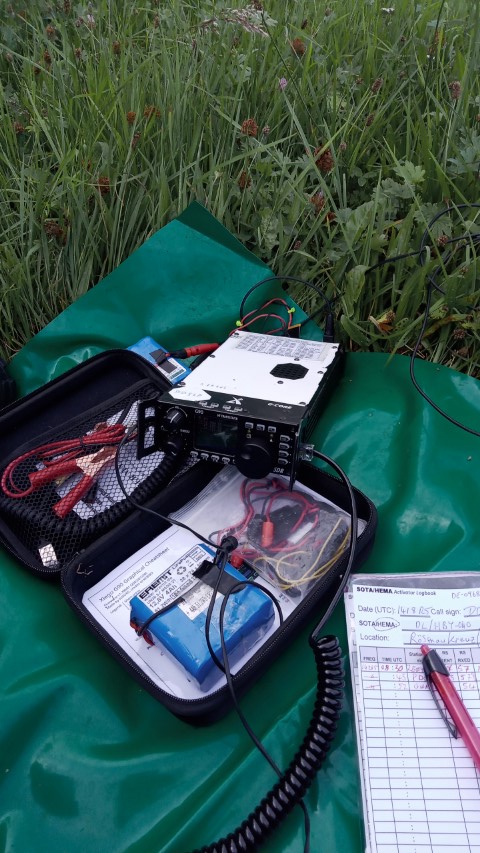
Station
Station
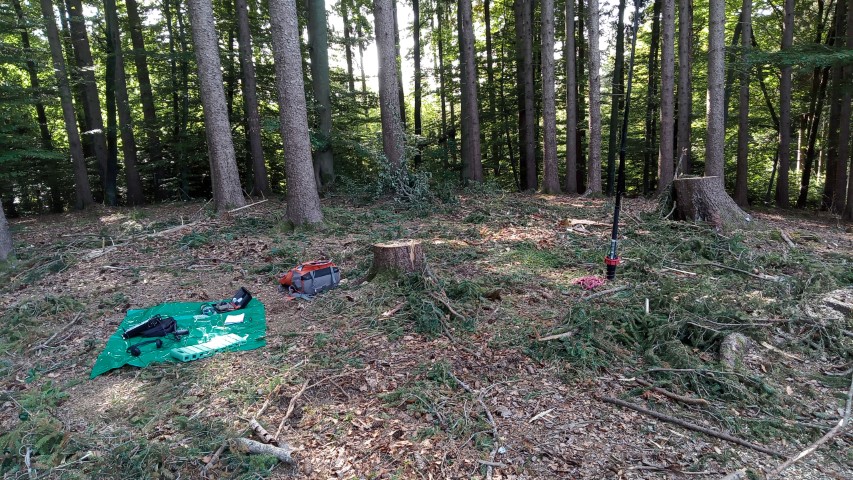
Antenna
DL/HBY-040 Rösenau Kreuz
Route to Summit.
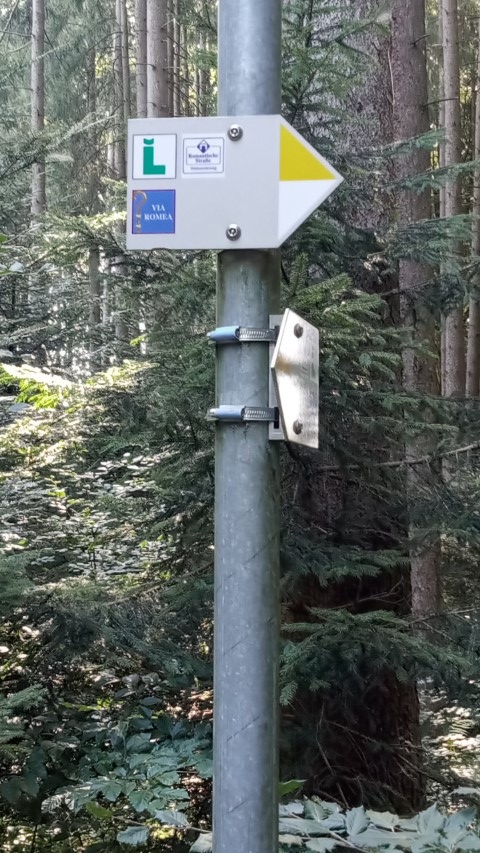
Trail Markers.
The little Rösenau Cross.
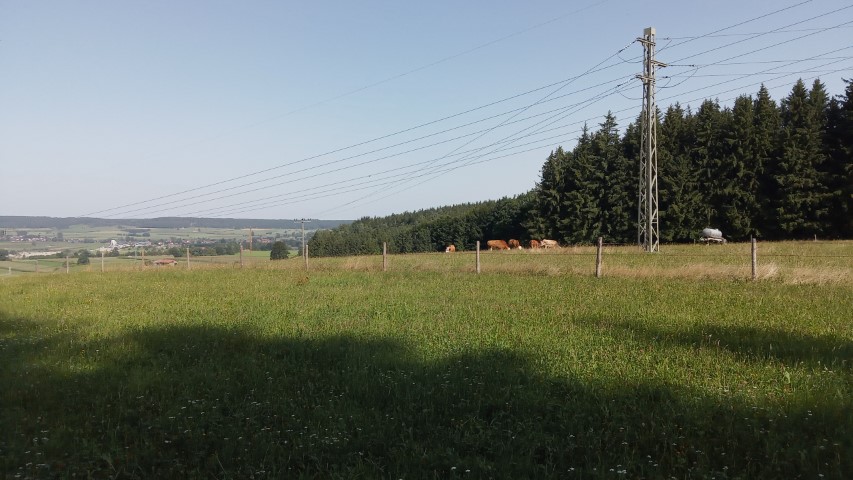
The View around the summit.
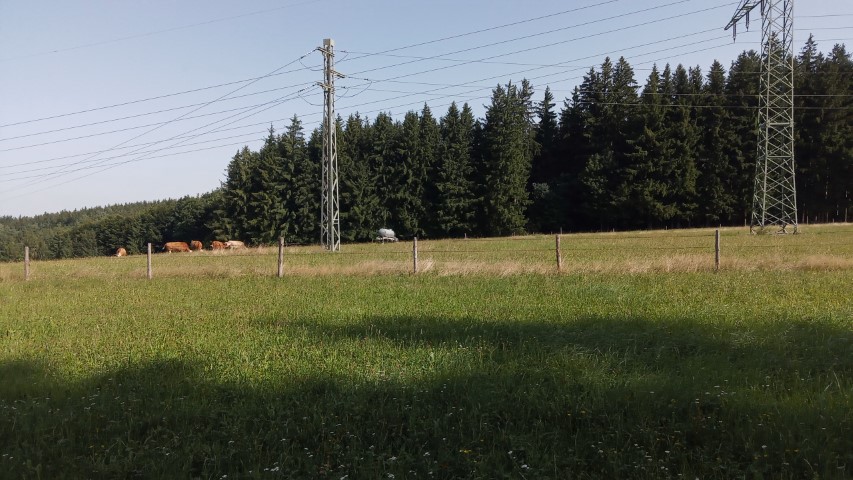
The View around the summit.
The View around the summit.
The View around the summit.
The View around the summit.
The View around the summit.
The View around the summit.
The View around the summit.
Antenna.
Station.
Equipment taken:
Xiegu G-90 radio.
Komunica Power HF-PRO2-PLUS-T loaded vertical antenna (not used).
Tripod with radials (not used).
2 x 4Ah LifePO4 batteries (not used).
40L Rucksack
Inverted-V linked dipole
6 metre fibreglass mast
Screw-in sun umbrella base
Small headphones.
Smartphone for spotting.
Logs:
HEMA DL/HBY-064 Berndorfer Buchet
HEMA DL/HBY-040 Rösenau Kreuz plus POTA DE-0968 & DE-0791
Conclusions:
It was great to bag the two rare summits that Colin was on, and indeed the tests of the equipment were worthwhile. All I need now is the terrestrial weather to behave itself next week, and I might get two good activations in, in an area I have never been to before.




































































 DD5LP / G8GLM / VK2JI blog
You must be logged in to post a comment.