Preparation:
This park looked like it would be a challenge to operate within, being a lake – perhaps the only way is from a boat or from the end of a pier? I searched maps to find a location within the officially defined Natura 2000 area linked to from the POTA parks data page, and I found that there are one or two “boggy areas” on the banks of the lake, where you can activate without having to be in or over the actual water. One of those spots was just a few kilometres north of a museum/art gallery, which my wife visits when a new painter is featured, and indeed, there is a new one that she would like to see, so again, a combined trip was planned.


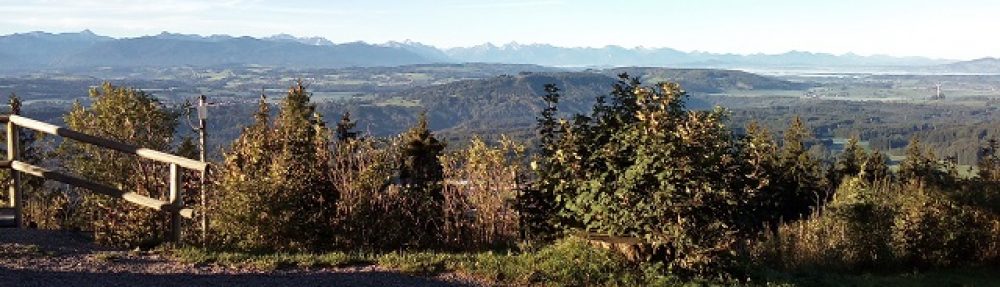
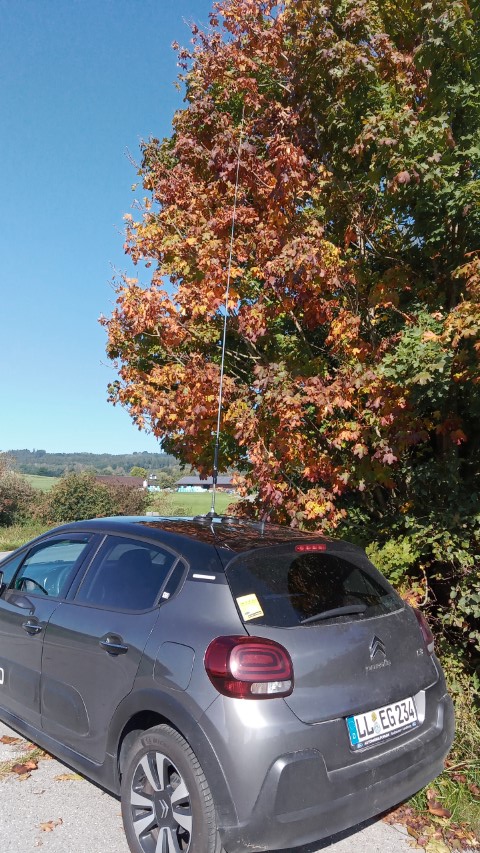
As you can see from the picture above, I found a small concreted field entry off the side of the main road that marks the edge of the park at this point on the lake’s shore. Again, this would be a PLOTA, but with more time, a “real” portable operation would be possible as between my parking spot and the cycling track, which goes through the park, there is a nice grassed area. Perhaps I will set up there next time when I have more time.
The plan was to again use the car-based set-up with the G90 and the HF-PRO2 antenna from the back seat of the car..
The Activation
POTA DE-1065
The morning started at under 3°C, and although sunshine was forecast, there was going to be an icy cold wind for most of the day, so this was another good reason for a car-based activation. The drive to the museum/art gallery went without incident, a route we have driven several times before. From there, it was just a few minutes up the road to my chosen spot, and I was glad to see it free and looking as I had seen it via Google Street View. As the radio was already set ready to go on the back seat, I only needed to put the loaded whip antenna on its magnetic mount on the roof, connect up the radio to the battery, and I was set.
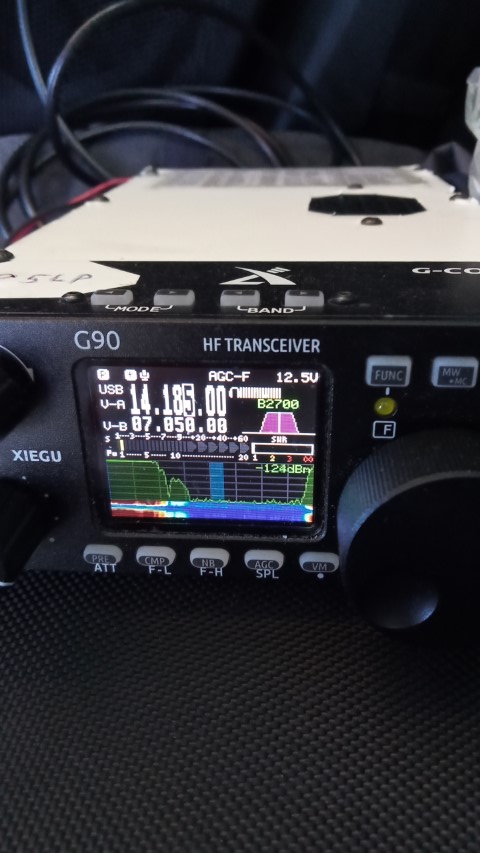
I started on 20 metres and could not believe the level of noise on the band – some device was wiping out the bottom half of 20 metres, and while the G90 is an SDR radio, heavy AGC was being applied to the whole of the band, making signals that I could find at the top of the band very weak. I realised what was happening (see pictures below) and turned off the AGC in the radio, which improved things, but despite calling stations and spotting myself and calling, 20 minutes of calls brought no callers. To make matters worse, the problem I have had on the last three activations returned, so the indicated power output dropped from 20 watts to under one watt. I say “indicated power” as I am not yet convinced that the actual power is being dropped, and rather suspect it may be the SWR/Power sensor circuit that has gone intermittent. I tried my usual checks without any success in sorting out the problem. The noise on 20 metres (I suspect a military source in Eastern Europe) was getting even worse, so I decided to switch to 40 metres as I had a limited time to get my needed 10 contacts.
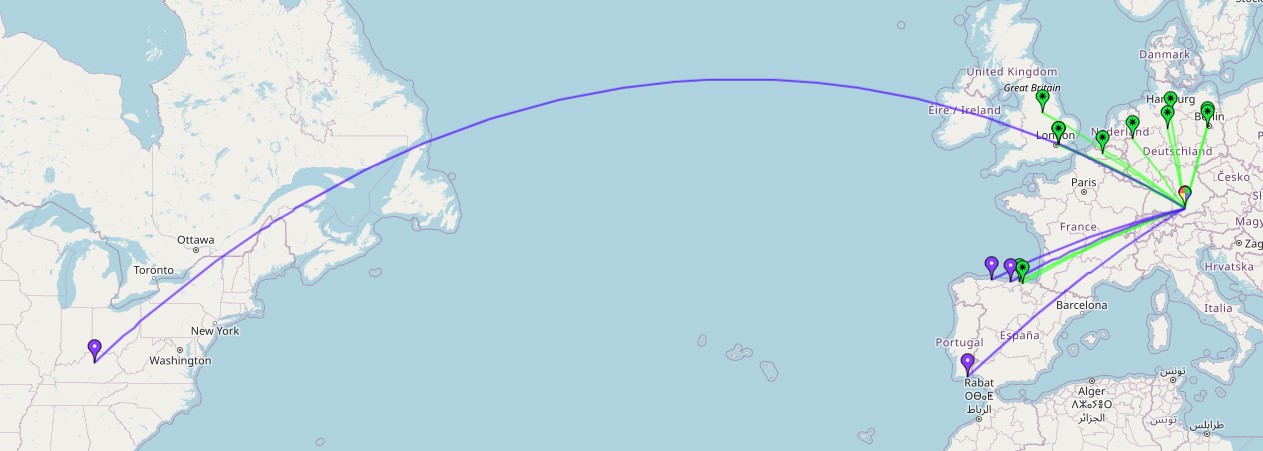
After switching to 40 metres and adjusting the antenna loading, I found that with loud speaking, I was seeing 10 watts output now indicated, and so decided that would have to be enough. My activity on 40 metres was a mix of spotting and calling CQ for some time – often resulting in only one or two calls, and search and pounce of any strong signals or indeed other POTA operators who were spotted on the band. With a 3-fer P2P with Paul G4BWQ, I managed to break the 10-contact limit, and after a couple more CQ calls with no replies, I decided to give 20 metres another chance before packing up. I’m glad I did, as well as being called by three of my regular hunters, I was also called by K2UPD out of the US.
Photos:




Equipment taken:
- Xiegu G-90 radio.
- Komunica Power HF-PRO2-PLUS-T loaded vertical antenna.
- 3-magnet car roof mount and single magnet mount (single not used).
- 8 Ah LifePO4 battery.
- 2 x 4Ah Eremit LifePO4 batteries (not used).
- Lightweight headphones.
- Smartphone for spotting.
Log:
POTA DE-1065

Conclusions:
The bands started off horribly, well, with the K Index over 5 following a G2-level solar storm, which should not have surprised me, but with the skip distance being shortened, the megawatts of Ukrainian or Russian jamming within the amateur band, I was lucky to get any contacts at all!
That annoying power level problem is still there, and I think I will have to go in and inspect the area around the antenna socket for dry solder joints.
73 ’til the next activation!
 DD5LP / G8GLM / VK2JI blog
You must be logged in to post a comment.