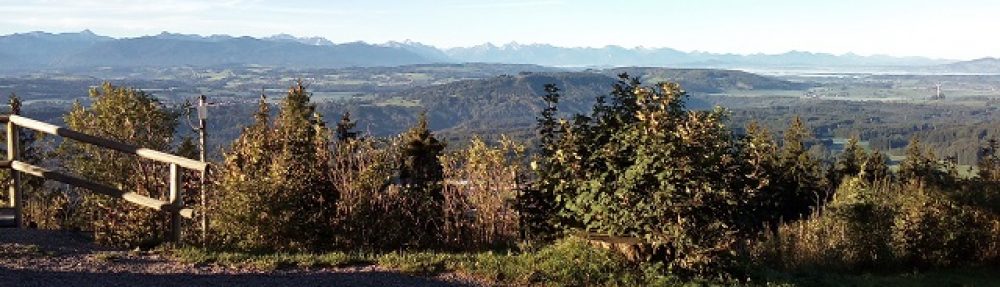
Preparation:
The annual North America to Europe S2S event day had arrived again and (as usual), the weather forecast looked good until the day before when it changed from foggy in the morning and sunny in the afternoon (when the event is), to being cold, damp and foggy all day. Despite that, I decided to go ahead with the activation with the hope of getting some easy S2S contacts from this 1-pointer plateau summit.
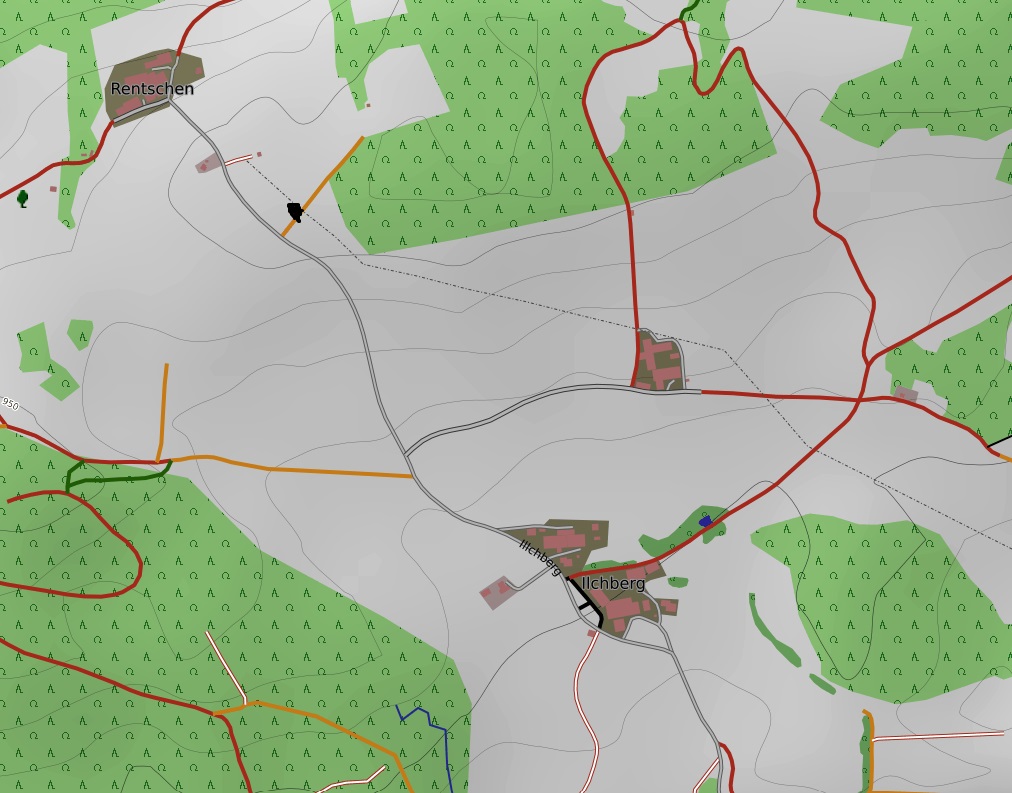
Rentschen is the summit I choose for testing new antennas on as it is a flat plateau and so provides plenty of space.
I decided to play it safe for this afternoon’s activation. I packed not only the electrically switchable trapped tri-bander beam but also the manually switched 5-bander and my linked dipole, each with its own masts and supports. To be safe I also packed the antenna analyser, a complete spare radio station (G106 plus 100w amp tower) and 4, 8 & 12 Ah batteries. (I was hoping that the weather may improve so I would have the opportunity to compare various combinations). The weather didn’t change and most of the equipment stayed in the car as it turned out. This is thankfully a drive-on summit.
The Activation
It is rare that I only head out in the afternoon for a SOTA activation – usually, I am eager to get to the summit just after daybreak to work VK via the long path but in this case, where North America was the target the clock difference made a morning activation the wrong options and all of the many SOTA activators who would be out had alerted to be on from around 1300 UTC (or 2 pm local time here) – so that was my target to get on site and set-up.
The run down to Rentschen, I know very well and it was good that I did as the fog came in reducing visibility along the roads for a fair distance. On arrival at the summit, visibility was around 30 metres and it was a very damp fog. As Rob DM1CM was also going to join me I got started straight away with setting up the antenna and station.
As usual, the 2 element wire beam antenna was installed using the screw-in base with the four wires going out at 90° to each other, the combined length of the element and its cord extender (also acting as the guy cords for the mast), formed a 60° angle with the vertical mast, this after looking at a model of the antenna appears to be a better value than the normally stated 56° (the mast is a 7-metre mast but with the top section removed so that the feed point board sits at 6 metres above ground level).
As I was finishing up the set-up, Rob arrived and we took a listen around 10 metres (which I had expected to be the “money band” for this event going by recent radio conditions. Initially, the band was empty but then about 15 minutes later it filled up with stations from Russia and the US. It seems skip was not going to allow me to get any contacts inside Europe but the first in the log was Jörg signing as DL/HB9BIN/P from Laber DL/AM-060 – which, if there wasn’t a forest in the way, would have been line-of-sight from where we were. Watching the SOTA spots on my smartphone, I saw more & more European and UK stations spotting that they were out however when I tuned to their frequencies I could not hear them. I suspect the skip distance on the 10m band at the time was too long. This was in some ways confirmed by the strength of the US home stations. Unfortunately, the US SOTA activating stations all seem to have been using either CW or data so were not an option for me. I put out several CQ calls and was eventually rewarded by calls from three US SOTA chasers calling me.
The cold damp temperatures and the lack of contacts eventually decided me to cut the activation short and head home to the warmth. As I approached home, it was obvious that the weather at home had not been nearly as bad as where Rob and I were located.
There are positive points out of this action. The wire beam works well (even though I set it up 45° off the intended direction). It would have been nice to compare the linked-elements version against the trapped elements but the work involved in the wet and cold was not justified. The G90 radio with its 20 watts output on SSB, continues to “do the job” and the new 12 Ah LifePO4 battery also got another test.
Photos:
Equipment taken:
- Mountaintop travelling 40-litre rucksack.
- Raddy rucksack. (not used)
- Xiegu G90 radio.
- Xiegu G106 radio plus RMItaly amplifier, LPF box and ATU-100. (not used)
- Screw-in mast base.
- 7 metre fibreglass mast.
- Surveyors tripod and 10m mast. (not used)
- 10/15/20-metre band 2-element trapped wire beam.
- 10/12/15/17/20-metre band 2-element linked elements wire beam.
- SOTA/HEMA logbook & pens.
- Komunica Power HF-Pro2-PLUS-T loaded vertical antenna and tripod (not used)
- 6m mini-mast (not used).
- SotaBeams linked dipole (not used).
- 4 Ah Eremit LifePO4 battery (not used).
- 8 Ah LiFePO4 battery (not used).
- 12 Ah LifePO4 battery.
- Painter’s thick plastic sheet.
- Gardener’s kneeling pad (not used).
- 2 x Lightweight headphones (one pair not used).
- Smartphone for SOTA/HEMA spotting.
Log:

Conclusions:
-
The NA-EU SOTA S2S event is “jinxed” every year it is accompanied by bad terrestrial weather (at least here in Southern Germany).
-
The equipment used worked well and it was a nice “social” meet-up with Rob.
73 ’til the next summit.
 DD5LP / G8GLM / VK2JI blog
You must be logged in to post a comment.