Preparation:
Following the success of the VK-EU S2S SOTA event on Saturday October 22nd, a similar one for November 19th. was planned but this time for EU-NA contacts. The 15m half wave, coax fed end-fed vertical (aka J-Pole) antenna that I tested at Buchberg, was replaced with one using RG-174 coax. As I didn’t want to have to take down the mast each time I wanted to change band between the possible 15, 17 & 20m being used in the event, I worked out a way of just mounting the 15m “element” on the mast and then plugging in extensions for 17m and 20m at ground level. Each band having its own stub (see my article on this antenna build under the equipment tab on this website). All three configurations were tested and trimmed in the garden ready for taking with me to the summit.
I was concerned about the weather, we had been having some awful rainy weather of late and it looked unlikely to stop. In the end I decided to stick to my choice og Heersberg as according to the Weather underground site (but not others), the rain should stop on the 19th. for a window of dry weather around the time I needed to activate. The published time for the S2S event was 1400 to 1700 UTC – 3-6pm local time here. As it gets pitch black by 5pm, I decided I would aim for the start of this window and run for about an hour, which should give me time to get back to the car before dark. I would adjust as appropriate with the weather on the day.
As well as preparing radio equipment, I also bought some new video equipment that I planned to use if possible on the activation. this is a video camera/recorder built into the frame of some polarised sun glasses. The are sold as “Spy glasses” but actually their specifications re rather good for the price. They are HD (720p) and take a Micro-SD card for storage of video or single shots. The glasses arrived two days before the S2S event and I quickly tested them out. The control is a bit fiddlely but they do indeed work as stated. So I packed them in with the gear for the activation (in fact I didn’t have time to try them out on the summit).
The Location:
Heersberg is located in the Albstadt area about three-quarters of the way from where I live near Munich to the French border. Put another way, it’s around an hour and a halves drive north-west of Friedrichshafen. Although the first 30-40 minutes of the drive is Autobahn, the rest of the way is A and B roads winding their way through small villages. Google maps quoted just over 2.5 hours to drive the route, so along with the weather predictions for when it should stop raining, I calculated a start time of 12 noon latest to be sure I would have time to get from the car park, the 2.5 Km to the summit and then set-up by 1400 UTC. I decided to use my new “Navi” which I have loaded the SOA DL & DM summit kml file to guide me through the many turns en-route so that I could concentrate on driving and not need to look at the maps.
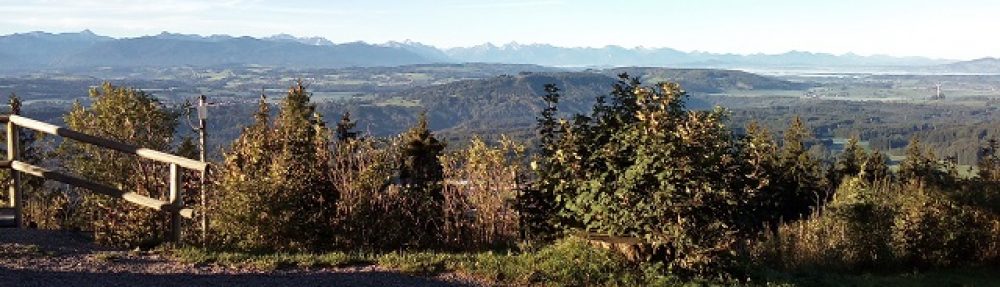
The Heersberg “summit” itself is relatively flat – so flat that there’s a cross-country skiing “loipe” set out across the top of it. Access to the summit is best from the car park near the start of this Loipe in Albstadt-Beergfelden.
The Activation:
The drive was 3 hours not the expected 2.5 but I had set off half an hour earlier in any case.
Drove through heavy rain and spray (particularly bad on the first section of the trip on the Autobahn, some aquaplaning – not fun). After leaving the autobahn for about 2 hours of back roads, I went through more heavy rain and then it cleared, there was even a little sunshine. Great I thought but 5 minutes later I was driving in a SNOW storm! At one point I lost GPS and I pulled into a lay-by. About 7 satellites were being received but were showing red not green in the display. I checked my position and route on a good old paper map and carried on. The GPS came back a few kilometres up the road. Interestingly on the return journey the GPS dropped out along exactly the same stretch of road. There are some military bases nearby, so I wonder what they were running to knock out the GPS? The cunning plan with the weather worked however as when I eventually drew up into the car park, the rain stopped and I had a dry (but 0°C) activation. The 2.5 Km walk up to the summit was an easy one. Over half of in on a tarmacced road, that later I saw a lot of (not farm or forestry) traffic on as people drove up it onto a convenient field and took their dogs for a walk. The wind howling up the valley sounded like a waterfall at some points as I walked up to the summit.
Having arrived, I set up the FT817, 15/20w amplifier and initially put up the 21MHz J-Pole antenna. Then I tried to spot and guess what – no Internet coverage with either Vodaphone or T-Online. Actually Vodaphone were showing a 3G signal but I couldn’t spot myself and only occasionally got the list of spotted stations into RRT. I tried spotting via SMS also without any luck. Eventually the Internet link worked for a few minutes before failing again – it was like that the whole time.
In any case after several CQ SOTA calls on 21MHz, I heard a very weak “summit to summit, summit to summit” it turned out to be Kevin, AC2KL on W2/WE-031. With a lot of patience from Kevin we managed an S2S contact and my first contact from this summit. More attempts to spot operation on 18MHz, having switched antennas, got through once on SMS I think. No contacts made on 17m though.
Switching to 20 metres, it was wall to wall NOISE from contest stations – which contest was this, surely not the small Bulgarian one – I never expected that to create so much activity – sure enough it was the LZ-DX contest! I decided to give 20m a miss and went back to 15m again.
I was rewarded with three more contacts on 15 metres – M6YOM (a second Kevin for the day), Victor GI4ONL, Don G0RQL and a VOTA to SOTA contact with Andy EA8/MM0FMF/P on the Canary Islands. That last contact was just as I had decided to pack up feeling very cold despite full skiing gear (less boots and skis) and Andy’s comment about being in 27 degrees of heat, along with some threatening clouds decided for me that 1 hour on this cold summit was enough and I packed up and headed back to the car under an ever darkening sky. As I got the boots off and into the car, the rain started again – call that timing or what? Just a 3 hour drive home in front of me (which I managed in just over 2.5 hours). Two long drives for a short activation but I’m happy with an African S2S plus a North American S2S and a couple of UK chasers.
Photos:
Equipment:
Yaesu FT817ND.
Modified Ramsey power amplifier ( 15w on 18 & 21MHZ ).
CO-AX fed half-wave end-fed 15m vertical (aka J-Pole) with extensions and stubs for 17 & 20m.
LamdaHalbe 6 metre fibreglass mast.
Log:
 Conclusions:

Three hours travelling for a 1 hour activation isn’t worth it, especially at this time of year when it is very cold and gets dark early. In better weather several 10 points summits in the area could be combined, to justify the long drive.
The new J-Pole antenna worked, whether it performed better than my linked or OCF Inverted V dipoles would have, I don’t know. It’s certainly easier to install and lighter to carry.
The “Spy Glasses” will have to wait for another activation to see how well they can record me operating.
Don’t under estimate the amount of QRM even a small HF contest can create.
73 – until the next summit!


 DD5LP / G8GLM / VK2JI blog
You must be logged in to post a comment.